

Chena Mezhukkupuratti (Elephant Foot Yam Stir-Fry) Recipe
Malayalam ചേന മെഴുക്കുപുരട്ടിTamil சேன மெழுக்குபுரட்டிKannada ಚೇನ ಮೆಳುಕ್ಕುಪುರಟ್ಟಿTelugu చేన మెళుక్కుపురట్టి
- Prep20 min
- Cook35 min
- Serves4
- DifficultyEasy
- DietVegan
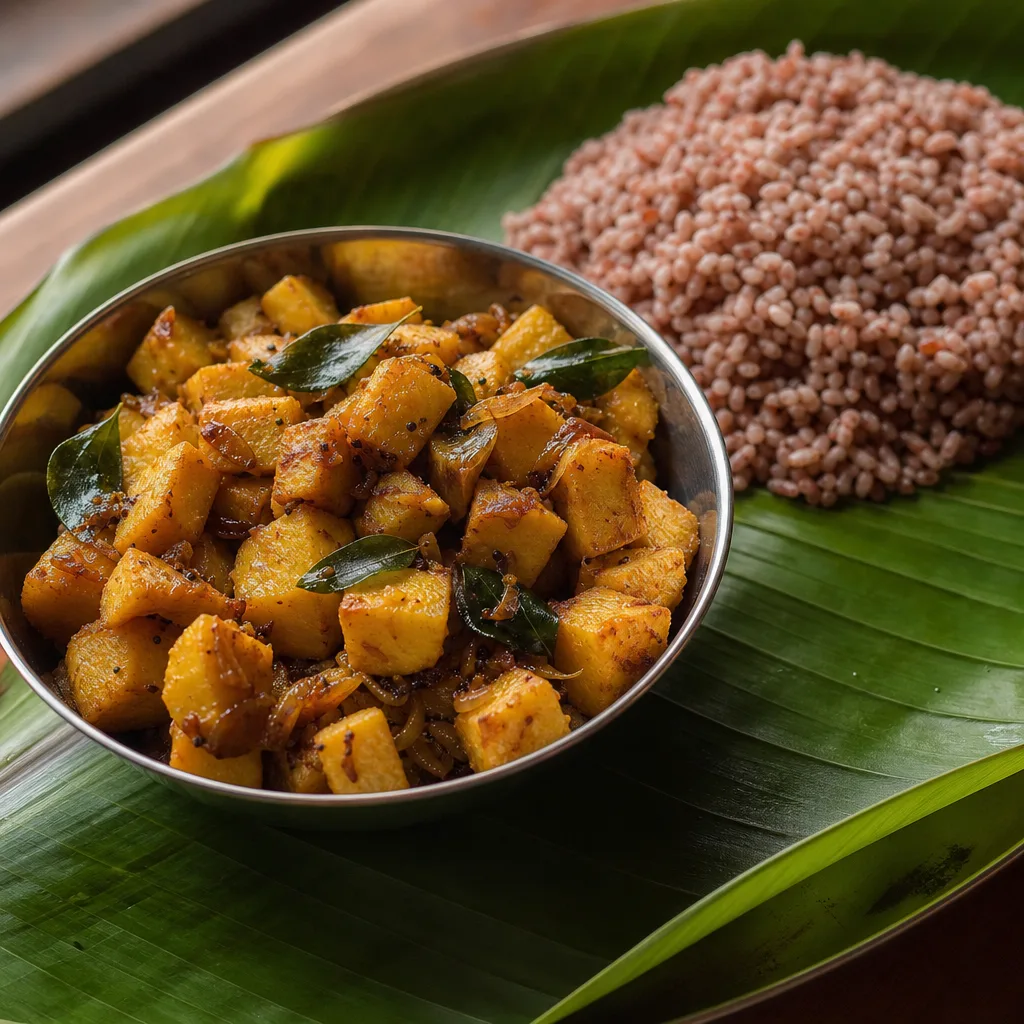
Mezhukkupuratti is the everyday dry stir-fry technique of Kerala, built around three elements: the vegetable, its coating of cooked-down spice and oil, and the char from letting it sit undisturbed in the pan for a minute before the final toss. Chena is one of the finest vegetables for this treatment. The yam has a dense, almost meaty texture that holds together through long cooking, and it absorbs the turmeric and chilli without turning mushy.
In most households across Travancore and central Kerala, this dish appears on the sadya and on ordinary weekday plates alike. It is cooked in coconut oil, finished with curry leaves, and seasoned simply with turmeric, dried red chillies, and salt. The goal is a piece of yam that is fully cooked through, slightly dry on the outside, and lightly coated in the caramelised oil and spice. It should never be wet.
The main point of variation in households is how long you let the yam cook before the final fry-down: some cooks par-boil it separately and then finish it in the pan; others cook it entirely in the covered kadai with a splash of water. Both routes work if you trust the heat and do not rush the final open-pan stage. This recipe follows the kadai method, which is more common.
Ingredients (serves 4)
Main
Method
Prepare the yam
Peel the chena thickly, removing all the rough outer skin and the pinkish layer beneath it. Cut into cubes of about 3 cm. Rinse once under cold water. Raw chena contains calcium oxalate crystals that cause itching; if your hands feel irritated, rub them with a cut lime before washing.
Par-cook the chena
Put the yam cubes into a heavy kadai or wide pan. Add 100 ml water, ½ tsp of the turmeric, and a pinch of salt. Cover and cook on medium heat for 12 to 15 minutes, until the yam is just cooked through but still holds its shape when you press a cube with your thumb. There should be almost no water left in the pan by this point. If water remains, uncover and let it evaporate before moving on.
Start the coconut oil base
Move the par-cooked yam to a plate. Wipe the kadai dry. Pour in the coconut oil and set the heat to medium. When the oil shimmers, add the dried red chillies. Let them swell and darken for about 30 seconds.
Cook the shallots
Add the sliced shallots to the oil. Stir and cook on medium heat for 6 to 8 minutes until they are a deep golden brown. Do not rush this step. Pale shallots will make the finished dish taste raw and sweet rather than savoury. Add the curry leaves in the last minute and let them crisp in the oil.
Add the remaining turmeric
Stir in the remaining ¼ tsp turmeric directly into the shallot and oil mixture. Let it cook for 30 seconds, stirring, so the raw smell of turmeric cooks off.
Return the yam to the pan
Add the par-cooked yam cubes to the pan. Season with salt. Stir gently to coat every piece in the oil, shallot, and spice mixture. Use a wide spatula and fold rather than stir aggressively; the yam breaks easily at this stage.
Fry down to finish
Spread the yam in a single layer across the base of the pan. Cook on medium-high heat, without stirring, for 3 to 4 minutes. You will hear a faint sizzle and see the undersides of the cubes beginning to colour to a light golden-brown at the edges. Now toss once and let the other sides sit for another 2 minutes. The finished pieces should look slightly dry, well-coated, and have a few lightly browned edges. Remove from heat immediately.
Rest and serve
Let the mezhukkupuratti rest in the pan, off the heat, for 2 minutes before transferring to a serving dish. This allows the coating to set on the pieces rather than slide off.
How to serve
Steamed matta rice and sambar, or as one of the vegetable dishes in an Onam sadya. Commonly eaten alongside a simple dal (parippu curry) on everyday meals.
Served with: Steamed matta rice and sambar, or as one of the vegetable dishes in an Onam sadya. Commonly eaten alongside a simple dal (parippu curry) on everyday meals.
Cook's tips
Choosing the chena
Buy a piece that was cut fresh from a large yam and shows a firm, pale-cream or pale-purple interior with no discolouration or softness near the centre. A yam that has been stored too long will be fibrous and will not hold its shape through cooking.
The itching problem
The itch from raw chena comes from calcium oxalate crystals. Cooking destroys them completely, but handling the raw yam without gloves will irritate your hands for an hour. This is not an allergy; it is universal. Apply a cut lime or tamarind to your hands before washing if you do not have gloves.
Do not skimp on coconut oil
Mezhukkupuratti means 'coated in oil'. The dish requires enough oil to coat each cube and achieve the characteristic dry-but-glistening finish. Reducing the oil to cut calories makes the pieces stick together and ruins the texture.
Shallots, not onions
Large onions give a different flavour and too much moisture. Kerala shallots are small, pink, and pungent. If you can only find large shallots, use fewer and slice them very thin so they cook down properly.
Leftovers
Cold mezhukkupuratti becomes drier and even better the next day. Reheat in a dry pan on medium heat for 3 to 4 minutes rather than microwaving, which makes the yam rubbery.
Regional variations
Some Malabar households add a small amount of grated coconut at the finish; certain Nasrani cooks include a pinch of black pepper along with the chillies.
Glossary
- Chena ചേന
- Elephant foot yam (Amorphophallus paeoniifolius); a large starchy tuber with rough brown skin and pale interior, very different in texture from smaller yams.
- Mezhukkupuratti മെഴുക്കുപുരട്ടി
- Literally 'smeared with oil'; the Kerala technique of stir-frying a vegetable until it is dry and coated in seasoned oil, neither wet nor deep-fried.
- Chuvannulli ചുവന്നുള്ളി
- Kerala shallots; small, red-pink, with a sharper flavour than large onions.
- Kollamulaku കൊല്ലമുളക്
- Dried red chilli used in Kerala cooking; adds colour and a background heat without the sharpness of fresh green chillies.
- Matta rice മട്ട അരി
- Kerala's indigenous red parboiled rice; nutty, firm, and higher in fibre than white rice. The standard daily rice in many Kerala households.
Two things decide this dish. The first is cooking the shallots all the way to deep golden before the yam goes in; underdone shallots leave a raw sweetness that throws off the whole balance. The second is the final open-pan fry on medium-high heat without stirring, which gives the cubes that lightly browned, dry exterior that makes mezhukkupuratti what it is rather than a plain boiled vegetable.
More Dry Vegetable Sides recipes
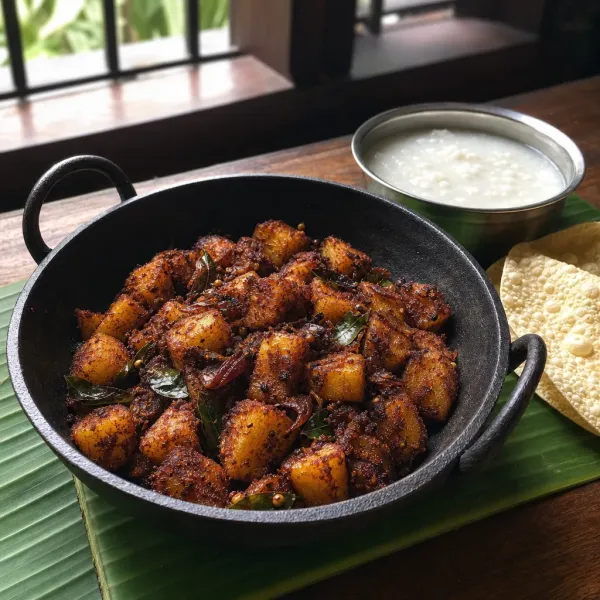
Urulakizhangu Roast
Traditional Kerala Nasrani-style potato roast with shallots, curry leaves and coconut oil. Step-by-step method for a dry, spice-coated urulakizhangu…
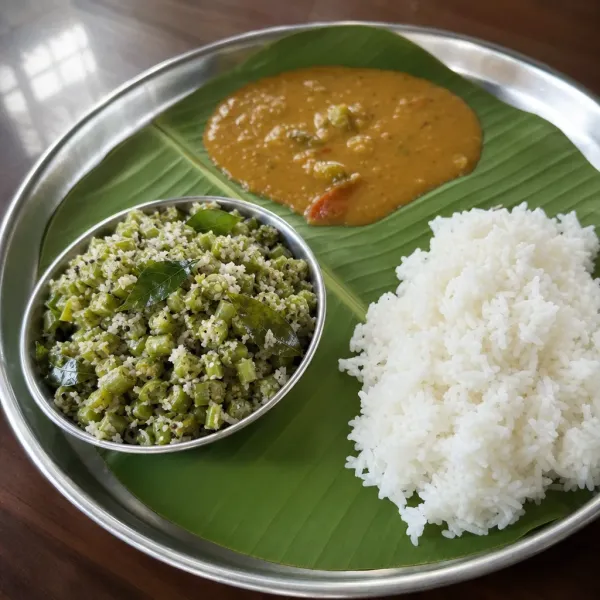
Beans Poriyal
A traditional Tamil Brahmin beans poriyal with gingelly oil tadka and fresh coconut. Dry, lightly spiced, and ready in under 30 minutes.
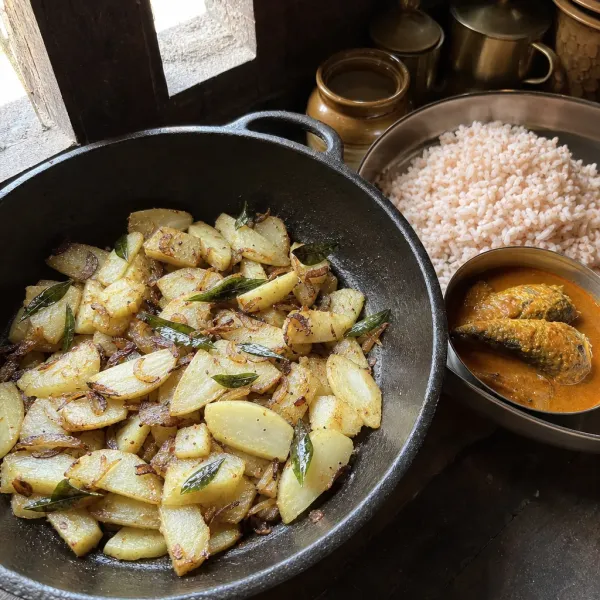
Koorka Mezhukkupuratti (Chinese Potato Stir-Fry)
Traditional Kerala koorka mezhukkupuratti: Chinese potato stir-fried with shallots, green chilli and curry leaves in coconut oil. Step-by-step househ…
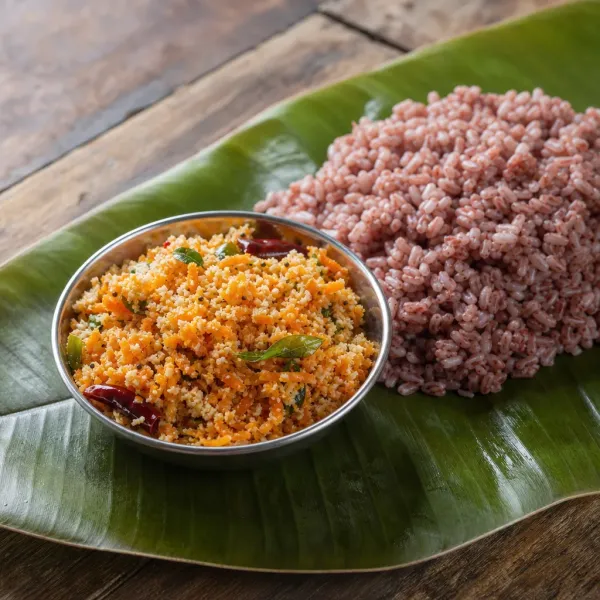
Carrot Thoran
A classic Kerala carrot thoran made with fresh grated coconut, shallots, curry leaves and coconut oil. Dry, fragrant and ready in under 30 minutes.
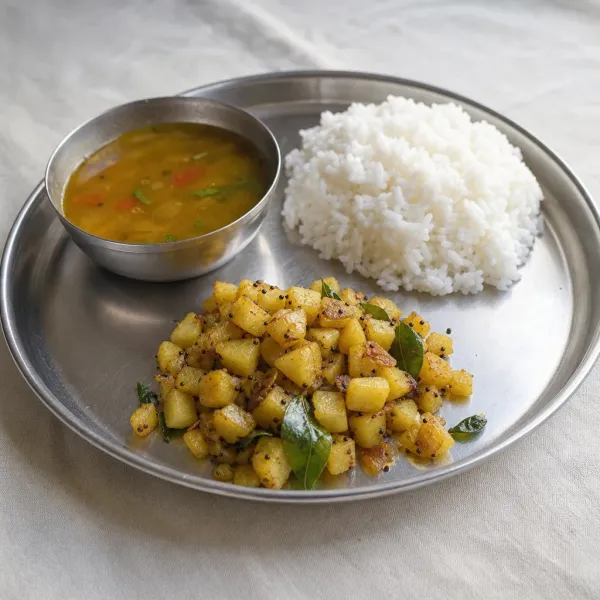
Alugadde Palya
Traditional Karnataka alugadde palya: a dry potato stir-fry with mustard, curry leaves and shallots. Everyday Kannada home cooking, ready in 40 minut…
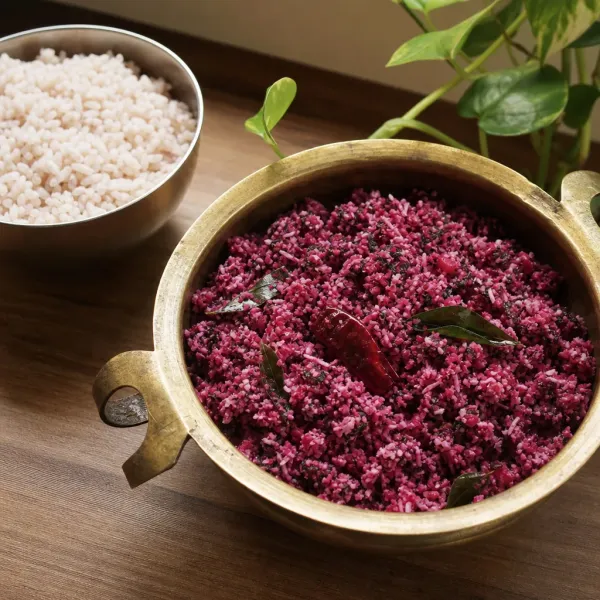
Cheera Thoran (Amaranth Leaves Stir-Fry)
Traditional Kerala cheera thoran with red or green amaranth, fresh coconut and shallots. Dry, fragrant and ready in under 30 minutes. Authentic house…