

Cheera Thoran (Amaranth Leaves Stir-Fry) Recipe
Malayalam ചീര തോരൻTamil கீரை தோரன்Kannada ಚೀರ ತೋರನ್Telugu చీర తోరన్
- Prep15 min
- Cook12 min
- Serves4
- DifficultyEasy
- DietVegan
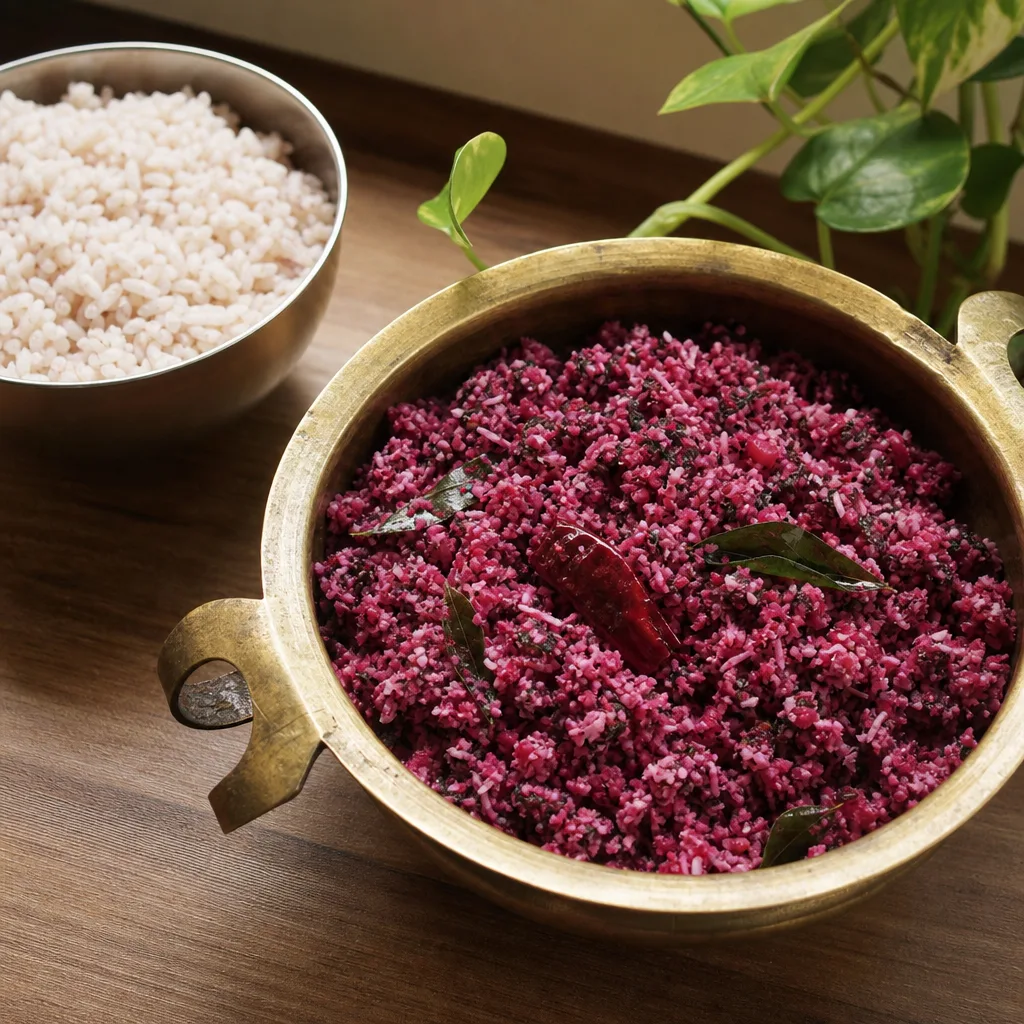
Cheera thoran is everyday food in Kerala, the kind of dish that appears on the sadya plate and on the ordinary weekday lunch plate with equal comfort. Red amaranth (chuvanna cheera) and green amaranth (pachcha cheera) are both used; red amaranth gives a deep magenta tint to the coconut once it is mixed in, which is half the pleasure of the dish. The technique is the same for both.
The method is the standard Kerala thoran method: leaves chopped fine, cooked briefly with a little water, then mixed through a coconut-shallot-green chilli mixture and finished dry. The coconut is not pre-fried and not added raw at the very start; it goes in after the leaves have wilted and released their water, so it steams gently rather than frying or going soggy. Getting that sequence right is the whole skill of the dish.
Households differ mainly in how much coconut they use and whether they add a small dried red chilli to the tempering alongside the green. Some cooks add a pinch of turmeric to the coconut mixture; others leave the coconut white. Both are genuine. The dish is always dry when done — no pooling liquid at the bottom of the pan.
Ingredients (serves 4)
For the thoran
For the tempering
Method
Prepare the leaves
Wash the amaranth thoroughly in two or three changes of water; grit hides in the leaf folds. Shake off excess water but do not dry completely — the moisture clinging to the leaves helps the initial cooking. Chop the leaves and tender stems finely, roughly 1 cm pieces. Discard any stem that feels fibrous when you bend it.
Mix the coconut paste
Combine the grated coconut, chopped shallots, crushed garlic, slit green chillies and turmeric in a bowl. Mix them together with your fingers, pressing lightly so the shallot and garlic bruise into the coconut. This is not a ground paste — it should stay coarse and distinct. Set aside.
Temper the oil
Heat the coconut oil in a wide, heavy kadai or cheenachatti over medium heat. When the oil is hot, add the mustard seeds and wait for them to pop fully — this takes about 30 seconds. Add the dried red chilli and curry leaves immediately and stand back; the leaves will sputter. Let them crisp for 10 seconds.
Add the chopped greens
Add all the chopped amaranth to the pan at once. It will look like a great deal but it collapses quickly. Add salt and stir to coat the leaves in the tempered oil. The leaves will begin releasing water within a minute.
Cook the leaves down
Cover the pan with a lid and cook on medium heat for 3 to 4 minutes, until the leaves have fully wilted and are tender. Lift the lid once halfway through and stir. If red amaranth, the liquid in the pan will be vivid magenta — this is correct. Do not drain it away; let it cook off.
Drive off the water
Remove the lid and increase the heat to medium-high. Stir and cook for 1 to 2 minutes until most of the released liquid has evaporated. The leaves should look glossy but the pan should have no pooling water. If you add the coconut mixture while liquid remains, the coconut will turn pasty and clump.
Add the coconut mixture
Reduce the heat to low. Add the coconut-shallot mixture to the pan and stir it through the wilted greens thoroughly. The coconut will pick up the colour of the leaves — this is the moment red cheera thoran turns a beautiful deep pink throughout. Mix well so every part of the coconut is warmed through.
Finish dry and taste
Cook uncovered on low heat for 2 minutes, stirring gently, until the coconut is heated through and the mixture is dry and cohesive. Taste for salt. The finished thoran should hold its shape loosely when pressed — not wet, not crumbly dry. Take it off the heat and serve immediately.
How to serve
Steamed matta rice, sambar, and a simple mooru (thin buttermilk) or rasam. On a sadya plate it sits alongside other thorans, olan, avial and parippu curry.
Served with: Steamed matta rice, sambar, and a simple mooru (thin buttermilk) or rasam. On a sadya plate it sits alongside other thorans, olan, avial and parippu curry.
Cook's tips
Red vs green amaranth
Red amaranth (chuvanna cheera) gives a striking magenta colour to the finished dish and has a slightly earthier flavour. Green amaranth (pachcha cheera) is milder and stays green throughout. The technique is identical for both.
Do not grind the coconut
The coconut mixture should be coarse, not a smooth paste. If you grind it, it turns gluey in the pan and coats the leaves too heavily. Just mix by hand.
The biggest mistake
Adding the coconut before the water from the leaves has cooked off. The result is a wet, steamed-coconut smell rather than the clean, dry finish a thoran should have. Wait until the pan is nearly dry.
Staleness
Thoran does not keep well. The coconut turns sour by the next day. Cook only as much as you will eat at the meal.
Tender stems are fine
The thin upper stems of amaranth cook at the same rate as the leaves and add a slight bite. Only the thick lower stalks need to be discarded.
Regional variations
Malabar households sometimes add a small piece of green mango for sourness; Nasrani kitchens occasionally add a little grated coconut at a later stage and finish with a vinegar-free tempering; Tamil Nadu has a closely related keerai poriyal with similar technique but uses gingelly oil and no curry leaves in the coconut mixture.
Glossary
- Cheera ചീര
- Amaranth or spinach-type leafy green; in Kerala usage, cheera most commonly refers to amaranth.
- Thoran തോരൻ
- Kerala dry stir-fry of vegetables or greens finished with grated coconut and a mustard-curry leaf tempering.
- Chuvanna cheera ചുവന്ന ചീര
- Red amaranth; chuvanna means red.
- Pachcha cheera പച്ച ചീര
- Green amaranth; pachcha means green or raw.
- Cheriya ulli ചെറിയ ഉള്ളി
- Small shallots; the correct allium for Kerala cooking, sharper and more aromatic than large onions.
- Cheenachatti ചീനച്ചട്ടി
- A wide, round-bottomed wok-style pan used in Kerala kitchens, literally 'Chinese pan'; ideal for thorans.
- Kudampuli കുടംപുളി
- Gamboge or Malabar tamarind (Garcinia cambosia); the souring agent used in Kerala fish curries, not relevant to this dish but commonly confused with tamarind by outsiders.
Two things decide whether cheera thoran works: cooking off all the water from the leaves before the coconut goes in, and keeping the coconut mixture coarse rather than ground. Get those right and the dish is dry, fragrant and finished in under fifteen minutes.
More Dry Vegetable Sides recipes
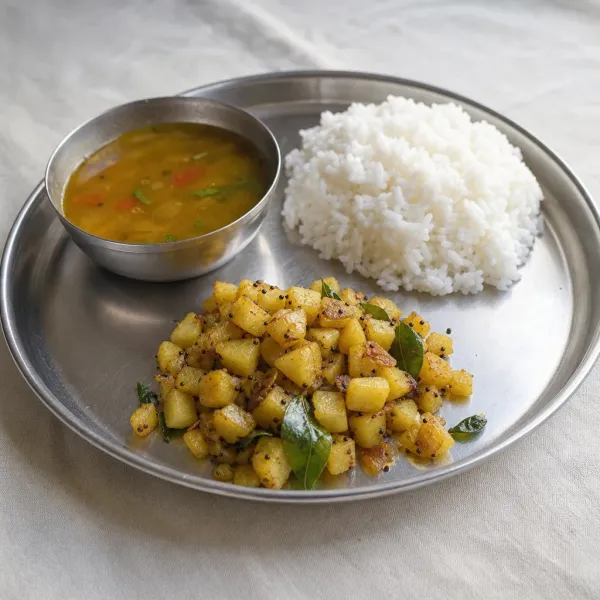
Alugadde Palya
Traditional Karnataka alugadde palya: a dry potato stir-fry with mustard, curry leaves and shallots. Everyday Kannada home cooking, ready in 40 minut…
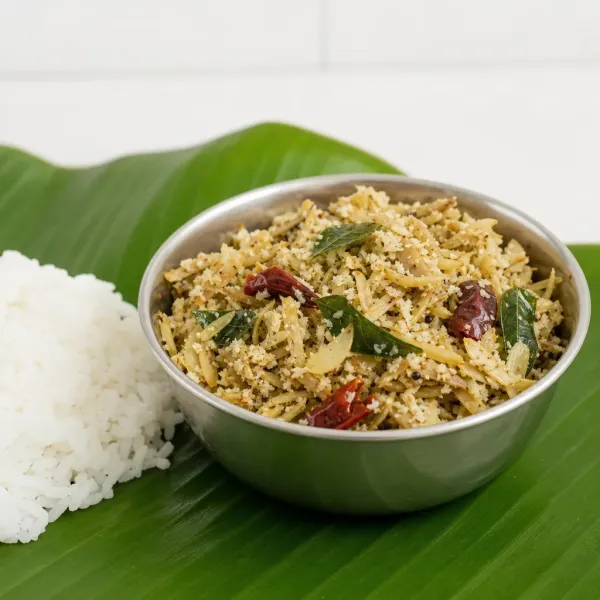
Vazhaipoo Poriyal
Traditional Tamil Brahmin vazhaipoo poriyal: banana blossom stir-fried with gingelly oil, shallots, urad dal and fresh coconut. Step-by-step cleaning…
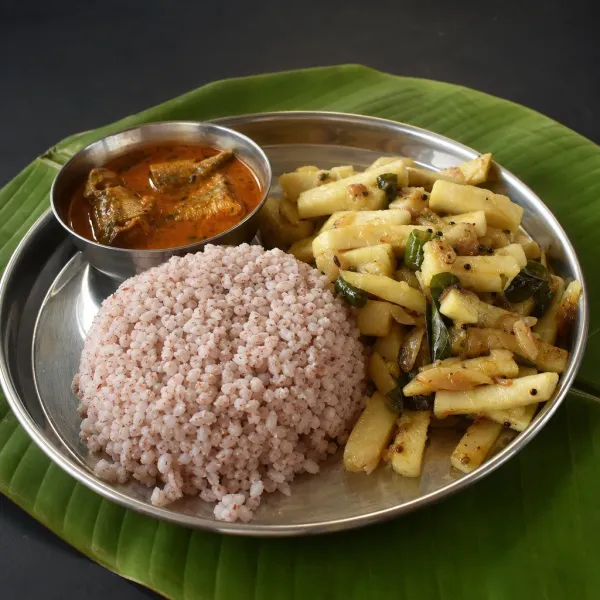
Kadachakka Mezhukkupuratti (Breadfruit Stir-Fry)
Traditional Kerala breadfruit stir-fry with coconut oil, shallots, and curry leaves. A dry, everyday mezhukkupuratti served with matta rice and fish…
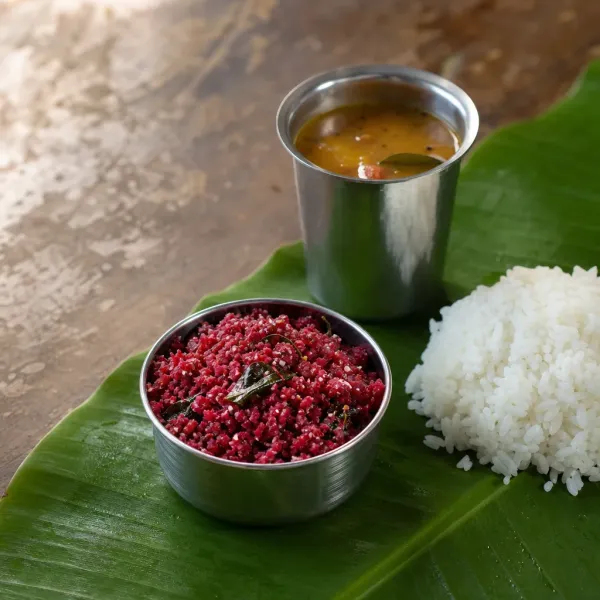
Beetroot Poriyal
Traditional Tamil Brahmin beetroot poriyal with fresh coconut, gingelly oil tempering and curry leaves. A dry, quick weekday vegetable dish.
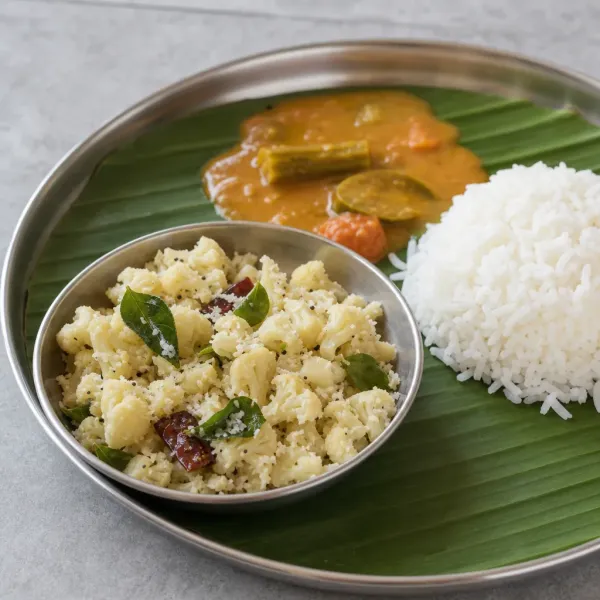
Cauliflower Poriyal
Traditional Tamil Brahmin cauliflower poriyal with mustard, curry leaves and fresh coconut. Dry, well-seasoned, cooked without water. Step-by-step me…
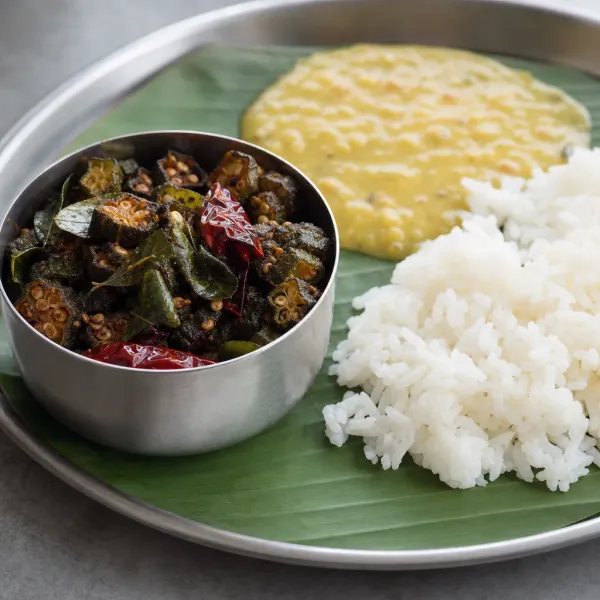
Bendakaya Vepudu
Traditional Andhra bendakaya vepudu: dry okra fry with groundnut oil, dried red chillies and besan. Crisp, spiced, and completely slime-free.