

Cauliflower Poriyal Recipe
Malayalam കോളിഫ്ലവർ പൊരിയൽTamil காலிஃப்ளவர் பொரியல்Kannada ಕಾಲಿಫ್ಲವರ್ ಪಲ್ಯTelugu కాలీఫ్లవర్ పొరియల్
- Prep15 min
- Cook20 min
- Serves4
- DifficultyEasy
- DietVegan
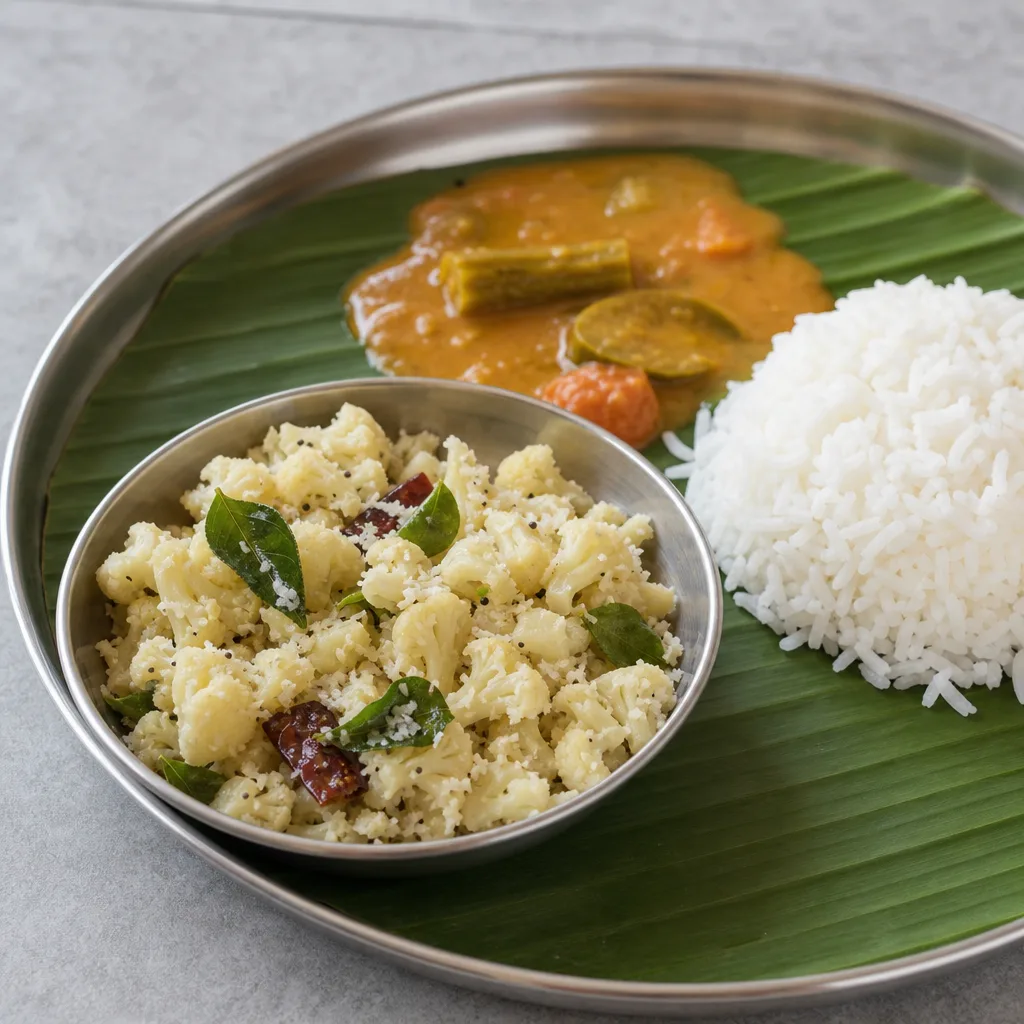
Poriyal is the everyday dry vegetable dish that sits alongside sambar and rasam on a Tamil Brahmin lunch plate. It is not a stir-fry in any restaurant sense. The vegetable is cooked through, seasoned firmly, and finished with freshly grated coconut. It should be dry enough that it does not wet the rice beneath it.
Cauliflower poriyal is a weekday staple in Iyer households. The florets are cut small so they cook quickly and absorb the tempering. The coconut goes in at the very end, off or on the lowest flame, just long enough to warm through without turning oily or losing its raw freshness.
Households differ mainly on two points: some add a little split urad dal to the tempering for extra nuttiness, and some skip it. A few cooks add a pinch of asafoetida. Neither is wrong. What does not vary is the fat: gingelly oil is not used here the way it is in kuzhambu; this is cooked in refined coconut oil or, in many city Iyer homes today, in refined groundnut oil. The coconut is always fresh and always grated fine.
Ingredients (serves 4)
For the poriyal
Method
Wash and cut the cauliflower
Break the cauliflower into small, even florets, no larger than 2 cm. Soak them in cold salted water for 10 minutes to draw out any hidden insects, then drain and shake off as much water as you can. Excess water in the pan will steam the florets instead of letting them cook dry.
Heat the oil and bloom the mustard
Set a wide, heavy kadai over medium heat and add the oil. When the oil is hot, add the mustard seeds. Keep the lid nearby. They will splutter within 30 to 40 seconds; let them finish spluttering completely before moving on.
Add the dal and dried chillies
Add the urad dal and the broken dried red chillies. Stir continuously. The dal should turn a pale golden in about 30 seconds. If it browns too fast, lift the pan off the heat for a moment. A burnt dal will make the whole dish bitter.
Add curry leaves, asafoetida and green chillies
Drop in the curry leaves — stand back, they will hiss and spit. Add the asafoetida and the slit green chillies immediately after. Stir once and let the chillies blister for about 20 seconds.
Add turmeric and the cauliflower
Sprinkle in the turmeric, then add all the cauliflower florets at once. Toss well so every piece is coated in the tempered oil. The pan will seem crowded; that is fine.
Season and cook covered on low heat
Add salt, stir once more, then cover the kadai and reduce the heat to low. Cook for 8 to 10 minutes. The florets will release a little moisture; this is what cooks them through without adding any water. Check once halfway and stir gently from the bottom.
Uncover and dry it out
Remove the lid and increase the heat to medium. Cook for another 4 to 5 minutes, stirring every minute or so, until any remaining moisture has evaporated. The florets should be just cooked through — tender but not falling apart — and the pan should look dry. A floret pressed lightly should give without crumbling.
Finish with fresh coconut
Reduce the heat to the lowest setting. Add the grated coconut and fold it through gently. Leave on the heat for just one minute, enough to warm the coconut. Take it off before the coconut turns oily or sticks. Taste for salt and serve immediately.
How to serve
Hot rice with sambar and rasam; a small portion of plain yoghurt on the side is common. On a full South Indian lunch leaf, this sits as one of the dry vegetable dishes alongside a kootu or more.
Served with: Hot rice with sambar and rasam; a small portion of plain yoghurt on the side is common. On a full South Indian lunch leaf, this sits as one of the dry vegetable dishes alongside a kootu or more.
Cook's tips
Keeping it dry
The single biggest mistake is adding water to hurry the cooking. If the florets are small and the pan is covered on low heat, they will cook in their own steam. Water makes them waterlogged and the poriyal will be wet on the plate.
Fresh coconut matters
Desiccated coconut absorbs oil and turns the dish heavy. Frozen grated coconut thawed at room temperature is a reasonable weekday substitute; desiccated is not.
Even floret size
If some florets are large and some tiny, the small ones will be mushy before the large ones are cooked. Take the extra two minutes to cut them evenly.
Asafoetida quantity
The pinch should be genuinely small. Too much and it overwhelms everything. If you are using compounded asafoetida (the kind sold in small yellow tins), use slightly more than if you have pure resin powder.
Regional variations
Kongunad households add more dried red chillies and skip the coconut; Chettiar kitchens sometimes finish with kalpasi and marathi mokku in the tempering.
Glossary
- Poriyal பொரியல்
- Tamil term for a dry vegetable side dish, tempered and finished with coconut.
- Perungayam பெருங்காயம்
- Tamil name for asafoetida, the dried resin used in a pinch for flavour and digestion.
- Kadai கடாய்
- A wide, deep cooking pan with sloping sides, the standard vessel for Tamil dry dishes.
- Urad dal உளுந்து பருப்பு
- Split and husked black gram, used whole in tempering for a nutty flavour and slight crunch.
Two things decide whether this poriyal works: the florets must be cut small and even so they cook through without water, and the coconut must go in at the very end over low heat so it stays fresh and light rather than oily. Get those two right and the rest follows.
More Dry Vegetable Sides recipes
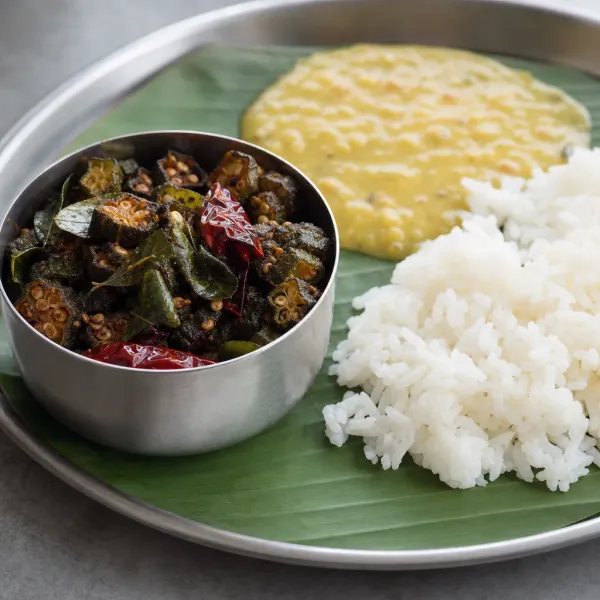
Bendakaya Vepudu
Traditional Andhra bendakaya vepudu: dry okra fry with groundnut oil, dried red chillies and besan. Crisp, spiced, and completely slime-free.
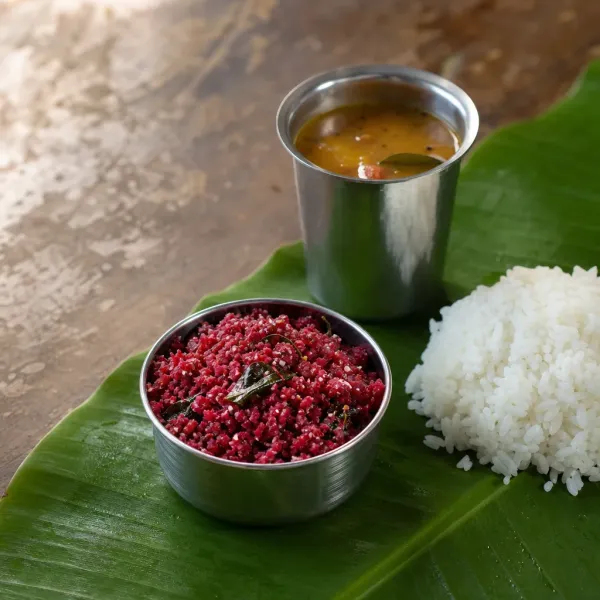
Beetroot Poriyal
Traditional Tamil Brahmin beetroot poriyal with fresh coconut, gingelly oil tempering and curry leaves. A dry, quick weekday vegetable dish.
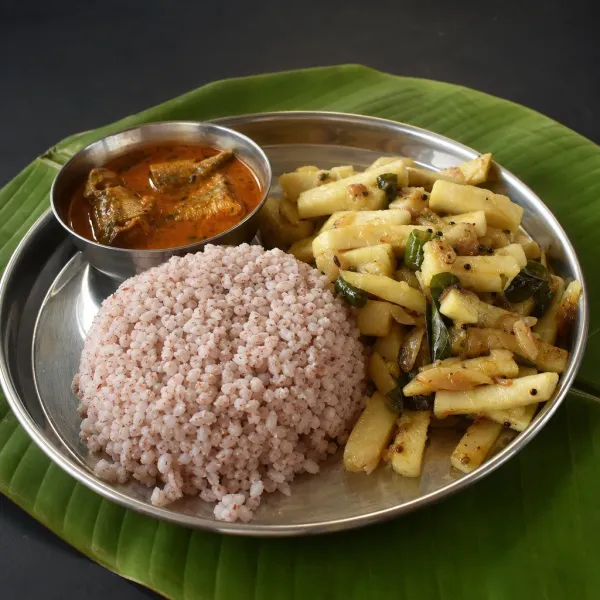
Kadachakka Mezhukkupuratti (Breadfruit Stir-Fry)
Traditional Kerala breadfruit stir-fry with coconut oil, shallots, and curry leaves. A dry, everyday mezhukkupuratti served with matta rice and fish…
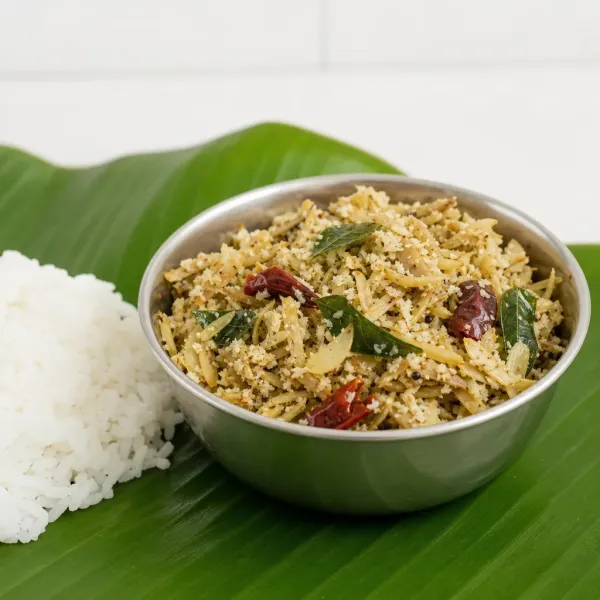
Vazhaipoo Poriyal
Traditional Tamil Brahmin vazhaipoo poriyal: banana blossom stir-fried with gingelly oil, shallots, urad dal and fresh coconut. Step-by-step cleaning…
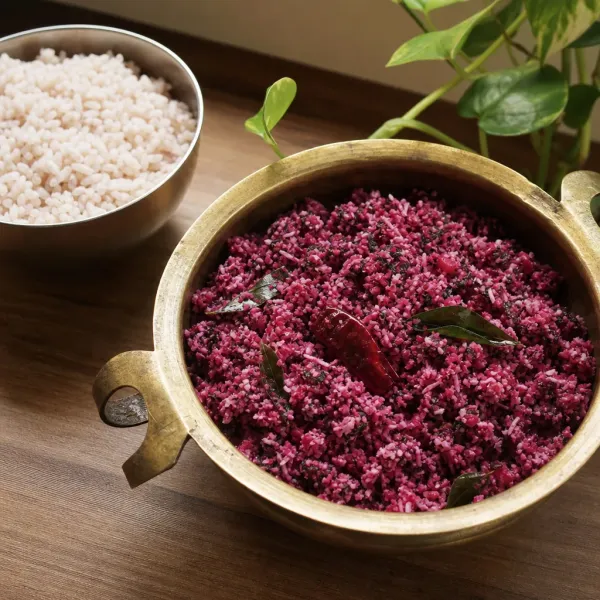
Cheera Thoran (Amaranth Leaves Stir-Fry)
Traditional Kerala cheera thoran with red or green amaranth, fresh coconut and shallots. Dry, fragrant and ready in under 30 minutes. Authentic house…
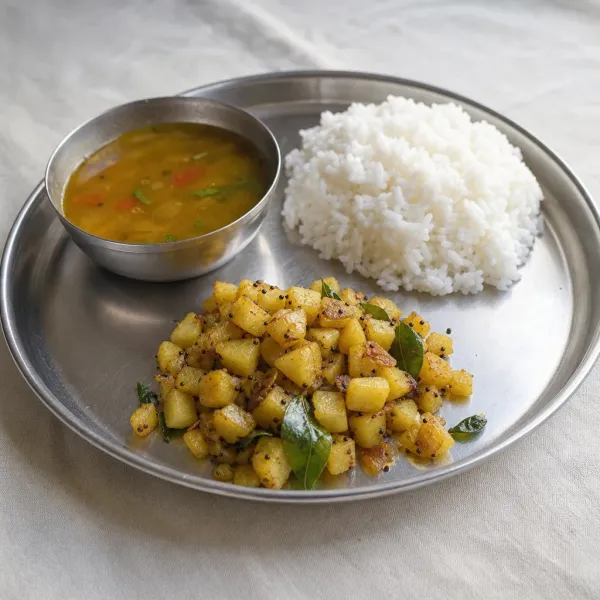
Alugadde Palya
Traditional Karnataka alugadde palya: a dry potato stir-fry with mustard, curry leaves and shallots. Everyday Kannada home cooking, ready in 40 minut…