

Beetroot Poriyal Recipe
Malayalam ബീറ്റ്റൂട്ട് പൊരിയൽTamil பீட்ரூட் பொரியல்Kannada ಬೀಟ್ರೂಟ್ ಪಲ್ಯTelugu బీట్రూట్ పొరియల్
- Prep15 min
- Cook20 min
- Serves4
- DifficultyEasy
- DietVegan
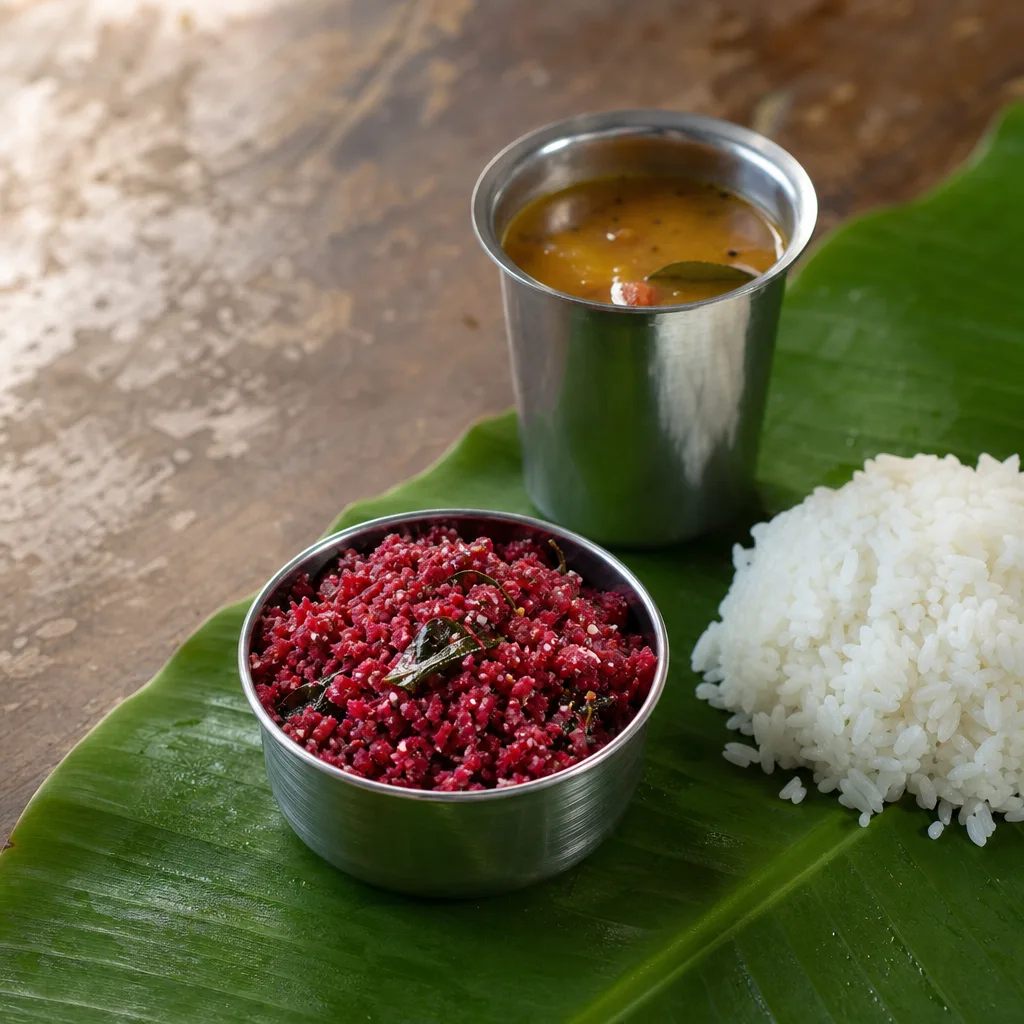
Beetroot poriyal is a weekday staple in Tamil Brahmin households, cooked quickly and served as one of several dry vegetable dishes alongside sambar and rice. It is not a showpiece dish; it is the thing that adds colour to the leaf and a mild sweetness that cuts through the tamarind in the sambar.
The grated coconut stirred in at the end is not optional in this version. It absorbs the residual moisture, coats every strand of beetroot, and rounds out the earthiness of the vegetable. Some households add a small amount of grated coconut to the tempering as well, letting it toast lightly before the beetroot goes in, but the more common practice is to add it all at the finish.
Households differ on how finely the beetroot is cut. Grating gives a softer, faster result. Cutting into small cubes or thin matchsticks gives more texture and a slightly firmer bite. Both are correct; the cooking time changes accordingly.
Ingredients (serves 4)
Main
For the tempering
Method
Prepare the beetroot
Peel the beetroot and grate it on the coarse side of a box grater directly into a bowl, or cut it into 5 mm cubes if you prefer more texture. Set aside. The grated version will cook in about 8 minutes; cubes will need 12 to 15 minutes.
Heat the oil and pop the mustard
Set a heavy kadai over medium heat and add the gingelly oil. When it shimmers, add the mustard seeds. Keep the lid nearby. Wait until they have all popped and gone quiet, which takes about 30 seconds. If they do not pop, the oil is not hot enough; if they burn, the oil was too hot and you should wipe the pan and start the oil again.
Fry the dals and chillies
Add the urad dal and chana dal together. Stir constantly over medium heat until both turn a pale gold, about 1 minute. Add the broken dried red chillies and stir for another 20 seconds. The dals should smell nutty, not sharp.
Add the curry leaves, shallots and asafoetida
Add the curry leaves and stand back; they will splutter in the oil. Stir, then add the sliced shallots and the pinch of asafoetida. Cook over medium heat, stirring occasionally, until the shallots are soft and just beginning to turn translucent, about 3 minutes. They should not brown.
Add the beetroot and salt
Tip the grated beetroot into the kadai and add salt. Stir well so the tempering is evenly distributed through the beetroot. The mixture will look very bright pink at this point.
Cook until the beetroot is done
Cover the kadai with a lid and cook on medium-low heat for 6 to 8 minutes for grated beetroot, or 12 to 15 minutes for cubes, stirring once or twice. The beetroot is ready when it is tender but not mushy and no raw, earthy smell remains. Do not add water; the beetroot releases enough moisture on its own.
Check and dry out any excess moisture
Remove the lid. If there is liquid pooled at the bottom of the pan, raise the heat to medium-high and stir continuously for 1 to 2 minutes until the pan is dry. A poriyal should not be wet. This step is especially important if the beetroot was very fresh and juicy.
Finish with fresh coconut
Lower the heat to the minimum. Add the grated fresh coconut and stir it through the beetroot. Cook for just 1 minute so the coconut warms through and clings to the vegetable. Taste for salt, adjust, and take off the heat. The finished dish is deep pink-red, dry, and flecked with white coconut.
How to serve
Hot plain rice, sambar, and a small serving of papad or appalam. In a full South Indian meal it sits alongside one or two other poriyals and a mor kuzhambu or rasam.
Served with: Hot plain rice, sambar, and a small serving of papad or appalam. In a full South Indian meal it sits alongside one or two other poriyals and a mor kuzhambu or rasam.
Cook's tips
Grating vs cubing
Grating is faster and gives a softer, more cohesive texture that coats the rice easily. Cubing gives a firmer bite and shows the colour more distinctly on the plate. Both are traditional; choose based on what you prefer.
Staining
Beetroot will stain your hands, the grater, and a wooden spoon permanently. Use a metal spoon and rinse the grater immediately after use. Rubbing your hands with a cut lemon before washing removes most of the colour.
Fresh coconut is important here
Desiccated coconut absorbs moisture differently and turns slightly gritty in this dish. If fresh coconut is not available, frozen grated coconut thawed at room temperature is a reasonable substitute. Desiccated coconut is not.
Do not cover after adding coconut
Once the coconut goes in, keep the pan uncovered. Covering it traps steam, the coconut goes soggy, and the poriyal loses its dry character.
Regional variations
Kerala households make a similar dry beetroot stir-fry finished with grated coconut and curry leaves in coconut oil; Andhra households cook it with green chillies and no coconut.
Glossary
- poriyal பொரியல்
- Tamil term for a dry vegetable stir-fry, usually finished with grated coconut.
- nallennai நல்லெண்ணெய்
- Gingelly oil, cold-pressed sesame oil used widely in Tamil Nadu cooking for tempering and dressing.
- perungayam பெருங்காயம்
- Asafoetida; used in small quantities in Tamil Brahmin cooking in place of onion and garlic in some preparations, and alongside them in others.
- kadai கடாய்
- A wide, deep, round-bottomed pan used for stir-frying and tempering across South Indian kitchens.
- urad dal உளுந்து
- Split black gram, used whole in tempering where it adds a nutty crunch.
- chana dal கடலைப் பருப்பு
- Split Bengal gram, used alongside urad dal in tempering for texture and a mild sweetness.
Two things decide whether this works: the pan must be fully dry before you serve it, because any pooled liquid makes it taste steamed rather than stir-fried, and the fresh coconut must go in only at the very end so it stays distinct and does not dissolve into the beetroot.
More Dry Vegetable Sides recipes
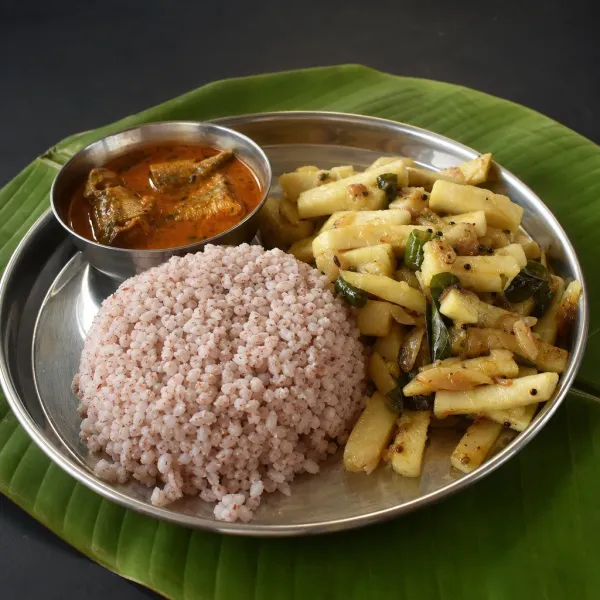
Kadachakka Mezhukkupuratti (Breadfruit Stir-Fry)
Traditional Kerala breadfruit stir-fry with coconut oil, shallots, and curry leaves. A dry, everyday mezhukkupuratti served with matta rice and fish…
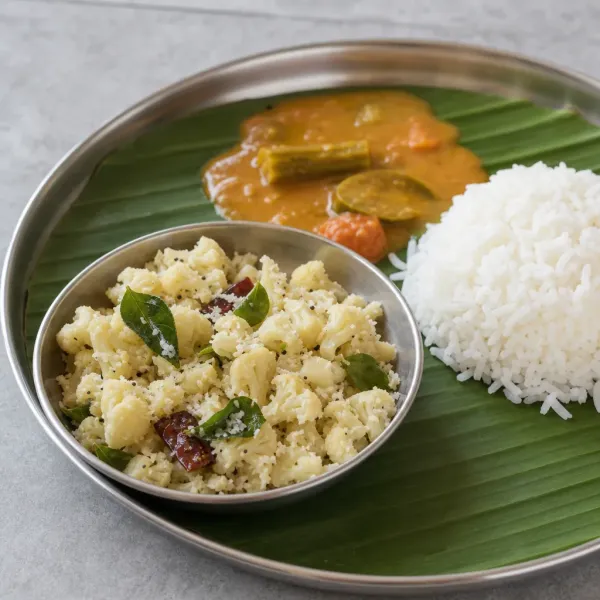
Cauliflower Poriyal
Traditional Tamil Brahmin cauliflower poriyal with mustard, curry leaves and fresh coconut. Dry, well-seasoned, cooked without water. Step-by-step me…
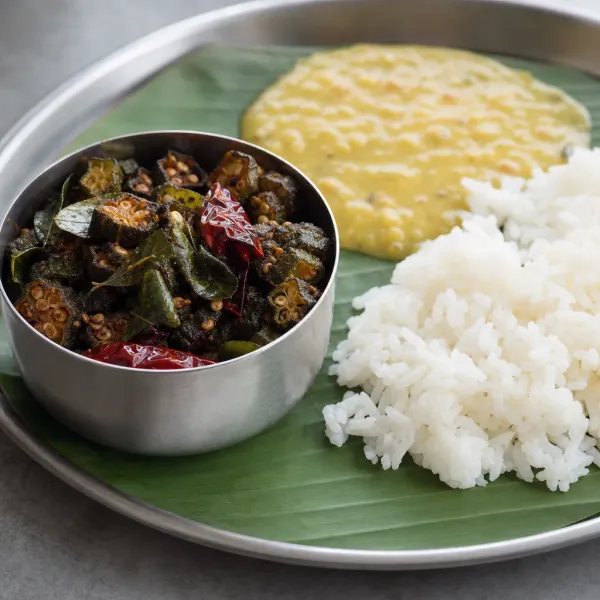
Bendakaya Vepudu
Traditional Andhra bendakaya vepudu: dry okra fry with groundnut oil, dried red chillies and besan. Crisp, spiced, and completely slime-free.
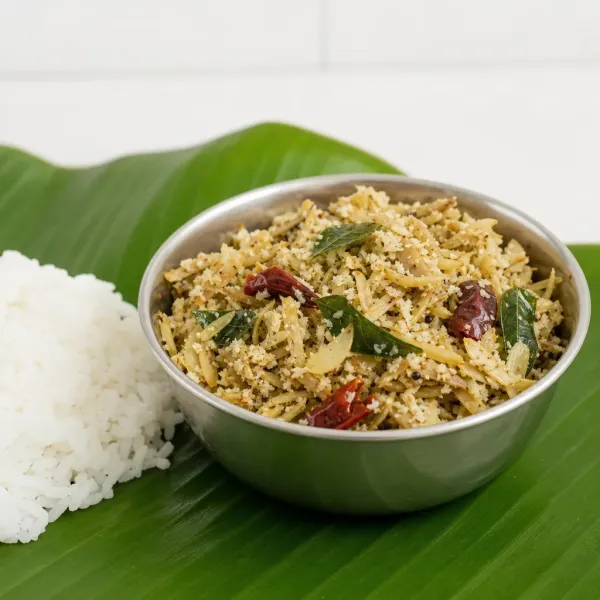
Vazhaipoo Poriyal
Traditional Tamil Brahmin vazhaipoo poriyal: banana blossom stir-fried with gingelly oil, shallots, urad dal and fresh coconut. Step-by-step cleaning…
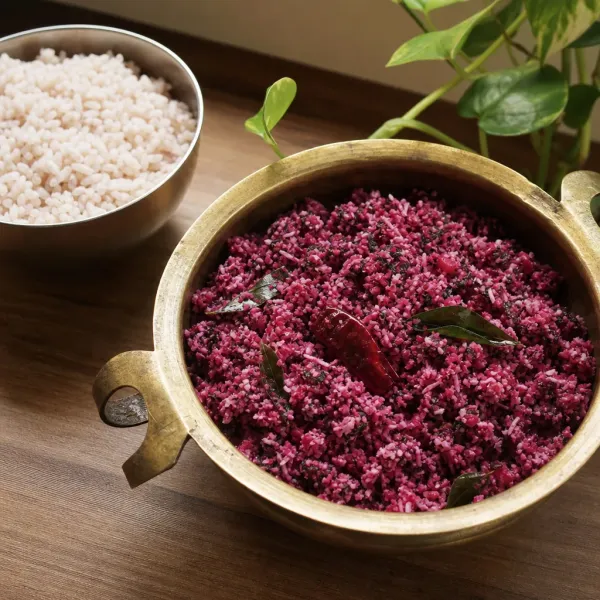
Cheera Thoran (Amaranth Leaves Stir-Fry)
Traditional Kerala cheera thoran with red or green amaranth, fresh coconut and shallots. Dry, fragrant and ready in under 30 minutes. Authentic house…
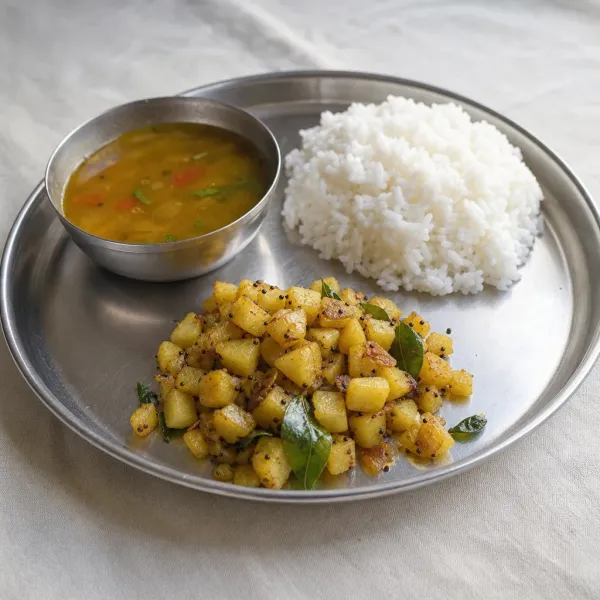
Alugadde Palya
Traditional Karnataka alugadde palya: a dry potato stir-fry with mustard, curry leaves and shallots. Everyday Kannada home cooking, ready in 40 minut…