

Ennai Kathirikai Kuzhambu Recipe
Malayalam എണ്ണൈ കത്തിരിക്കൈ കുഴമ്പ്Tamil எண்ணை கத்திரிக்காய் குழம்புKannada ಎಣ್ಣೆ ಕತ್ತರಿಕಾಯಿ ಕುಳಂಬುTelugu నూనె కత్తరికాయ కుళంబు
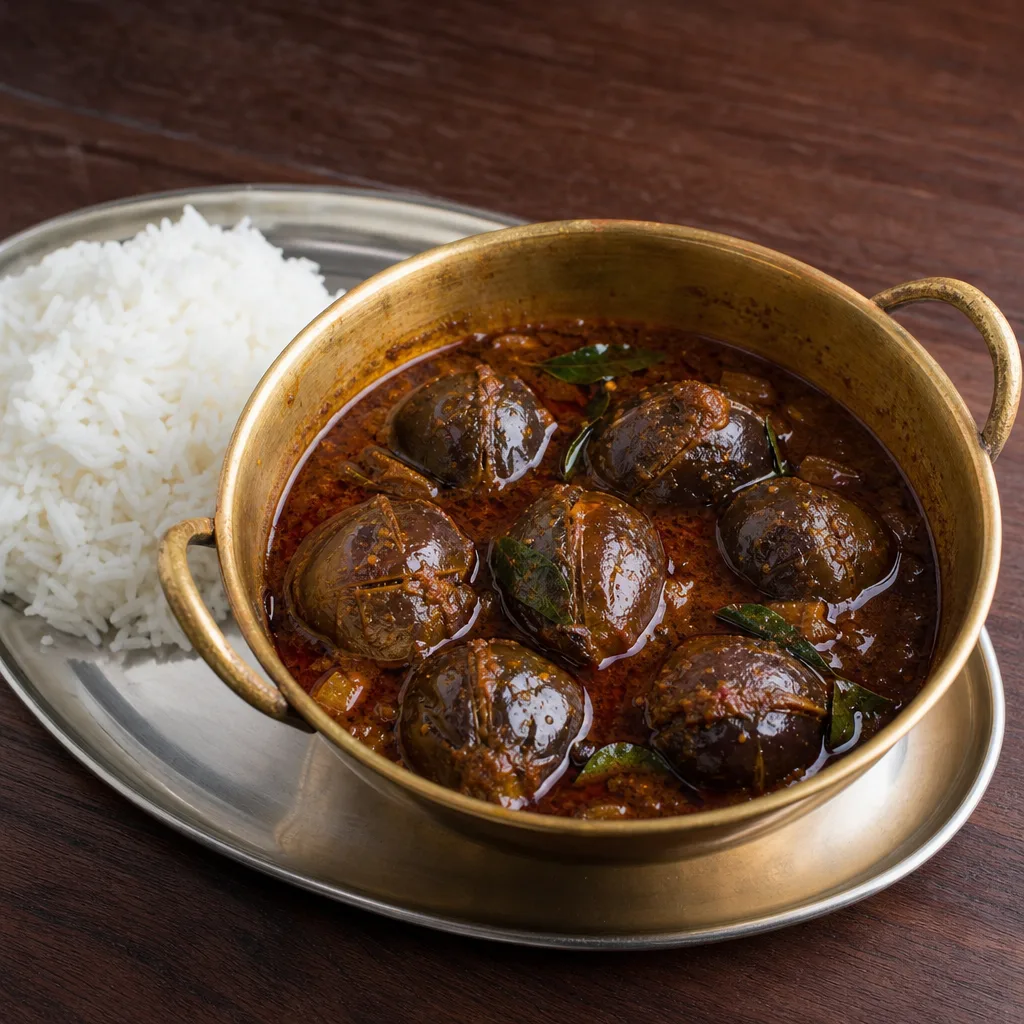
- Prep25 min
- Cook45 min
- Serves4
- DifficultyMedium
- DietVegan
This is a Chettinad household dish, cooked on ordinary weekdays as well as for guests. The brinjals are small and round, the kind sold in clusters at Tamil Nadu markets, and they are slit and stuffed with a dry-ground masala before being shallow-fried whole in gingelly oil and then simmered in a tamarind kuzhambu until the oil rises to the surface. That risen oil is the sign the kuzhambu is ready.
The masala inside the brinjal and the kuzhambu around it are built from the same spice family, so the dish tastes like one thing, not a stuffed vegetable floating in an unrelated gravy. Chettinad kitchens use freshly dry-roasted and ground spices for this, not a pre-mixed powder. The kalpasi (stone flower), marathi mokku (dried flower pods), and dried Gundu chillies are what separate this from a generic brinjal kuzhambu.
It is eaten with plain steamed rice. Some households serve a small bowl of plain curd alongside to cut the heat. The kuzhambu thickens as it sits, so leftovers the next day are often even better, spooned over rice with a little extra gingelly oil drizzled on top.
Ingredients (serves 4)
For the stuffing masala
For the brinjal
For the kuzhambu
Method
Dry-roast the stuffing spices
Set a heavy iron or thick-bottomed pan on medium-low heat. Roast the coriander seeds, cumin, peppercorns, Gundu chillies, chana dal, urad dal, kalpasi, and marathi mokku one after another, or together if your pan is large enough, stirring constantly. They are ready when the chana dal turns pale gold and the spices smell toasted but not burnt, about 3 to 4 minutes. Tip onto a plate and cool completely before grinding.
Grind the stuffing
In a small mixer jar, grind the roasted spices with the shallots, garlic, and grated coconut to a coarse, slightly damp paste. Do not add water; the moisture from the shallots and coconut is enough. The paste should hold its shape when pressed between your fingers. Season with salt and mix.
Slit and stuff the brinjals
Trim the stalk of each brinjal but leave it attached — it helps the brinjal hold together. Make two deep cuts from the base almost to the stalk end, crossing at the centre, so you get four quarters still joined at the top. Ease the masala paste into each brinjal, pressing it in firmly. Any leftover paste is added to the kuzhambu later.
Fry the stuffed brinjals
Heat 5 tbsp gingelly oil in a wide, heavy pan on medium heat. Place the stuffed brinjals in the oil, stalk side up. Cover and cook for 5 minutes, then gently turn them. Continue turning every 4 to 5 minutes until the skin is blistered and lightly browned on all sides and the brinjal flesh feels just tender when pressed, about 15 to 18 minutes total. Lift them out and set aside. Do not discard the oil in the pan.
Build the kuzhambu base
Add 3 tbsp gingelly oil to the same pan (with whatever oil remains from frying). On medium heat, splutter the mustard seeds, then add the fenugreek seeds and let them colour for 20 seconds — do not let fenugreek go dark brown or it will make the kuzhambu bitter. Add the dried Gundu chillies and curry leaves.
Fry the shallots and garlic
Add the sliced shallots and crushed garlic. Fry, stirring often, until the shallots are deep golden and beginning to crisp at the edges, about 8 minutes. This caramelisation gives the kuzhambu its body and colour, so do not rush it.
Add the dry powders
Lower the heat. Add the turmeric and the kuzhambu milagai thool. Stir for 30 seconds until the raw smell of the powders disappears and the oil takes on a deep red colour. If there is any leftover stuffing paste, add it now and fry for another minute.
Pour in the tamarind water
Pour in the strained tamarind water. Raise the heat to medium-high and bring to a boil. Add salt. Let it boil for 5 minutes to cook out the raw tamarind taste. The kuzhambu will look thin at this stage — that is correct.
Simmer the brinjals in the kuzhambu
Gently lower the fried brinjals into the kuzhambu. Reduce the heat to low. Simmer uncovered for 12 to 15 minutes, turning the brinjals once very carefully halfway through. The kuzhambu is ready when it has thickened to a coating consistency and the gingelly oil has risen and pooled on the surface. Do not stir vigorously or the brinjals will break apart.
Rest before serving
Turn off the heat and leave the pan undisturbed for at least 10 minutes before serving. The brinjals continue to absorb the kuzhambu as they rest, and the flavour deepens noticeably. Serve directly from the pan.
How to serve
Steamed plain rice (raw rice or boiled rice). A small bowl of plain curd is common alongside to temper the heat.
Served with: Steamed plain rice (raw rice or boiled rice). A small bowl of plain curd is common alongside to temper the heat.
Cook's tips
Choosing the brinjals
Use small round brinjals, ideally the purple-green variety sold at Tamil Nadu markets, roughly 60 to 70 g each. Avoid large brinjals — they take too long to cook through and the stuffing falls out. If the brinjals are not uniform in size, the smaller ones will overcook while the larger ones are still firm.
Kalpasi and marathi mokku
These two spices are non-negotiable in a Chettinad kitchen. Kalpasi (stone flower, a lichen) smells faintly of earth and wood; marathi mokku (dried kapok flower pods) adds a subtle bitterness. Both are available at shops selling Chettinad masalas. Without them the dish is still good, but it is no longer distinctly Chettinad.
Gingelly oil
Use cold-pressed untoasted gingelly oil, not the dark toasted sesame oil used in East Asian cooking. The flavour is lighter and nuttier. Chettinad cooks use it generously — the oil is part of the dish, not just a cooking medium. Do not substitute sunflower or refined oil.
Leftovers
The kuzhambu thickens overnight and the brinjals absorb more flavour. Reheat gently on low heat with a splash of water if needed. It keeps well for two days at room temperature in a cool kitchen, or three days refrigerated.
Preventing the brinjals from breaking
The most common mistake is stirring too often during the final simmer. Once the brinjals go into the kuzhambu, move them as little as possible. Turn them once, carefully, using a wide spoon or by tilting the pan.
Regional variations
A Brahmin Tamil version (Iyer kitchen) uses a milder stuffing without shallots and is cooked in sesame oil with less chilli; an Andhra version called Gutti Vankaya uses a peanut-and-sesame stuffing and is cooked in groundnut oil.
Glossary
- Kuzhambu குழம்பு
- A Tamil word for a thick, oil-rich tamarind-based gravy, distinct from sambar in that it contains more oil and less dal.
- Kalpasi கல்பாசி
- Stone flower, a dried lichen used as a spice in Chettinad cooking; adds an earthy, woody note.
- Marathi mokku மராத்து மொக்கு
- Dried flower pods of the kapok tree, used in Chettinad masalas for a faint bitterness and body.
- Gundu milagai குண்டு மிளகாய்
- Small round dried red chillies used in Tamil Nadu; moderately hot with a fruity undertone.
- Gingelly oil நல்லெண்ணெய்
- Cold-pressed sesame oil used as the primary cooking fat in Tamil Nadu kuzhambu and pickles; lighter in colour and flavour than toasted sesame oil.
- Ennai எண்ணை
- Oil in Tamil; in the dish name it signals that the recipe is oil-forward, with the fat as a defining element.
- Milagai thool மிளகாய் தூள்
- Chilli powder; Chettinad kuzhambu milagai thool is a specific blend of dried chillies ground for kuzhambu, giving colour and moderate heat.
Two things decide this dish: the quality of the dry-roasted stuffing masala, which must be ground while the spices are still warm and fragrant, and patience at the end of cooking, when the kuzhambu must be left to simmer undisturbed until the gingelly oil rises. Rush either of those and the dish is flat.
More Vegetarian Gravies recipes
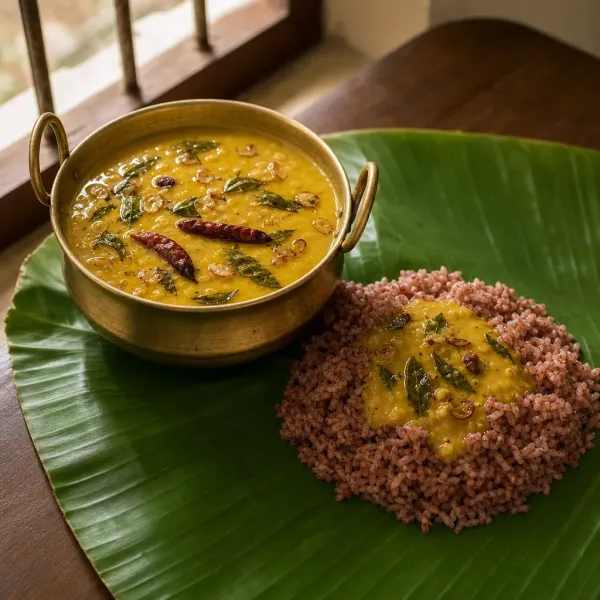
Parippu Curry
Traditional Kerala sadya parippu curry made with split moong dal, freshly ground coconut paste and a coconut oil tempering. Step-by-step home recipe.
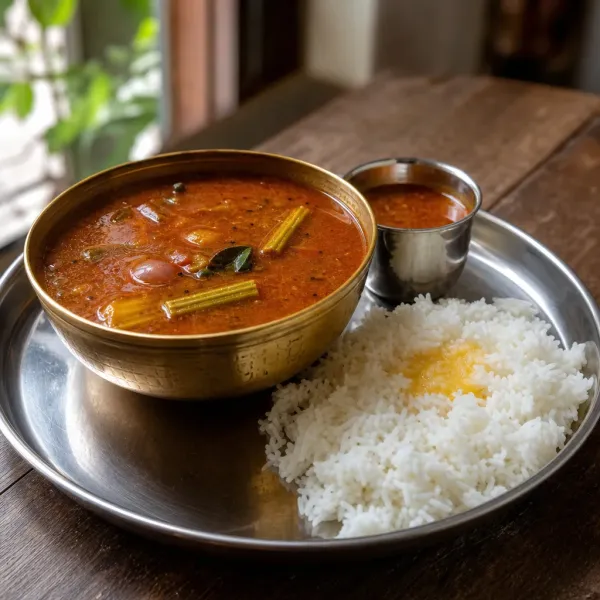
Tamil Brahmin Sambar with Homemade Sambar Podi
Traditional Tamil Brahmin sambar with homemade sambar podi, toor dal, drumstick and shallots in a tamarind base. Cooked in gingelly oil.
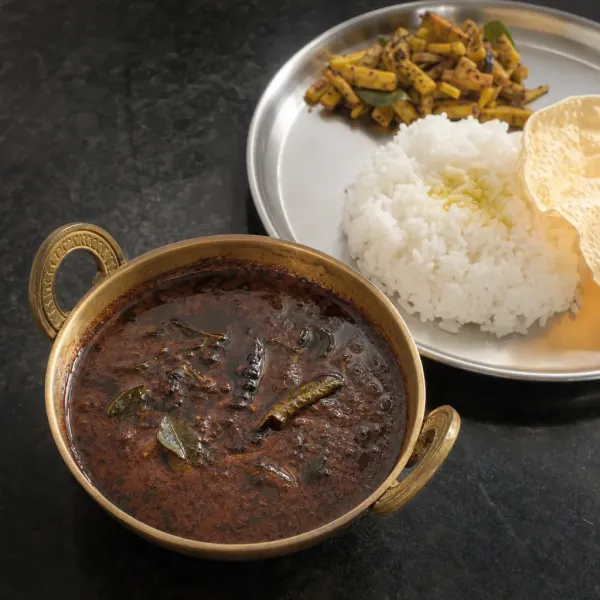
Milagu Kuzhambu
Traditional Tamil Brahmin milagu kuzhambu made with whole black pepper, tamarind, shallots, and gingelly oil. Thick, pungent, and cooked the old way.
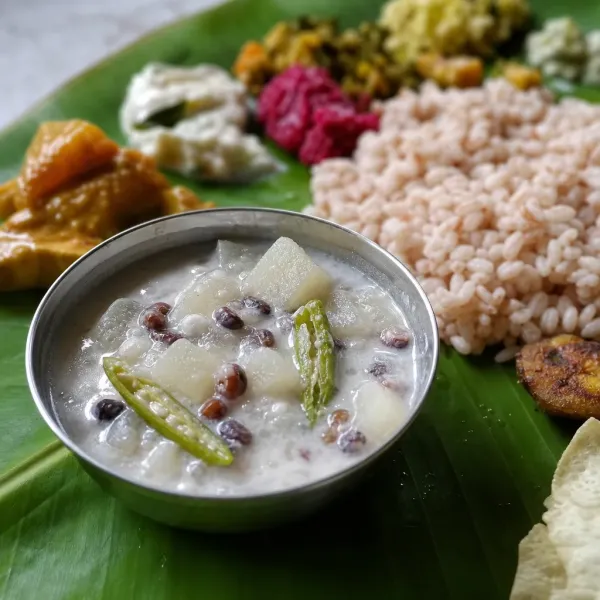
Olan
Traditional Kerala Olan recipe with ash gourd, vanpayar, and fresh coconut milk. A Sadya essential from the Travancore kitchen, cooked the household…
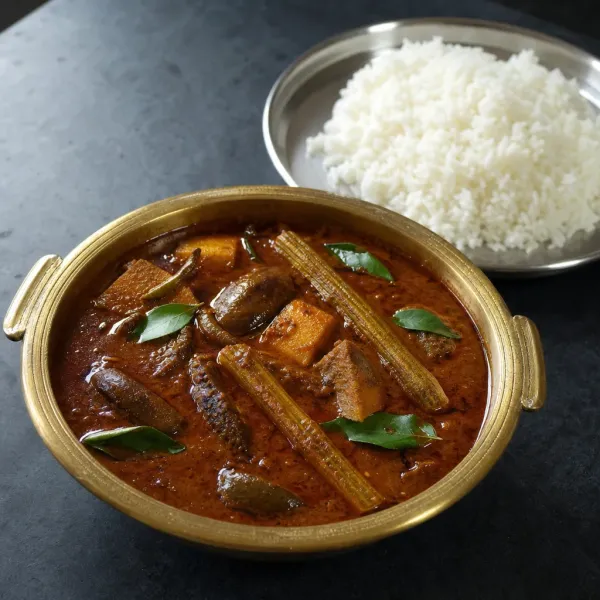
Kadamba Kuzhambu
Traditional Tamil Brahmin kadamba kuzhambu with many vegetables, toor dal, tamarind, and a freshly ground coconut-spice paste. Temple-day recipe.
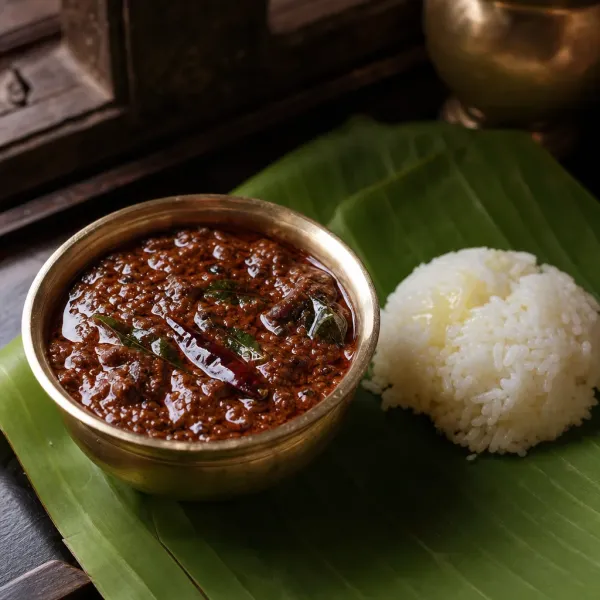
Menthya Gojju
Traditional Karnataka menthya gojju: dry-roasted fenugreek seeds in tamarind, jaggery and fresh coconut paste. Balanced bitter, sour and sweet.