

Tamil Brahmin Sambar with Homemade Sambar Podi Recipe
Malayalam സാമ്പാർTamil சாம்பார்Kannada ಸಾಂಬಾರ್Telugu సాంబార్
- Prep25 min
- Cook45 min
- Serves4
- DifficultyMedium
- DietVegan
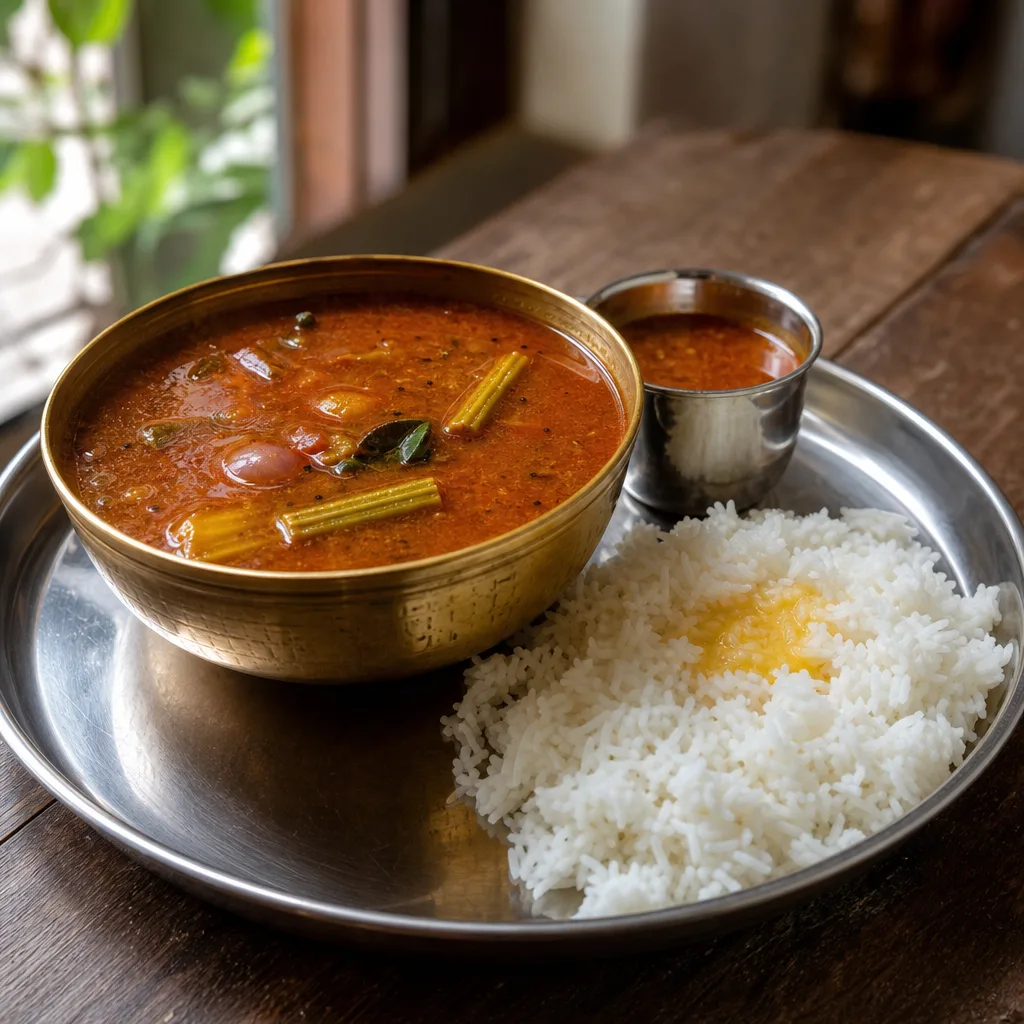
Sambar belongs most completely to the Tamil Brahmin kitchen, where it has been made daily for generations. In an Iyer household it is not a side dish — it is the meal itself, ladled generously over rice with a spoon of ghee, or poured into a small bowl alongside idli or dosa at breakfast. The tamarind is the backbone, the cooked toor dal gives body, and the sambar podi ground at home is what separates this from anything made with a commercial powder.
The podi here is the Iyer household version: coriander seeds and dried red chillies roasted separately and carefully, with chana dal and urad dal for depth, a little black pepper, and curry leaves dried in the pan. No coconut in the podi — that is a different tradition. The proportions below make a podi that keeps for two months in a dry jar and can be used for any sambar you make in that time.
Households differ mainly on which vegetable goes in. Drumstick is the most beloved, and when drumstick is in the pot the sambar needs almost nothing else. Pearl onions (shallots) are nearly always present. Some families add a small piece of tomato to brighten the colour without relying on it for sourness — the tamarind does that work. The method below uses drumstick and shallots, which is the most common everyday combination.
Ingredients (serves 4)
For the sambar podi (makes about 100 g; use 2½ tsp per batch)
For the cooked dal
For the tamarind base
Vegetables
For the sambar
For the tempering (thalippu)
Method
Make the sambar podi
Heat a heavy iron or thick-bottomed kadai on a low flame. Add the dried red chillies and dry-roast them, turning constantly, for about 2 minutes until they darken slightly and smell toasted — not burnt. Remove them immediately to a plate. In the same pan, roast the coriander seeds on low heat for 3 to 4 minutes, stirring, until they are a shade darker and fragrant. Remove. Roast the chana dal and urad dal together, stirring, until the chana dal turns pale gold and the urad dal is lightly coloured, about 2 to 3 minutes. Remove. Finally, put the curry leaves into the dry pan and press them lightly with a spoon for 30 seconds until they are completely dry and crisp but not browned. Let everything cool fully on the plate before grinding.
Grind the podi
Once the roasted ingredients are at room temperature, grind them together with the black peppercorns and cumin seeds in a dry mixer jar to a moderately fine powder — not dust-fine, a little texture is correct. Add the turmeric powder and pulse once to combine. Spread the podi on a plate for 10 minutes to release any residual heat, then store in a clean, dry glass jar. It keeps for up to two months at room temperature if the jar is always opened with a dry spoon.
Cook the toor dal
Put the rinsed toor dal in a pressure cooker with 400 ml water and the turmeric. Cook on medium heat for 3 whistles, then lower the flame and cook for 2 more minutes. Turn off the heat and let the pressure release naturally. Open the cooker and whisk the dal well — it should be completely soft and smooth, with no whole grains remaining. A lumpy dal makes a sambar that separates. Set aside.
Prepare the tamarind water
Break the tamarind into the 250 ml of warm water and squeeze it well with your fingers for a few minutes until the pulp has dissolved into the water. Strain through a sieve, pressing the fibre firmly. Discard the fibrous residue. You need a sour, dark extract — taste it; it should be noticeably tart.
Start the tamarind base
In a wide, heavy pot (a thick-bottomed aluminium or stainless vessel is traditional), warm 2 tsp of gingelly oil on medium heat. Add the whole shallots and cook, stirring, for 3 to 4 minutes until they soften and the edges begin to colour. Add the tomato quarters and cook for 2 minutes until they begin to break down. Pour in the strained tamarind water and add the drumstick pieces. Bring to a boil, then lower the heat and cook uncovered for 12 to 15 minutes until the drumstick is fully tender — a knife should go in without resistance — and the raw tamarind smell has cooked off completely. If the tamarind still smells sharp and raw, cook a few minutes more.
Add the sambar podi
Add 2½ tsp of the homemade sambar podi directly to the simmering tamarind base. Stir it in and let it cook for 2 minutes on medium heat. The liquid will smell of roasted spices now. If you add the podi too early, before the tamarind has cooked, the spices taste raw; if you add it after the dal, it does not bloom properly. This order matters.
Add the cooked dal
Pour the whisked toor dal into the pot and stir to combine. The sambar should now be a warm reddish-brown, neither too thick nor watery — it should coat a spoon lightly but flow freely. Add water if needed, about 100 to 150 ml, to reach this consistency. Add salt and stir. Bring to a gentle boil and simmer for 5 minutes so the dal and tamarind base come together.
Temper and finish
In a small tempering ladle or a very small pan, heat 1 tbsp gingelly oil until it shimmers. Add the mustard seeds and wait for them to pop completely. Add the cumin seeds, dried red chilli, and curry leaves — stand back, they will splutter. Add the asafoetida, let it sizzle for 3 seconds, then pour the entire tempering immediately into the sambar. Stir once, put a lid on the pot for 2 minutes to trap the aroma, then serve.
How to serve
Hot rice with a spoon of ghee; or alongside idli or dosa at breakfast. A small steel cup of sambar is often placed separately so it can be poured over as needed.
Served with: Hot rice with a spoon of ghee; or alongside idli or dosa at breakfast. A small steel cup of sambar is often placed separately so it can be poured over as needed.
Cook's tips
Drumstick cooking time
Drumstick takes longer than most vegetables. If you add it at the same time as softer vegetables, the others turn to mush. Always cook drumstick in the tamarind water first and add softer additions later.
The dal must be fully mashed
Incompletely cooked or poorly whisked dal is the most common reason sambar looks separated and thin in the bowl. Whisk it thoroughly before adding — use a hand whisk or the back of a ladle.
Tamarind sourness varies
Block tamarind varies in potency by season and age. Taste the extracted liquid before adding it. If it seems very sour, use 20 g instead of 30 g. You can always add a little more tamarind water at the end, but you cannot take it out.
Gingelly oil in Tamil Nadu
Traditional Tamil sambar uses gingelly oil (sesame oil, nallennai) for both the base and the tempering. It gives a particular nutty depth. Coconut oil changes the character noticeably. Do not substitute refined sunflower oil.
Podi storage
Always let the podi cool completely before jarring. Sealing warm powder creates moisture inside the jar and the podi will go stale within days. A dry jar and a dry spoon every time you use it will keep it good for two months.
Shortcut for the podi
In many Tamil households today, a trusted commercial sambar podi (MTR or a local brand the family has used for decades) is used on weekdays and the homemade podi reserved for weekends or when hosting. That is a genuine household practice, not a compromise — but the flavour is different.
Regional variations
Udupi sambar (Karnataka, temple-style, no shallots, sweeter); Chettinad sambar (heavier spicing, more chillies); Kerala sambar (coconut added, kudampuli sometimes used); Andhra pappu charu (thinner, more tamarind); hotel-style Madras sambar (tomato-heavy, commercial podi).
Glossary
- Toor dal துவரம் பருப்பு
- Split pigeon peas; the standard dal for sambar across South India.
- Perungayam பெருங்காயம்
- Asafoetida; used in tiny quantities in the tempering; essential in Brahmin cooking where onion and garlic are avoided in some contexts, though shallots appear in sambar.
- Thalippu தாளிப்பு
- The tempering of mustard seeds, curry leaves and dried chilli in hot oil poured over a finished dish.
- Nallennai நல்லெண்ணெய்
- Gingelly oil; cold-pressed sesame oil used as the cooking fat in much of Tamil Nadu.
- Murungakkai முருங்கைக்காய்
- Drumstick; the long ridged pods of the Moringa tree; the most traditional vegetable for sambar.
- Chinna vengayam சின்ன வெங்காயம்
- Small South Indian shallots; sweeter and more pungent than large onions; used whole in sambar.
- Kudampuli കുടംപുളി
- Gamboge / Malabar tamarind (Garcinia cambogia); used in Kerala fish curries, not in this Tamil sambar, which uses ordinary tamarind.
Two things decide whether this sambar succeeds: the tamarind base must cook long enough that the raw sourness is completely gone before anything else goes in, and the toor dal must be whisked to a completely smooth, lump-free consistency before it meets the pot. Get those two right and the homemade podi does the rest.
More Vegetarian Gravies recipes
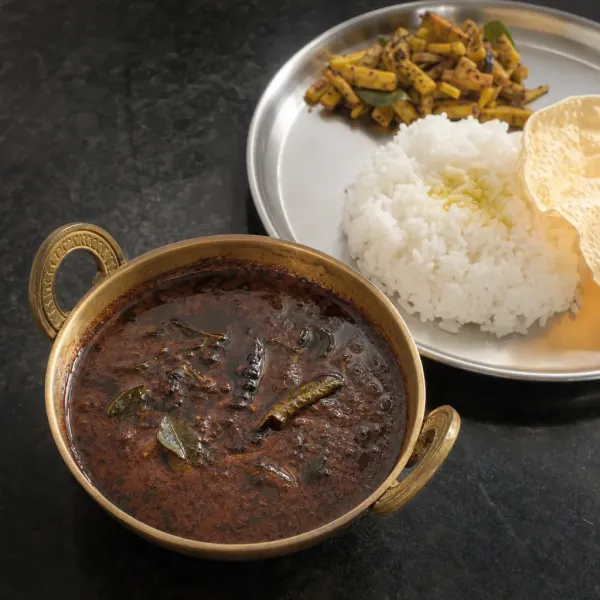
Milagu Kuzhambu
Traditional Tamil Brahmin milagu kuzhambu made with whole black pepper, tamarind, shallots, and gingelly oil. Thick, pungent, and cooked the old way.
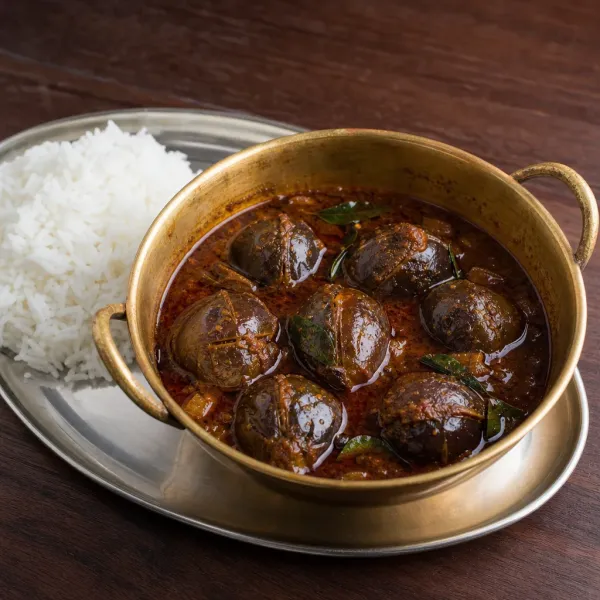
Ennai Kathirikai Kuzhambu
Traditional Chettinad ennai kathirikai kuzhambu: small brinjals stuffed with dry-roasted spice paste, fried in gingelly oil and simmered in tamarind…
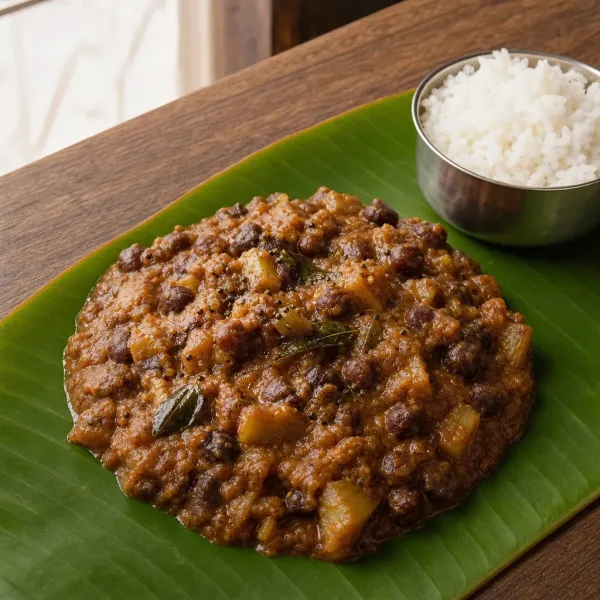
Kootu Curry
Traditional Kerala kootu curry with kala chana, raw banana, and yam in a deep-roasted coconut paste. A fixed dish on the sadya leaf.
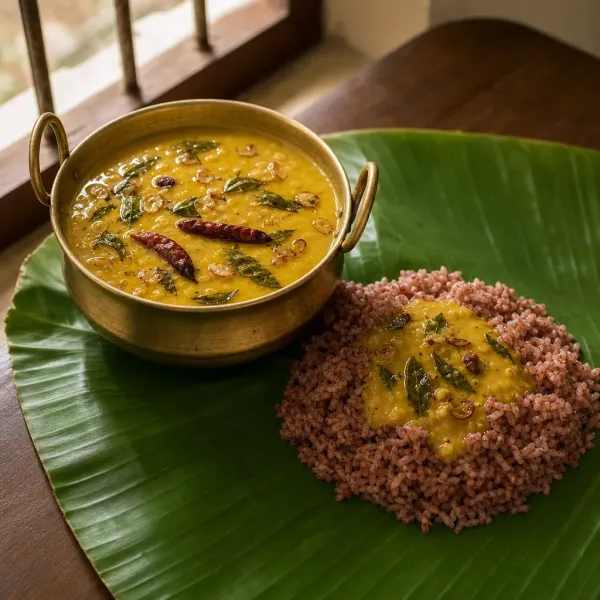
Parippu Curry
Traditional Kerala sadya parippu curry made with split moong dal, freshly ground coconut paste and a coconut oil tempering. Step-by-step home recipe.
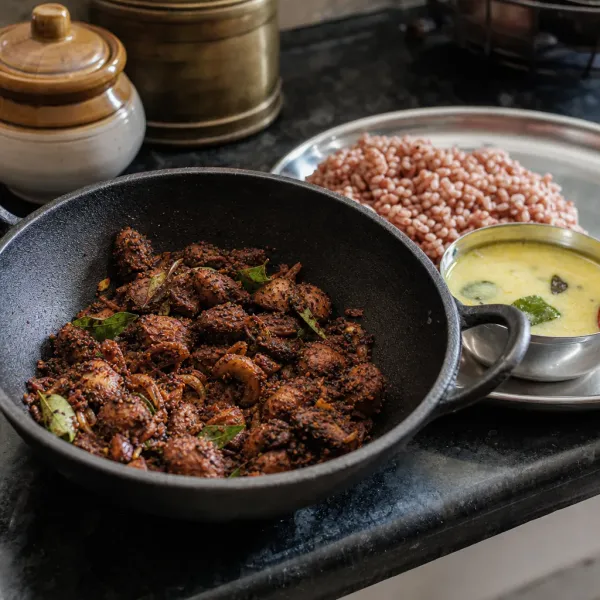
Mushroom Pepper Masala
A dry, pepper-forward mushroom masala from Nasrani kitchens in Travancore, cooked in coconut oil with shallots and curry leaves. Ready in 40 minutes.
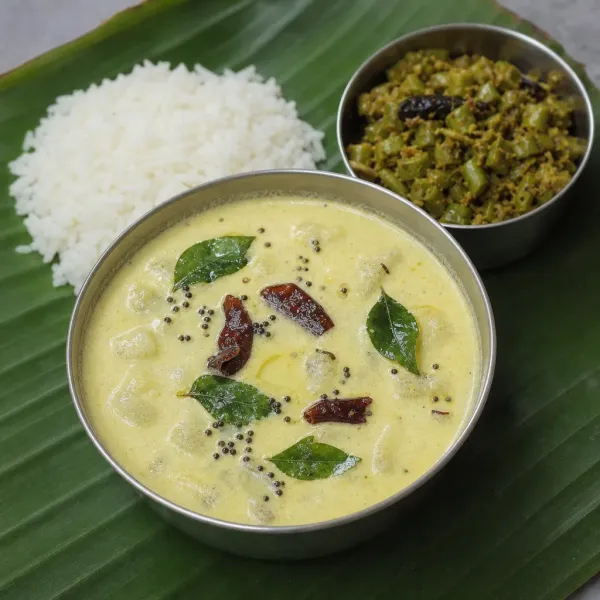
Majjige Huli
Traditional Karnataka Brahmin majjige huli with ash gourd, fresh coconut paste and sour curd. Step-by-step method with tips to prevent splitting.