

Kootu Curry Recipe
Malayalam കൂട്ടുകറിTamil கூட்டு கறிKannada ಕೂಟು ಕರಿTelugu కూటు కూర
- Prep20 min
- Soak / ferment8 hr
- Cook50 min
- Serves6
- DifficultyMedium
- DietVegan
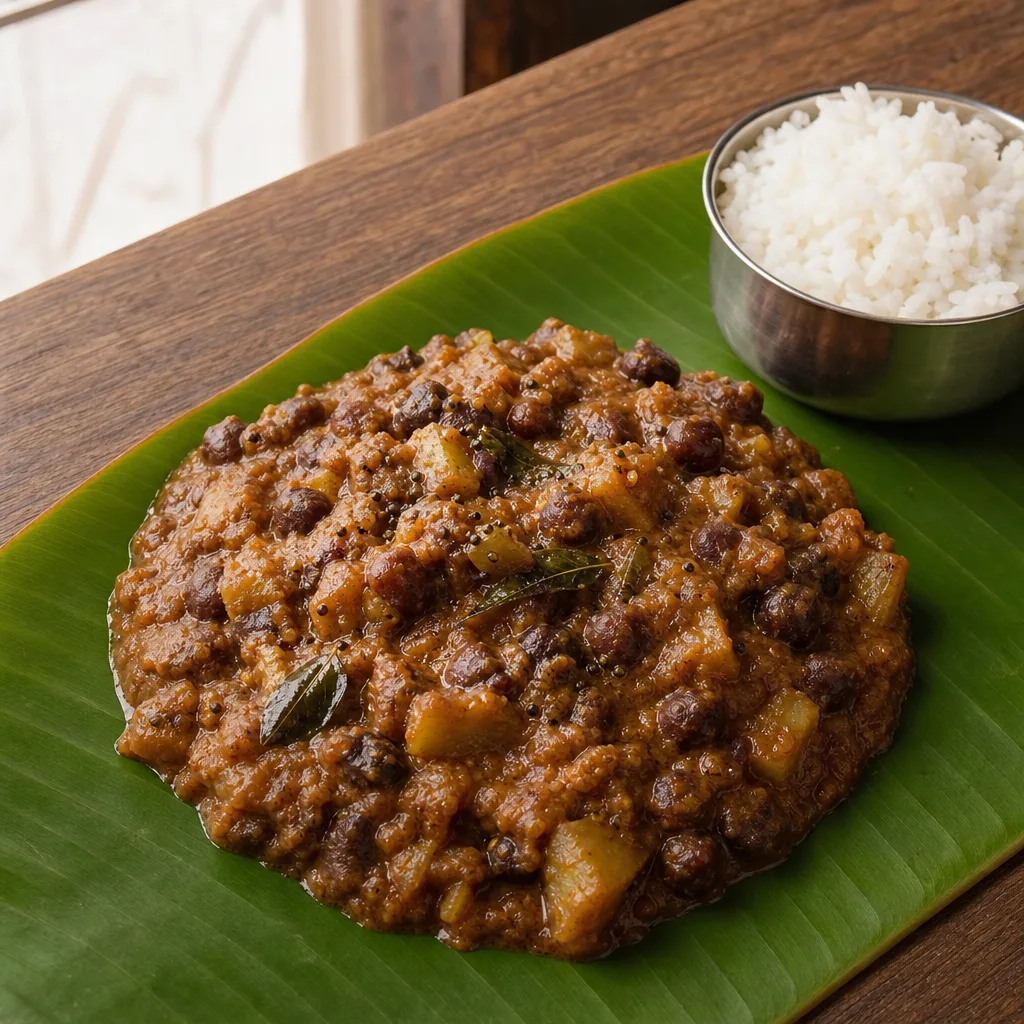
Kootu curry is one of the fixed dishes on a Kerala sadya leaf. It sits in its own portion of the leaf and is eaten mixed with rice and the other gravies. The dish is built on two things together: a starchy vegetable, usually raw banana or yam or both, and kala chana cooked until just tender. Neither the vegetable nor the chana should go mushy. The texture is thick and semi-dry, not a gravy.
What makes it distinct is the roasted coconut paste. The grated coconut is dry-roasted in a pan until it turns deep brown, almost brick-coloured, before it is ground with spices. That roasted coconut is the backbone of the flavour. Skip the roasting or stop it too early and you have a dish that tastes flat and pale.
Households differ mainly on which vegetables they use. Raw banana is nearly universal. Elephant yam (chena) is the most common second vegetable. Some cooks add a small piece of ash gourd. The spicing stays consistent: cumin, black pepper, and dried red chillies ground with the coconut, finished with a mustard and curry leaf tempering in coconut oil.
Ingredients (serves 6)
Main body
For cooking the vegetables and chana
Roasted coconut paste
Tempering (tadka)
Method
Soak the chana
Rinse the kala chana twice in cold water, then cover with plenty of fresh water and leave to soak for 8 hours or overnight. The chana will swell and the skin will tighten. Drain and discard the soaking water before cooking.
Cook the chana
Put the drained chana in a pressure cooker with enough fresh water to cover by 4 cm, add ¼ tsp turmeric and a pinch of salt. Cook on medium heat for 4 to 5 whistles, then lower the heat and cook a further 10 minutes. Let the pressure drop naturally. The chana should be completely cooked through but still hold its shape when pressed between your fingers. If it crumbles, it has gone too far. Drain, reserving the cooking liquid.
Cook the vegetables
Place the raw banana and yam cubes in a wide heavy pan. Add ¼ tsp turmeric, salt, and just enough water to come halfway up the vegetables, about 100 ml. Cover and cook on medium heat for 10 to 12 minutes until the vegetables are cooked through but still firm. Yam takes a little longer than banana, so check both. There should be very little water left in the pan when they are done. If water remains, uncover and let it evaporate.
Roast the coconut
Heat a dry heavy pan or iron tawa on medium flame. Add the grated coconut and spread it out. Stir continuously. The coconut will first release steam, then begin to dry out and colour. Keep stirring so it roasts evenly. You are looking for a deep reddish-brown colour, like the inside of a toasted bread crust. This takes 10 to 15 minutes and cannot be rushed. If you stop too early, the paste will taste raw and sweet rather than smoky and deep. Remove from heat the moment it reaches that dark brown colour.
Grind the paste
Transfer the roasted coconut to a grinder. Add the cumin, black pepper, dried red chillies, and ¼ tsp turmeric. Grind to a coarse-to-medium paste, adding 3 to 4 tbsp of the reserved chana cooking liquid just to help the blades move. The paste should not be completely smooth; a little texture is correct.
Combine chana, vegetables, and paste
Add the cooked chana to the pan with the cooked vegetables. Stir the roasted coconut paste in. Mix well so the paste coats everything evenly. Add 4 to 5 tbsp of the reserved chana cooking liquid if the mixture looks too dry to come together, but this is not a gravy; it should be thick and clingy. Taste and adjust salt.
Cook the paste into the dish
Set the pan on low heat and cook, stirring gently, for 5 to 6 minutes. The paste needs this time to cook into the vegetables and chana rather than sitting on top of them. The colour will deepen slightly and the raw smell of the ground spices will disappear. Stir often so nothing sticks to the base.
Make the tempering
Heat coconut oil in a small pan on medium heat until it shimmers. Add the mustard seeds and wait for them to pop fully. Add the broken dried red chillies and curry leaves; they will splutter, so stand back. Add the sliced shallots and fry, stirring, until they turn golden brown at the edges, about 2 minutes.
Finish and rest
Pour the tempering over the kootu curry and fold it in gently. Take the pan off the heat. Leave it to rest for 5 minutes before serving; the flavours settle and the texture firms up slightly. The finished dish should be dark, thick, and dry enough to mound on a banana leaf without spreading.
How to serve
Served as part of a Kerala sadya on a banana leaf, alongside rice, parippu curry, sambar, rasam, avial, thoran, olan, pachadi, kichadi, pickles, pappadam, and payasam.
Served with: Served as part of a Kerala sadya on a banana leaf, alongside rice, parippu curry, sambar, rasam, avial, thoran, olan, pachadi, kichadi, pickles, pappadam, and payasam.
Cook's tips
Do not rush the coconut roasting
The single most common mistake is pulling the coconut off the heat when it is golden rather than dark brown. A pale paste produces a dish that tastes bland and sweet. The coconut must go deep reddish-brown.
Yam handling
Raw elephant yam can cause itching on the skin and in the throat if undercooked. Make sure it is completely cooked through. Some cooks add a few drops of coconut oil or a small piece of raw mango while cooking the yam to counter the irritation.
Soaking time matters
Kala chana that has not soaked long enough will need many more whistles and may still have a hard centre. Eight hours is the minimum in a warm Kerala kitchen. In a cooler climate, soak for 10 to 12 hours.
Advance cooking for sadya
For a full sadya, the chana can be soaked and pressure-cooked the previous evening. The vegetables can be cooked in the morning. The coconut paste is best ground and combined on the day itself, as the roasted coconut loses its aroma if it sits too long.
Vegetable substitution
If elephant yam is unavailable, suran (lesser yam) works. Some households use only raw banana with chana. Ash gourd can replace part of the yam but will make the dish slightly wetter; reduce the cooking liquid accordingly.
Regional variations
Some households use raw banana and yam together without chana; Palakkad Iyer households make a drier kootu with toor dal and no whole spice roasting in the coconut paste.
Glossary
- Kala chana കടല
- Black chickpeas, smaller and darker than the white kabuli variety, with a firmer texture after cooking.
- Pachakkai പച്ചക്കായ
- Raw green plantain, used as a vegetable rather than a fruit in Kerala cooking.
- Chena ചേന
- Elephant yam, a large starchy tuber used widely in Kerala vegetarian cooking.
- Kaduku കടുക്
- Mustard seeds, used whole in tempering; they must pop fully before the next ingredient is added.
- Kariveppila കറിവേപ്പില
- Curry leaves, the fresh leaves of Murraya koenigii, essential to Kerala tempering.
- Chuvannulli ചുവന്നുള്ളി
- Small red shallots, the standard allium in Kerala cooking, sharper and more aromatic than large onions.
- Jeerakam ജീരകം
- Cumin seeds, ground into the roasted coconut paste.
- Kurumulaku കുരുമുളക്
- Black pepper, whole, ground with the coconut paste; gives the dish its characteristic heat alongside the dried chillies.
Two things decide whether this dish works. The first is the depth of the coconut roasting: stop early and the whole dish tastes flat. The second is the texture of the chana and vegetables, which must hold their shape through the final cooking so the dish stays thick and moundable rather than collapsing into a paste.
More Vegetarian Gravies recipes
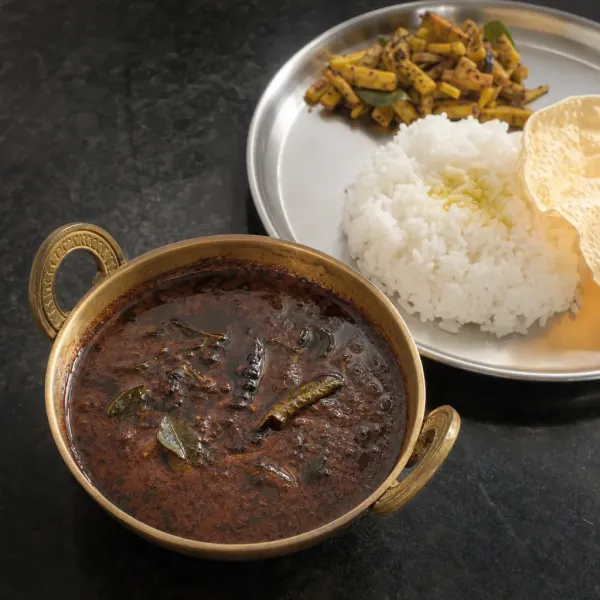
Milagu Kuzhambu
Traditional Tamil Brahmin milagu kuzhambu made with whole black pepper, tamarind, shallots, and gingelly oil. Thick, pungent, and cooked the old way.
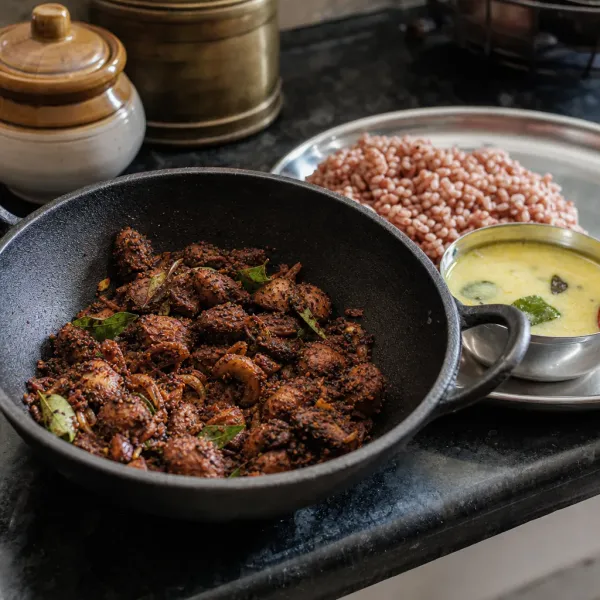
Mushroom Pepper Masala
A dry, pepper-forward mushroom masala from Nasrani kitchens in Travancore, cooked in coconut oil with shallots and curry leaves. Ready in 40 minutes.
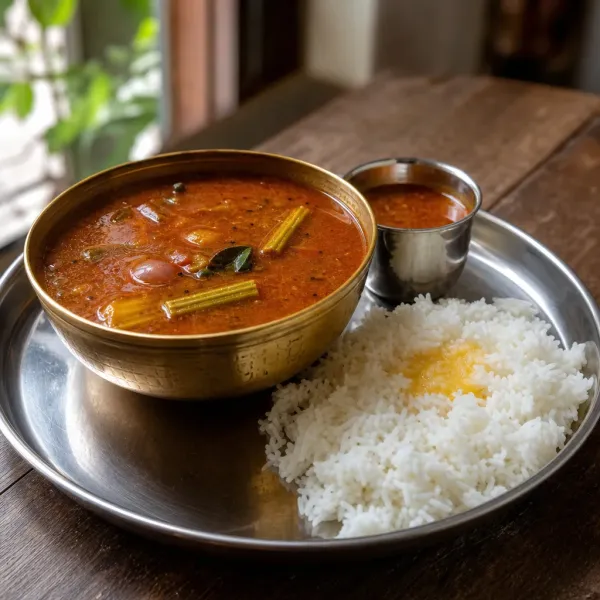
Tamil Brahmin Sambar with Homemade Sambar Podi
Traditional Tamil Brahmin sambar with homemade sambar podi, toor dal, drumstick and shallots in a tamarind base. Cooked in gingelly oil.
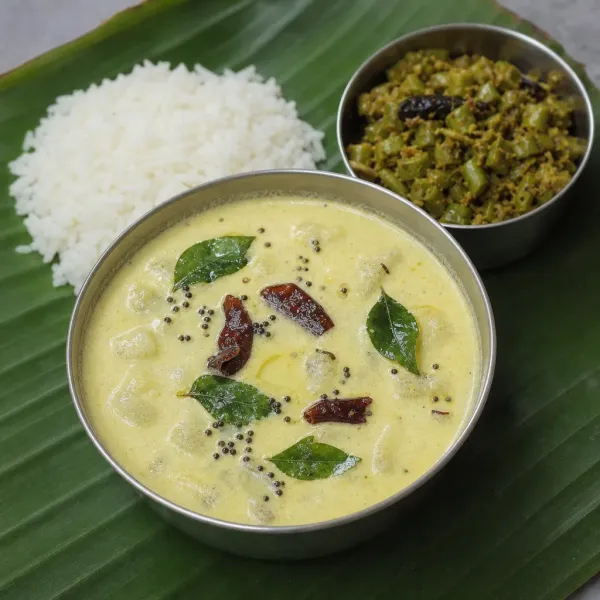
Majjige Huli
Traditional Karnataka Brahmin majjige huli with ash gourd, fresh coconut paste and sour curd. Step-by-step method with tips to prevent splitting.
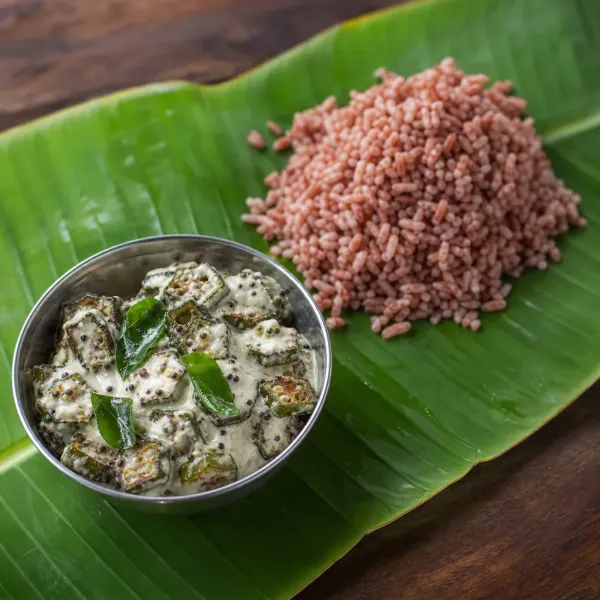
Vendakka Kichadi
Traditional Kerala Vendakka Kichadi: crisp-fried okra folded into a fresh coconut and sour curd base, tempered with mustard and curry leaves in cocon…
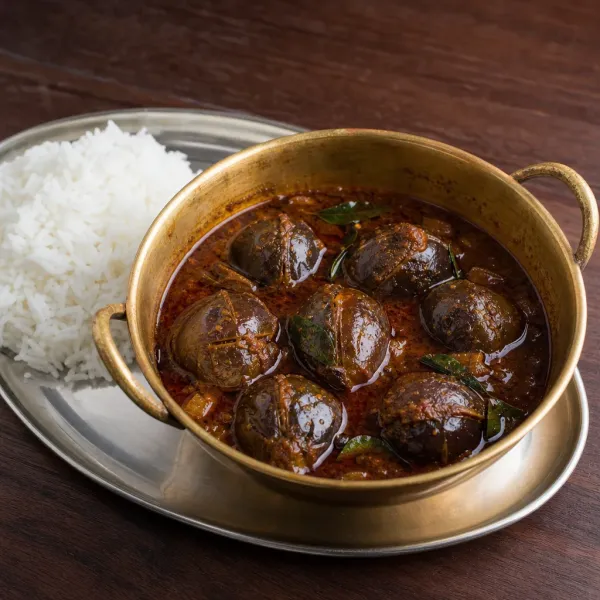
Ennai Kathirikai Kuzhambu
Traditional Chettinad ennai kathirikai kuzhambu: small brinjals stuffed with dry-roasted spice paste, fried in gingelly oil and simmered in tamarind…