

Ulavacharu Recipe
Malayalam ഉലവചാരുTamil உளவச்சாருKannada ಉಲವಚಾರುTelugu ఉలవచారు
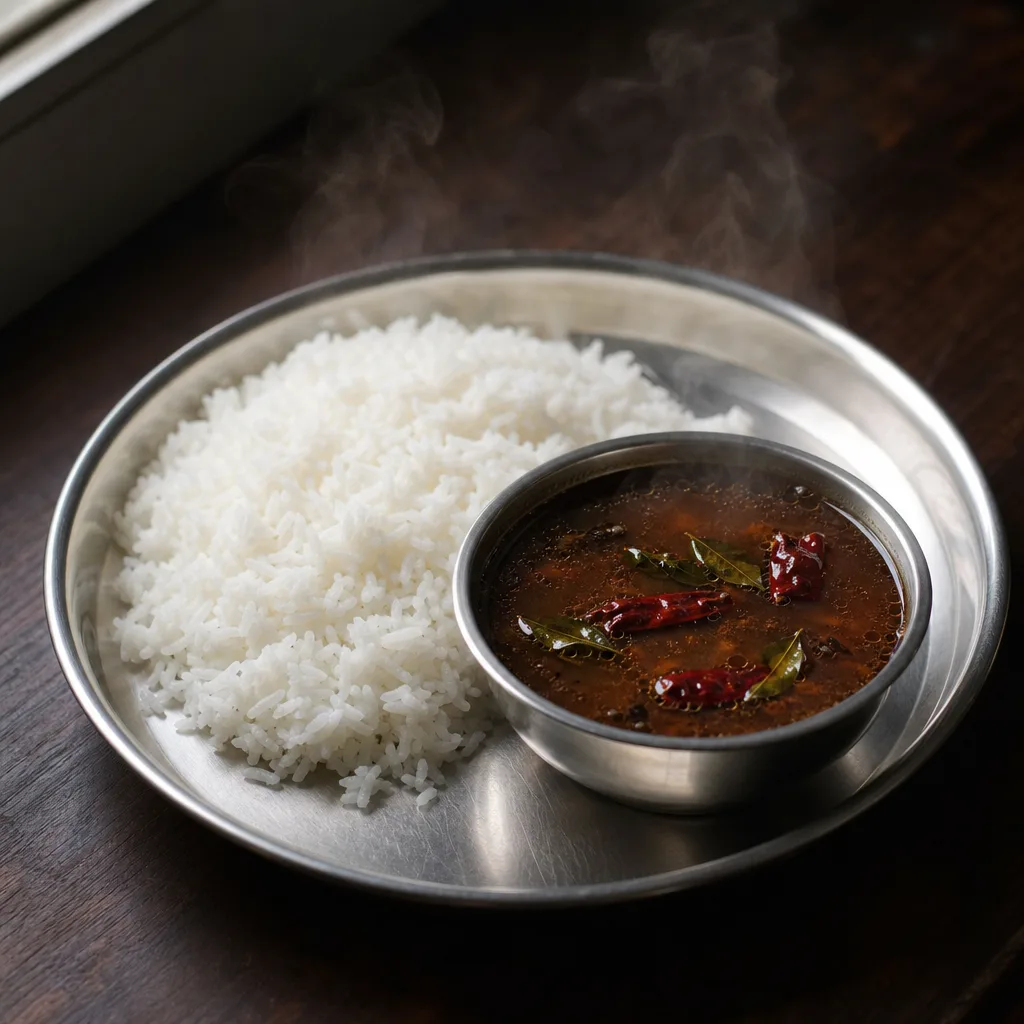
- Prep20 min
- Soak / ferment8 hr
- Cook1 hr 30 min
- Serves4
- DifficultyMedium
- DietVegan
Ulavacharu is the cooking liquid left after boiling horse gram, reduced until it turns a deep mahogany brown and thickens just enough to coat the back of a spoon. It is one of the older preparations in Rayalaseema cooking, made in homes where horse gram is a staple pulse and nothing that can feed a family is thrown away. The gram itself is eaten separately; the broth is the point.
It is eaten with hot rice, poured over generously, with a spoon of ghee added at the table if the household keeps it. Some families eat it as the first course of the meal, before vegetables or dal, because it is warming and said to be good after physical work in the fields. The flavour is earthy, slightly astringent, and smoky from the reduction.
Households differ mainly in how long they reduce the broth and how much tamarind they use. Some add a small piece of jaggery to round the sourness; others do not. The tadka is always in gingelly oil, never coconut oil, and the dried red chillies and curry leaves go in at the end so their fragrance stays sharp against the deep, slow flavour of the broth.
Ingredients (serves 4)
For the broth
For the tadka
Method
Soak the horse gram
Rinse the horse gram well and cover with cold water in a deep vessel. Leave it for 8 hours or overnight at room temperature. The gram will swell but will not sprout in this time. Drain before cooking.
Pressure-cook the gram
Put the drained horse gram into a pressure cooker with 1.5 litres of water. Do not add salt at this stage; it toughens the skins. Cook on medium heat for 6 to 7 whistles, then lower the heat and cook for another 10 minutes. Let the pressure drop on its own.
Separate the broth from the gram
Open the cooker and pour the contents through a large sieve or colander set over a wide, heavy-bottomed vessel. Press the cooked gram firmly with the back of a ladle or your fist to push out every drop of liquid. The gram is now set aside for another use. You should have roughly 900 ml to 1 litre of dark grey-brown broth.
Add tamarind and begin reducing
Pour the strained tamarind pulp into the broth. Add salt. Place the vessel on medium heat and bring to a steady simmer, uncovered. Do not cover it at any point during reduction or the colour will not deepen properly.
Reduce slowly to a thick broth
Keep the broth at a lively simmer for 40 to 50 minutes, stirring every 8 to 10 minutes and scraping the bottom of the vessel. It will reduce by roughly half and turn a deep reddish-brown, almost the colour of strong black tea. It should coat the back of a spoon lightly but still pour easily. If it becomes too thick to pour, add a small splash of water and stir. Taste and adjust salt.
Make the tadka
Heat the gingelly oil in a small tadka pan over medium heat until it shimmers. Add the crushed garlic cloves and fry for 30 seconds until the edges colour slightly. Add the mustard seeds and wait for them to pop, then add the cumin seeds, dried red chillies, and asafoetida. As soon as the chillies darken slightly, add the curry leaves and stand back as they will splutter.
Combine and rest
Pour the entire tadka into the reduced broth immediately. Stir once and take the vessel off the heat. Let it sit for 5 minutes before serving so the tadka flavours settle into the broth. Taste once more for salt and sourness.
How to serve
Hot plain rice (sona masoori or raw rice cooked soft), with a spoon of ghee added at the table. Some households serve a dry vegetable poriyal or raw onion alongside. The cooked horse gram pressed out of the broth can be seasoned separately and served as a side.
Served with: Hot plain rice (sona masoori or raw rice cooked soft), with a spoon of ghee added at the table. Some households serve a dry vegetable poriyal or raw onion alongside. The cooked horse gram pressed out of the broth can be seasoned separately and served as a side.
Cook's tips
Do not rush the reduction
The deep colour and the slightly thick body come only from a long, slow reduction without a lid. If you raise the heat to speed it up, the bottom scorches and the broth turns bitter. Medium heat and patience are the method.
Gingelly oil is not optional
The nutty, slightly smoky flavour of gingelly oil in the tadka is part of the dish. Coconut oil or refined oil will produce a noticeably different result. Use cold-pressed gingelly oil if you can find it.
Soaking time matters
Horse gram is a very hard legume. Less than 6 hours of soaking means the gram will not cook through in 6 whistles and the broth will be thinner and paler. Overnight soaking gives a fuller, darker broth.
Using the leftover gram
The pressed gram is not waste. Season it with salt, a pinch of chilli powder, and a small tadka of mustard and curry leaves, and it becomes a dry side dish. Some households mash it into a rough paste with raw onion and green chilli.
Storage
The broth keeps well in the refrigerator for 3 days. It thickens further as it cools; thin with a little water when reheating and bring it back to a simmer.
Regional variations
Coastal Andhra version is thinner and sometimes slightly sweetened with jaggery; Telangana households make a closely similar broth called ulavacharu that may use more tamarind.
Glossary
- Ulava ఉలవ
- Telugu name for horse gram (Macrotyloma uniflorum), a small, dark, hard legume widely grown in the Deccan.
- Charu చారు
- Telugu word for a thin, spiced broth or rasam; the cooking liquid of a pulse reduced and tempered.
- Inguva ఇంగువ
- Telugu name for asafoetida, the dried resin used in small amounts to aid digestion and add a savoury depth.
- Nuvvula nune నువ్వుల నూనె
- Gingelly oil; sesame oil pressed from unroasted sesame seeds, the standard cooking fat for Andhra rasams and tadkas.
Two things decide whether ulavacharu works: the length of the reduction and the quality of the gingelly oil. Cut the reduction short and you have thin, pale horse gram water with no depth. Use a neutral oil and the tadka tastes flat. Give the broth the full 40 to 50 minutes on medium heat, use proper cold-pressed gingelly oil, and the result is something that earns its place as the first thing poured over rice.
More Lentils & Legumes recipes
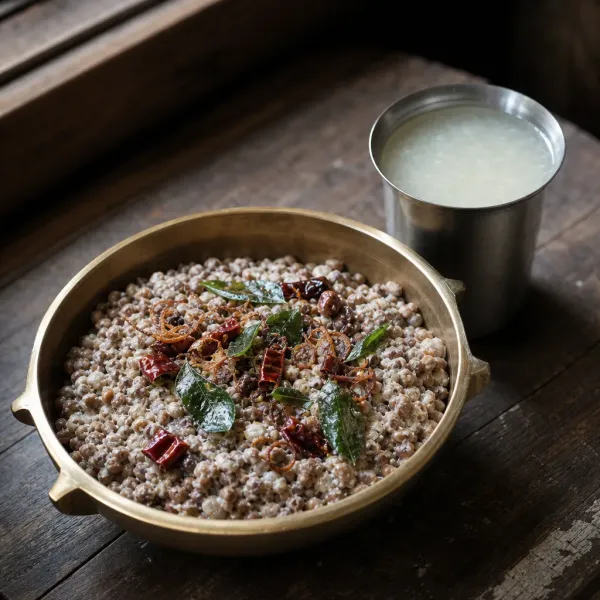
Muthira Puzhukku (Horse Gram Puzhukku)
Traditional Kerala muthira puzhukku: horse gram slow-cooked with kudampuli, finished with a fresh coconut-shallot paste and coconut oil tempering. Se…
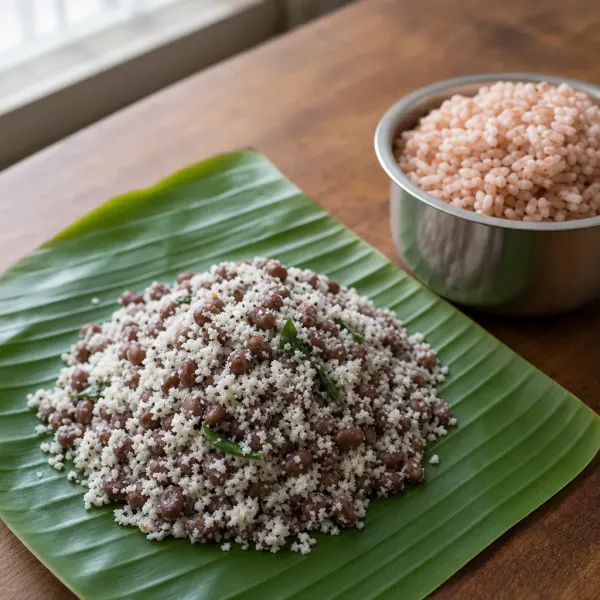
Vanpayar Thoran
Traditional Kerala vanpayar thoran: red cowpea cooked tender, tossed with fresh grated coconut and tempered in coconut oil with mustard and curry lea…
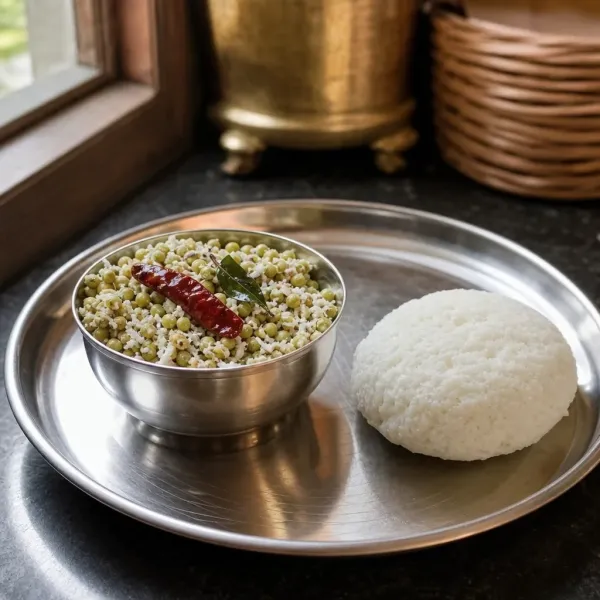
Hesarukalu Usli
Traditional Karnataka sprouted moong usli from a Udupi kitchen: steamed hesarukalu, fresh coconut, mustard tadka in coconut oil. Vegan, easy, everyda…
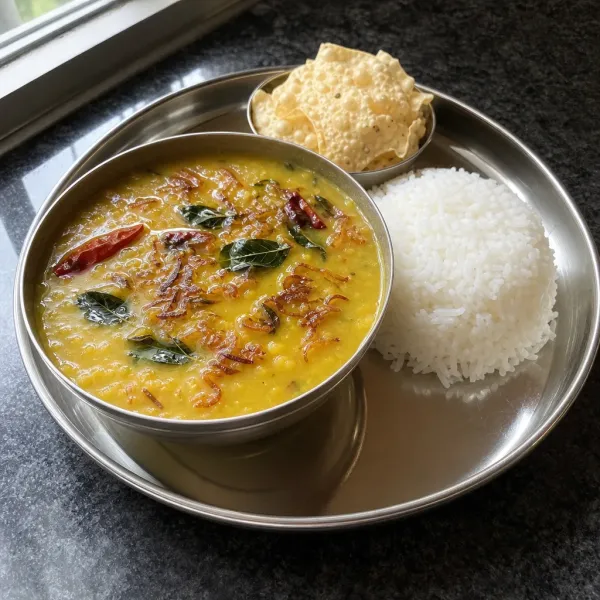
Mamidikaya Pappu
Traditional Andhra recipe for mamidikaya pappu: toor dal cooked with sour raw mango, finished with a ghee tadka of mustard, shallots, and curry leave…
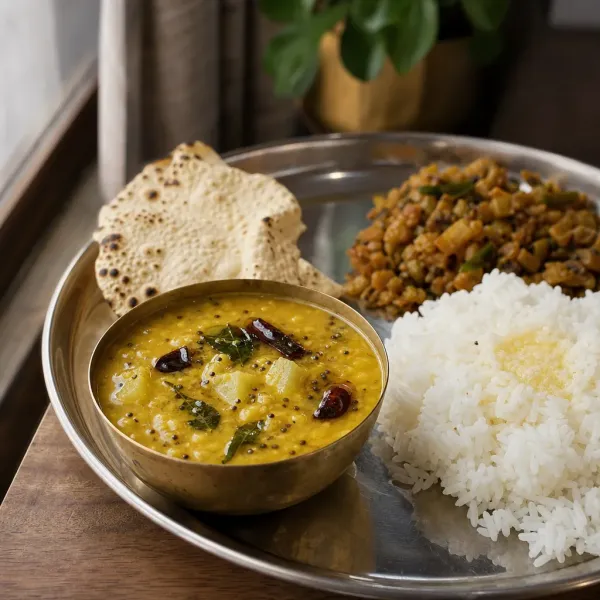
Dosakaya Pappu
Authentic Andhra-Telangana dosakaya pappu: toor dal cooked with yellow cucumber and finished with a ghee tempering. Traditional household method.
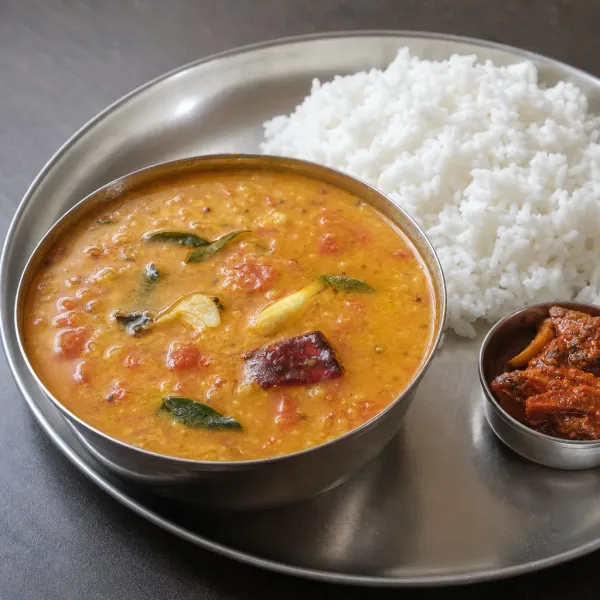
Tomato Pappu (Andhra Tomato Dal)
Authentic Andhra tomato pappu made with toor dal, ripe sour tomatoes and a ghee tadka with garlic and curry leaves. A daily dal from coastal Andhra h…