

Muthira Puzhukku (Horse Gram Puzhukku) Recipe
Malayalam മുതിര പുഴുക്ക്Tamil முதிரை புழுக்குKannada ಹುರುಳಿ ಪುಳುಕ್ಕುTelugu ముతిర పుళుక్కు
- Prep15 min
- Soak / ferment8 hr
- Cook50 min
- Serves4
- DifficultyEasy
- DietVegan
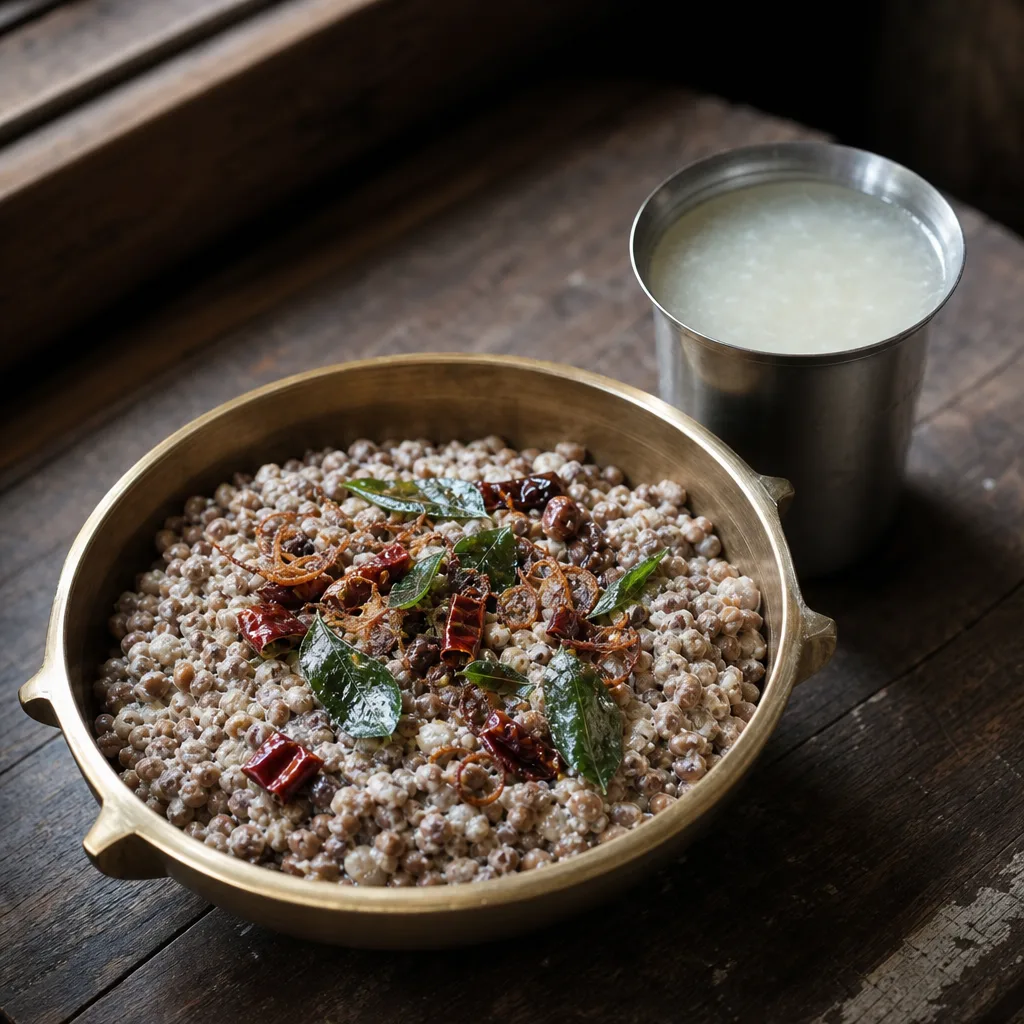
Muthira puzhukku is a thick, dry-ish cooked-gram dish made with horse gram, freshly grated coconut, shallots, and a souring agent, finished with a coconut oil tempering. It belongs to the everyday cooking of Travancore households and has always been considered plain, sustaining food rather than festive food. The horse gram is soaked overnight, pressure-cooked or slow-boiled until just tender but still whole, then brought together with a coarse coconut-shallot paste and kudampuli-soured cooking water.
It is eaten with kanjhi — the thin rice porridge that is the traditional morning or evening meal in much of central and southern Kerala. The combination is deliberate: the puzhukku is dense and warming, the kanjhi light and watery, and together they make a complete, filling meal. Some households also eat it with matta rice and a simple papad.
Every family adjusts the sourness and the salt. Some grind the coconut very fine so it coats the gram smoothly; others keep it coarser for texture. The tempering is always coconut oil, always finished with dried red chillies and curry leaves, and always goes in at the very end so the fragrance stays sharp.
Ingredients (serves 4)
For the horse gram
For the coconut paste
For the tempering
Method
Soak the horse gram
Rinse the horse gram in two changes of water. Cover with plenty of cold water and leave to soak for 8 hours or overnight at room temperature. The gram will swell noticeably and the skins may loosen slightly. Drain before cooking.
Cook the gram with kudampuli
Put the drained gram in a heavy pot with 750 ml water, the kudampuli pieces, and salt. Bring to a boil over high heat, then reduce to a steady simmer. Cook uncovered for 40 to 50 minutes, until each grain is cooked through and yields when pressed but has not burst open or turned mushy. If you are using a pressure cooker, cook for 3 whistles on medium heat, then allow pressure to release naturally. The cooking water will have turned a dark reddish-brown from the kudampuli; do not discard it.
Reserve the cooking liquid
Once the gram is cooked, drain it but collect and keep about 100 ml of the cooking water separately. This soured, flavoured water goes back into the dish at the end and carries much of the sourness. Discard the kudampuli pieces.
Grind the coconut paste
In a small stone grinder or wet grinder jar, combine the grated coconut, roughly chopped shallots, dried red chillies, and turmeric. Grind to a coarse, slightly grainy paste using as little water as possible — a tablespoon or two at most. The paste should hold together but not be smooth. Grinding it too fine makes the final dish gluey.
Combine gram and coconut paste
Return the drained, cooked gram to the pot over low heat. Add the coconut paste and stir it through gently so every grain gets coated. Pour in the reserved cooking water. Stir once, taste for salt, and let it cook on low heat for 4 to 5 minutes, stirring occasionally, until the mixture comes together and any raw smell from the coconut is gone. The dish should be thick and just barely moist, not wet or soupy.
Make the tempering
Heat coconut oil in a small tempering pan over medium heat until it shimmers. Add the mustard seeds and wait for them to pop completely. Add the broken dried red chillies and sliced shallots. Fry the shallots, stirring often, until they are golden at the edges — about 3 minutes. Add the curry leaves last; they will splutter, so stand back. The moment the leaves crisp, pour the entire tempering over the gram.
Rest and serve
Stir the tempering through gently and take the pot off the heat. Leave it covered for 2 minutes before serving. This brief rest lets the coconut oil fragrance settle into the dish rather than sitting on top of it.
How to serve
Rice kanjhi (thin rice porridge made with matta rice); or as a side with plain matta rice and pappadam.
Served with: Rice kanjhi (thin rice porridge made with matta rice); or as a side with plain matta rice and pappadam.
Cook's tips
Soaking time matters
Horse gram is a hard legume. If you shorten the soak to 2 or 3 hours, the gram will take much longer to cook and may still be slightly chalky in the centre. Eight hours is the minimum for a reliable result in a normal pot. Pressure cooking compensates somewhat for a shorter soak, but the texture is better with a full soak.
Kudampuli sourness
Kudampuli varies in intensity depending on how dry and aged the pieces are. Start with 2 pieces and taste the cooking water before adding it back. If it is very sour, add only half the reserved water and balance with a little plain water.
Do not overcook the gram
If the gram splits and turns to a paste during cooking, the final dish becomes a thick mash rather than a textured puzhukku. Watch from the 35-minute mark. You want the gram yielding, not bursting.
Grinding without a stone grinder
A small mixer jar works, but pulse rather than run it continuously. Stop as soon as the coconut and shallots come together into a rough paste. A few seconds too long and it becomes smooth, which changes the texture of the finished dish.
Regional variations
In northern Kerala some households add a small piece of raw mango in season instead of kudampuli; in certain Mappila kitchens a little coconut milk is stirred in at the end.
Glossary
- Muthira മുതിര
- Horse gram, a small, dark, hard legume widely used in Kerala cooking, known for its earthy, slightly bitter flavour.
- Puzhukku പുഴുക്ക്
- A Kerala cooking style where a legume or tuber is cooked and combined with a fresh coconut paste; the result is thick and dry rather than a curry.
- Kudampuli കുടംപുളി
- Dried rind of Garcinia cambogia (Malabar tamarind), used as the souring agent in many Kerala dishes; gives a distinctive dark colour and mild, fruity sourness.
- Cheriya ulli ചെറിയ ഉള്ളി
- Small red shallots used throughout Kerala cooking; sharper and more aromatic than large onions.
- Kanjhi കഞ്ഞി
- Thin rice porridge, traditionally made with matta rice, eaten as a morning or evening meal across Kerala.
Two things decide whether this puzhukku works: the gram must be cooked to exactly the right point — tender throughout but still whole — and the coconut paste must stay coarse enough to give the dish body and texture. Get those right and the kudampuli sourness, the shallot sweetness in the tempering, and the fragrance of fresh coconut oil do the rest on their own.
More Lentils & Legumes recipes
Ulavacharu
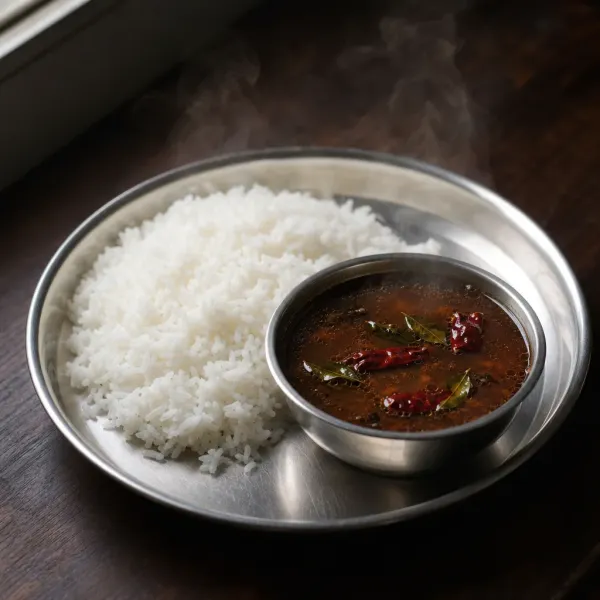
Traditional Rayalaseema ulavacharu: horse gram broth slowly reduced to a deep mahogany, finished with a gingelly oil tadka. Served over hot rice.
Vanpayar Thoran
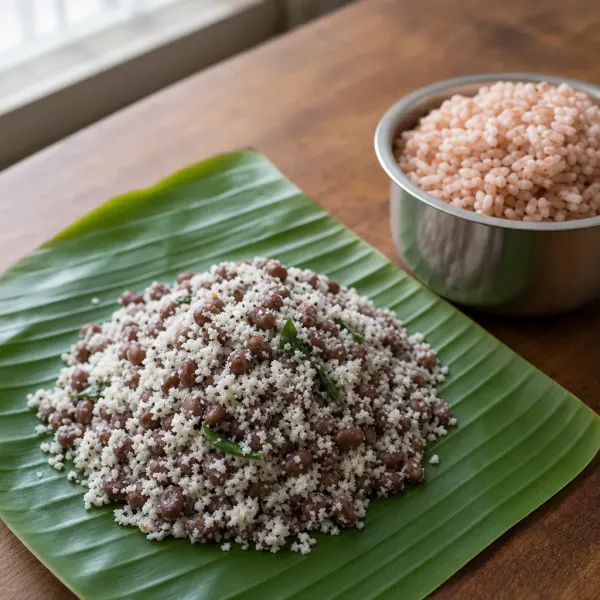
Traditional Kerala vanpayar thoran: red cowpea cooked tender, tossed with fresh grated coconut and tempered in coconut oil with mustard and curry lea…
Hesarukalu Usli
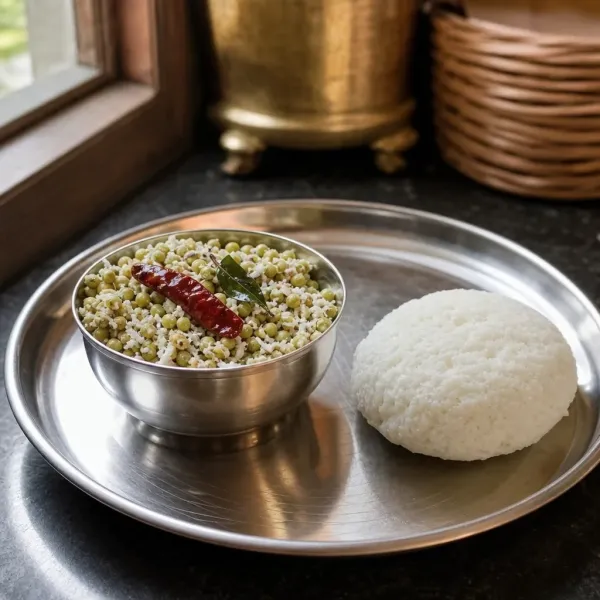
Traditional Karnataka sprouted moong usli from a Udupi kitchen: steamed hesarukalu, fresh coconut, mustard tadka in coconut oil. Vegan, easy, everyda…
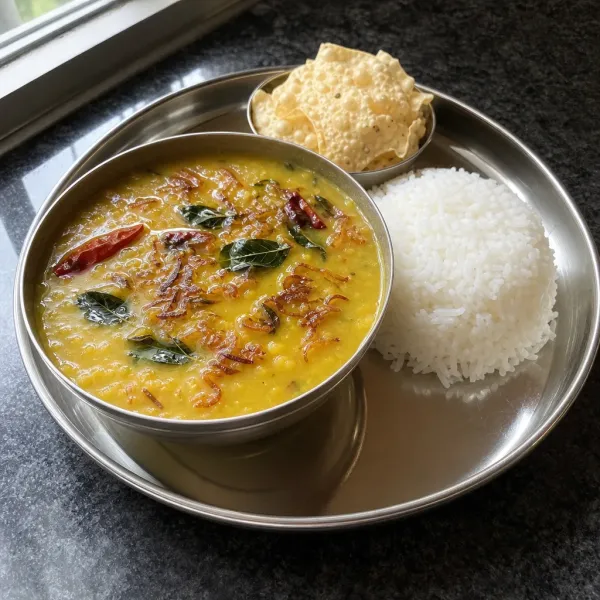
Mamidikaya Pappu
Traditional Andhra recipe for mamidikaya pappu: toor dal cooked with sour raw mango, finished with a ghee tadka of mustard, shallots, and curry leave…
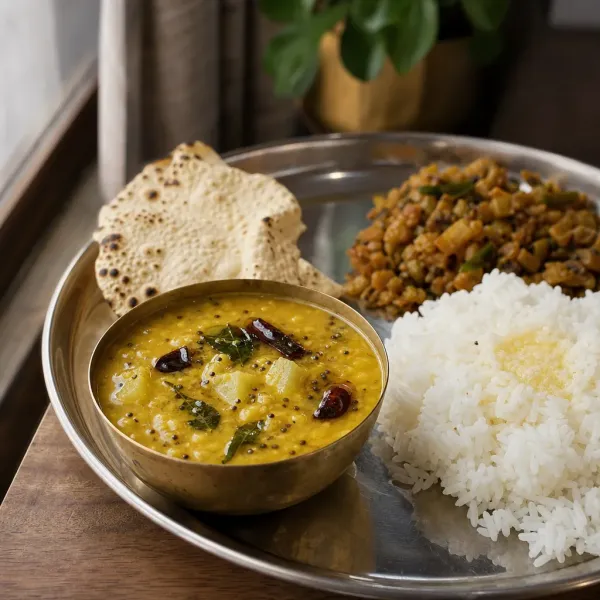
Dosakaya Pappu
Authentic Andhra-Telangana dosakaya pappu: toor dal cooked with yellow cucumber and finished with a ghee tempering. Traditional household method.
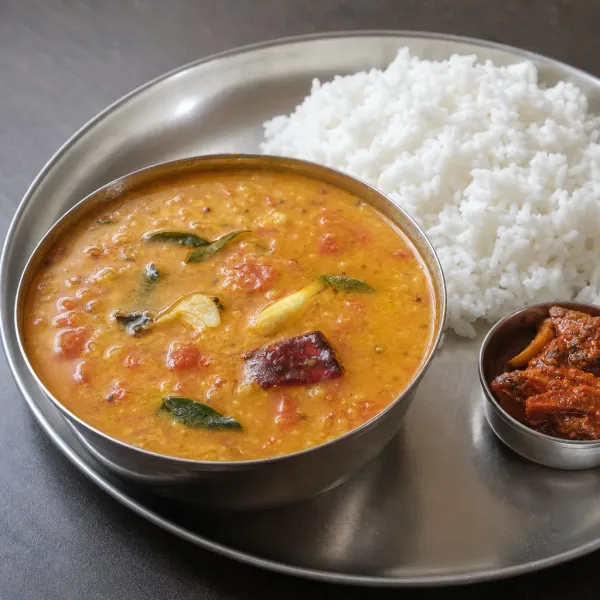
Tomato Pappu (Andhra Tomato Dal)
Authentic Andhra tomato pappu made with toor dal, ripe sour tomatoes and a ghee tadka with garlic and curry leaves. A daily dal from coastal Andhra h…