

Paruppu Sadam Recipe
Malayalam പരിപ്പ് സാദംTamil பருப்பு சாதம்Kannada ಪರುಪ್ಪು ಸಾದಂTelugu పప్పు సాదం
- Prep10 min
- Cook35 min
- Serves4
- DifficultyEasy
- DietVegetarian
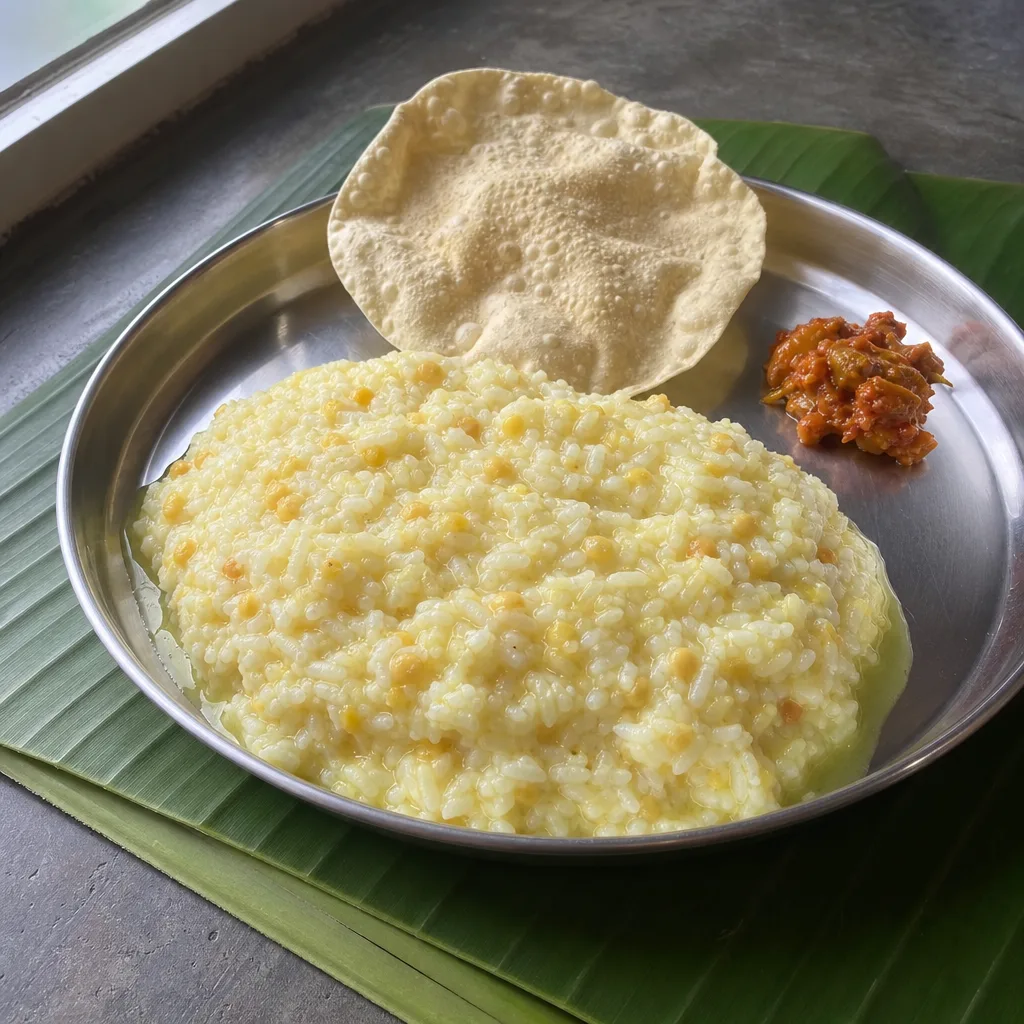
Paruppu sadam is the rice that an Iyer household puts on the table first, before the rasam course, before the sambar. It is plain, sustaining, and made every single day. The dal is toor dal cooked soft and stirred into hot cooked rice with a spoonful of ghee, nothing more. The seasoning is the ghee itself, sometimes a pinch of turmeric in the dal water, and the salt in the rice.
The dish is eaten mashed together in the hand or with a spoon, the rice and dal becoming one soft mass. It is always the first mouthful of a proper Tamil Brahmin meal, eaten with a papad and a small mound of pickle before the sambar arrives. On ordinary weekday afternoons it is the whole meal for small children, given with ghee and banana.
Every household has its ratio. Some prefer the dal thin and plentiful so the rice stays loose; others cook it thicker so each grain is coated. The rice is always raw rice, never parboiled, so the texture stays soft and slightly sticky in the way that suits the dish. The ghee is not optional and it is not a finishing drizzle — it goes in while the rice is still steaming hot so it melts through completely.
Ingredients (serves 4)
For the rice and dal
Method
Rinse and measure
Rinse the raw rice in two changes of cold water until the water runs mostly clear. Rinse the toor dal once. Keep them separate — they cook separately. Measure out your water for each.
Cook the dal
Put the toor dal in a small pressure cooker or a heavy saucepan with 400 ml water and the turmeric. If using a pressure cooker, cook on medium heat for 3 whistles, then let the pressure drop on its own. If using a saucepan, cook covered on low heat for 25 to 30 minutes until the dal is completely soft and can be mashed against the side of the pot with a spoon. The cooked dal should be thick but pourable, not stiff.
Cook the rice
Bring 600 ml water to a rolling boil in a wide, heavy pot. Add salt and the rinsed rice. Stir once, reduce heat to low, cover tightly, and cook for 15 minutes. Do not lift the lid during this time. After 15 minutes, check: the water should be fully absorbed and the rice grains should be tender and slightly clumped together. If any water remains, cover and cook for 3 more minutes.
Rest the rice
Turn off the heat and leave the rice covered for 5 minutes. This lets the steam finish the cooking and makes the grains easier to work with. The rice will be soft and a little sticky, which is correct for this dish.
Whisk the dal smooth
Once the pressure has dropped from the cooker, open it and whisk the dal briskly with a ladle or a hand whisk until it is smooth and lump-free. If it has thickened too much and looks pasty rather than pourable, stir in a splash of hot water, no more than 3 to 4 tablespoons, and whisk again. Taste and add salt if needed.
Combine rice and dal
Scoop the hot cooked rice into a wide serving bowl or directly into the pot you cooked it in. Pour the hot dal over the rice — start with about three-quarters of it and stir gently from the bottom upward, folding rather than mashing at this stage. The rice should be moist and coated, not soupy. Add more dal if the rice looks dry. Every household finds its own balance here.
Add the ghee and serve immediately
While the rice and dal are still steaming hot, spoon the ghee over the top. Stir it through once or twice — just enough to distribute it — and serve at once. If the ghee goes in after the rice has cooled even slightly, it sits on the surface rather than melting through, and the dish loses its character.
How to serve
Appalam (papad), a small portion of pickle (mango or lime), and on a full meal plate: sambar and rasam follow this course. On its own as a simple meal it is eaten with ripe banana and a little extra ghee.
Served with: Appalam (papad), a small portion of pickle (mango or lime), and on a full meal plate: sambar and rasam follow this course. On its own as a simple meal it is eaten with ripe banana and a little extra ghee.
Cook's tips
Rice-to-water ratio
Raw rice varies. The 1:2 ratio (rice to water) given here works for most South Indian raw rice. If your rice is older and drier it may need a little more water. Check at the 15-minute mark rather than guessing.
Dal consistency
The dal should be loose enough to coat the rice grains when stirred in. If it has thickened to a stiff paste in the cooker, add hot water in small amounts and whisk. Cold water added to hot dal can make it lumpy.
Ghee quantity
Two tablespoons is a household minimum. Many Iyer cooks use three or even four tablespoons for this quantity of rice, especially when serving children or elderly family members. Do not reduce it to a token amount — it changes the dish entirely.
Leftover dal
If you have leftover cooked dal from a previous meal, this is the ideal use for it. Reheat it with a little water, whisk smooth, and proceed from step 6. The dish is often made this way on busy mornings.
No pressure cooker
Toor dal can be cooked in a covered saucepan. It takes longer — about 30 minutes on a low flame — and you need to check that the water does not cook off before the dal is soft. Add more water if needed and keep the heat low.
Regional variations
Andhra households make a similar pesarapappu annam with moong and turmeric; Karnataka Brahmin kitchens cook bele chitranna, which is spiced differently with a dry coconut masala.
Glossary
- pacha arisi பச்சை அரிசி
- Raw (unparboiled) white rice, the everyday cooking rice in Tamil Brahmin households.
- thuvaram paruppu துவரம் பருப்பு
- Toor dal, split pigeon pea; the standard dal for this dish and for sambar in Tamil Nadu.
- paruppu sadam பருப்பு சாதம்
- Literally dal rice; the first course of the traditional Tamil Brahmin meal.
- appalam அப்பளம்
- Thin crisp wafer made from urad dal flour, roasted or fried; the standard accompaniment to paruppu sadam.
Two things decide whether this works. The first is the rice: it must be raw rice cooked soft and a little sticky, not parboiled rice, which stays separate and dry. The second is the ghee: it must go in while the rice is steaming hot, so it melts through every grain rather than pooling on the surface. Get those two right and the rest is just proportion.
More Rice Dishes recipes
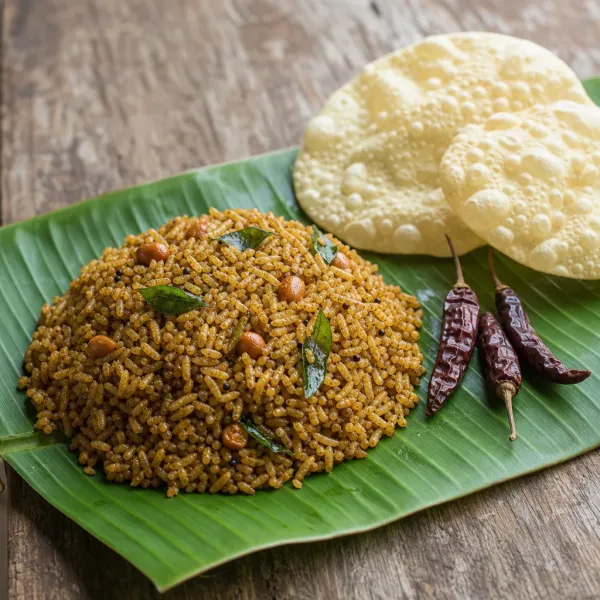
Puliyodarai with Pulikachal
Traditional Tamil Iyer puliyodarai made with homemade pulikachal paste, gingelly oil, and firm-cooked raw rice. Temple-style tamarind rice recipe.
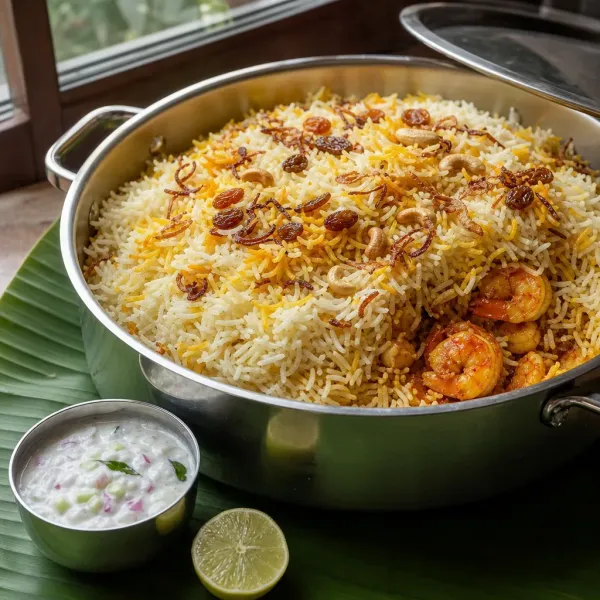
Malabar Prawn Biryani (Chemmeen Biryani)
Traditional Mappila-style prawn biryani from Malabar, Kerala, made with kaima rice, coconut oil, and a thick prawn masala, finished on dum.
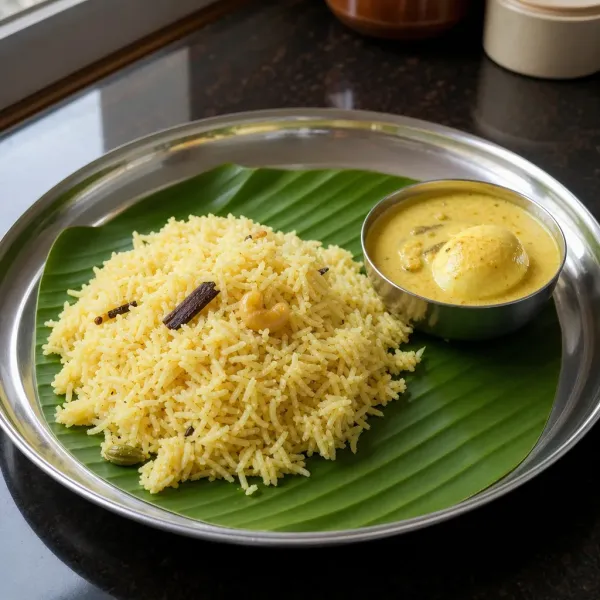
Nei Choru (Kerala Ghee Rice)
Traditional Malabar Mappila nei choru made with jeerakasala rice, pure ghee and whole spices. Step-by-step household method for perfectly separate, f…
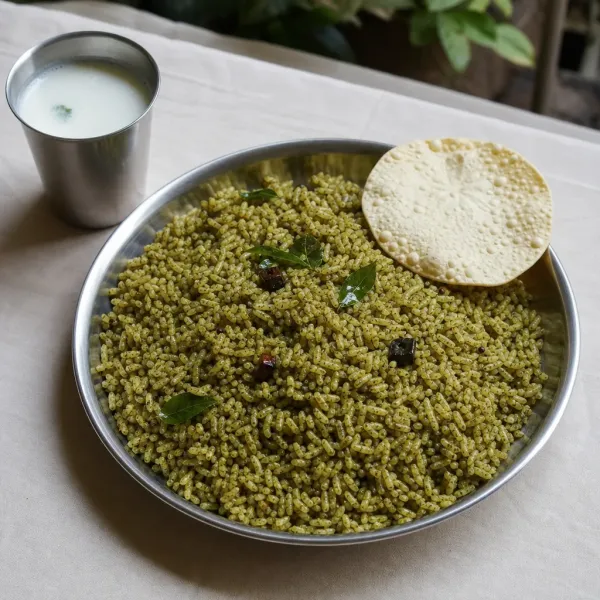
Karuveppilai Sadam (Curry Leaf Rice)
Traditional Tamil Iyer recipe for karuveppilai sadam: cooked rice mixed with a dry-roasted curry leaf spice powder and gingelly oil. Ready in 40 minu…
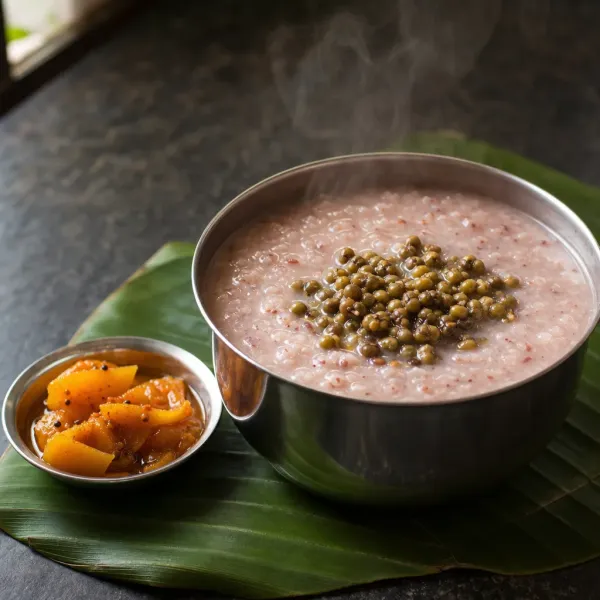
Kanji with Cherupayar
Traditional Kerala kanji made with matta rice cooked to a silky gruel, served with whole green moong. Simple, nourishing, and made the household way.
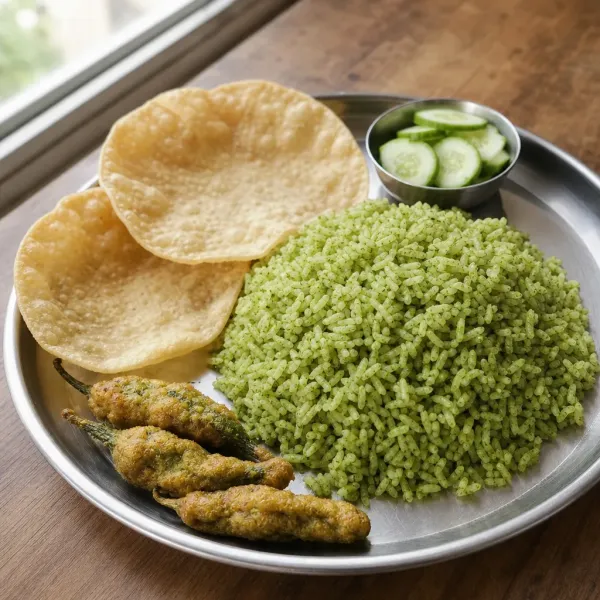
Kothamalli Sadam (Coriander Rice)
Traditional Tamil Iyer kothamalli sadam: fresh coriander paste with roasted dals, coconut and gingelly oil folded through cooled sona masoori rice.