

Kanji with Cherupayar Recipe
Malayalam കഞ്ഞി (ചെറുപയർ ചേർത്ത്)Tamil கஞ்சி (பச்சைப் பயறு சேர்த்து)Kannada ಗಂಜಿ (ಹಸಿರು ಹೆಸರುಬೇಳೆ ಸೇರಿಸಿ)Telugu గంజి (పెసలు కలిపి)
- Prep10 min
- Cook50 min
- Serves4
- DifficultyEasy
- DietVegan
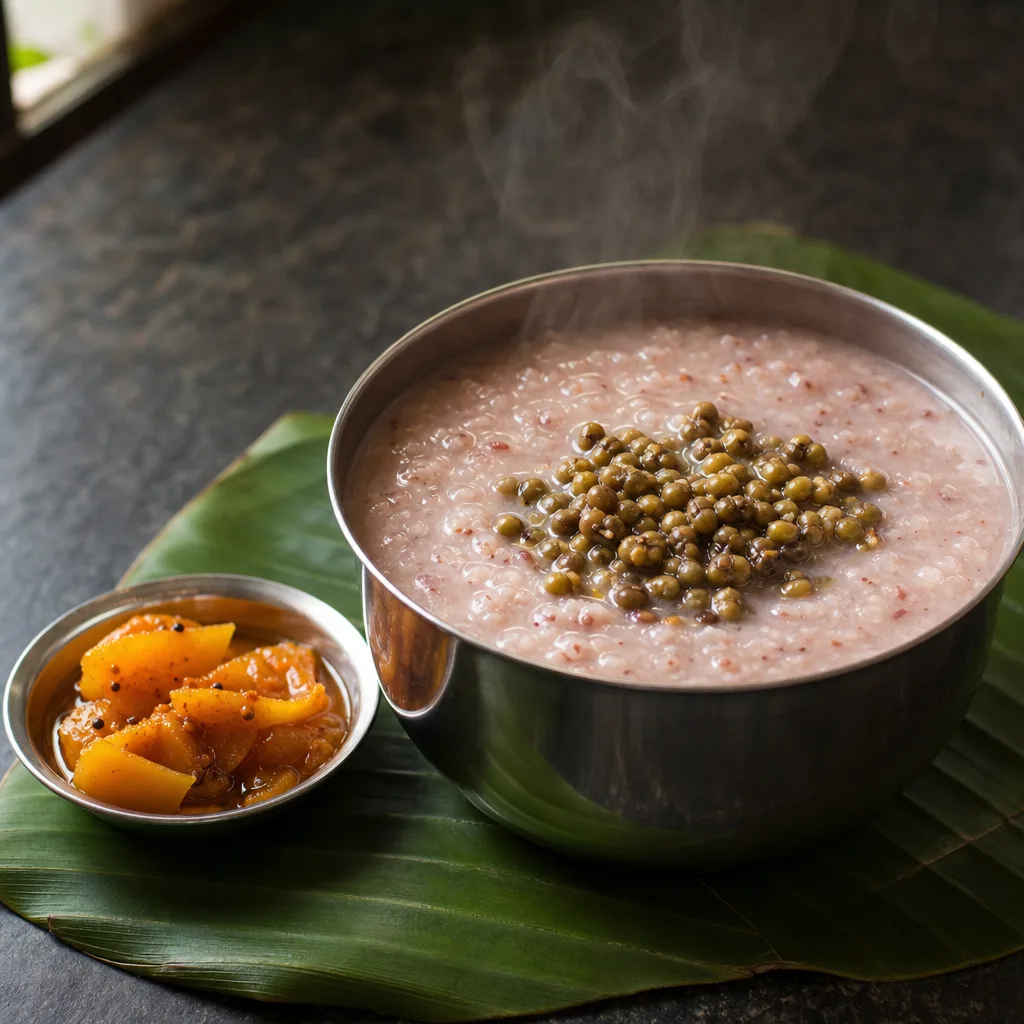
Kanji is the everyday comfort food of Kerala, eaten for breakfast or for a light dinner. This version pairs the gruel with whole green moong – cherupayar – cooked separately and stirred in or served alongside. The rice cooks down to a thick, flowing porridge, pale and starchy, with the moong adding a gentle earthiness and enough body to make it a proper meal.
Most Kerala households use matta rice, the red-bran parboiled rice that gives kanji its characteristic slightly nutty flavour and a light pink tinge. Some families, especially in Malabar, use raw white rice for a cleaner, lighter gruel. The cherupayar is cooked until the skins just begin to split but the grains hold their shape; overcooked moong turns the bowl muddy.
This is not a dressed-up dish. It is finished with nothing but salt. The accompaniments – pickle, pappadam, a small bowl of coconut chutney, or a piece of raw banana – are set at the table separately, and each person adjusts their own bowl. In many households a small pour of coconut oil goes in at the end, stirred through just before eating.
Ingredients (serves 4)
For the kanji
For the cherupayar
Method
Rinse the rice
Put the matta rice in a heavy pot and rinse it in two changes of water, rubbing the grains gently. The water will run a light pink from the bran; that is normal. Drain and leave the rice in the pot.
Start the gruel
Add 1.5 litres of water to the pot with the rice. Bring to a full rolling boil over high heat, then reduce to a steady medium simmer. Do not cover fully; leave the lid slightly ajar so it does not boil over.
Cook the rice low and slow
Simmer for 35 to 45 minutes, stirring every 8 to 10 minutes and scraping the bottom of the pot. Matta rice takes longer than raw white rice to break down. You are looking for grains that have fully bloomed open and a broth that has thickened to a flowing, porridge-like consistency – it should coat the back of a spoon but still pour. Add hot water in 100 ml additions if it thickens too fast before the grains are fully cooked.
Cook the cherupayar separately
While the rice cooks, put the rinsed green moong in a small saucepan with 400 ml water and a pinch of salt. Bring to a boil, then reduce to a medium simmer. Cook for 20 to 25 minutes. The moong is ready when the skins have just begun to split and the grains are fully tender but still holding their shape – press one between your fingers; it should crush without resistance. Do not let them turn to mush.
Drain the moong
Drain the cooked cherupayar through a colander. Reserve the cooking liquid if you like; some households stir a little of it into the kanji for extra body. Set the moong aside.
Season the kanji
Once the rice gruel has reached a smooth, flowing consistency, taste and add salt. Stir well and cook for another 2 minutes so the salt is absorbed evenly through the gruel.
Serve immediately
Ladle the kanji into deep bowls or steel tumblers. Spoon a portion of the cooked cherupayar on top or into a small separate bowl alongside. Serve at once; kanji thickens quickly as it cools, and the moong should be added just before eating.
How to serve
Mango pickle (uppumanga or kadumanga), pappadam, raw shallots, a piece of raw banana, or a small bowl of fresh coconut chutney. A few drops of coconut oil stirred into the bowl at the table is common in many households.
Served with: Mango pickle (uppumanga or kadumanga), pappadam, raw shallots, a piece of raw banana, or a small bowl of fresh coconut chutney. A few drops of coconut oil stirred into the bowl at the table is common in many households.
Cook's tips
Matta rice versus raw white rice
Matta rice takes longer to cook and gives a fuller, slightly earthy flavour with a faint pink tinge to the gruel. Raw white rice (pachari) makes a whiter, lighter kanji and is ready in about 20 minutes. Both are traditional; the choice is a household preference.
The gruel thickens as it sits
Kanji is always thicker in the bowl than in the pot. Take it off the heat when it still looks slightly looser than you want. If it thickens too much before serving, stir in a little boiling water.
Do not rush the moong
Undercooked cherupayar is hard in the centre and unpleasant. If you are unsure, cook them a full 5 minutes longer than you think necessary. They should be completely soft but not split into a paste.
Pressure cooker shortcut
Many modern households cook the rice in a pressure cooker with the same water ratio for 3 to 4 whistles on medium heat, which cuts the time to about 15 minutes. The texture is slightly different – a little more uniform – but it is a genuinely common method. The cherupayar can be pressure-cooked separately for 2 whistles.
Storing leftovers
Leftover kanji can be refrigerated for a day. It will set almost solid when cold. Reheat gently with a splash of water, stirring constantly. The moong is best cooked fresh each time.
Regional variations
Kanji is also made with matta rice alone (without cherupayar) and eaten with pickle and pappadam; Mappila households sometimes cook rice and cherupayar together with coconut milk for a richer version called 'paal kanji'; Tamil Nadu has its own rice kanji tradition eaten with mor milagai.
Glossary
- Kanji കഞ്ഞി
- Rice gruel or porridge; the everyday staple meal of Kerala, cooked to varying thicknesses depending on the household and occasion.
- Cherupayar ചെറുപയർ
- Whole green moong beans; 'cheru' means small, 'payar' means bean. A common protein companion to kanji across Kerala.
- Matta rice മട്ട അരി
- Red parboiled rice from Kerala, also called rosematta or Palakkadan matta; retains its bran layer, giving it a reddish colour, a firm bite, and a nutty flavour.
- Uppumanga ഉപ്പുമാങ്ങ
- Whole raw mangoes preserved in brine; a classic accompaniment to kanji.
- Pachari പച്ചരി
- Raw (unparboiled) white rice, as distinct from the parboiled matta rice.
Two things decide whether this kanji is worth eating: the rice must be cooked long enough that every grain has fully bloomed open and the gruel has become genuinely silky, not just watery; and the cherupayar must be tender all the way through without collapsing into paste. Get those two textures right and the dish needs nothing else.
More Rice Dishes recipes
Kuthari Choru
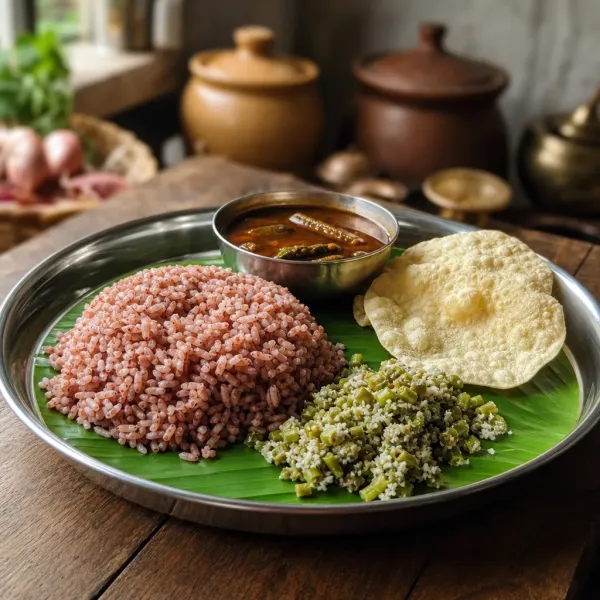
Traditional Kerala matta rice cooked by the open-boil-and-drain method with a second steam sitting. Step-by-step household recipe for kuthari choru.
Karuveppilai Sadam (Curry Leaf Rice)
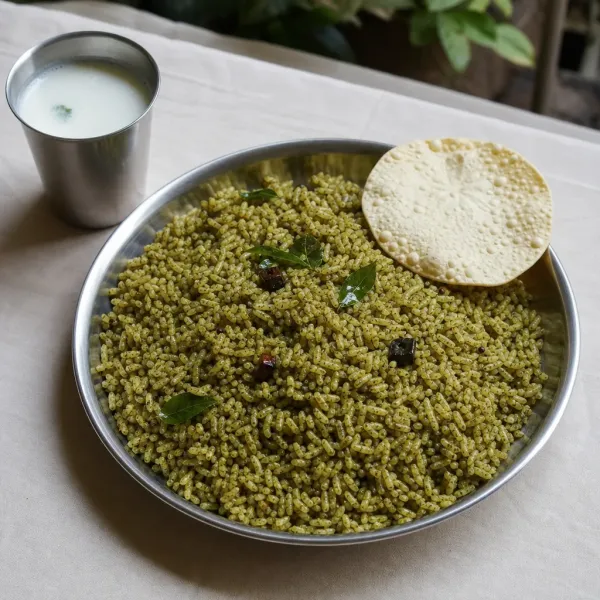
Traditional Tamil Iyer recipe for karuveppilai sadam: cooked rice mixed with a dry-roasted curry leaf spice powder and gingelly oil. Ready in 40 minu…
Nei Choru (Kerala Ghee Rice)
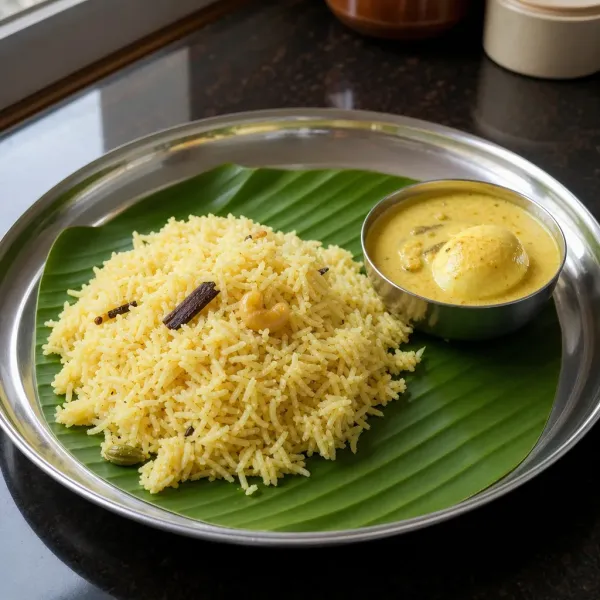
Traditional Malabar Mappila nei choru made with jeerakasala rice, pure ghee and whole spices. Step-by-step household method for perfectly separate, f…
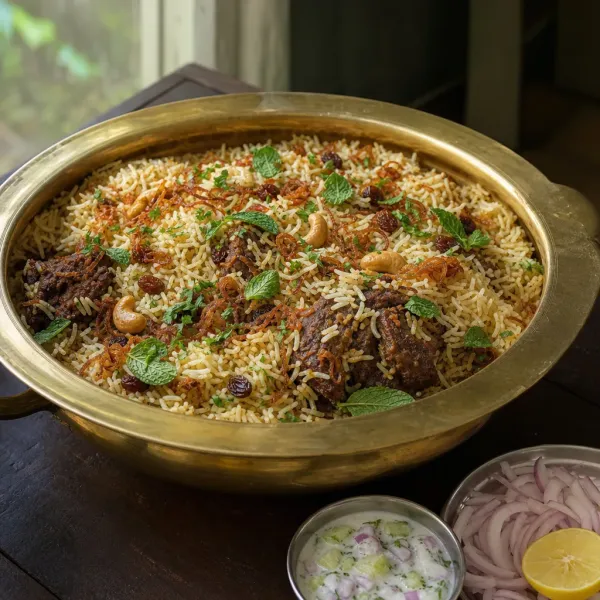
Malabar Mutton Dum Biryani
Traditional Malabar Mappila mutton dum biryani with Kaima rice, whole spices, and a sealed dum finish. Household recipe from northern Kerala.
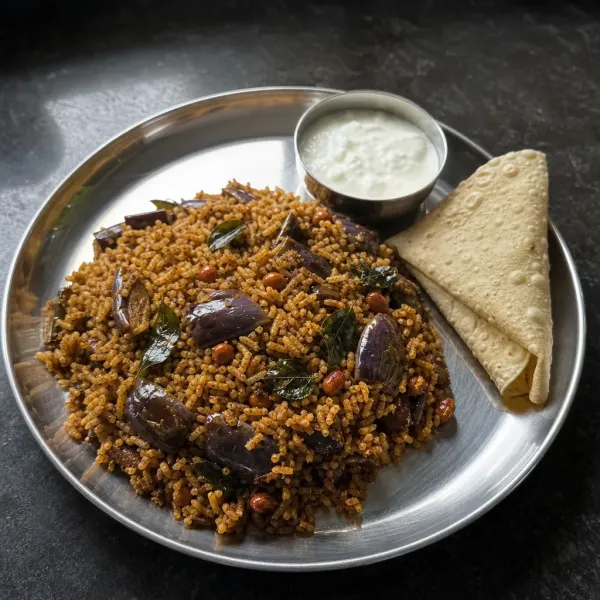
Vangi Bath
Authentic Karnataka vangi bath with freshly ground dry masala of kopra, dagad phool and byadagi chilli. Step-by-step traditional household recipe.
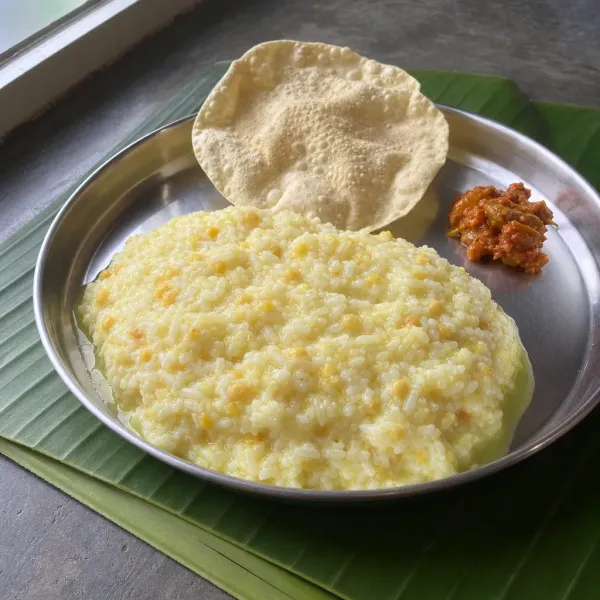
Paruppu Sadam
Traditional Iyer-style paruppu sadam: soft raw rice stirred with toor dal and finished with ghee, the first course of a Tamil Brahmin meal.