

Malabar Mutton Dum Biryani Recipe
Malayalam മലബാർ മട്ടൺ ദം ബിരിയാണിTamil மலபார் மட்டன் தம் பிரியாணிKannada ಮಲಬಾರ್ ಮಟನ್ ದಮ್ ಬಿರಿಯಾನಿTelugu మలబార్ మటన్ దమ్ బిర్యానీ
- Prep45 min
- Cook1 hr 30 min
- Serves6
- DifficultyHard
- DietNon-vegetarian
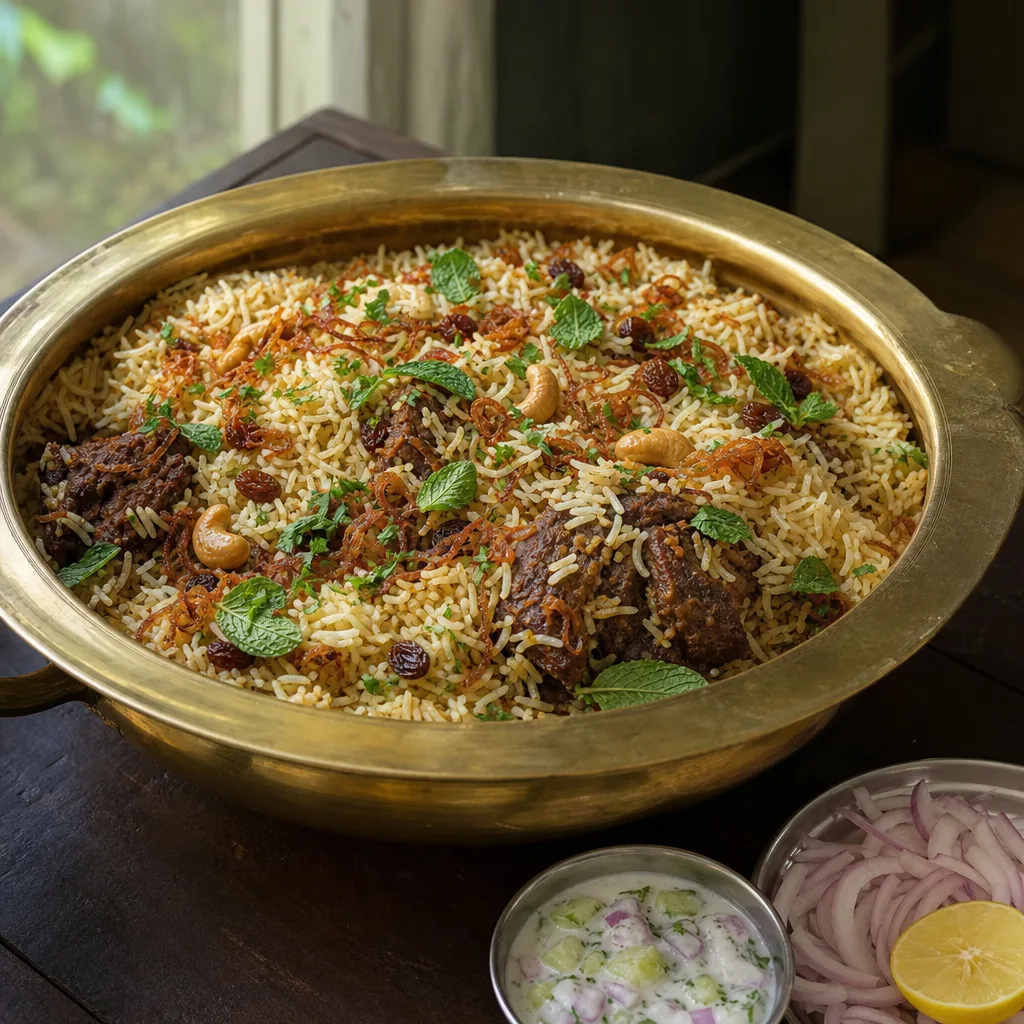
This is Malabar Mappila biryani, the version cooked in Muslim households along the northern Kerala coast from Kozhikode up through Kannur and Kasaragod. It is built on Kaima rice, a short-grain, intensely aromatic variety grown in the region, and on mutton that is cooked separately into a thick, dark gravy before the rice ever meets it. The two come together only at the dum stage, sealed in a pot and finished over a slow fire.
The spicing is warm and rounded rather than sharp. Whole spices do most of the work. The tomato, which appears in many modern recipes, is absent in older Malabar households; the sourness comes from curd and, in some families, a small piece of kudampuli in the gravy. Fried shallots and fried cashews go in at layering; raisins are optional and some families leave them out entirely.
This is wedding food and Eid food, but it is also cooked on Fridays in homes where the men come back from the mosque hungry. It is eaten with a cooling raita and a date pickle, though in many homes a simple sliced-onion-and-lemon salad is all that accompanies it.
Ingredients (serves 6)
For the rice
For the mutton
For the layering
Method
Marinate the mutton
In a large bowl, combine the mutton with the ginger paste, garlic paste, curd, coriander powder, red chilli powder, turmeric, garam masala, and salt. Mix well so every piece is coated. Let it sit for at least 30 minutes at room temperature, or up to 2 hours if your kitchen is cool. The curd tenderises the meat and the spices begin to penetrate; do not rush this.
Fry the garnishes
Heat enough coconut oil in a wide kadai to shallow-fry. Fry the sliced shallots in batches over medium heat, stirring often, until they are deep amber and crisp — this takes 12 to 15 minutes per batch. Do not rush by raising the heat or they will burn bitter. Remove and drain on a plate. In the same oil, fry the cashews until pale gold, then the raisins for 30 seconds. Set all three aside separately.
Cook the mutton gravy
In a heavy-bottomed pot or a large uruli, heat 80 ml coconut oil over medium heat. Add the whole spices — cardamom, cloves, cinnamon, star anise — and let them sizzle for 30 seconds. Add the sliced shallots and cook, stirring, until they are soft and beginning to colour, about 10 minutes. Add the slit green chillies and stir for a minute. Now add the marinated mutton with all its marinade. Stir well, raise the heat to medium-high, and cook uncovered for 10 minutes, turning the pieces, until the curd dries out and the masala begins to coat the meat and fry rather than steam.
Finish the gravy
Reduce the heat to low, add about 100 ml water, cover tightly and cook until the mutton is just tender — 35 to 45 minutes depending on the age of the animal. Check twice and add small splashes of water if it catches. When done, the gravy should be thick and dark, clinging to the pieces, with very little liquid pooling at the bottom. Taste for salt. The mutton should be cooked through but not falling off the bone; it will cook further in the dum.
Parboil the rice
Bring 1.8 litres of water to a rolling boil in a large pot. Add salt generously — the water should taste like a light broth. Add the whole spices (cardamom, cloves, cinnamon, bay leaf) and then the soaked, drained rice. Cook uncovered over high heat, stirring once or twice, until the rice is about 70 percent done — the grains should have a small white core when you press one between your fingers. This takes 6 to 8 minutes from when the rice goes in. Drain immediately through a colander and spread loosely. Do not let it sit in hot water or it will overcook.
Layer the biryani
Use the same heavy pot you cooked the mutton in, or a wide, deep vessel with a tight-fitting lid. Spread the mutton and its gravy in an even layer at the bottom. Scatter half the fried shallots, half the cashews, half the raisins, a handful of coriander, and a handful of mint over the mutton. Spoon the parboiled rice over this in an even layer. Scatter the remaining fried shallots, cashews, raisins, coriander, and mint over the rice. Drizzle the saffron water, the rose water, and the coconut oil or ghee over the top.
Seal and dum
Cover the pot tightly. If your lid does not seal well, press a rope of soft dough made from atta and water around the rim to seal it completely — this is the traditional method and it matters. Place the pot over the lowest possible heat. If you have a tawa or flat griddle, set it under the pot to diffuse the heat further. Cook on dum for 20 to 25 minutes. You will smell the spices intensify and a little steam may escape at the edges of the dough seal. Do not lift the lid before 20 minutes.
Rest and open
Remove from the heat and let the pot rest, still sealed, for 10 minutes. Break the seal at the table if you like, or in the kitchen. Open gently; the steam inside is very hot. Use a wide, flat spoon or spatula to serve, reaching down to bring up both rice and mutton together from the bottom. Do not stir — lift and plate in sections so the layers remain visible.
How to serve
A simple raita of sliced shallots, cucumber, and curd; sliced raw onion with lemon and green chilli; date and lime pickle (eenthapazham achar). In many Malabar homes, a small bowl of pappadam is also set out.
Served with: A simple raita of sliced shallots, cucumber, and curd; sliced raw onion with lemon and green chilli; date and lime pickle (eenthapazham achar). In many Malabar homes, a small bowl of pappadam is also set out.
Cook's tips
Kaima rice is not optional
Basmati will give a different dish entirely — longer, drier, and without the characteristic fragrance. Kaima (also sold as Jeerakasala or Khyma) is available at Kerala grocery stores and online. The shorter grain holds its shape under dum without turning mushy, which basmati tends to do in this method.
The 70 percent rule for parboiling
If you parboil the rice fully, the dum stage will make it mushy. Press a grain between your thumb and finger — it should yield but still have a hard white line at the centre. If it crushes completely, drain immediately regardless of timing.
Dough seal versus a wet cloth
Some households press a damp cloth between the pot and lid instead of dough. The dough seal is more reliable for a complete seal, especially if your pot lid is slightly warped. Either works if the steam stays in.
Mutton quality and cooking time
Older animals need longer. If the mutton is not tender after 45 minutes, cook it further before layering — never try to finish tough meat in the dum, because the rice will overcook before the meat does.
Pressure cooker shortcut
Some households pressure cook the mutton for 2 whistles before layering, reducing the gravy stage to 10 minutes. This is genuinely common and does not ruin the dish. The dum stage remains the same.
Regional variations
Thalassery biryani uses Kaima/Jeerakasala rice and a distinctly lighter spice profile; Hyderabadi Mappila-influenced dum biryani exists in some households; Kozhikode and Kannur households differ on whether fried onions are layered or mixed into the gravy.
Glossary
- Kaima rice കൈമ അരി
- A short-grain, intensely aromatic rice variety grown in Malabar, also called Jeerakasala; the traditional rice for Malabar biryani.
- Dum دم
- A sealed slow-cooking technique, Urdu in origin, where the pot is closed airtight and the dish finishes in its own trapped steam.
- Cheriya ulli ചെറിയ ഉള്ളി
- Small red shallots used throughout Kerala cooking; sweeter and more pungent than large onions.
- Uruli ഉരുളി
- A wide, shallow, thick-bottomed brass or bell-metal vessel traditional to Kerala kitchens; excellent for even heat distribution.
- Garam masala (Malabar) ഗരം മസാല
- In Malabar Mappila cooking this refers to a locally ground blend of cardamom, clove, cinnamon, star anise and mace — distinct from the North Indian commercial blend.
Two things decide this biryani: the rice must be exactly 70 percent cooked before it goes into the pot, and the dum seal must hold completely. Get those right and the layered steam does the rest — the rice finishes in the fragrance of the mutton below it, and the meat stays moist rather than drying out on direct heat.
More Rice Dishes recipes
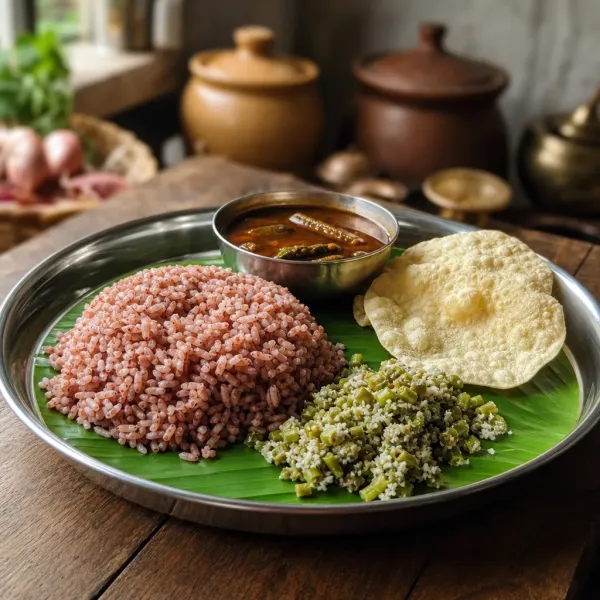
Kuthari Choru
Traditional Kerala matta rice cooked by the open-boil-and-drain method with a second steam sitting. Step-by-step household recipe for kuthari choru.
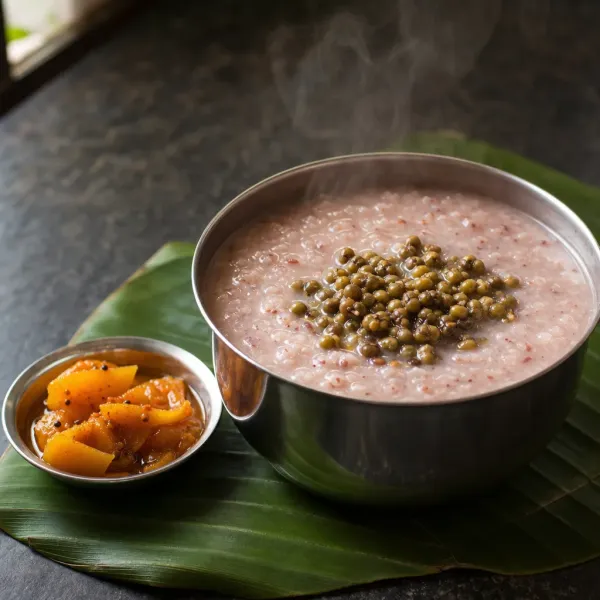
Kanji with Cherupayar
Traditional Kerala kanji made with matta rice cooked to a silky gruel, served with whole green moong. Simple, nourishing, and made the household way.
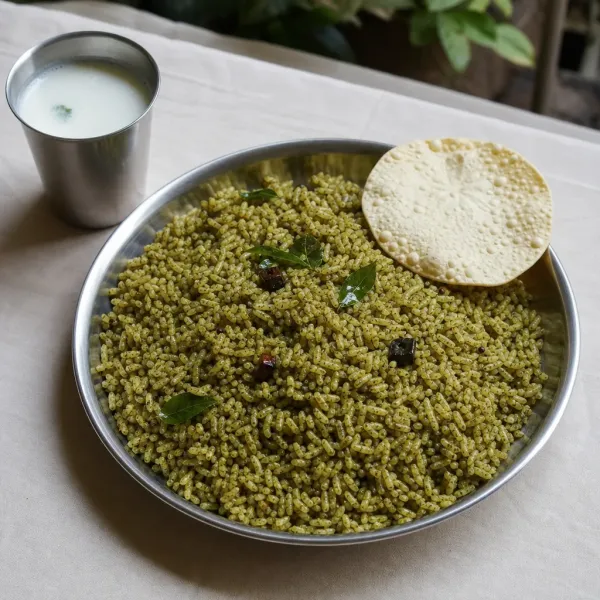
Karuveppilai Sadam (Curry Leaf Rice)
Traditional Tamil Iyer recipe for karuveppilai sadam: cooked rice mixed with a dry-roasted curry leaf spice powder and gingelly oil. Ready in 40 minu…
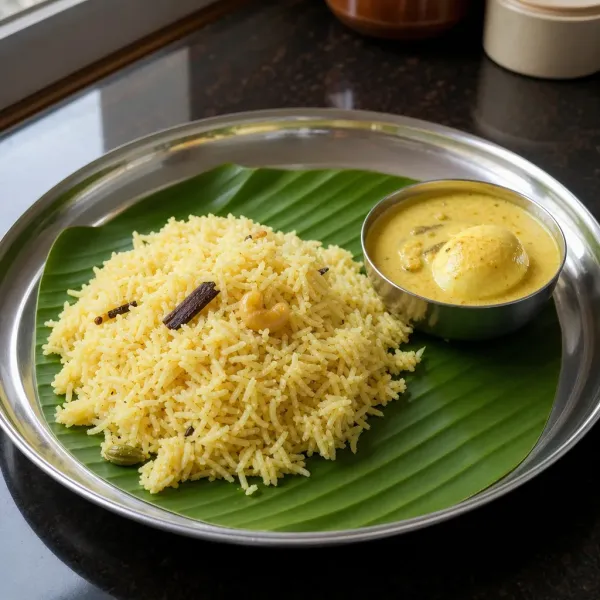
Nei Choru (Kerala Ghee Rice)
Traditional Malabar Mappila nei choru made with jeerakasala rice, pure ghee and whole spices. Step-by-step household method for perfectly separate, f…
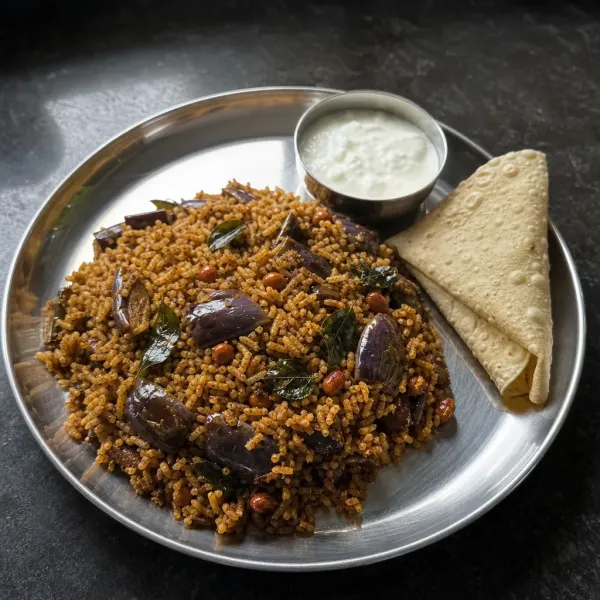
Vangi Bath
Authentic Karnataka vangi bath with freshly ground dry masala of kopra, dagad phool and byadagi chilli. Step-by-step traditional household recipe.
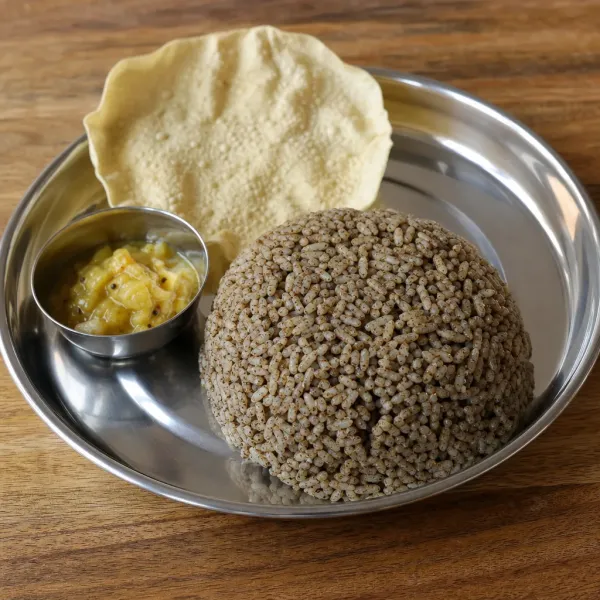
Milagu Sadam
Traditional Iyer-style milagu sadam: cooked rice mixed with freshly roasted pepper-cumin paste and ghee tempering. A simple, warming Tamil Brahmin ri…