

Kuthari Choru Recipe
Malayalam കുതരി ചോറ്Tamil குத்தரிசி சோறுKannada ಕುತರಿ ಅನ್ನTelugu కుతరి అన్నం
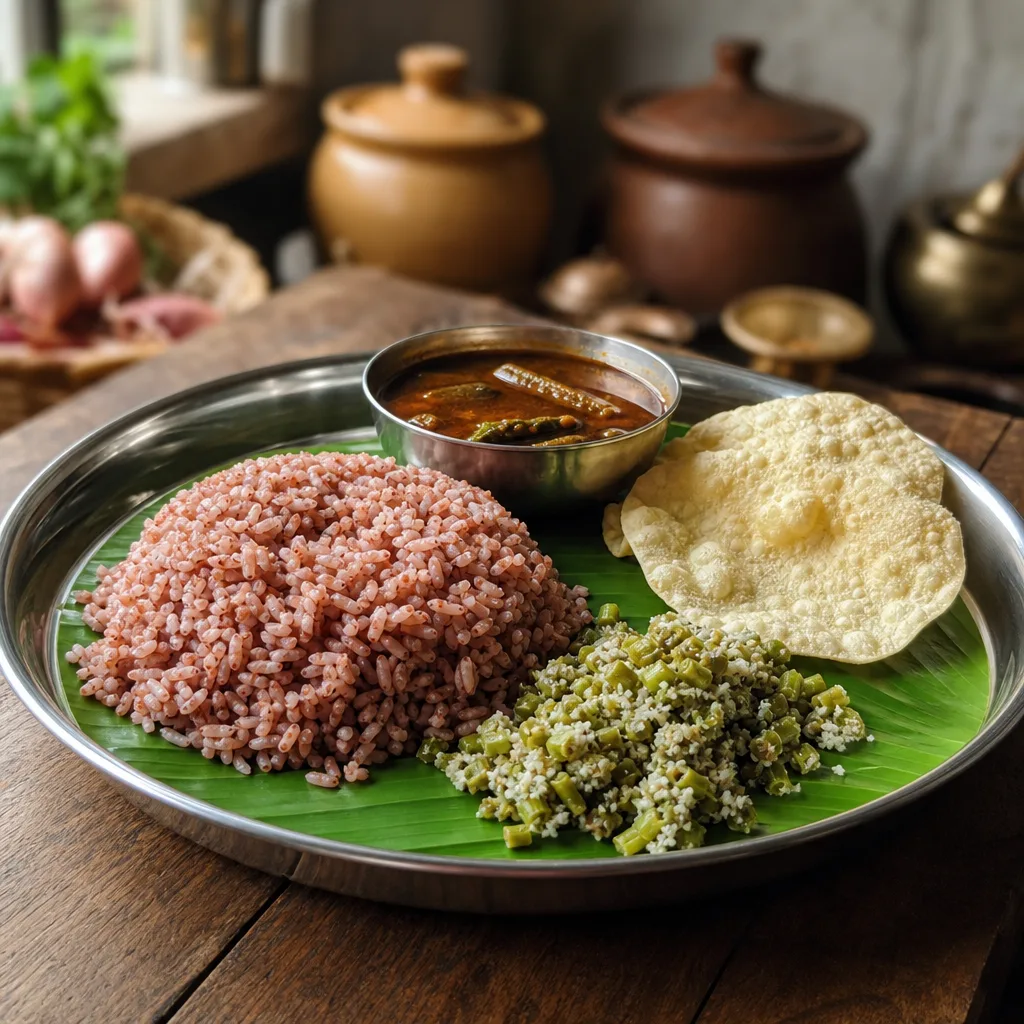
- Prep5 min
- Cook45 min
- Serves4
- DifficultyEasy
- DietVegan
Matta rice — the short, reddish, parboiled grain grown in Palakkad and sold across Kerala as kuthari or rosematta — is the everyday rice of most Kerala households. It is not polished white; it carries the bran layer, which gives it a faint nuttiness and a pleasantly firm bite even when fully cooked. The grains swell considerably more than raw white rice, so you use less than you think.
The method here is the traditional one: a wide, heavy-bottomed vessel, plenty of water, an open boil, and then draining. Some older households steam it a second time after draining, setting the pot back on a low flame so the residual steam finishes the centre of each grain without making it mushy. That second sitting is worth doing; it is what separates fluffy, separate grains from a sticky mass.
This rice is eaten at every meal in a Kerala home. At noon it comes with sambar, one or two kootan (curries), a thoran, and papadam. In the evening the leftover rice is soaked in water overnight to make pazhankanji, eaten the next morning with green chilli, shallots, and a little coconut oil. Households differ mainly in the water ratio and the exact soaking habits of the cook.
Ingredients (serves 4)
For the rice
Method
Rinse the rice
Put the matta rice in a heavy pot and cover with cold water. Rub the grains between your palms and pour off the water; it will run reddish-brown from the bran. Repeat two or three times until the water is only faintly cloudy. Drain completely.
Bring a large volume of water to a rolling boil
Pour 2 litres of water into the pot and bring it to a full, rolling boil over high heat. Use a pot that is wider than it is tall; matta rice needs room to move freely. Salt the water lightly if you are using salt.
Add the rice and stir once
Tip the drained rice into the boiling water. Stir once with a wooden spoon to prevent any grains sticking to the base. Do not cover the pot. Keep the heat high so the water returns to a boil within a minute or two.
Boil openly, skimming if needed
Let the rice boil vigorously and openly for 25 to 30 minutes. Matta takes longer than white rice; do not rush this. After 20 minutes, fish out a grain and press it between your fingers — it should give completely with no hard white core at the centre. If there is any resistance, give it five more minutes.
Test for doneness
Take one grain and press it flat. It should be fully soft all the way through, slightly sticky on the outside, and the reddish skin should have split slightly. The colour of the water will be a deep reddish-brown from the bran — this is correct.
Drain through a colander
Set a large colander in the sink. Pour the rice and cooking water through it in one steady movement. Shake the colander once or twice to shed excess water. Do not rinse the rice with fresh water; you will wash away flavour and cool the grains unevenly.
Return to the pot for the second sitting
Tip the drained rice back into the empty pot. Set the pot on the lowest possible flame, cover tightly with a lid, and leave for 8 to 10 minutes. The steam trapped inside the pot will finish cooking the very centre of each grain and dry the surface just enough to keep them separate. Do not lift the lid during this time.
Rest and serve
Take the pot off the heat and leave it covered for another 3 to 4 minutes. When you lift the lid, the grains should look plump and separate, pale reddish-pink, with no pooled water at the bottom. Fluff gently with a spoon and serve immediately on a banana leaf or steel plate.
How to serve
Sambar, a vegetable thoran (dry-cooked with coconut), a fish or meat kootan, moru (buttermilk), papadam, and raw shallots and green chilli on the side. Leftover rice soaked overnight in water becomes pazhankanji, eaten the next morning with a drizzle of coconut oil.
Served with: Sambar, a vegetable thoran (dry-cooked with coconut), a fish or meat kootan, moru (buttermilk), papadam, and raw shallots and green chilli on the side. Leftover rice soaked overnight in water becomes pazhankanji, eaten the next morning with a drizzle of coconut oil.
Cook's tips
Water ratio is not fixed
The open-boil-and-drain method frees you from counting cups of water. Use plenty — at least five times the volume of rice — and drain. This is more forgiving than the absorption method, which can leave matta undercooked in the centre if you measure too tightly.
The second sitting is not optional
If you skip the covered rest on a low flame, the grains will be cooked but slightly wet on the outside. The second sitting is what gives the rice its characteristic texture — firm, separate, and not gummy.
Matta takes longer than you expect
New cooks consistently undercook matta by pulling it off at 20 minutes. The bran layer slows water penetration. If the centre of the grain is still chalky when pressed, put it back. An extra five minutes will not ruin it; five minutes short will.
Pressure cooker shortcut
Many households cook matta in a pressure cooker with 1:2.5 ratio (rice to water) for 3 to 4 whistles on medium heat. The texture is softer and slightly stickier than the open-boil method, which some prefer. This is genuinely common and not a compromise — it is simply a different household habit.
Pazhankanji from leftovers
If you have leftover cooked matta rice, cover it with cool water in a clay pot or steel vessel before bed. By morning the water will have turned slightly sour and the rice will have softened further. This is pazhankanji, eaten with coconut oil, green chilli, and shallots — a complete breakfast in itself.
Regional variations
Some households in north Kerala use a clay pot over a wood fire and allow a light crust to form at the base; Palakkad Iyer households substitute raw white rice entirely.
Glossary
- Kuthari കുതരി
- The Malayalam name for matta or rosematta rice; a short-grain, parboiled red rice grown primarily in Palakkad district.
- Matta rice മട്ട അരി
- The common trade name for Kerala's parboiled red rice; the same grain as kuthari, named after the Mattancherry area where it was historically traded.
- Choru ചോറ്
- Cooked rice in Malayalam; the word used for rice once it has been boiled, as distinct from arri (raw rice).
- Pazhankanji പഴങ്കഞ്ഞി
- Overnight water-soaked leftover rice; eaten as a probiotic morning meal with coconut oil, shallots, and green chilli.
- Thoran തോരൻ
- A dry Kerala stir-fry of vegetables with grated coconut, mustard seeds, and curry leaves; a standard accompaniment to rice.
- Kootan കൂട്ടാൻ
- A general Kerala term for any curry or gravy dish served with rice.
Two things decide whether matta rice turns out well: cooking it long enough in the open boil so there is no raw white core, and giving it the second covered sitting on low heat so the surface dries and the grains separate. Rush either of those and you get a sticky, wet pot of rice that is still somehow undercooked in the middle.
More Rice Dishes recipes
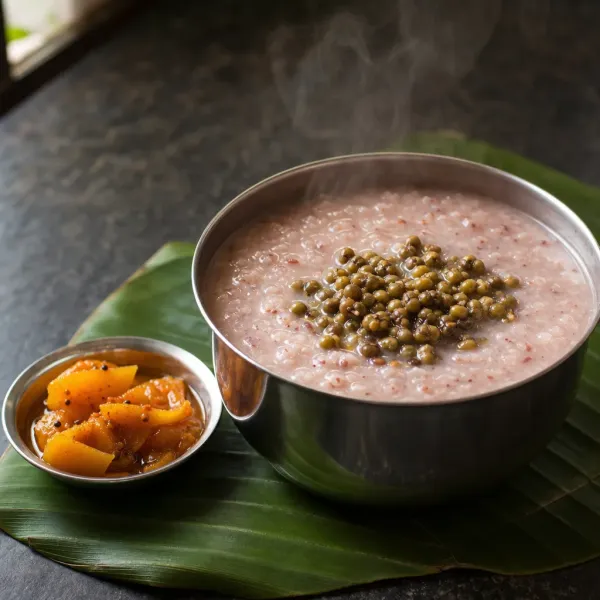
Kanji with Cherupayar
Traditional Kerala kanji made with matta rice cooked to a silky gruel, served with whole green moong. Simple, nourishing, and made the household way.
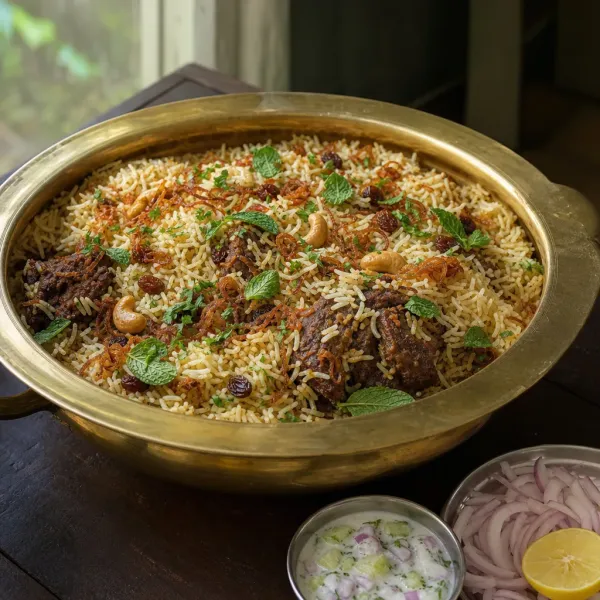
Malabar Mutton Dum Biryani
Traditional Malabar Mappila mutton dum biryani with Kaima rice, whole spices, and a sealed dum finish. Household recipe from northern Kerala.
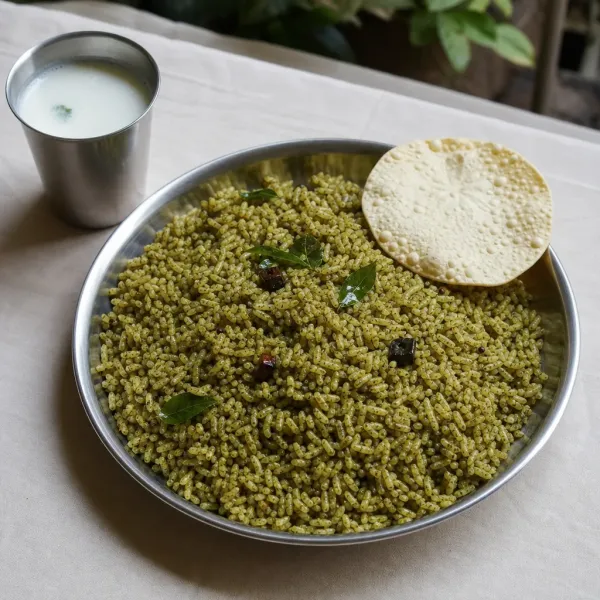
Karuveppilai Sadam (Curry Leaf Rice)
Traditional Tamil Iyer recipe for karuveppilai sadam: cooked rice mixed with a dry-roasted curry leaf spice powder and gingelly oil. Ready in 40 minu…
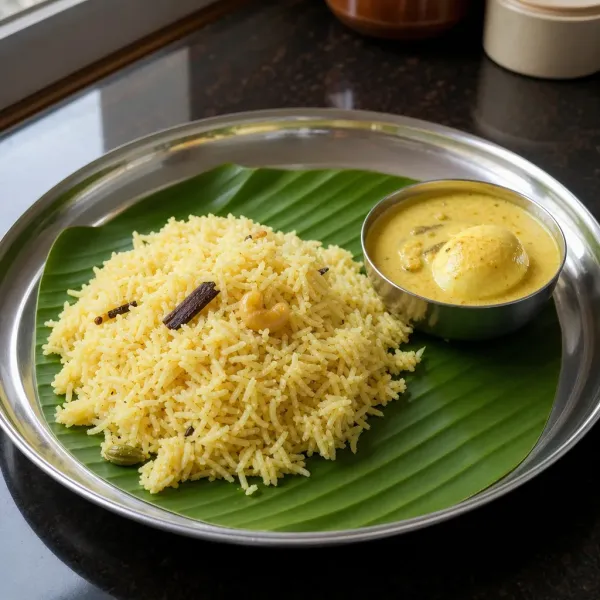
Nei Choru (Kerala Ghee Rice)
Traditional Malabar Mappila nei choru made with jeerakasala rice, pure ghee and whole spices. Step-by-step household method for perfectly separate, f…
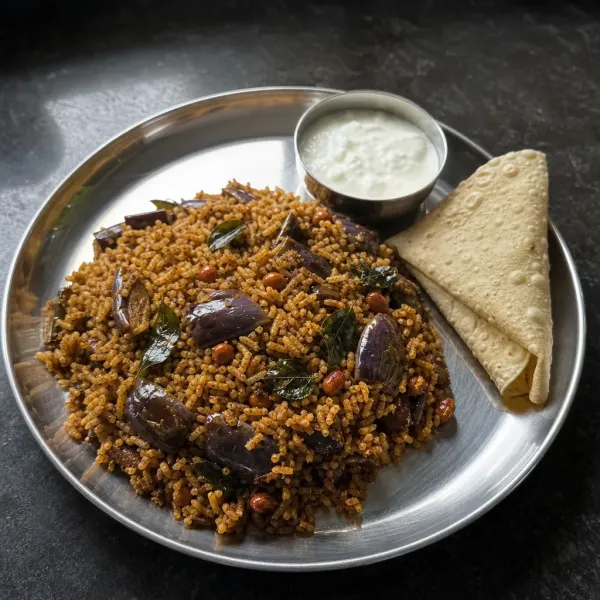
Vangi Bath
Authentic Karnataka vangi bath with freshly ground dry masala of kopra, dagad phool and byadagi chilli. Step-by-step traditional household recipe.
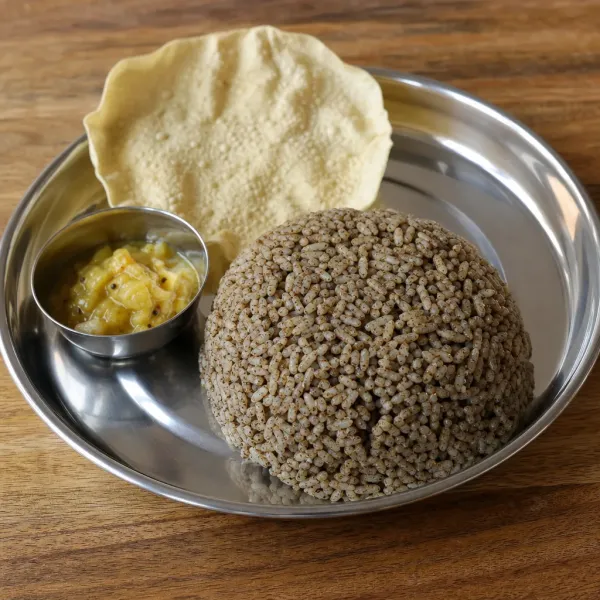
Milagu Sadam
Traditional Iyer-style milagu sadam: cooked rice mixed with freshly roasted pepper-cumin paste and ghee tempering. A simple, warming Tamil Brahmin ri…