

Kozhi Varutharacha Curry Recipe
Malayalam കോഴി വറുത്തരച്ച കറിTamil கோழி வறுத்தரைச்ச கறிKannada ಕೋಳಿ ವರುತ್ತರಚ್ಚ ಕರಿTelugu కోడి వరుత్తరచ్చ కూర
- Prep25 min
- Cook55 min
- Serves4 to 5
- DifficultyMedium
- DietNon-vegetarian
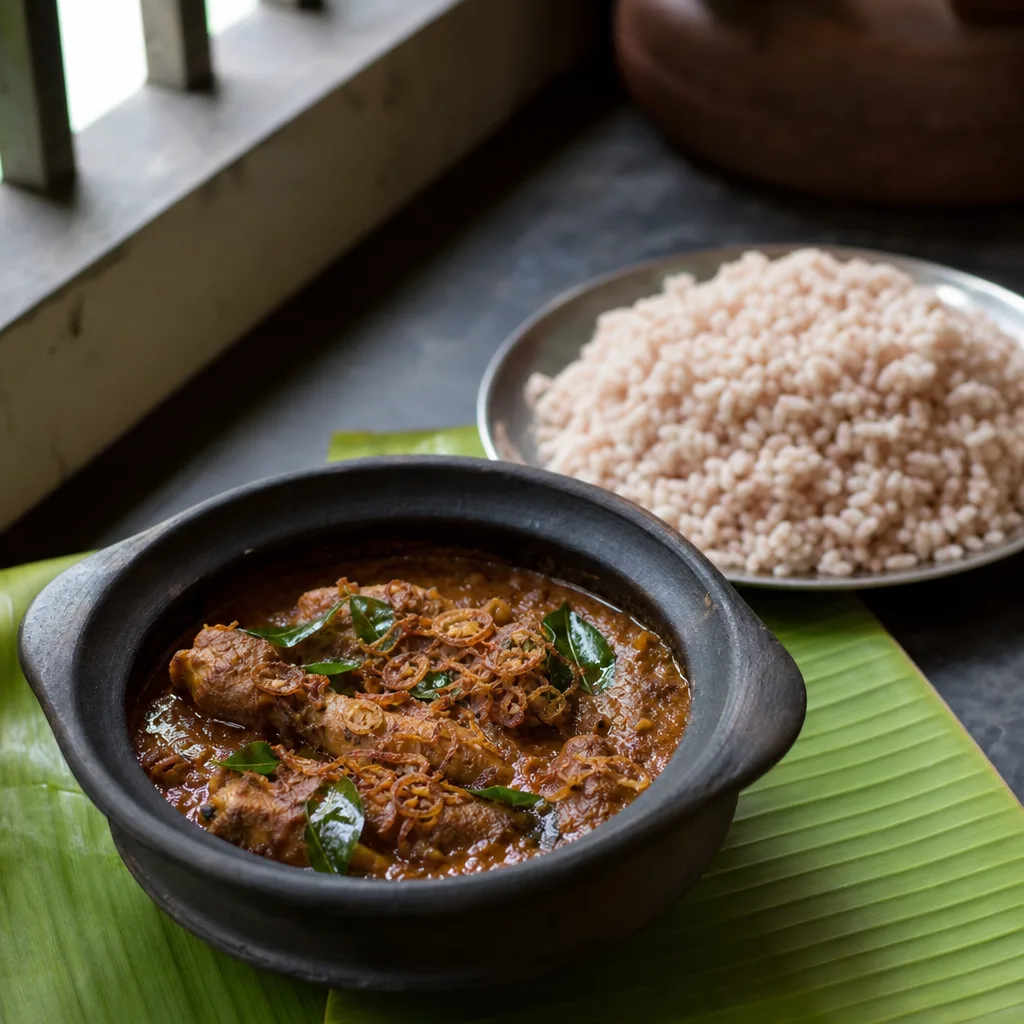
This is a Nasrani kitchen staple, made in Travancore Christian households for Sunday lunch and for the table after a church feast. The name says everything about the method: the coconut is dry-roasted until dark and fragrant before it is ground into the paste that thickens and colours the gravy. That roasting is what separates this from an ordinary coconut chicken curry. The colour of the finished dish is a deep reddish-brown, not white, not orange.
The gravy has body without being heavy. Shallots and tomato are cooked down into the oil before the chicken goes in, and the roasted coconut paste is added only after the meat has had time to take on some colour. The curry sits well overnight and most families find it better the next day, eaten with matta rice or appam.
Household differences are real but small. Some cooks add a piece of kodampuli for a faint sourness; others skip it entirely and rely on the tomato. The level of whole black pepper varies. A few families add a small piece of cinnamon to the coconut while roasting it, which deepens the flavour. The recipe here follows the more common Travancore Nasrani version without kodampuli.
Ingredients (serves 4 to 5)
For the chicken
For the roasted coconut paste
For the curry
For tempering
Method
Marinate the chicken
Rub the chicken pieces with turmeric and salt. Set aside while you prepare everything else, at least 15 minutes. The turmeric will begin to colour the surface a pale yellow.
Dry-roast the coconut and spices
Place a heavy iron or thick-bottomed pan over medium-low heat. Add the grated coconut, black peppercorns, coriander seeds, both kinds of dried red chillies, fennel seeds and cinnamon together. Do not add any oil. Stir constantly and keep the heat moderate. The coconut will release its own moisture first, then begin to dry out and colour. Keep stirring; it catches and burns quickly if you leave it. Roast until the coconut is a deep golden brown to dark brown throughout, not just on the surface, and the kitchen smells of roasted spice, about 12 to 15 minutes. The colour of the finished curry depends entirely on how dark you take this.
Cool and grind the paste
Spread the roasted coconut mixture on a plate and let it cool completely before grinding. Grinding warm coconut turns the paste greasy and the oil separates. Once cool, grind to a very smooth, thick paste in a stone grinder or a mixer-grinder, adding water a tablespoon at a time, no more than 4 to 5 tablespoons total. The paste should be stiff, not runny.
Fry the shallots
Heat 3 tablespoons of coconut oil in a wide, deep pan or manchatti over medium heat. Add the sliced shallots and curry leaves and fry, stirring often, until the shallots are a deep golden brown, about 10 minutes. Do not rush this step; under-fried shallots make the gravy taste raw and sharp.
Add ginger, garlic and green chillies
Add the ginger, garlic and green chillies to the pan. Fry for 3 to 4 minutes until the raw smell of garlic disappears and everything is lightly golden.
Cook the tomatoes down
Add the chopped tomatoes, turmeric and coriander powder. Stir well and cook over medium heat until the tomatoes break down completely and the oil begins to show at the edges of the masala, about 8 minutes. The mixture should look jammy, not wet.
Sear the chicken
Add the marinated chicken pieces to the pan. Increase the heat to medium-high and stir to coat every piece with the masala. Cook, turning occasionally, for 8 to 10 minutes until the chicken loses its raw pink colour and the pieces begin to take on a little colour from the masala. If the pan looks dry, add a splash of water to prevent sticking.
Add the roasted coconut paste
Reduce the heat to medium. Add the roasted coconut paste and stir it through the chicken. The paste will immediately thicken everything. Stir well so the paste coats every piece and does not sit in lumps.
Add water and simmer
Pour in 300 ml of water, stir and bring to a gentle boil. Taste for salt and adjust. Reduce the heat to low, cover the pan and cook for 20 to 25 minutes until the chicken is fully cooked through and the gravy has thickened to a coating consistency. Stir every 5 minutes and check that the bottom is not catching. The gravy should be thick and dark, not soupy.
Finish and temper
Heat 1 tablespoon of coconut oil in a small pan over medium heat. Add the sliced shallots and fry until they are crisp and dark golden. Add the curry leaves and broken dried red chilli, let them splutter for 10 seconds, then pour the entire tempering over the curry. Stir once and take the pan off the heat. Let the curry rest for 5 minutes before serving.
How to serve
Matta rice (rosé rice), appam, or pathiri. A raw shallot and green chilli on the side is common at a Nasrani table.
Served with: Matta rice (rosé rice), appam, or pathiri. A raw shallot and green chilli on the side is common at a Nasrani table.
Cook's tips
How dark to roast the coconut
The coconut should be the colour of dark caramel, not pale gold. If you stop too early the curry will be beige and mild. If you take it to the edge of burning, it turns bitter. Aim for a colour just short of dark chocolate.
Stone grinder versus mixer-grinder
A wet grinder gives a smoother paste that blends into the gravy without visible flecks. A mixer-grinder works but grind in two or three long bursts, scraping down the sides each time. The paste must be genuinely smooth or the texture of the finished curry is gritty.
The curry is better the next day
The roasted coconut paste continues to release flavour as it sits. Reheat gently over low heat with a splash of water if it has thickened too much overnight.
Manchatti versus aluminium
A clay pot (manchatti) gives a slightly earthier flavour and holds heat gently, which suits the long simmer. If you use one, season it before first use and expect the simmer time to be a few minutes longer.
Adjusting heat
The Kashmiri chillies give colour without much heat; the small dried chillies provide the burn. Adjust the small chillies freely. The green chillies in the curry base add a different, fresher heat and most Nasrani cooks would not reduce those.
Regional variations
Mappila households in Malabar make a roasted coconut chicken curry with fennel and kalpasi that differs in spicing; Kodava chicken curry uses roasted coconut but with distinct Coorg spices and pork fat.
Glossary
- Varutharacha വറുത്തരച്ച
- Literally 'roasted and ground'; describes the technique of dry-roasting coconut and spices before grinding them into a paste.
- Cheriya ulli ചെറിയ ഉള്ളി
- Small shallots, the standard allium in Kerala cooking; sharper and more flavourful than the large onion.
- Manchatti മൺചട്ടി
- Unglazed clay cooking pot used across Kerala for curries and stews; imparts a mild earthiness to long-cooked dishes.
- Matta rice മട്ട അരി
- Red parboiled rice from Palakkad; the everyday rice of Kerala households, with a firm texture and nutty flavour.
- Kozhi കോഴി
- Chicken in Malayalam.
Two things decide this curry: how dark you take the coconut during roasting, and how long you fry the shallots before anything else goes into the pan. Get both right and the gravy builds itself; rush either one and no amount of extra spice will recover the depth you lost.
More Chicken recipes
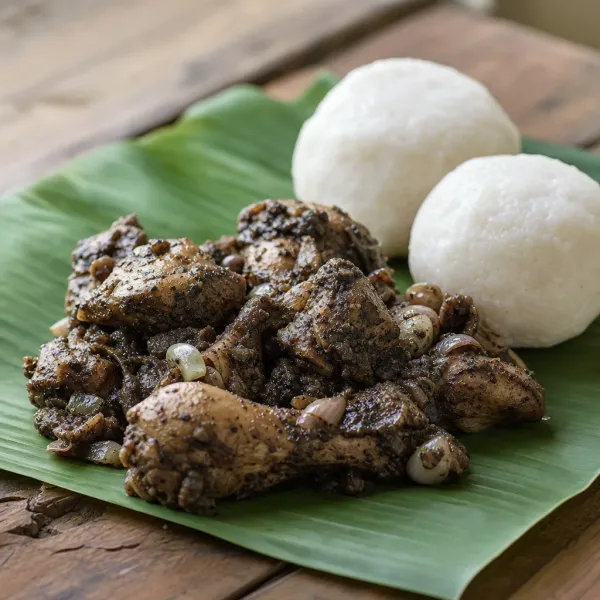
Chicken Uppu Kari
Authentic Kodava chicken uppu kari with black pepper, shallots and kachampuli. Dry-roasted, bone-in, traditional Coorg method. No gravy, no garam mas…
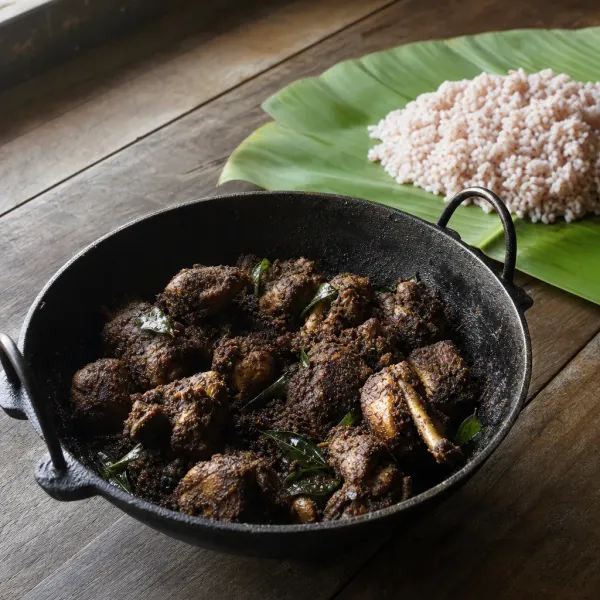
Chicken Chukka
Traditional Chettinad chicken chukka with fresh-ground kalpasi and marathi mokku masala. Dry, dark and deeply spiced. Step-by-step household method.
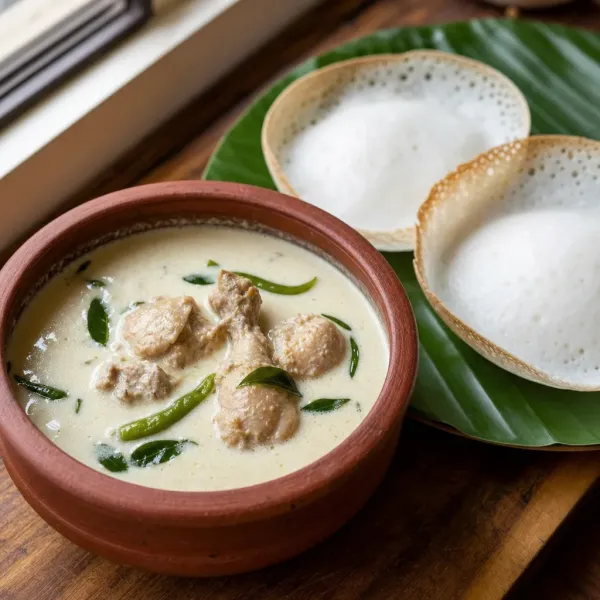
Chicken Mappas
Traditional Kerala Syrian Christian chicken mappas with coconut milk, whole spices and white vinegar. Served with appam or idiyappam. Authentic Nasra…
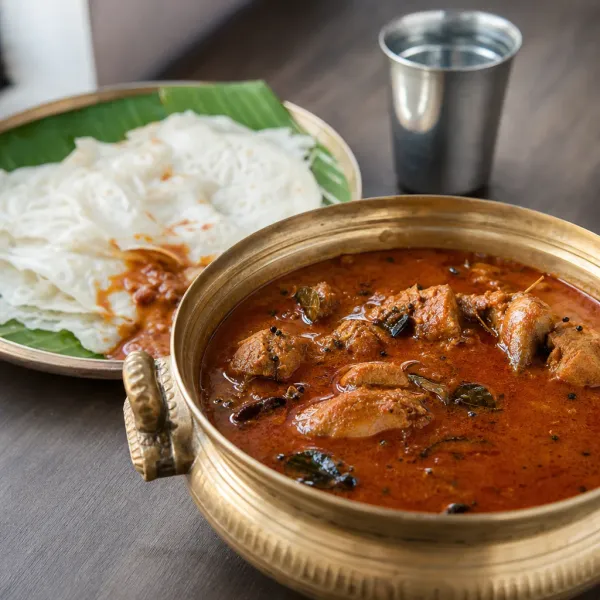
Kori Gassi
Authentic Bunt-style Kori Gassi from coastal Karnataka: chicken in a roasted coconut and byadagi chilli gravy, served with Kori Rotti or neer dosa.
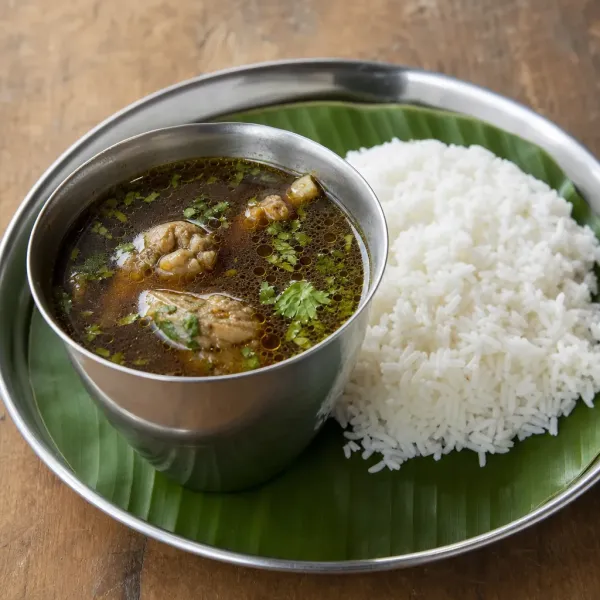
Nattu Kozhi Rasam
Traditional Kongunad nattu kozhi rasam: country chicken simmered with black pepper, cumin, marathi mokku and gingelly oil. A real household recipe.
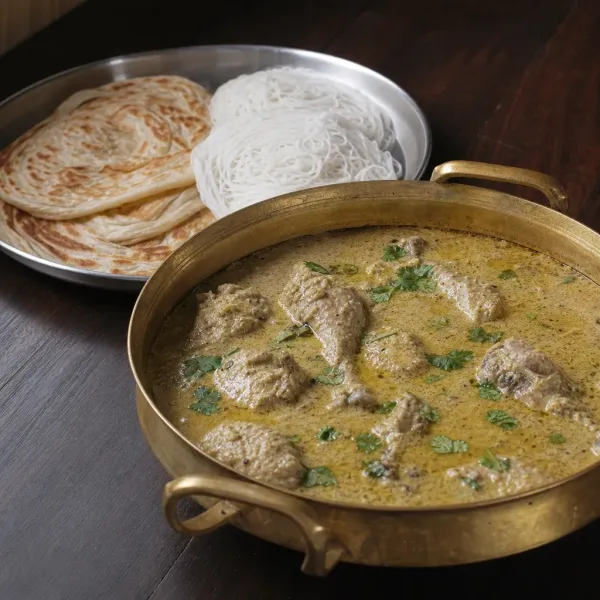
Mappila Chicken Kurma
Authentic Malabar Mappila chicken kurma with freshly ground coconut-cashew paste. The traditional partner for parotta and idiyappam. Step-by-step rec…