

Chicken Mappas Recipe
Malayalam ചിക്കൻ മാപ്പാസ്Tamil சிக்கன் மாப்பாஸ்Kannada ಚಿಕನ್ ಮಾಪ್ಪಾಸ್Telugu చికెన్ మాప్పాస్
- Prep20 min
- Cook45 min
- Serves4
- DifficultyMedium
- DietNon-vegetarian
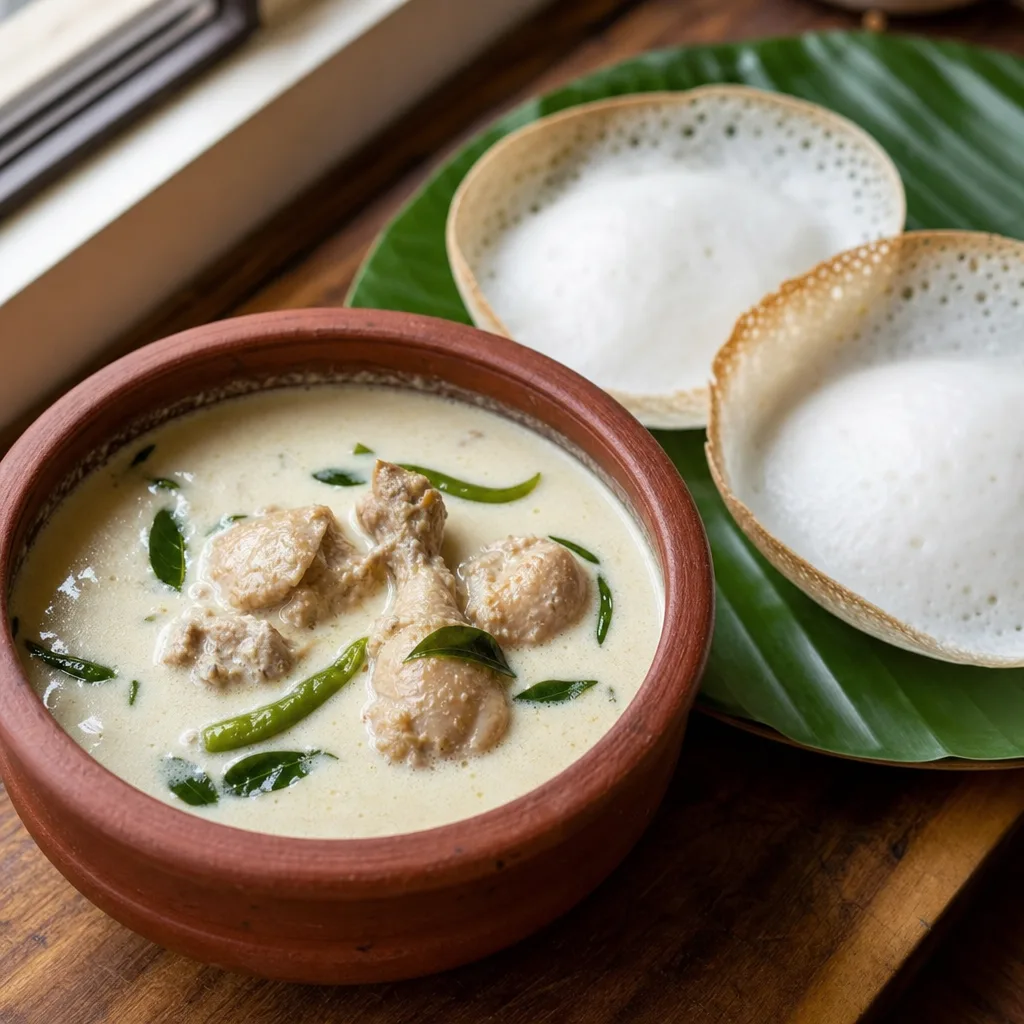
Chicken mappas is a Kerala Syrian Christian curry, cooked in every Nasrani home from Kottayam to Thiruvalla. It is a coconut-milk curry, pale and fragrant, with whole spices doing most of the aromatic work. The heat is gentle by design. This is Sunday food, the kind that sits in a clay pot on the stove while the family comes back from church.
The name likely comes from the Portuguese 'molho', meaning sauce, which tells you something about the trading history of these communities along the backwaters. The gravy is thin enough to pool around appam or idiyappam, and that is exactly what it is meant to do. It is not a thick, reduced curry. If it looks like a stew, you are on the right track.
Households differ mostly in two places: some cooks add a small piece of cinnamon and a couple of cloves to the whole-spice tempering, others keep it to cardamom and pepper. Some use a little vinegar at the end for brightness; others do not. The version here uses vinegar in the traditional Travancore manner. The fat is coconut oil throughout.
Ingredients (serves 4)
For the chicken
For the curry
Method
Season the chicken
Rub the chicken pieces with the turmeric and salt. Set aside while you prepare the other ingredients. Do not marinate for long; this is just a light seasoning, not a marinade.
Extract the coconut milk
If using a fresh coconut, grate the flesh and extract the milk in two stages. Blend the grated coconut with 200 ml warm water, squeeze through a muslin cloth and set this thick first milk aside. Add another 300 ml warm water to the squeezed coconut, blend again and strain; this is your thin second milk. Keep the two extractions separate. If using a coconut milk block, dissolve a quarter of the block in 300 ml warm water for thin milk, and half the block in 200 ml warm water for thick milk.
Temper the whole spices
Heat the coconut oil in a wide, heavy-bottomed vessel over medium heat. Add the cardamom, cloves, cinnamon and crushed peppercorns. Let them sizzle for about 30 seconds until the cardamom puffs slightly and you can smell the spices. Do not let them darken.
Cook the aromatics
Add the sliced shallots and fry over medium heat, stirring often, for 8 to 10 minutes until they are soft and lightly golden at the edges. Add the ginger, garlic, green chillies and curry leaves. Cook for another 3 to 4 minutes until the raw smell of the ginger and garlic is gone. The mixture should look soft and fragrant, not browned.
Add the ground spices
Reduce the heat to low. Add the coriander powder and black pepper powder. Stir continuously for about a minute. If the pan looks dry, add a splash of water to prevent scorching. The spices should coat the aromatics evenly and smell cooked, not raw.
Seal the chicken
Add the seasoned chicken pieces to the pot. Increase the heat to medium and turn the pieces in the spice mixture for 3 to 4 minutes until the surface of the chicken is no longer pink. This step is about coating the chicken and starting the cooking, not browning it.
Add the thin coconut milk
Pour in the thin coconut milk and add salt. Stir gently to combine. Bring to a gentle simmer, then reduce the heat to low, cover and cook for 20 to 25 minutes until the chicken is cooked through. The meat should be tender and beginning to leave the bone. Stir once or twice during cooking. Do not boil hard or the thin milk may split.
Add the thick coconut milk
Uncover the pot. Pour in the thick coconut milk and stir. Bring the curry just to the edge of a simmer over low heat. Do not let it boil after this point; boiling will cause the thick milk to curdle and the gravy will turn grainy. Heat it through for 3 to 4 minutes, stirring gently.
Finish with vinegar
Add the white vinegar and stir. Taste for salt and adjust. The curry should be pale, fragrant and gently spiced, with a thin but slightly creamy gravy. Take it off the heat.
Rest before serving
Let the mappas sit covered for at least 10 minutes before serving. The flavour settles and the gravy thickens very slightly as it rests. Serve warm, not piping hot.
How to serve
Appam, idiyappam, or vellayappam. Some households also serve it with palappam on feast days. String hoppers are the most common weekday pairing.
Served with: Appam, idiyappam, or vellayappam. Some households also serve it with palappam on feast days. String hoppers are the most common weekday pairing.
Cook's tips
On the coconut milk
Fresh coconut milk makes a real difference here because the curry is pale and the coconut flavour is front and centre. Tinned coconut milk works and is common in households today; use a good-quality brand and shake the tin well before opening. The thin and thick extractions from a tin can be approximated by diluting: use full-fat milk from the tin for the thick extract and dilute half-and-half with water for the thin.
Do not boil after the thick milk goes in
This is the step most people rush. Once the thick coconut milk is added, the heat must stay low. A rolling boil will split the gravy. If it does split, there is no fixing it; the texture will be grainy for the rest of the meal.
On the vinegar
White vinegar is traditional in Travancore Nasrani cooking and gives a clean, mild acidity. Some cooks skip it entirely; others add a little more. Start with the stated amount and adjust to your taste. Do not use malt vinegar or apple cider vinegar here; the flavour is wrong.
Shallots, not onions
Cheriya ulli (small red shallots) are the correct allium. Large onions give a different texture and sweetness. If you cannot find shallots, use the smallest, sharpest red onions available and reduce the quantity slightly.
Storage
Mappas keeps well in the refrigerator for two days. Reheat very gently over low heat, never in a rolling boil. The coconut milk will separate if reheated too aggressively. Add a small splash of water if the gravy has thickened too much overnight.
Regional variations
Some Mappila households in Malabar make a similar coconut-milk chicken curry called chicken ishtu or a richer mappas with fennel and kus kus paste; the Nasrani and Mappila versions are distinct in spicing.
Glossary
- Cheriya ulli ചെറിയ ഉള്ളി
- Small red shallots used across Kerala cooking; sweeter and more pungent than large onions.
- Mappas മാപ്പാസ്
- A Kerala coconut-milk curry, the name likely derived from the Portuguese word 'molho' meaning sauce, reflecting the trading history of coastal Kerala communities.
- Palappam പാലപ്പം
- Fermented rice and coconut appam with a soft, thick centre and a lacy, slightly crisp rim; the classic accompaniment to mappas on feast days.
- Idiyappam ഇടിയപ്പം
- Steamed rice noodle discs pressed through a mould; white, soft and plain, served with coconut-milk curries.
Two things decide whether this curry works. The first is patience with the thick coconut milk: keep the heat low after it goes in and never let the curry boil. The second is time at the end: ten minutes of resting after you take it off the heat is not optional. The spices settle, the gravy finds its consistency, and the whole thing comes together in a way it simply does not if you serve it straight from the stove.
More Chicken recipes
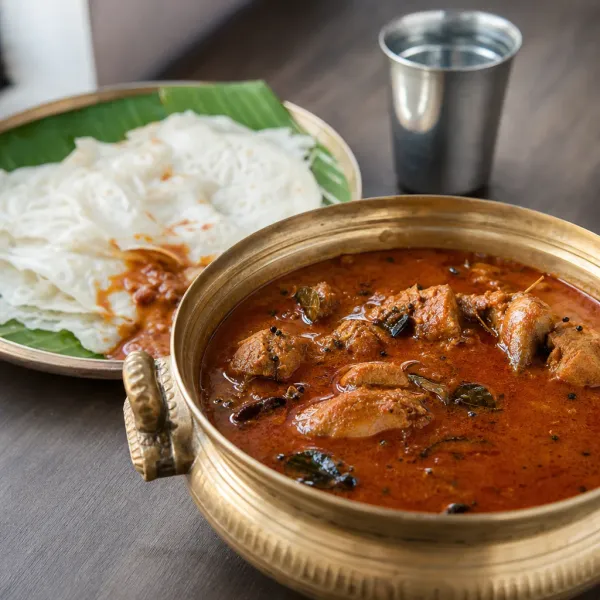
Kori Gassi
Authentic Bunt-style Kori Gassi from coastal Karnataka: chicken in a roasted coconut and byadagi chilli gravy, served with Kori Rotti or neer dosa.
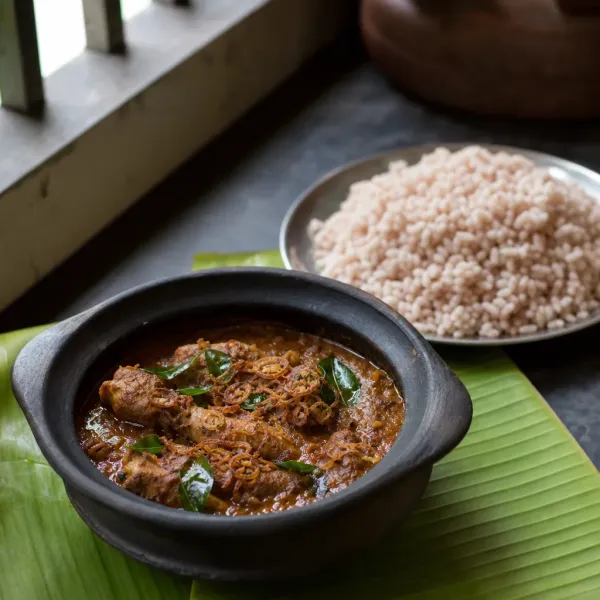
Kozhi Varutharacha Curry
Authentic Kerala Nasrani kozhi varutharacha curry with dry-roasted coconut paste. Step-by-step traditional method for a rich, dark chicken gravy.
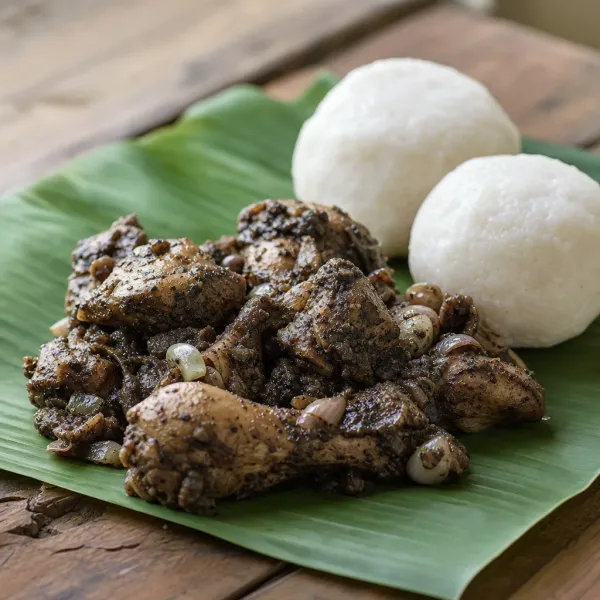
Chicken Uppu Kari
Authentic Kodava chicken uppu kari with black pepper, shallots and kachampuli. Dry-roasted, bone-in, traditional Coorg method. No gravy, no garam mas…
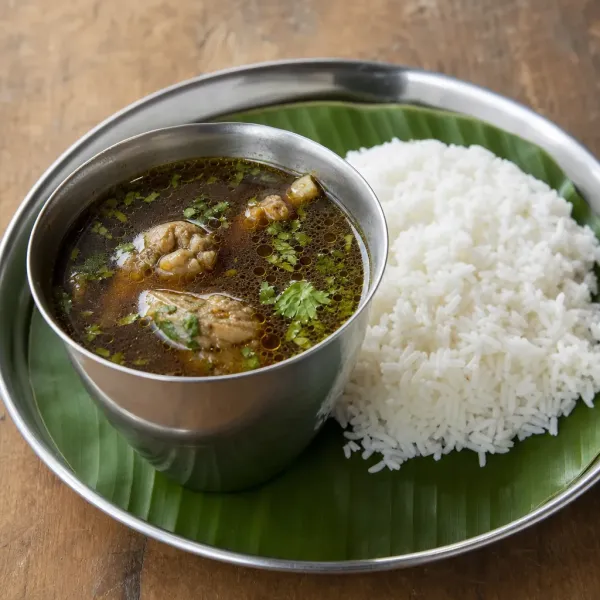
Nattu Kozhi Rasam
Traditional Kongunad nattu kozhi rasam: country chicken simmered with black pepper, cumin, marathi mokku and gingelly oil. A real household recipe.
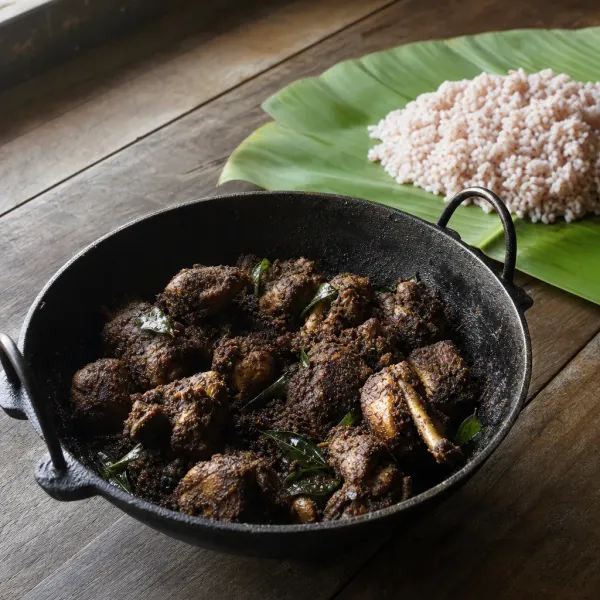
Chicken Chukka
Traditional Chettinad chicken chukka with fresh-ground kalpasi and marathi mokku masala. Dry, dark and deeply spiced. Step-by-step household method.
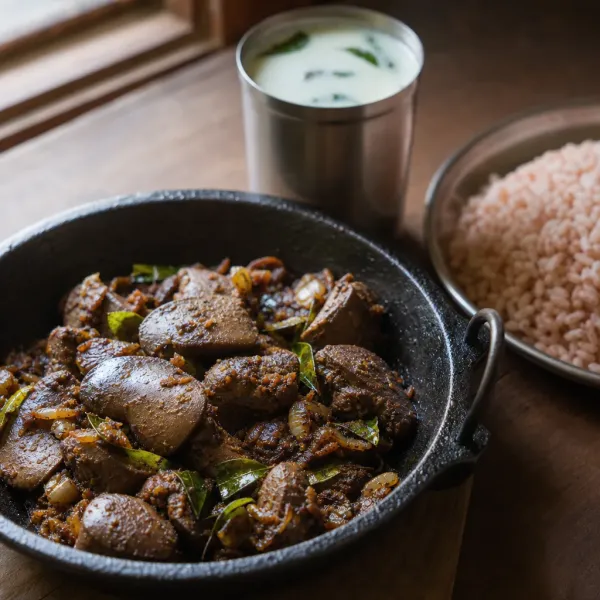
Kerala Nasrani Chicken Liver Fry
Traditional Nasrani chicken liver fry from Travancore: shallots, black pepper, curry leaves, coconut oil. Dry-fried, dark, and ready in 30 minutes.