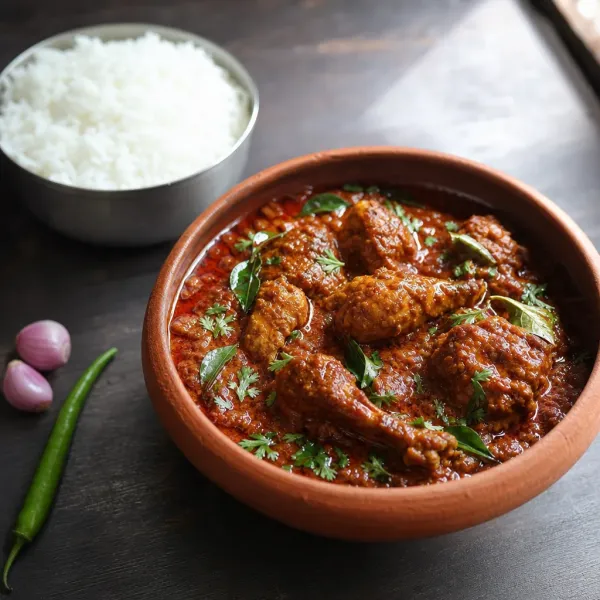
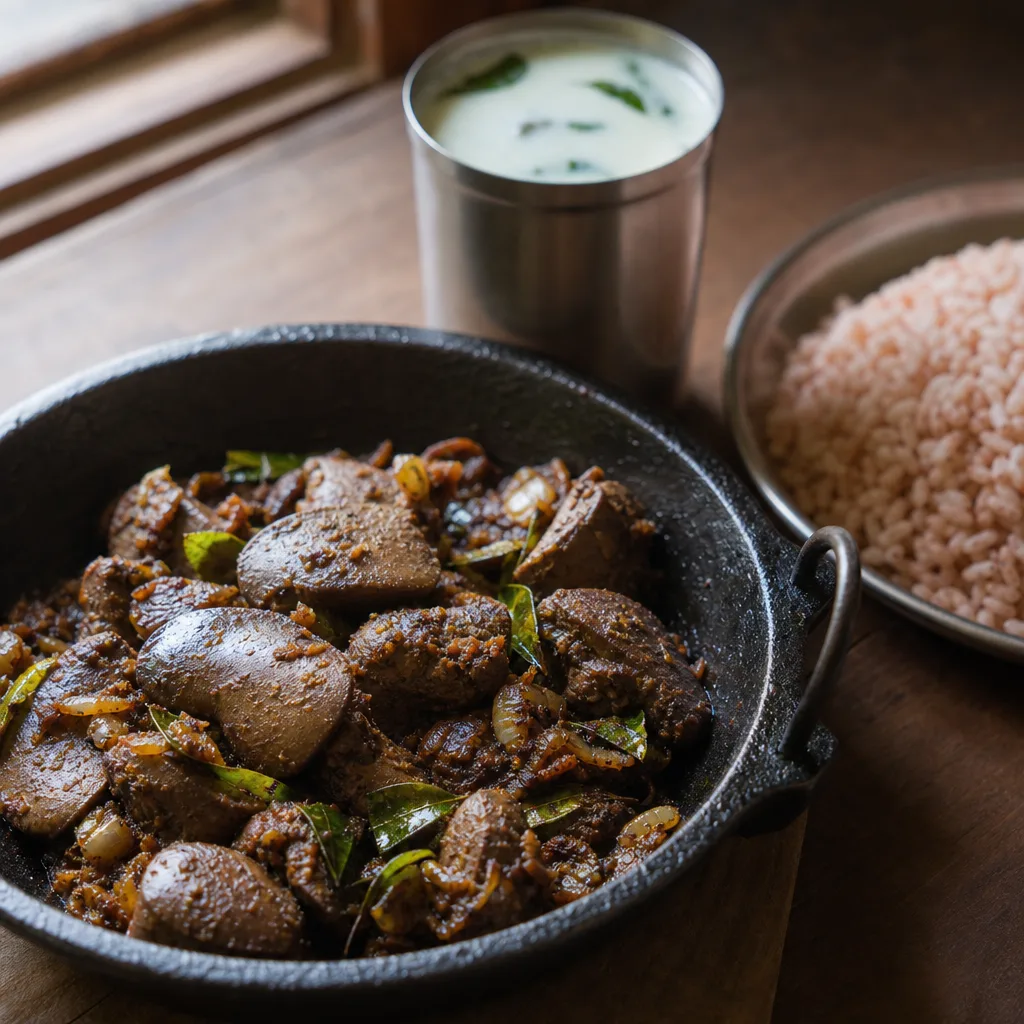
Kerala Nasrani Chicken Liver Fry Recipe
Malayalam കോഴി കരൾ വറുത്തത്Tamil கோழி கல்லீரல் வறுவல்Kannada ಕೋಳಿ ಕಲೇಜಿ ಫ್ರೈTelugu చికెన్ లివర్ వేపుడు
- Prep20 min
- Cook30 min
- Serves4
- DifficultyEasy
- DietNon-vegetarian
In Nasrani households across Travancore, chicken liver fry is a quick, everyday preparation that appears most often at Sunday lunch alongside rice and a simple moru kachiyathu. It is not a party dish; it is the kind of thing a cook puts together in thirty minutes while the rice is still on the stove. The livers are cooked entirely in coconut oil, and the spicing is direct: black pepper, red chilli, shallots, curry leaves, and a small amount of coriander powder. There is no tomato, no garam masala, no green chilli paste.
The technique is a dry fry, which means the livers must release and then reabsorb their own juices before the masala coats them properly. Rushing this stage leaves the pieces wet and the spices raw-tasting. The finished dish should be dark, slightly caramelised at the edges, and just barely moist inside. Overcooked liver turns grainy and bitter, so the moment the pieces stop bleeding and feel firm is the moment to stop.
Households differ mainly on the ratio of black pepper to red chilli. Some cooks lean heavily on pepper and use only one or two dried red chillies; others reverse this. Both are genuine. A few families add a small piece of kudampuli dissolved in a tablespoon of water toward the end for a faint sourness, though this is less common in Travancore than in central Kerala.
Ingredients (serves 4)
Main
Method
Clean the livers
Rinse the livers under cold water. Trim away any visible bile duct, green-tinged flesh, or sinew. Halve each liver so the pieces are roughly equal in size, around 3 to 4 cm across. Pat them completely dry with a clean cloth or kitchen paper. Wet livers will steam in the pan rather than fry.
Marinate briefly
In a bowl, toss the dried liver pieces with the turmeric, red chilli powder, half the black pepper, and salt. Mix well so every surface is coated. Set aside for 10 minutes at room temperature while you prepare the other ingredients. Do not marinate longer than 20 minutes or the salt will draw out moisture.
Fry the shallots
Heat the coconut oil in a wide, heavy-bottomed pan or cheenachatti over medium heat. Add the sliced shallots and a small pinch of salt. Cook, stirring regularly, for 8 to 10 minutes until they are deep golden and beginning to crisp at the edges. The colour of the finished dish depends on how well you colour the shallots here.
Add aromatics
Add the garlic and ginger to the pan. Stir and cook for 2 minutes until the raw smell disappears and the garlic is just beginning to colour. Add the broken dried red chillies and the curry leaves, standing back as the leaves will splutter. Stir for 30 seconds.
Add the ground spices
Lower the heat. Add the coriander powder and stir it into the shallot mixture for about 1 minute. You are cooking out the raw smell of the coriander. If the pan looks dry, add a teaspoon more coconut oil. Do not let the masala scorch.
Add the livers
Raise the heat to medium-high. Add the marinated liver pieces in a single layer. Do not stir immediately. Let them sear undisturbed for 2 minutes so the underside colours. Then turn each piece and sear the other side for another 2 minutes. The livers will release liquid; this is normal.
Dry the pan
Once the livers have released their juices, continue cooking over medium-high heat, stirring occasionally, until all the liquid has evaporated and the masala begins to coat the pieces and darken slightly. This takes 5 to 7 minutes. Do not cover the pan at this stage or the livers will stew.
Finish with pepper
Add the remaining black pepper and stir well. Cook for 1 more minute. Taste for salt. The livers are done when they are firm but not hard, dark on the outside, and no longer pink when you press one open. If the centre is still very pink, give it 2 more minutes; if it is grey and crumbling, it is overcooked.
Rest and serve
Take the pan off the heat and let the dish rest for 2 minutes before serving. The residual heat finishes the inside without drying the exterior. Serve hot.
How to serve
Steamed matta rice, moru kachiyathu (seasoned buttermilk), and a simple thoran. Also eaten as a side with appam or pathiri at breakfast in some households.
Served with: Steamed matta rice, moru kachiyathu (seasoned buttermilk), and a simple thoran. Also eaten as a side with appam or pathiri at breakfast in some households.
Cook's tips
Removing the bile duct
Even a small piece of green bile duct left on the liver will make the entire dish bitter. Check each half after cutting and trim carefully. This is the step most people skip when they are in a hurry, and it is the one that ruins the dish.
Dry the liver before marinating
Moisture is the enemy of a good fry. If the livers are wet when they go into the pan, they will boil in their own liquid and the masala will not adhere. Pat them thoroughly dry.
Pan size matters
Use a pan wide enough that the liver pieces are not crowded. If they are piled on top of each other they will steam. Cook in two batches if your pan is small.
Kudampuli variation
Some central Kerala Nasrani households add a small piece of kudampuli soaked in 2 tablespoons of water. Add it with the liquid in step 7 and let it cook off. It gives a faint sourness that cuts the richness of the liver.
Storage
This keeps refrigerated for up to two days. Reheat in a dry pan over low heat with a few fresh curry leaves. Do not microwave or the liver will turn rubbery.
Regional variations
Mappila (Malabar) version uses fennel and kus kus paste; Chettinad version uses kalpasi and marathi mokku in the masala.
Glossary
- Cheriya ulli ചെറിയ ഉള്ളി
- Small red shallots used throughout Kerala cooking; sweeter and more pungent than large onions.
- Cheenachatti ചീനച്ചട്ടി
- A wide, shallow iron or clay wok used in Kerala kitchens, ideal for dry fries and roasting.
- Kudampuli കുടംപുളി
- Dried Malabar tamarind (Garcinia cambogia), the souring agent used in Kerala fish and meat dishes; not interchangeable with regular tamarind.
- Moru kachiyathu മോരു കാച്ചിയത്
- Seasoned and tempered buttermilk, a standard accompaniment to rice meals in Kerala Nasrani and Hindu households.
- Matta rice മട്ട അരി
- Kerala's traditional red parboiled rice, nutty and slightly chewy, the everyday rice of most Kerala households.
Two things decide this dish: how thoroughly you dry the livers before they go into the pan, and how patiently you let the liquid evaporate in step 7 before you declare it done. Get both right and the masala clings, the outside darkens, and the inside stays just tender. Rush either one and you have wet, pale liver with raw-tasting spices.
More Chicken recipes
Chettinad Chicken Perattal
Authentic Chettinad Chicken Perattal from the Chettiar kitchen: bone-in chicken cooked in a fresh-ground spice paste with kalpasi, gingelly oil, and…
Kerala Chicken Stew
Traditional Kerala Nasrani chicken stew with fresh coconut milk, whole spices, potatoes and carrots. Served with appam for Sunday breakfast.
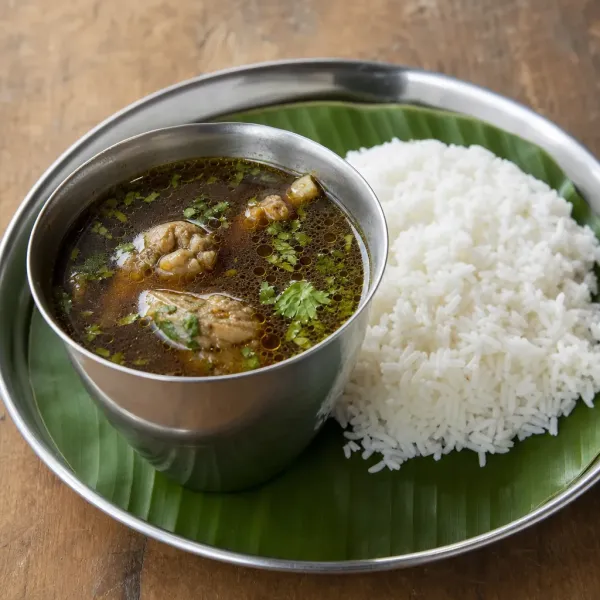
Nattu Kozhi Rasam
Traditional Kongunad nattu kozhi rasam: country chicken simmered with black pepper, cumin, marathi mokku and gingelly oil. A real household recipe.
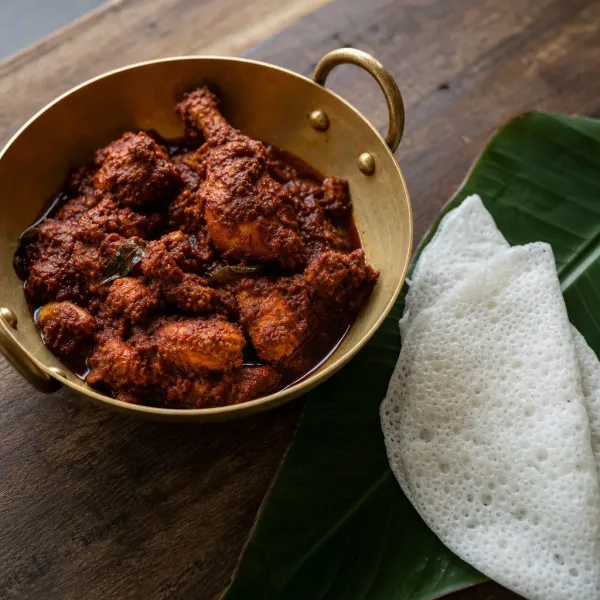
Kundapur Chicken Ghee Roast
Authentic Kundapur chicken ghee roast with byadagi and guntur chillies, freshly ground masala, and generous ghee. Traditional coastal Karnataka metho…
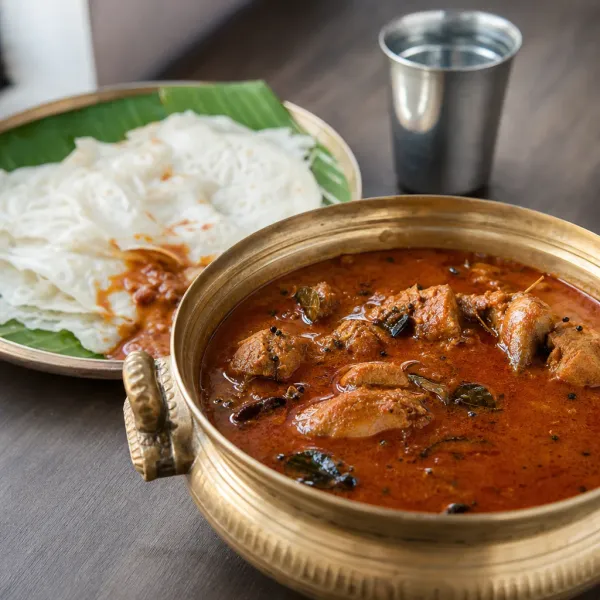
Kori Gassi
Authentic Bunt-style Kori Gassi from coastal Karnataka: chicken in a roasted coconut and byadagi chilli gravy, served with Kori Rotti or neer dosa.