

Kerala Chicken Stew Recipe
Malayalam കേരള ചിക്കൻ സ്റ്റൂTamil கேரள சிக்கன் ஸ்டூKannada ಕೇರಳ ಚಿಕನ್ ಸ್ಟ್ಯೂTelugu కేరళ చికెన్ స్టూ
- Prep20 min
- Cook40 min
- Serves4
- DifficultyEasy
- DietNon-vegetarian
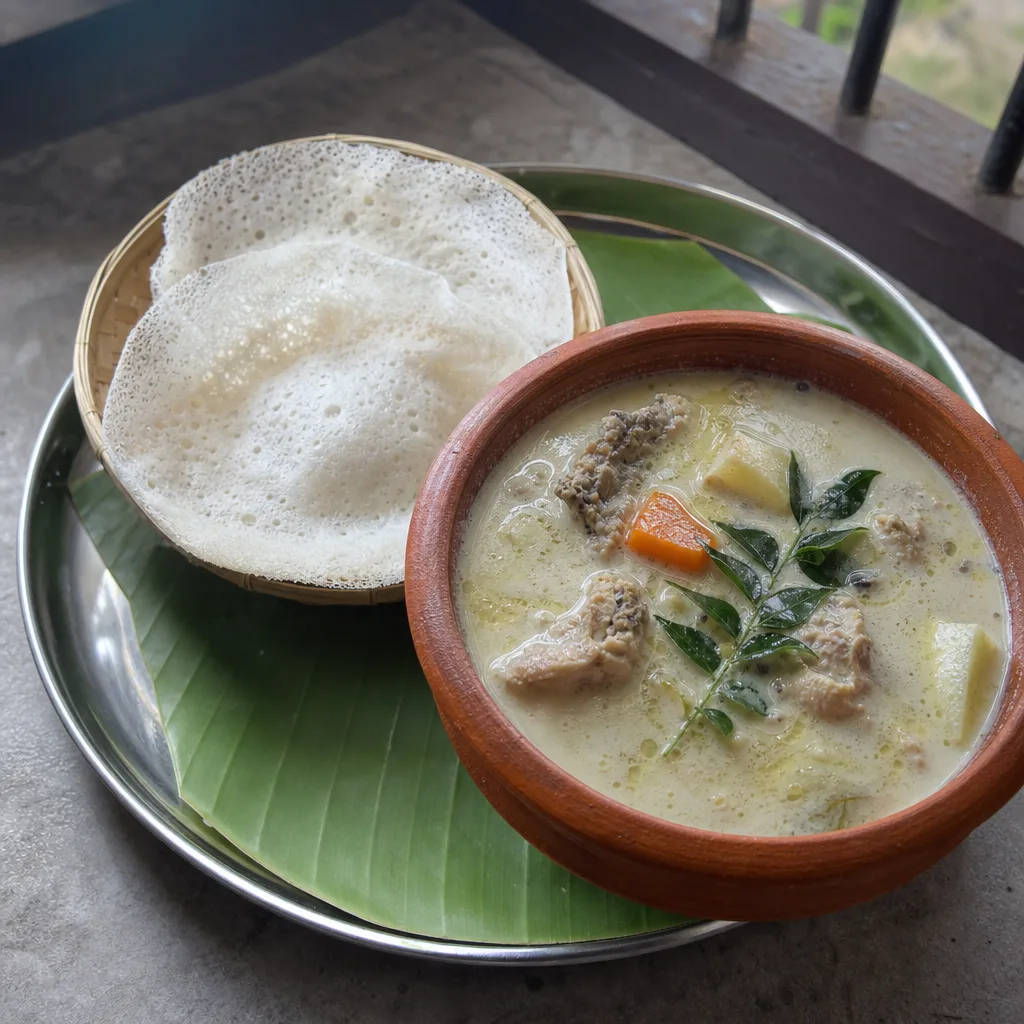
This is the stew that appears on the Nasrani breakfast table on Sunday mornings, almost always beside a basket of appam. It is white, mild, and gently fragrant with whole spices and thin coconut milk cooked down into the broth before thick coconut milk is stirred in at the very end, off the heat. The chicken stays tender because it finishes cooking in the coconut milk rather than being boiled hard beforehand.
The flavour rests entirely on fresh coconut milk and whole spices: cinnamon, cloves, cardamom, and a bay leaf. There is no roasted spice powder, no tomato, no coriander leaves. Shallots and green chillies give it a faint sweetness and a mild warmth that never competes with the coconut. Potatoes and carrots are standard in most households; some add a small piece of raw papaya instead of carrot, which is the older practice.
Households differ mainly in how much pepper they use and whether they add a final tempering. Many Nasrani cooks finish with a small pour of coconut oil in which a few curry leaves and shallot slices have been briefly fried, tipped over the top just before serving. Others leave it completely plain and white. Both are correct.
Ingredients (serves 4)
For the stew
Method
Extract the coconut milk
Grate the fresh coconut and squeeze it twice with warm water to get thin milk, and once more with less water for the thick first extract. Keep them in separate bowls. If you rush this and add the thick milk too early, it will split and the stew will look curdled and oily. Set the thick milk aside at room temperature while you cook.
Warm the oil and bloom the whole spices
Set a wide, heavy-bottomed pot over medium-low heat and pour in the coconut oil. When it is warm but not smoking, add the cinnamon, cloves, cardamom, and bay leaf. Let them sizzle gently for about 45 seconds until the oil smells fragrant. Do not let the cloves darken or they will turn bitter.
Soften the shallots, ginger, and garlic
Add the halved shallots, ginger matchsticks, and crushed garlic. Stir to coat them in the spiced oil. Cook over medium-low heat for 6 to 8 minutes, stirring occasionally, until the shallots are soft and translucent but have not taken any colour. This is a white stew; if the shallots begin to brown, lower the heat immediately.
Add the green chillies and curry leaves
Add the slit green chillies and one sprig of curry leaves. Stir and cook for another minute. The chillies should soften slightly and lose their raw smell.
Add the chicken and season
Add the chicken pieces and the cracked black pepper. Season with salt. Turn the pieces to coat them well with the shallot and spice mixture. Cook over medium heat for 4 to 5 minutes, turning once, until the outside of the chicken is no longer pink. It will not brown; that is correct.
Add the vegetables
Add the potato cubes and carrot rounds. Stir everything together gently so the vegetables settle among the chicken pieces.
Pour in the thin coconut milk and simmer
Pour the thin coconut milk over the chicken and vegetables. It should just cover everything; add a splash of water if needed. Bring to a gentle simmer over medium heat, then reduce the heat to low, cover the pot with a lid slightly ajar, and cook for 20 to 25 minutes until the chicken is cooked through and the potatoes are tender when pierced with a knife. Stir once or twice during this time. Do not let it boil hard or the thin milk will separate.
Check the chicken and vegetables
The chicken should be completely cooked through with no pink at the bone, and the potato should be soft but still holding its shape. The broth will have reduced slightly and taken on a pale ivory colour. Taste and adjust salt.
Stir in the thick coconut milk off the heat
Take the pot completely off the flame. Wait one minute, then pour in the thick coconut milk and stir it in gently. Do not return the pot to the heat after this point. The residual warmth is enough to bring everything together. If you boil the stew after adding the thick milk, it will split and the oil will separate to the surface.
Finish with a tempering (optional but traditional in many households)
In a small pan, heat 1 teaspoon of coconut oil over medium heat. Add the remaining sprig of curry leaves and let them crackle for 10 seconds. Pour this directly over the stew. Cover the pot for two minutes to let the fragrance settle in before serving.
How to serve
Appam (lacy fermented rice and coconut pancakes) is the classic pairing. Also eaten with idiyappam, palappam, or plain white matta rice for a midday meal.
Served with: Appam (lacy fermented rice and coconut pancakes) is the classic pairing. Also eaten with idiyappam, palappam, or plain white matta rice for a midday meal.
Cook's tips
Fresh coconut milk matters
Canned or tetrapak coconut milk can be used in a household emergency, but the stew will taste flat. If using canned, use one 400 ml can diluted with 200 ml water as the thin milk, and the remaining undiluted portion as the thick milk. The result is acceptable but not the same.
The pot you use
A clay pot or a wide aluminium vessel with a heavy base distributes heat gently and is less likely to scorch the coconut milk. A thin-bottomed pan over a gas flame runs hot and the milk can catch on the bottom.
Bone-in chicken only
Boneless chicken breast will overcook and turn stringy before the potatoes are done. Bone-in thighs and drumsticks release gelatin into the broth and give it body. The stew should have a slight silkiness to it, not be watery.
Storing leftovers
Reheat very gently over the lowest possible flame, stirring slowly. Never let it boil after the thick coconut milk has been added. Leftovers kept overnight in the refrigerator will thicken considerably; add a few tablespoons of water when reheating.
Pepper level
Older recipes use up to 1½ teaspoons of cracked black pepper, which gives a noticeable warmth. Households with young children often reduce it to half a teaspoon. The green chillies can also be reduced or left whole and uncut if you want the flavour without the heat.
Regional variations
Mappila households in Malabar make a similar white stew but often add fennel seeds and a small amount of coconut oil-fried shallots at the end; some Knanaya Nasrani cooks add a single dried red chilli for very mild background heat.
Glossary
- Cheriya ulli ചെറിയ ഉള്ളി
- Small shallots native to Kerala, sweeter and more aromatic than large onions; used whole or halved in most Kerala cooking.
- Kudampuli കുടംപുളി
- Gamboge or Malabar tamarind; a souring agent used in Kerala fish curries. Not used in this stew, but mentioned because it is sometimes confused with tamarind in recipe translations.
- Palappam പാലപ്പം
- Bowl-shaped fermented rice and coconut pancake with a soft white centre and a lacy, slightly crisp rim; the classic partner for this stew.
- Idiyappam ഇടിയപ്പം
- Steamed rice noodle discs pressed through a mould; pale white and soft throughout, with no browning.
- Nasrani നസ്രാണി
- Kerala Saint Thomas Christians, also called Syrian Christians; one of the oldest Christian communities in India, with a distinct culinary tradition that uses coconut milk extensively and avoids heavy roasted spice masalas in many dishes.
Two things decide this stew: fresh coconut milk added in two stages, and the discipline to keep the heat low throughout. Everything else is forgiving. The shallots should never colour, the thin milk should never boil hard, and the thick milk should never see the flame. Get those three things right and the stew will be pale, gently fragrant, and exactly as it should be.
More Chicken recipes
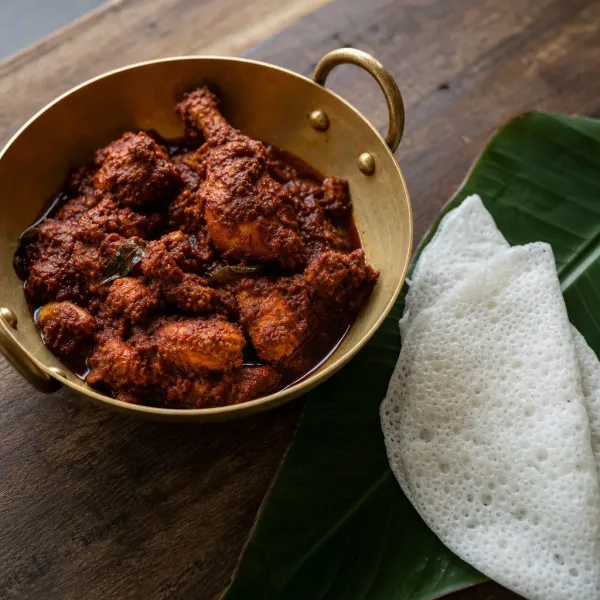
Kundapur Chicken Ghee Roast
Authentic Kundapur chicken ghee roast with byadagi and guntur chillies, freshly ground masala, and generous ghee. Traditional coastal Karnataka metho…
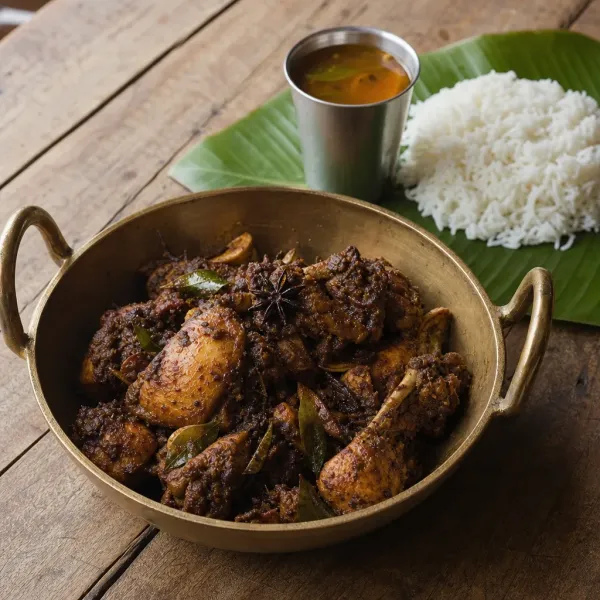
Chettinad Chicken Perattal
Authentic Chettinad Chicken Perattal from the Chettiar kitchen: bone-in chicken cooked in a fresh-ground spice paste with kalpasi, gingelly oil, and…
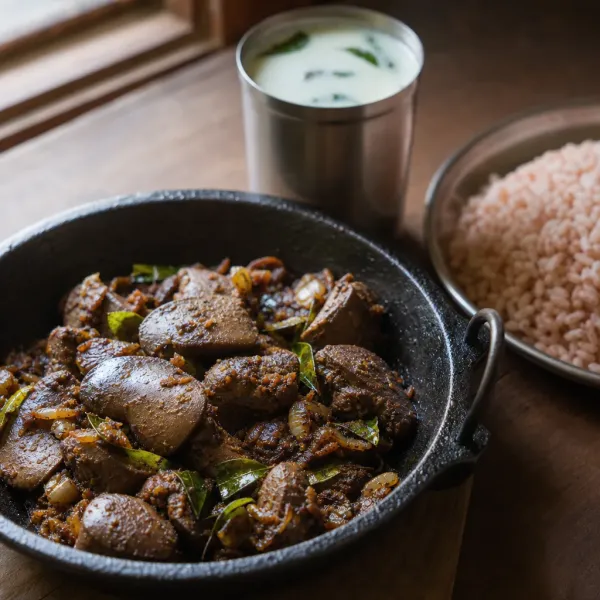
Kerala Nasrani Chicken Liver Fry
Traditional Nasrani chicken liver fry from Travancore: shallots, black pepper, curry leaves, coconut oil. Dry-fried, dark, and ready in 30 minutes.
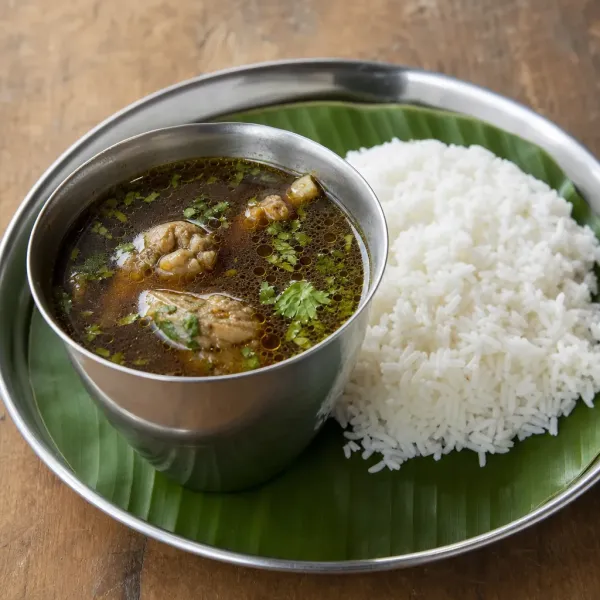
Nattu Kozhi Rasam
Traditional Kongunad nattu kozhi rasam: country chicken simmered with black pepper, cumin, marathi mokku and gingelly oil. A real household recipe.
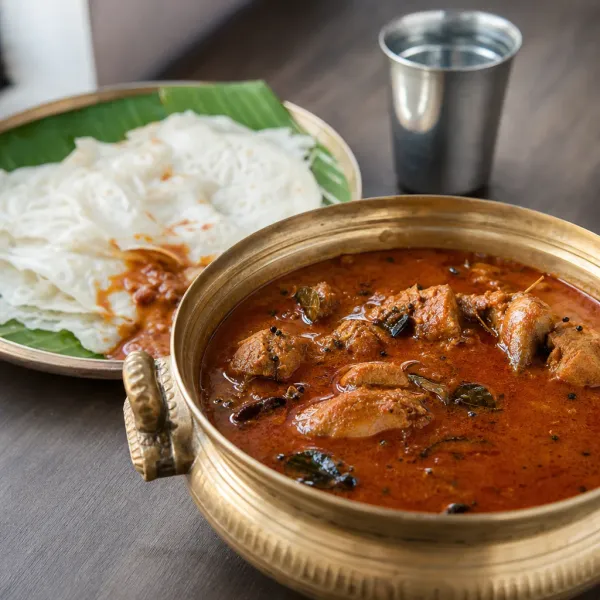
Kori Gassi
Authentic Bunt-style Kori Gassi from coastal Karnataka: chicken in a roasted coconut and byadagi chilli gravy, served with Kori Rotti or neer dosa.