

Rava Idli (Karnataka Style) Recipe
Malayalam റവ ഇഡ്ലിTamil ரவா இட்லிKannada ರವೆ ಇಡ್ಲಿTelugu రవ్వ ఇడ్లీ
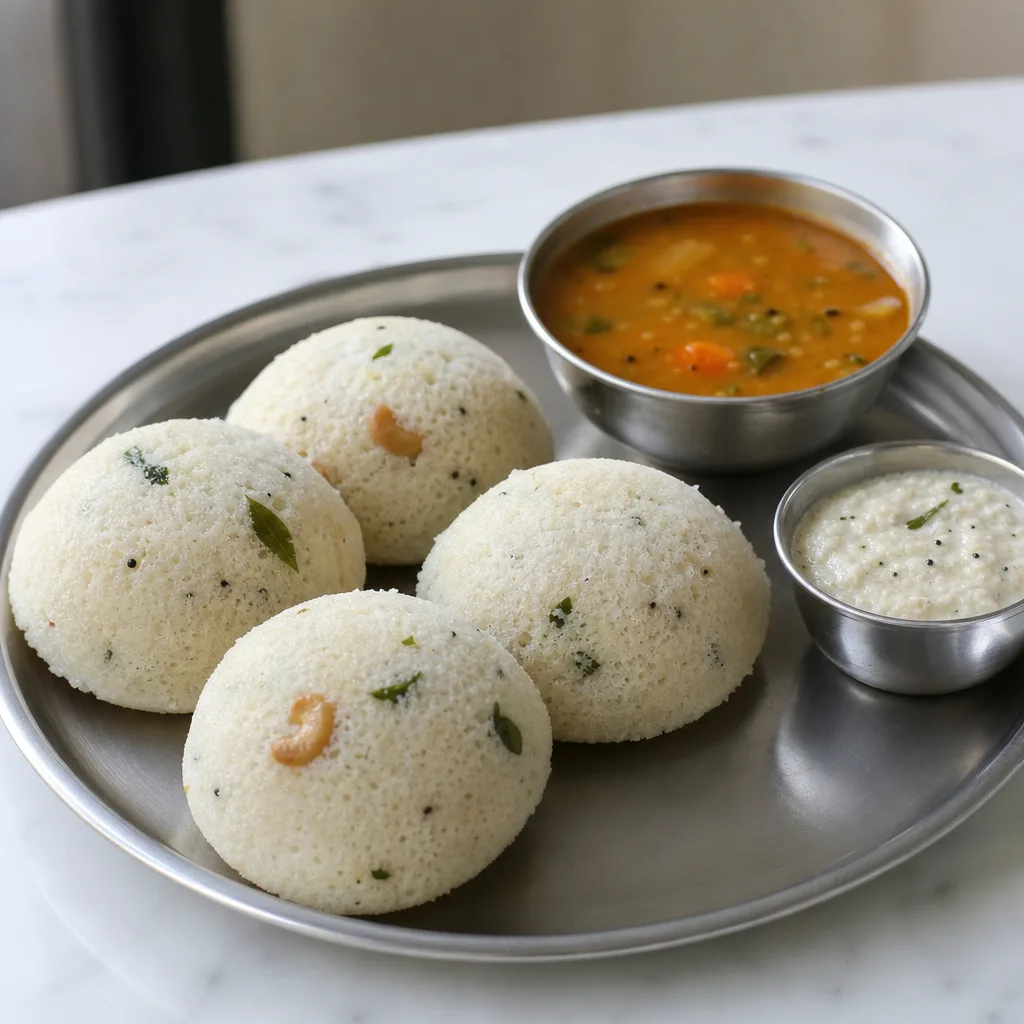
- Prep20 min
- Cook40 min
- Serves4
- DifficultyEasy
- DietVegetarian
Rava idli was born in Karnataka, most famously at the Mavalli Tiffin Rooms in Bengaluru during the Second World War when rice was rationed. It solved a real problem: idlis without a long ferment, ready in under an hour. It is now a fixture in Karnataka homes and tiffin rooms alike, eaten at breakfast and at the evening tiffin hour.
The batter is not fermented. Instead, curd does the work, giving the idli its slight tang and helping it rise. The rava is roasted dry first, then with ghee, which removes the raw smell and keeps the idli from turning gummy. The tempering is mixed directly into the batter, so every idli carries mustard, curry leaf and cashew through it.
Households differ mainly in the amount of ghee. Tiffin rooms are generous; everyday home cooking is a little lighter. Some cooks add a pinch of baking soda and some rely entirely on curd and resting time. Both are genuine. The idli should be soft and slightly spongy, pale throughout, with no browning anywhere.
Ingredients (serves 4)
For roasting
For the tempering
For the batter
For greasing the moulds
Method
Dry-roast the rava
Set a heavy kadai over medium heat. Add the rava with no fat and roast, stirring without stopping, for 4 to 5 minutes. The rava should smell nutty and feel dry and separate, not clumped. It should not colour. Tip it onto a wide plate to cool.
Roast again in ghee
Return the kadai to low heat. Add 2 tbsp ghee. Once it melts, add the cooled rava and stir for another 2 minutes until every grain is coated and the ghee smell is absorbed. This second roasting is what keeps the idli from becoming dense. Spread on the plate again and let it cool completely to room temperature before adding curd.
Make the tempering
In the same kadai over medium heat, add 1 tbsp ghee. When it shimmers, add mustard seeds and wait for them to pop. Add chana dal and stir until it turns pale gold, about 1 minute. Add cashew halves and stir until they are just lightly golden. Add green chillies, ginger and curry leaves and fry for 30 seconds. Take the kadai off the heat and stir in the chopped coriander.
Mix the batter
Pour the entire tempering over the cooled rava and mix well. Add salt. Add the curd and stir to combine. The batter will be thick, closer to a soft dough than a pourable batter. Add water, a tablespoon at a time, until it is the consistency of a thick cake batter that drops heavily from a spoon. You will need roughly 60 to 90 ml of water depending on the curd.
Rest the batter
Cover the batter and leave it to rest for 20 minutes at room temperature. The rava absorbs the curd and water during this time. After resting, the batter will have thickened further. If it looks too stiff, add a tablespoon of water and stir.
Prepare the steamer
Fill the bottom vessel of your idli steamer with water and bring it to a rolling boil over high heat. Grease the idli plates well with ghee, including the sides of each mould.
Add baking soda and fill the moulds
Add the baking soda to the rested batter and fold it in gently with a light hand. Do not beat or stir hard, or you will knock out the air. Fill each mould about three-quarters full. The batter rises as it steams, so leave room.
Steam the idlis
Place the filled plates in the steamer immediately after adding the baking soda. Cover with the lid and steam on high heat for 12 to 14 minutes. Do not lift the lid during steaming. The idlis are done when a toothpick or thin skewer inserted in the centre comes out clean and the tops look set and dry, not wet or shiny.
Rest before unmoulding
Turn off the heat and let the steamer sit, lid on, for 2 minutes. Then open and allow another minute before unmoulding. Idlis that are unmoulded while still very hot can tear. Run a wet spoon around the edge of each mould and lift them out. They should be pale, soft and slightly spongy throughout with no browning.
How to serve
Coconut chutney and sambar. In Karnataka homes, a small pool of ghee is often spooned over the idlis just before serving.
Served with: Coconut chutney and sambar. In Karnataka homes, a small pool of ghee is often spooned over the idlis just before serving.
Cook's tips
Curd temperature matters
Cold curd straight from the refrigerator slows absorption and can make the idli dense. Use curd that has been sitting at room temperature for at least 30 minutes.
Do not skip the double roasting
Roasting the rava once dry and once in ghee removes the raw starchy smell and prevents the idli from turning gluey inside. Skipping either round shows in the texture.
Baking soda timing
Add baking soda only at the very last moment, just before filling the moulds. If you add it too early and let the batter sit, the idlis will be flat.
Water quantity is variable
Curd thickness varies by brand and season. Add water cautiously. A batter that is too thin will produce flat, rubbery idlis. Too thick and the centre will not cook through.
Storing leftover batter
Do not add baking soda to leftover batter. Store the plain rested batter in the refrigerator and add baking soda fresh each time you steam a batch. It keeps for one day.
Regional variations
MTR-style rava idli uses cashews and ghee more generously; some households add grated carrot or green peas, though the plain version here is the everyday household standard.
Glossary
- Rava ರವೆ
- Semolina made from durum wheat; Bombay rava is the fine variety used in Karnataka tiffin dishes.
- Chana dal ಚನ್ನಾ ದಾಳ್
- Split Bengal gram, used in small quantities in tempering to add a nutty crunch.
- Kadai ಕಡಾಯಿ
- A deep, round-bottomed heavy pan used for frying and roasting.
- Idli steamer ಇಡ್ಲಿ ಪಾತ್ರೆ
- A stacked vessel with perforated plates for steaming idlis; the bottom holds boiling water.
Two things decide whether rava idli works: the rava must be roasted until genuinely dry and fragrant, and the baking soda must go in at the last second, not a minute before. Get those two right and the rest follows.
More Breakfast & Tiffin recipes
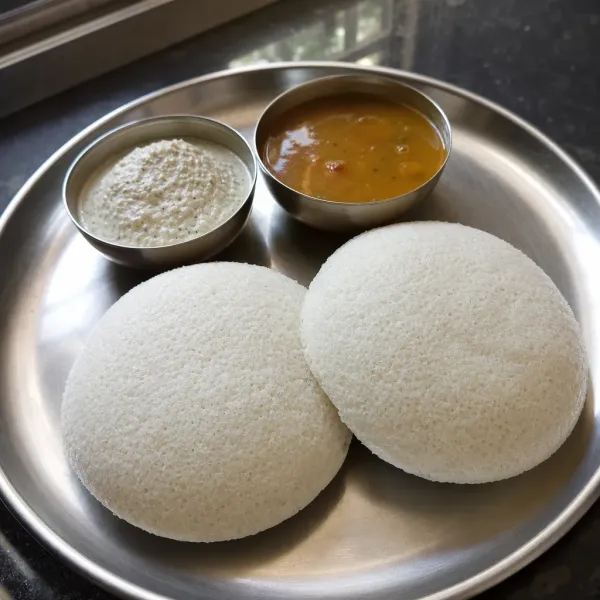
Thatte Idli
Soft, wide Karnataka-style thatte idli made with idli rice, urad dal and avalakki. Traditional household recipe with fermentation tips and steaming m…
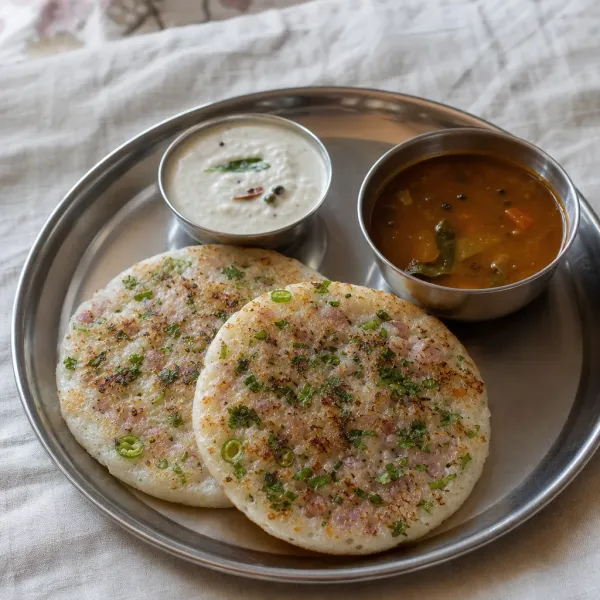
Uttapam: Tamil Brahmin Household Style
Traditional Tamil Brahmin uttapam made from fermented rice and urad dal batter, topped with shallots, green chilli and coriander. Step-by-step method.
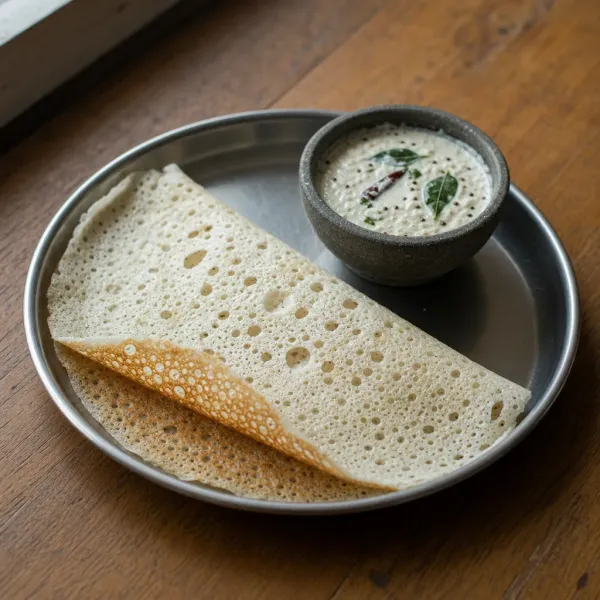
Rava Dosa
Traditional Tamil Iyer rava dosa with semolina, rice flour and gingelly oil. No fermentation, lacy and crisp. Step-by-step home kitchen method.
Aval Dosa (Soft Poha Dosa)
Soft, spongy aval dosa made with thick poha and raw rice. A quick-soak batter, no overnight ferment needed. Traditional Udupi home recipe.

Vattayappam
Traditional Nasrani vattayappam: soft steamed sweet rice cake made with raw rice, fresh coconut and toddy. Step-by-step Kerala recipe with fermentati…
Rava Upma
Classic Tamil Brahmin rava upma made with dry-roasted semolina, gingelly oil, shallots and curry leaves. Step-by-step traditional method.