

Vattayappam Recipe
Malayalam വട്ടയപ്പംTamil வட்டையப்பம்Kannada ವಟ್ಟಯಪ್ಪಂTelugu వట్టయప్పం

- Prep20 min
- Soak / ferment10 hr
- Cook40 min
- Serves6
- DifficultyMedium
- DietVegetarian
Vattayappam is a gently sweet, cloud-soft steamed cake made from raw rice and fresh coconut, leavened overnight with a little toddy or a spoonful of fermented batter. It belongs firmly to the Syrian Christian kitchen of Travancore, where it appears at breakfast on feast days and at the table whenever guests arrive without warning. The name simply means round appam, and that is exactly what it is: a wide, flat disc steamed in a round vessel, pale and smooth on top, with no browning anywhere.
The batter is ground fine, sweetened with sugar, and left to ferment in a warm corner of the kitchen. By morning it should have risen slightly and smell faintly sour and yeasty. If it smells sharp or has risen too aggressively, it has gone too far and the cake will taste acidic. The fermentation time depends entirely on the warmth of your kitchen; in a hot Kerala summer, eight hours is enough, while in a cooler month you may need twelve.
Households differ mainly on sweetness and on the leavening. Toddy gives the best flavour when you can get it, but most families today use a tablespoon of batter saved from the previous batch, the way sourdough bakers keep a starter. A few families add a handful of cooked rice to the soaked raw rice before grinding, which gives a slightly denser, more moist result. The steamed cake is eaten on its own or with sweetened coconut milk poured alongside.
Ingredients (serves 6)

For soaking
For the batter
For greasing
Method
Soak the rice
Wash the raw rice in two or three changes of water until the water runs mostly clear. Cover with fresh cold water and soak for 4 to 5 hours. The grains should crush easily between your fingers when they are ready. Drain completely before grinding.
Grind the batter
Put the drained rice, freshly grated coconut, and the 2 tablespoons of cooked rice into a wet grinder or a powerful mixer-grinder. Add the sugar and the pinch of salt. Grind with just enough water to keep the blades moving, adding it a tablespoon at a time. The batter should be very smooth, finer than idli batter, and should flow off a spoon in a slow, thick ribbon. Too much water now will give a flat, dense cake. You will use roughly 100 to 120 ml of water in total.
Add the leavening and ferment
Pour the batter into a large vessel, leaving plenty of room for it to rise. Stir in the toddy or the tablespoon of fermented batter. Cover loosely with a plate, not an airtight lid. Leave in a warm part of the kitchen for 8 to 10 hours, or overnight. The batter is ready when it has risen noticeably, smells pleasantly yeasty with a faint sour note, and small bubbles are visible on the surface. If your kitchen is cool, tuck the vessel near the pilot light of your stove or inside an unheated oven.
Check the fermented batter
Stir the batter gently from the bottom. It should be airy and slightly thicker than before fermentation. Taste a tiny amount: it should be sweet with just a whisper of sourness. If it smells sharply sour or has risen and then collapsed, it has over-fermented; the resulting cake will be acidic and may not hold its shape. If this has happened, shorten the fermentation time next time.
Prepare the steamer
Fill a wide steamer or a large vessel fitted with a steaming rack with enough water to steam for 20 minutes without running dry. Bring the water to a full rolling boil over high heat. Grease a round steel plate or a shallow round tin, roughly 20 to 22 cm across, with the teaspoon of coconut oil, covering the base and sides evenly.
Pour and steam
Stir the batter once more, then pour it into the greased plate to a depth of about 2 cm. Do not fill more than two-thirds of the height of the plate or it may overflow as it puffs. Lower the plate carefully onto the steaming rack, cover the steamer with a tight lid, and steam over medium-high heat for 18 to 22 minutes. Do not lift the lid in the first 15 minutes.
Test for doneness
After 18 minutes, open the lid away from you to let the steam escape safely. Insert a thin skewer or a clean broom straw into the centre of the cake. It should come out clean with no wet batter clinging to it. The surface will be pale, smooth, and set, with no wet or shiny patches. There is no browning anywhere on a properly made vattayappam.
Rest and unmould
Remove the plate from the steamer and set it on a flat surface. Leave the cake to rest for 5 minutes before attempting to unmould; if you cut it while it is very hot it will tear. Run a thin knife around the edge, place a flat plate on top, and invert. The cake should release cleanly. If it sticks, the plate was not greased well enough, or the cake needed another minute of steaming.
Slice and serve
Cut the cake into wedges the way you would cut a round cake, or into squares if you prefer. Serve warm. The texture should be soft and slightly spongy, with a fine, even crumb throughout, pale white all the way through with no dense or gummy layer at the bottom.
How to serve
Sweetened coconut milk (thenga paal, made by pressing fresh coconut with warm water and sweetening with sugar); also eaten on its own as a breakfast cake or a tea-time snack.
Served with: Sweetened coconut milk (thenga paal, made by pressing fresh coconut with warm water and sweetening with sugar); also eaten on its own as a breakfast cake or a tea-time snack.
Cook's tips
Toddy substitute
Fresh toddy gives the best lift and a gentle fermented flavour. If you cannot get it, save a tablespoon of batter from a successful previous batch and use that as your starter. Active dry yeast dissolved in a teaspoon of warm water works in an emergency but gives a slightly different, more bread-like flavour.
Grinding fine enough
The rice must be ground to a truly smooth paste. Rub a little batter between your fingers; you should feel almost no graininess. A coarse batter gives a gritty, dense cake. A wet grinder gives better results than a mixer-grinder for this reason.
Batter consistency
The batter before fermentation should be pourable but not watery. If you tilt the bowl, it should move slowly. Add water only a tablespoon at a time during grinding; you can always add more but you cannot take it back.
Steamer lid condensation
Water dripping from the lid onto the surface of the cake leaves wet pockmarks and can make the top sticky. Wrap the inside of the lid with a clean kitchen towel or a piece of muslin to absorb condensation before it can drip.
Storage
Vattayappam is best eaten the day it is made. It firms up overnight in the refrigerator. To revive it, steam the slices for 3 to 4 minutes or warm them in a covered pan with a few drops of water.
Regional variations
Mappila households in Malabar make a similar steamed rice cake called ozhichu appam, sometimes with egg; some Travancore Nasrani families add a small amount of cooked rice to the batter for a denser crumb.
Glossary
- Pachari പച്ചരി
- Raw white rice, as opposed to parboiled rice (puzhungalari); the standard rice for appam and vattayappam batter in Kerala.
- Kallu കള്ള്
- Toddy; freshly tapped palm wine used as a natural leavening agent in Kerala rice batters.
- Thenga paal തേങ്ങാപ്പാൽ
- Coconut milk; here used as an accompaniment, not an ingredient in the cake itself.
- Vattayappam വട്ടയപ്പം
- Literally 'round appam'; a steamed sweet rice cake, round and flat, from the Nasrani kitchen of Travancore.
Two things decide whether this works: the fineness of the grind and the timing of the fermentation. A batter that is even slightly gritty will never steam into a smooth, soft cake, and a batter that has over-fermented will be sour and dense no matter how carefully you steam it. Get those two right and the rest follows.
More Breakfast & Tiffin recipes
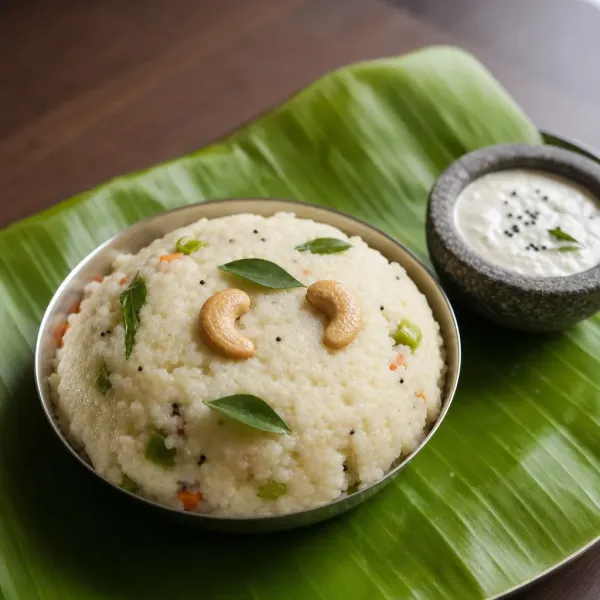
Rava Upma
Classic Tamil Brahmin rava upma made with dry-roasted semolina, gingelly oil, shallots and curry leaves. Step-by-step traditional method.
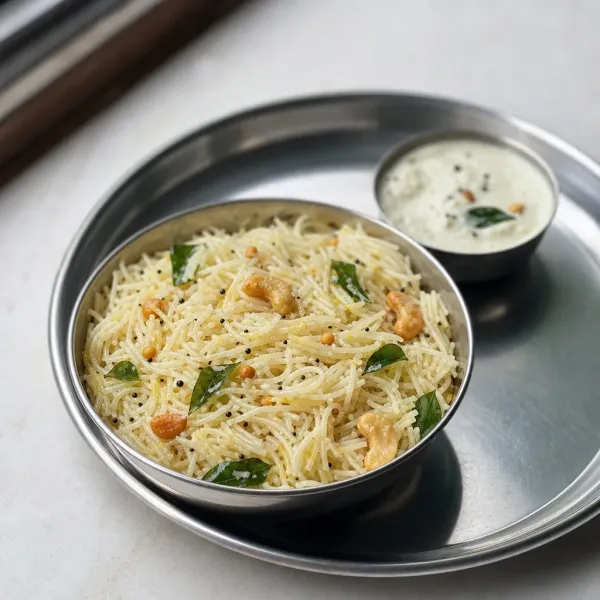
Semiya Upma
A light, traditional Iyer-style semiya upma made with roasted vermicelli, ghee, and a simple mustard-urad dal tempering. Ready in 30 minutes.
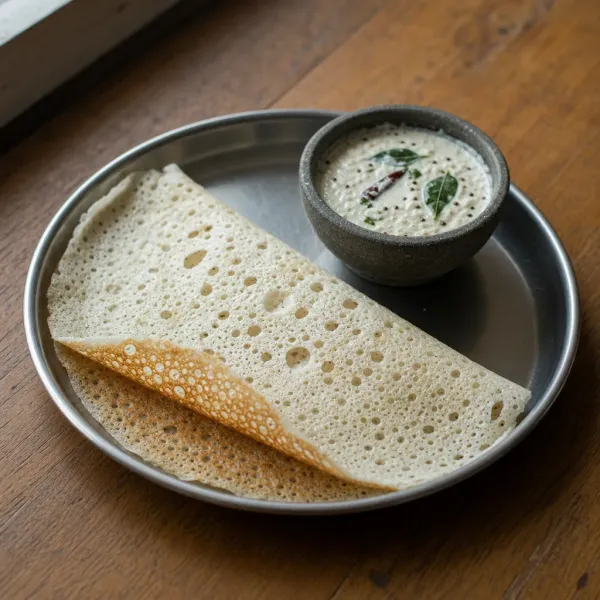
Rava Dosa
Traditional Tamil Iyer rava dosa with semolina, rice flour and gingelly oil. No fermentation, lacy and crisp. Step-by-step home kitchen method.
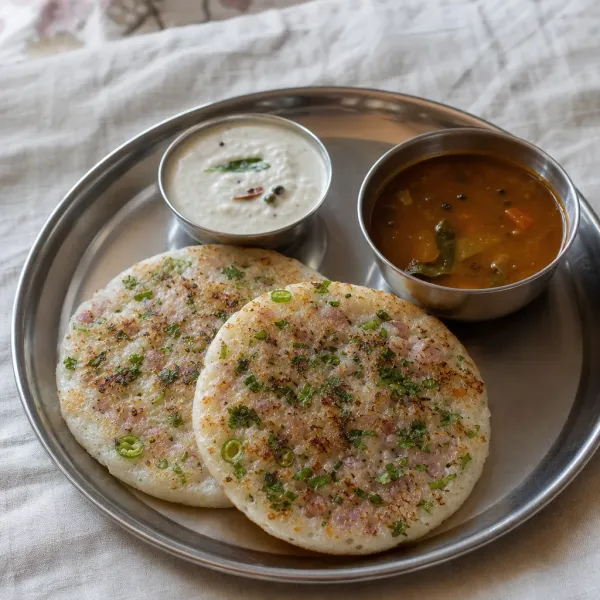
Uttapam: Tamil Brahmin Household Style
Traditional Tamil Brahmin uttapam made from fermented rice and urad dal batter, topped with shallots, green chilli and coriander. Step-by-step method.
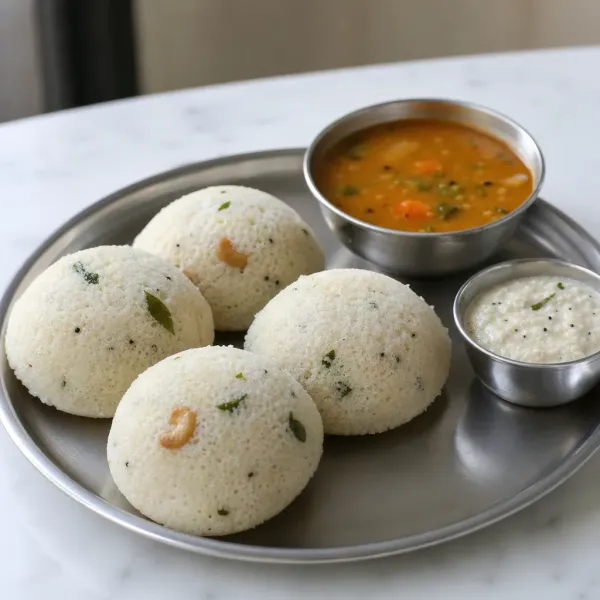
Rava Idli (Karnataka Style)
Traditional Karnataka rava idli made with ghee-roasted semolina, fresh curd and no fermentation. Soft, pale and ready in under an hour.
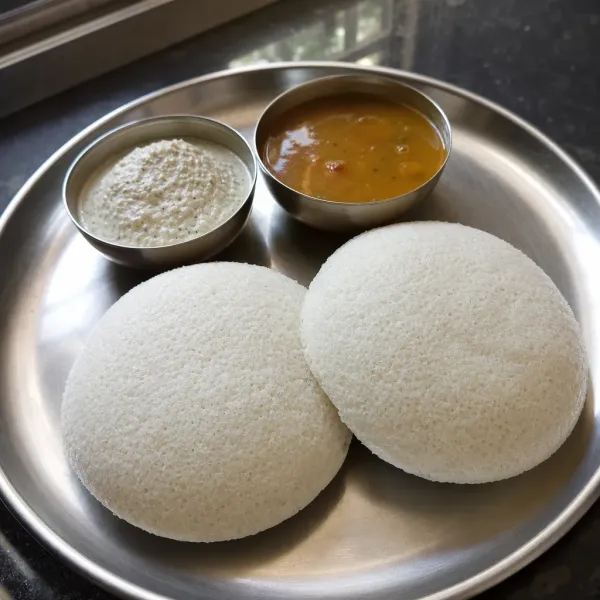
Thatte Idli
Soft, wide Karnataka-style thatte idli made with idli rice, urad dal and avalakki. Traditional household recipe with fermentation tips and steaming m…