

Semiya Upma Recipe
Malayalam സേമിയ ഉപ്പുമാവ്Tamil சேமியா உப்புமாKannada ಶೇವಿಗೆ ಉಪ್ಮಾTelugu సేమియా ఉప్మా
- Prep10 min
- Cook20 min
- Serves3
- DifficultyEasy
- DietVegetarian
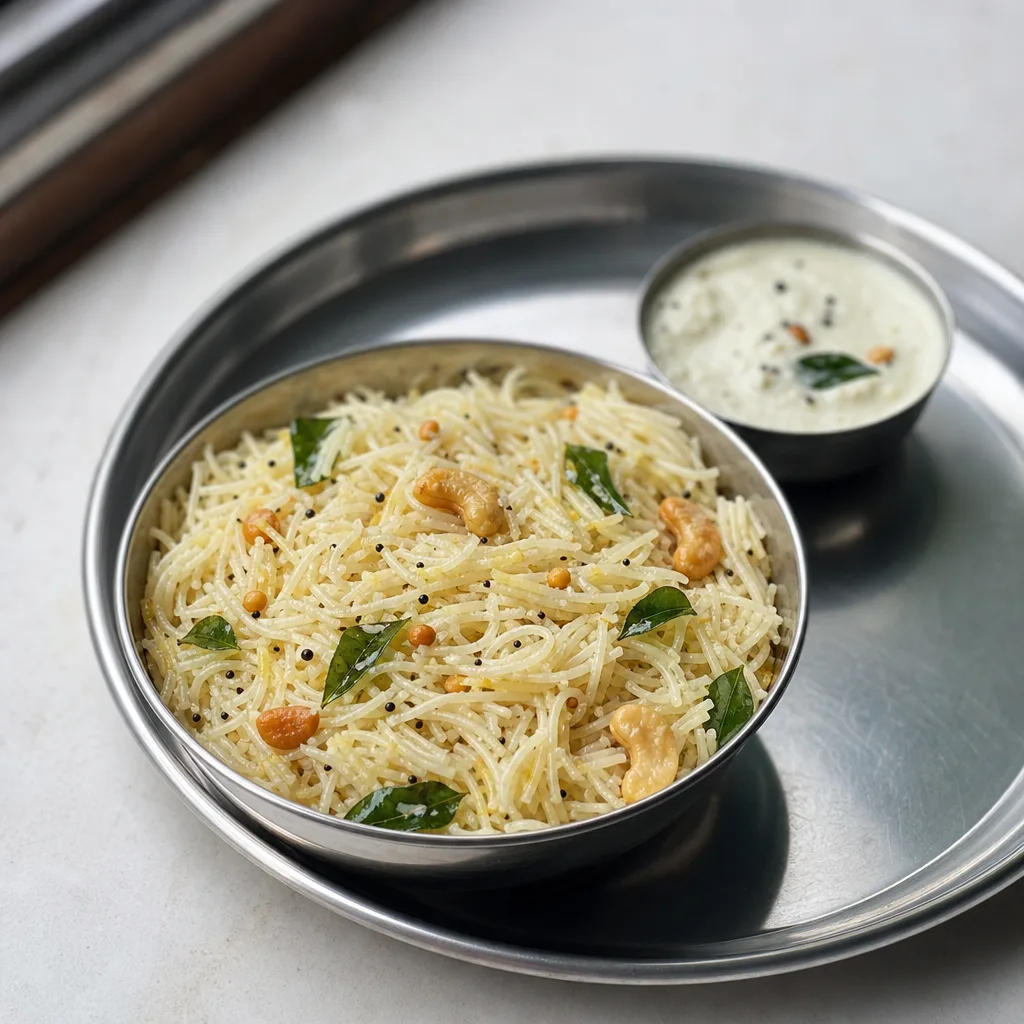
Semiya upma is a weekday breakfast dish in Tamil Brahmin homes, made when there is no time for something elaborate. It comes together in under half an hour and is eaten hot, straight from the kadai. The texture should be light and separate, each strand distinct, not a clump. That is the one thing people get wrong, and it is fixed entirely at the roasting stage.
In Iyer households this is cooked in ghee, not oil, and the seasoning is kept simple: mustard, urad dal, curry leaves, green chilli, ginger. There is no onion in the orthodox kitchen. Cashews go in when there is company or when someone feels like it on a Sunday; on weekday mornings they are often skipped. A small amount of fresh grated coconut is stirred in at the end in many homes, though some families leave it out entirely.
It is eaten with coconut chutney or pickle, or simply with a spoon of ghee poured over the top. Some households serve it with a ripe banana on the side. The portions are modest; this is not a dish that is piled high.
Ingredients (serves 3)
Main
For tempering
To finish
Method
Roast the vermicelli
If your vermicelli is not pre-roasted, put it in a dry kadai over medium heat and stir constantly for 3 to 4 minutes until it turns a pale golden and smells nutty. It should not darken beyond the colour of straw. Tip it out onto a plate immediately so it does not keep cooking. If you rush this step or skip it, the finished upma will be sticky and soft rather than light and separate.
Boil the water
Measure 500 ml water into a small pot and bring it to a full boil. Add salt and keep it hot on a low flame. You want the water ready the moment the tempering is done; adding cold water to the kadai makes the strands clump.
Start the tempering
Heat 2 tbsp ghee in a heavy kadai over medium flame. When the ghee is hot but not smoking, add the mustard seeds and let them splutter fully, about 30 seconds. Add the urad dal and chana dal and stir until they turn light golden, about 1 minute. Do not let them go dark brown or they will taste bitter.
Add cashews, chilli and ginger
If using cashews, add them now and stir for about 30 seconds until they pick up a little colour. Add the slit green chillies, grated ginger and curry leaves. Stand back when the curry leaves go in; they will sputter. Stir for 20 seconds until the raw smell of the ginger is gone.
Pour in the hot water
Pour the boiling salted water carefully into the kadai. Taste the water at this point; it should be slightly saltier than you want the finished dish, because the vermicelli will absorb some of the salt. Bring it back to a rolling boil over high heat.
Add the vermicelli
Add the roasted vermicelli in a steady stream, stirring as you pour so the strands do not fall in as one lump. Reduce the heat to medium and keep stirring gently for about 1 minute so every strand is submerged and coated.
Cook covered on low heat
Cover the kadai with a lid and cook on the lowest flame for 4 to 5 minutes. The vermicelli is ready when it has absorbed all the water and the strands look swollen and cooked through. Lift the lid and check; if any water remains, cover and cook for another minute. If it looks dry but still tastes raw in the centre, sprinkle 2 tbsp hot water, cover and give it another 2 minutes.
Fluff and finish
Turn off the heat. Use a fork or the back of a large spoon to gently fluff the strands apart. Stir in the grated coconut if using, and drizzle the final teaspoon of ghee over the top. Serve immediately; it tightens as it cools.
How to serve
Coconut chutney; or a small lime or mango pickle; or simply a ripe banana and a spoon of ghee poured at the table.
Served with: Coconut chutney; or a small lime or mango pickle; or simply a ripe banana and a spoon of ghee poured at the table.
Cook's tips
Pre-roasted versus raw vermicelli
Most supermarket semiya sold in Tamil Nadu is already roasted. Check the packet; it will say roasted or will look pale golden rather than white. If it is pre-roasted, skip step 1, but give it 1 minute in a dry pan anyway to refresh the roast if it has been sitting in the pantry for a while.
The water ratio
The 2.5:1 ratio (water to vermicelli by weight) works for thin semiya. Thick semiya needs a little more water, closer to 3:1. If you are unsure which you have, err on the side of less water; you can always add a splash more, but you cannot undo a soggy upma.
No onion in the orthodox kitchen
Many non-Brahmin households add half a finely chopped onion after the dal turns golden and cook it until soft before adding water. This is a genuine and common variation, but it is not the Iyer household version this recipe describes.
Leftovers
Semiya upma does not keep well. The strands clump together within an hour. Make only what you will eat. If you must reheat, sprinkle a little water over it and warm it covered on a very low flame.
Regional variations
Kerala households make a close version with coconut oil and curry leaves; Andhra kitchens often add more green chillies and skip the coconut.
Glossary
- Semiya சேமியா
- Fine wheat vermicelli, sold in thin and slightly thicker varieties; the thin kind is standard for upma.
- Upma உப்புமா
- A savoury cooked breakfast dish; the name comes from uppu (salt) and mavu (flour or grain), meaning salted grain.
- Urad dal உளுந்து பருப்பு
- Split black gram used whole in tempering; it turns golden and nutty in hot ghee and adds a faint crunch.
- Chana dal கடலை பருப்பு
- Split Bengal gram; used alongside urad dal in tempering for texture and a mild sweetness.
- Kadai கடாய்
- A deep, wide Indian wok with a thick base; the standard vessel for upma.
Two things decide whether this works: roasting the vermicelli thoroughly so it stays separate, and having the water at a full boil before it goes in. Get those right and the rest follows easily.
More Breakfast & Tiffin recipes
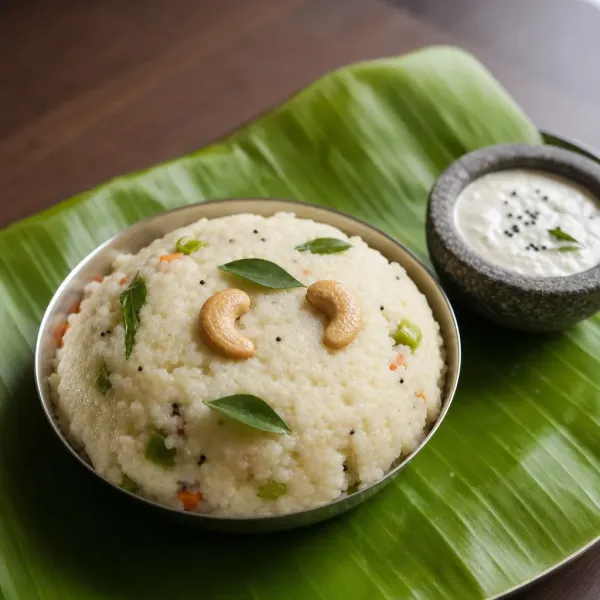
Rava Upma
Classic Tamil Brahmin rava upma made with dry-roasted semolina, gingelly oil, shallots and curry leaves. Step-by-step traditional method.

Vattayappam
Traditional Nasrani vattayappam: soft steamed sweet rice cake made with raw rice, fresh coconut and toddy. Step-by-step Kerala recipe with fermentati…
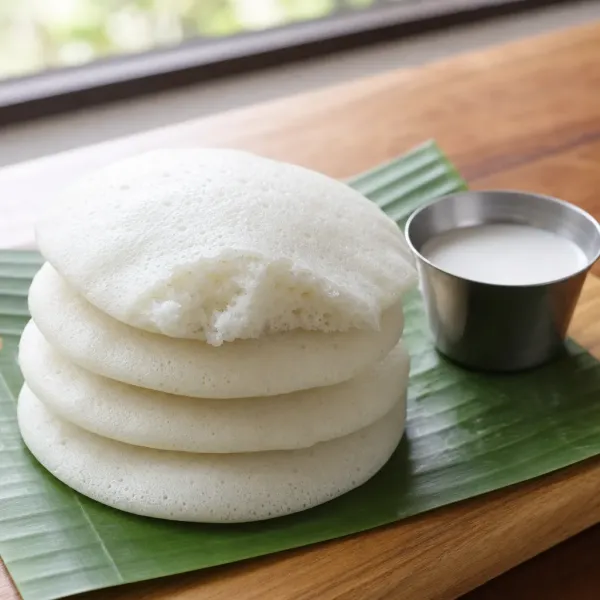
Vellayappam
Traditional Kerala Nasrani vellayappam recipe: thick, soft, pale fermented rice pancake made with pachari and coconut. Overnight batter, cooked cover…
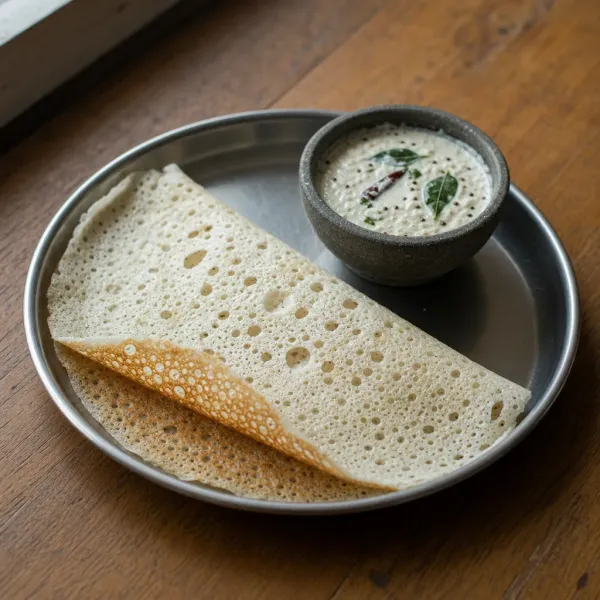
Rava Dosa
Traditional Tamil Iyer rava dosa with semolina, rice flour and gingelly oil. No fermentation, lacy and crisp. Step-by-step home kitchen method.
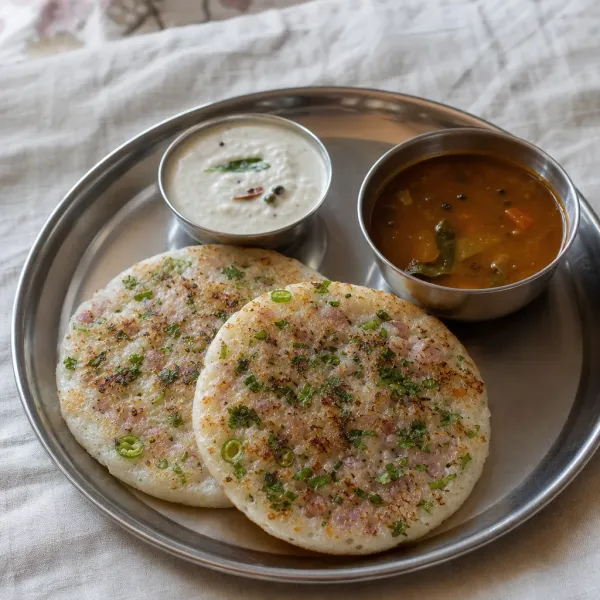
Uttapam: Tamil Brahmin Household Style
Traditional Tamil Brahmin uttapam made from fermented rice and urad dal batter, topped with shallots, green chilli and coriander. Step-by-step method.
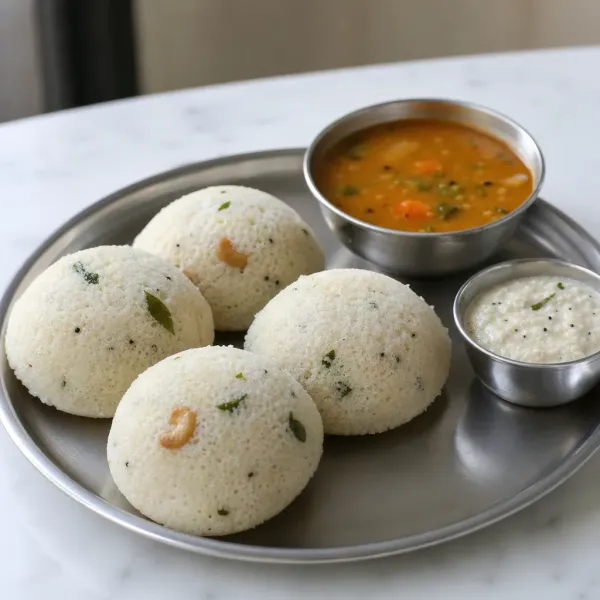
Rava Idli (Karnataka Style)
Traditional Karnataka rava idli made with ghee-roasted semolina, fresh curd and no fermentation. Soft, pale and ready in under an hour.