

Vanpayar Thoran Recipe
Malayalam വൻപയർ തോരൻTamil வான்பயறு தோரன்Kannada ವಾನ್ಪಯರ್ ತೋರನ್Telugu వాన్పయర్ తోరన్
- Prep15 min
- Soak / ferment8 hr
- Cook40 min
- Serves4
- DifficultyEasy
- DietVegan
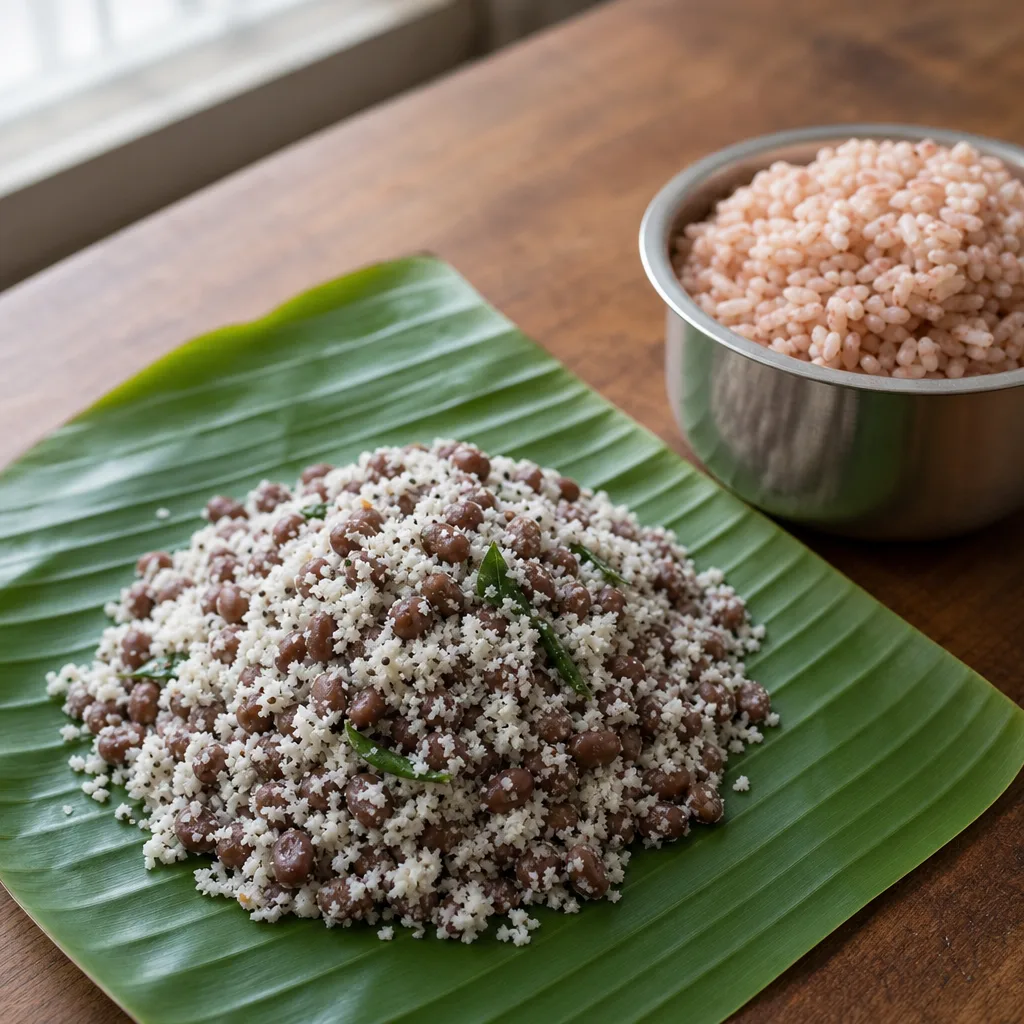
Vanpayar thoran is a workhorse of the Kerala sadya and the everyday lunch plate. The red cowpea is cooked until just tender, then tossed with a raw coconut mixture and finished with a mustard and curry leaf tempering in coconut oil. It is dry, not saucy, and the coconut should still smell fresh when it reaches the table.
In Travancore homes this appears almost daily alongside rice, sambar and a pachadi. It is one of the dishes that anchors the sadya banana leaf, sitting in its small mound between the olan and the kichadi. Households differ mainly on how much coconut they use and how finely it is ground: some prefer a coarser, more textured mix where you can see the coconut; others grind it finer so it coats the beans evenly. Both are correct.
The one thing that is not negotiable is cooking the cowpea properly. Undercooked vanpayar is chalky and the coconut does not cling to it. Overcooked, it turns mushy and loses the slight bite that makes the thoran worth eating. Aim for beans that are fully tender but still hold their shape.
Ingredients (serves 4)
For the cowpea
For the coconut mixture
For the tempering
Method
Soak the cowpea
Rinse the vanpayar well, then cover with cold water and soak for 8 hours or overnight at room temperature. The beans will swell noticeably and the skins will look taut. Drain and discard the soaking water.
Cook the cowpea
Put the drained beans in a heavy pan and cover with fresh water by about 5 cm. Add the turmeric and a generous pinch of salt. Bring to a boil over high heat, then reduce to a steady simmer. Cook uncovered for 25 to 35 minutes until the beans are fully tender when pressed between your fingers but still hold their shape. If you rush this step and stop too early, the thoran will taste raw and starchy at the centre.
Drain and rest the beans
Drain the cooked vanpayar in a colander. Shake out as much water as you can; excess moisture will make the finished thoran wet and the coconut will not cling. Set aside in the colander for 5 minutes.
Prepare the coconut mixture
Combine the fresh grated coconut, green chillies, crushed shallots, turmeric, and cumin in a small bowl. Using your fingers, crush and mix everything together firmly for about a minute until the shallots and chilli are bruised into the coconut and the mixture is faintly yellow. Do not grind it to a paste; it should stay coarse and textured.
Combine coconut and beans
Add the drained vanpayar to the coconut mixture and toss well so the coconut coats the beans evenly. Taste and adjust salt at this point.
Temper the spices
Heat the coconut oil in a wide kadai or heavy pan over medium-high heat until it shimmers. Add the mustard seeds and wait for them to pop completely, which takes about 30 seconds. Add the broken dried red chillies and let them darken for 10 seconds, then add the curry leaves, standing back as they will splutter.
Finish the thoran
Tip the coconut-and-bean mixture into the pan. Stir and fold everything together over medium heat for 3 to 4 minutes, turning it over from the bottom so the coconut is warmed through and very lightly toasted but not browned. The thoran should look dry, with each bean coated in coconut. Serve immediately.
How to serve
Hot matta rice; sambar or a thin rasam; a pickle or pappadam alongside. On a sadya leaf it sits as one of the vegetable thorans.
Served with: Hot matta rice; sambar or a thin rasam; a pickle or pappadam alongside. On a sadya leaf it sits as one of the vegetable thorans.
Cook's tips
Pressure cooker shortcut
Many households cook the soaked vanpayar in a pressure cooker: 2 whistles on medium heat after the first whistle, then natural release. This is genuinely common and produces good results. Do not skip the soak even if you use a pressure cooker.
Without soaking
Unsoaked vanpayar takes much longer to cook and the skins can split unevenly, leaving some beans overcooked and others hard. Soak whenever you can plan ahead.
Fresh coconut matters
Desiccated or frozen coconut can be used in a household pinch, but the flavour is noticeably flatter. If using frozen grated coconut, thaw it fully and squeeze out any excess water before mixing.
Heat level
Two green chillies gives a moderate heat that most households are comfortable with. Reduce to one for a milder thoran, or add a third if you prefer more fire.
Keeping it dry
If the thoran looks wet after you add the coconut mixture to the pan, raise the heat slightly and keep stirring for another minute or two. A wet thoran means the beans were not drained well enough or the heat was too low.
Regional variations
In northern Kerala some cooks add a small piece of dried red chilli to the tempering and skip the green chilli inside the coconut mixture; in some Nasrani households a pinch of turmeric is omitted and the coconut is coarser.
Glossary
- Vanpayar വൻപയർ
- Red cowpea (Vigna unguiculata), a staple legume in Kerala cooking, smaller and darker than rajma.
- Thoran തോരൻ
- A Kerala dry stir-fry of a vegetable or cooked legume with fresh grated coconut and a mustard-curry leaf tempering.
- Chuvannulli ചുവന്നുള്ളി
- Small red shallots used throughout Kerala cooking; sharper and more pungent than large onions.
- Kadai കടായി
- A wide, round-bottomed heavy pan used for stir-frying and tempering; the standard vessel for making thoran.
- Sadya സദ്യ
- The traditional Kerala feast served on a banana leaf, at which thoran is one of the standard side dishes.
Two things decide whether this thoran works: the cowpea must be cooked all the way through with no chalkiness at the centre, and the finished dish must be genuinely dry so the coconut clings to each bean rather than sitting in a puddle. Get those two right and everything else follows.
More Lentils & Legumes recipes
Hesarukalu Usli
Traditional Karnataka sprouted moong usli from a Udupi kitchen: steamed hesarukalu, fresh coconut, mustard tadka in coconut oil. Vegan, easy, everyda…
Mamidikaya Pappu
Traditional Andhra recipe for mamidikaya pappu: toor dal cooked with sour raw mango, finished with a ghee tadka of mustard, shallots, and curry leave…
Dosakaya Pappu
Authentic Andhra-Telangana dosakaya pappu: toor dal cooked with yellow cucumber and finished with a ghee tempering. Traditional household method.
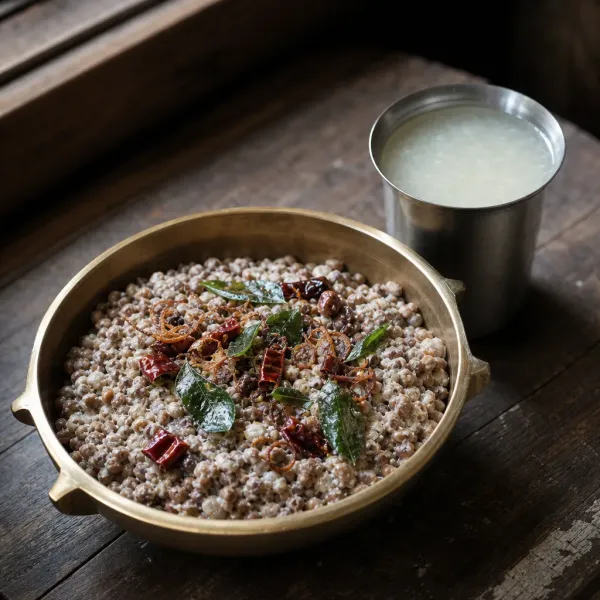
Muthira Puzhukku (Horse Gram Puzhukku)
Traditional Kerala muthira puzhukku: horse gram slow-cooked with kudampuli, finished with a fresh coconut-shallot paste and coconut oil tempering. Se…
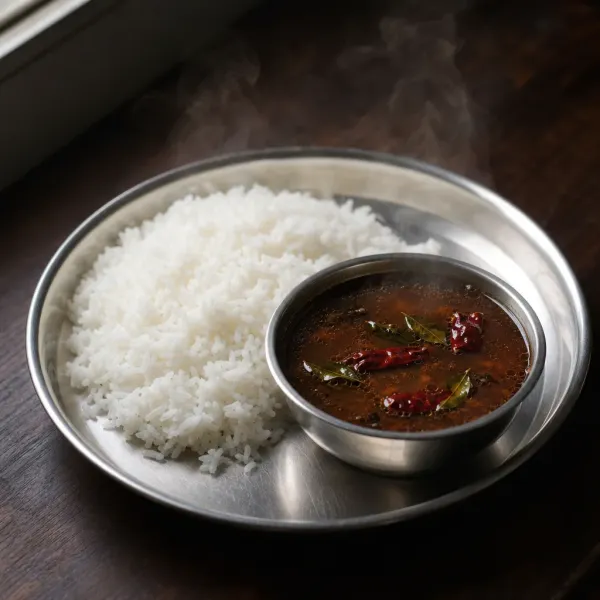
Ulavacharu
Traditional Rayalaseema ulavacharu: horse gram broth slowly reduced to a deep mahogany, finished with a gingelly oil tadka. Served over hot rice.
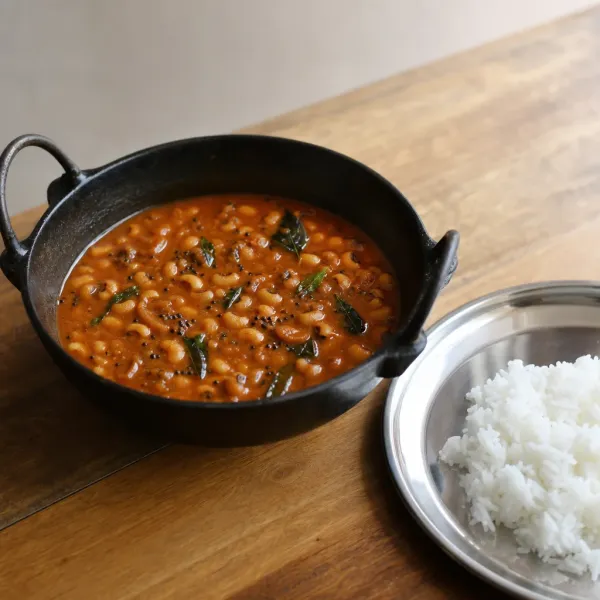
Thatta Payaru Kuzhambu
Traditional Kongunad thatta payaru kuzhambu with tamarind, fresh coconut paste and gingelly oil. A weekday Tamil household recipe for black-eyed pea…