

Hesarukalu Usli Recipe
Malayalam മുളപ്പിച്ച ചെറുപയർ ഉസ്ലിTamil முளைகட்டிய பச்சைப் பயறு உஸ்லிKannada ಹೆಸರುಕಾಳು ಉಸ್ಳಿTelugu మొలకెత్తిన పెసలు ఉస్లి
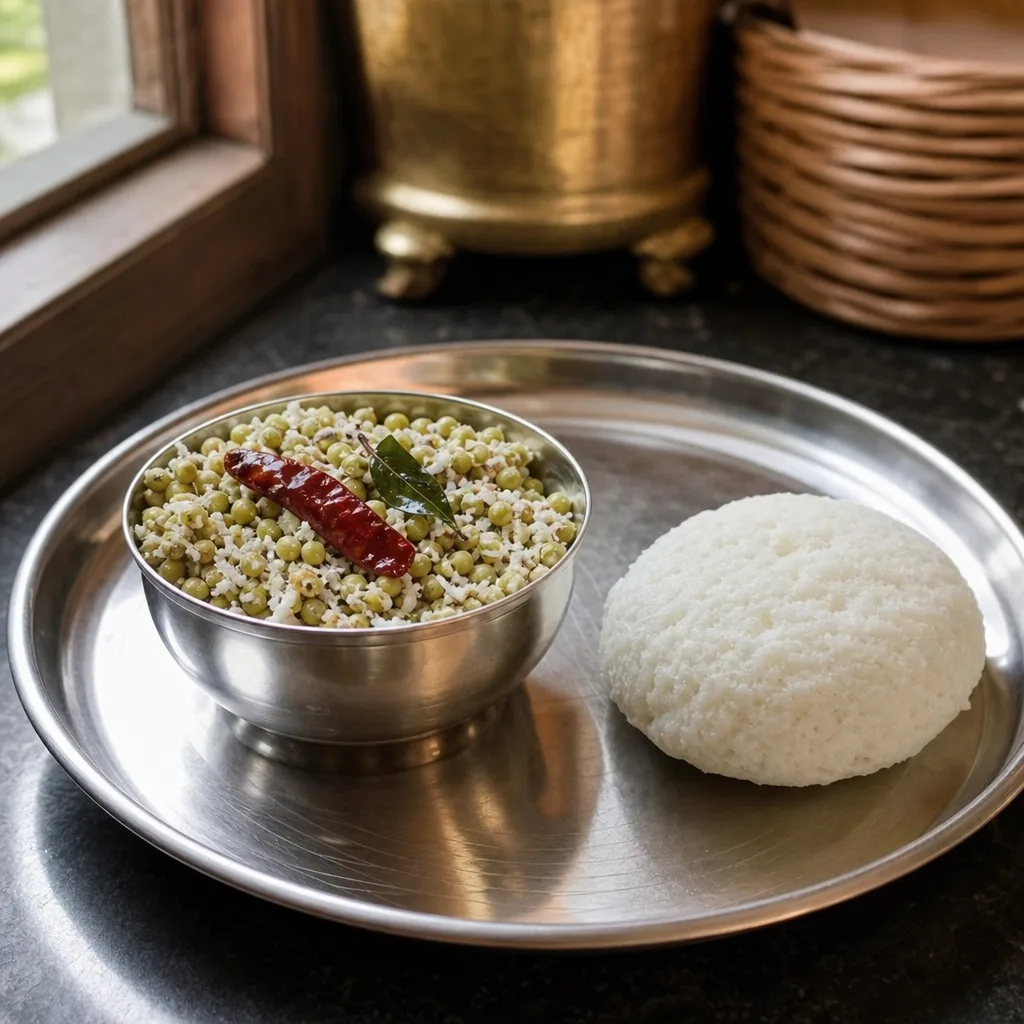
- Prep20 min
- Soak / ferment36 hr
- Cook15 min
- Serves4
- DifficultyEasy
- DietVegan
Hesarukalu usli is an everyday Karnataka dish made from whole green moong that has been soaked and then allowed to sprout. The sprouting is not optional or decorative — it changes the texture of the bean entirely, making it tender yet distinct, and it lightens the dish so it sits easily in the stomach. In Udupi homes it is made for breakfast or as part of a light evening meal, and it doubles as a snack eaten from a small steel bowl.
The dish is dry in the way a thoran is dry: each sprouted bean should be separate, lightly coated with coconut and spice, not clumped or wet. Fresh coconut is ground to nothing here — it is grated and stirred in off the heat, not cooked into a paste. The lemon is added at the very end and only just before serving, or the coconut turns sour.
Households differ mainly in heat level. Some use only dry red chillies in the tadka for a mild warmth; others add one or two slit green chillies with the mustard. The asafoetida is small but important — it keeps the dish from tasting flat. Do not skip it.
Ingredients (serves 4)
For sprouting
For the tadka
For the stir-fry
Method
Soak the moong
Rinse the moong in two or three changes of water until the water runs clear. Cover with plenty of cold water and leave to soak for 8 hours or overnight. The beans will swell noticeably and the skin will look tight.
Sprout the moong
Drain the soaked moong and transfer it to a clean cotton cloth or a colander lined with muslin. Tie the cloth loosely and hang it, or simply cover the colander with a damp cloth and leave it in a warm corner of the kitchen — not in the fridge. In a warm Karnataka or coastal kitchen this takes 24 to 28 hours. You are looking for a short white tail, about 5 mm to 1 cm long. Longer tails make the bean slightly bitter and the texture goes soft. Rinse the sprouts once before using.
Steam the sprouts briefly
Place the sprouted moong in a steamer basket or an idli pot and steam for 6 to 8 minutes over medium heat. The sprouts should be just cooked through — press one between your fingers and it should give without being mushy. They will continue to cook slightly in the pan, so stop on the early side. If you overcook here, the final dish will be pasty.
Heat the oil and pop the mustard
Set a wide heavy pan or kadai over medium heat. Add the coconut oil and let it warm until it shimmers. Add the mustard seeds and wait — do not stir — until they pop completely, about 30 seconds. If they do not pop, the oil is not hot enough.
Add the aromatics
Drop in the broken dry red chillies and let them darken for about 10 seconds — they should smell toasty, not burnt. Add the curry leaves carefully as they will splutter in the oil. Stir once, then add the asafoetida and the slit green chillies. Give everything 15 seconds together.
Add the steamed sprouts
Tip the steamed moong into the pan. Add salt and stir gently to coat the sprouts with the oil and spices. Keep the heat at medium. Cook for 3 to 4 minutes, turning the sprouts occasionally with a flat spatula rather than stirring vigorously — you want the beans to stay whole.
Stir in the coconut
Reduce the heat to low and add the grated fresh coconut. Fold it through the sprouts gently. Cook for just 1 minute — enough to warm the coconut through but not enough to make it oily or change its colour. The dish should look pale green and white, with the coconut clinging lightly to each bean.
Finish with lemon and serve
Take the pan off the heat. Add the lemon juice and fold through once. Taste for salt. Serve immediately. If the dish sits for more than a few minutes before the lemon goes in, the coconut stays fresh; add the lemon only when you are ready to plate.
How to serve
Eaten as part of a Karnataka breakfast spread alongside idli or akki roti, or as a small side in a rice meal. Some households eat it on its own as a mid-morning snack from a steel katori.
Served with: Eaten as part of a Karnataka breakfast spread alongside idli or akki roti, or as a small side in a rice meal. Some households eat it on its own as a mid-morning snack from a steel katori.
Cook's tips
Getting the sprout length right
A tail longer than 1 cm means the sprout has gone too far — the bean develops a faint bitterness and the texture after steaming becomes mealy. Check at 20 hours in a warm kitchen and every few hours after that.
Do not skip steaming
Some recipes say to add raw sprouts directly to the pan. This works only if the sprouts are very young and the pan time is long. For this version, steaming first gives you control over the final texture and keeps the stir-fry quick.
Fresh coconut cannot be replaced here
Desiccated coconut absorbs moisture and makes the dish dry and grainy. If fresh coconut is not available, the dish is better made without coconut than with a substitute.
Lemon timing
Adding lemon while the pan is still hot or leaving the dressed dish to sit makes the coconut taste sour within minutes. Add it off the heat and only just before serving.
Storing sprouts
Sprouted moong keeps in the fridge for up to two days once the tail has reached the right length. Rinse before using. Do not freeze.
Regional variations
Lingayat households in North Karnataka sometimes add finely chopped raw onion and use groundnut oil; Iyengar households omit onion and asafoetida differs in quantity; some households add grated raw mango in season instead of lemon.
Glossary
- Hesarukalu ಹೆಸರುಕಾಳು
- Kannada word for whole green moong beans (Vigna radiata).
- Usli ಉಸ್ಳಿ
- Karnataka term for a dry stir-fry of cooked legumes or sprouted beans with a mustard and coconut oil tadka.
- Tadka ತಡಕಾ
- The tempering step: hot fat in which whole spices are bloomed before the main ingredient is added. Called oggarane in Kannada.
- Hing ಇಂಗು
- Asafoetida, the dried resin used in small amounts in Karnataka and South Indian cooking as a digestive and flavour base.
Two things decide this dish: the sprout length and the lemon timing. Get the tail to 5 mm and no longer, steam gently so the beans stay whole, and add the lemon only after the pan comes off the heat. Everything else — the quantity of coconut, the number of chillies — can be adjusted to taste.
More Lentils & Legumes recipes
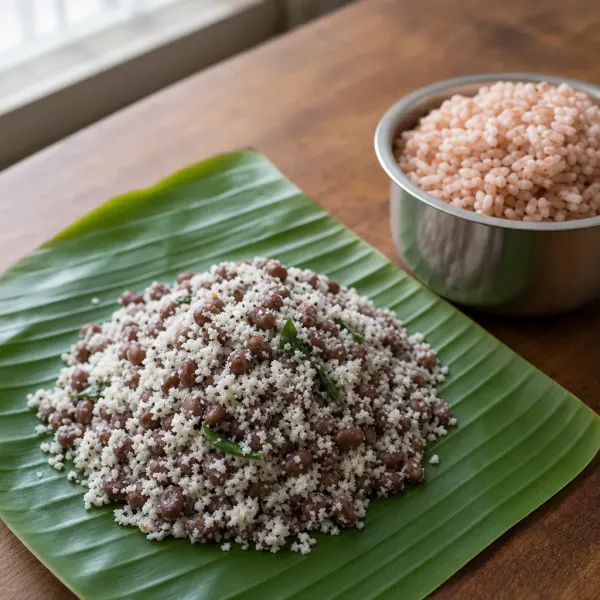
Vanpayar Thoran
Traditional Kerala vanpayar thoran: red cowpea cooked tender, tossed with fresh grated coconut and tempered in coconut oil with mustard and curry lea…
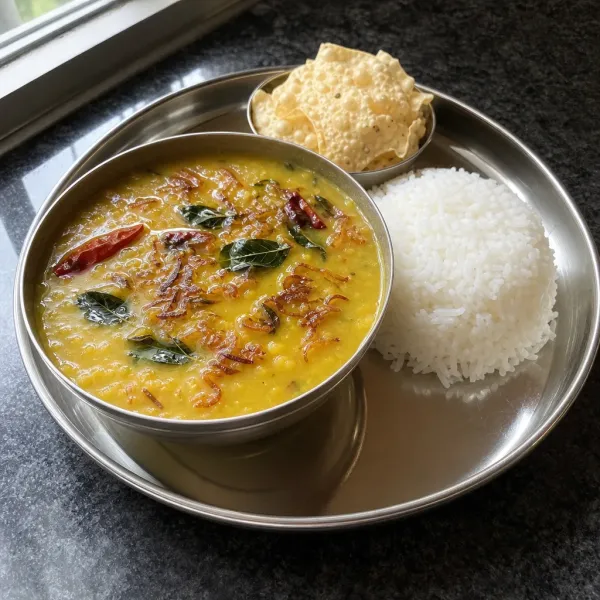
Mamidikaya Pappu
Traditional Andhra recipe for mamidikaya pappu: toor dal cooked with sour raw mango, finished with a ghee tadka of mustard, shallots, and curry leave…
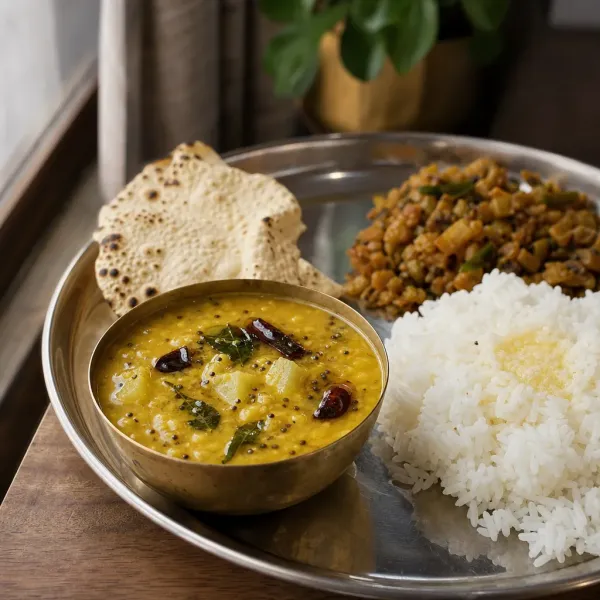
Dosakaya Pappu
Authentic Andhra-Telangana dosakaya pappu: toor dal cooked with yellow cucumber and finished with a ghee tempering. Traditional household method.
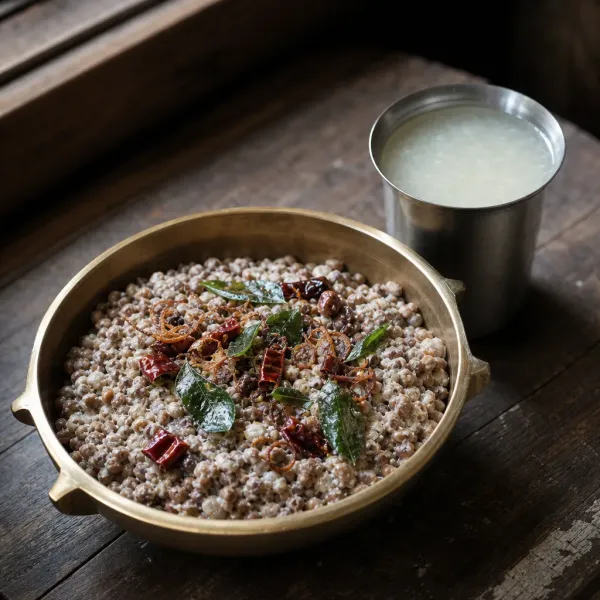
Muthira Puzhukku (Horse Gram Puzhukku)
Traditional Kerala muthira puzhukku: horse gram slow-cooked with kudampuli, finished with a fresh coconut-shallot paste and coconut oil tempering. Se…
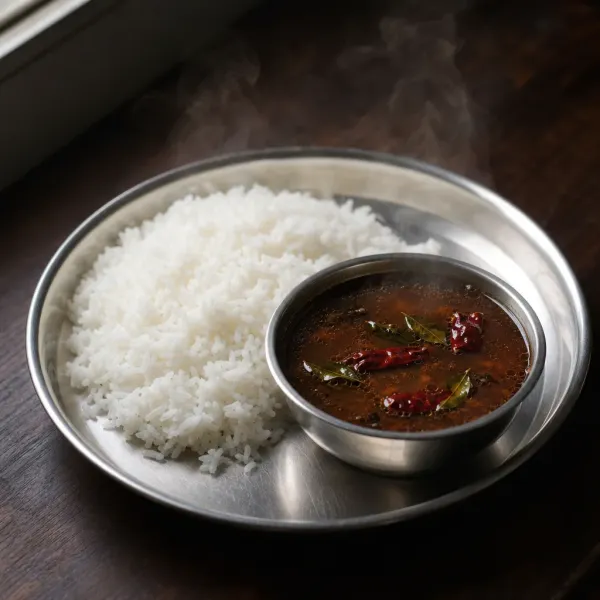
Ulavacharu
Traditional Rayalaseema ulavacharu: horse gram broth slowly reduced to a deep mahogany, finished with a gingelly oil tadka. Served over hot rice.

Thatta Payaru Kuzhambu
Traditional Kongunad thatta payaru kuzhambu with tamarind, fresh coconut paste and gingelly oil. A weekday Tamil household recipe for black-eyed pea…