

Kothamalli Sadam (Coriander Rice) Recipe
Malayalam കൊത്തമല്ലി സാദംTamil கொத்தமல்லி சாதம்Kannada ಕೊತ್ತಂಬರಿ ಸಾದTelugu కొత్తిమీర సాదం
- Prep15 min
- Cook25 min
- Serves4
- DifficultyEasy
- DietVegan
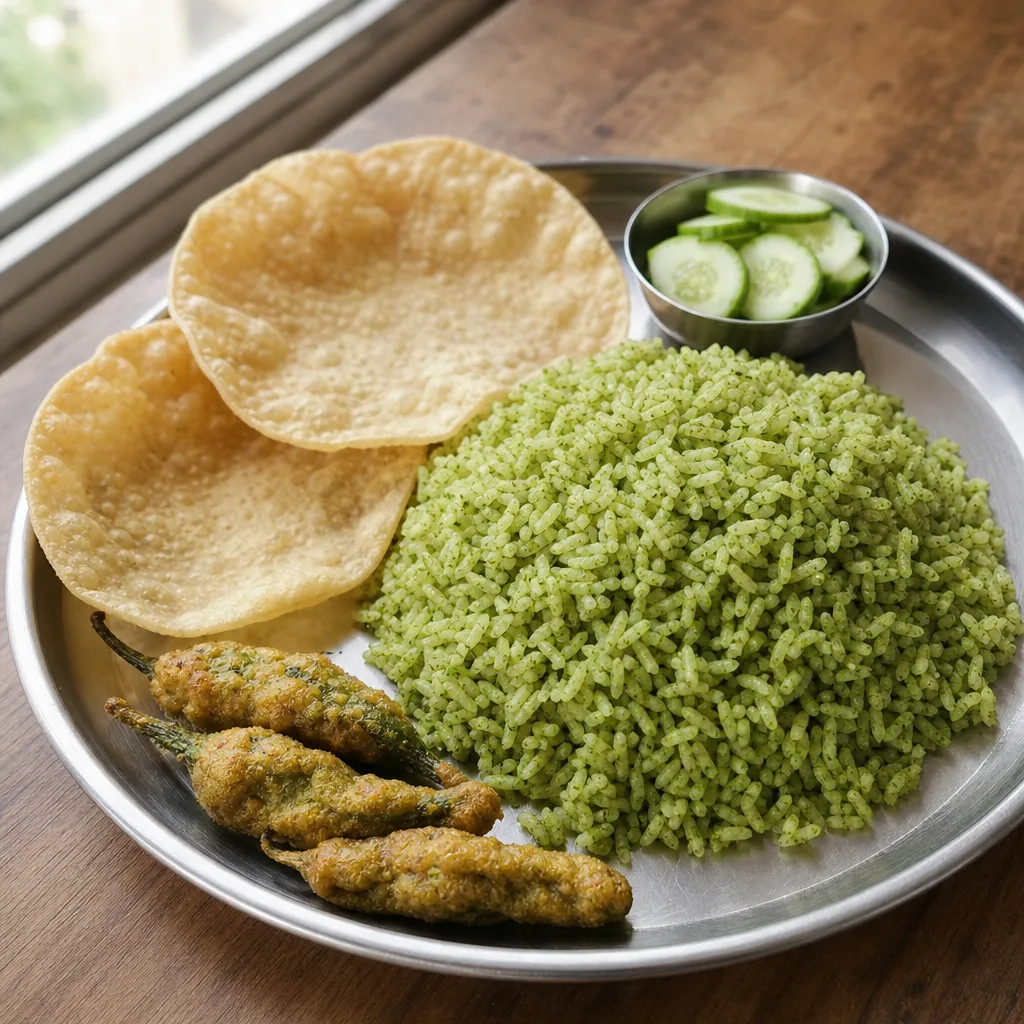
This is a rice dish built around a freshly ground coriander paste, cooked quickly and eaten at room temperature. It belongs to the category of variety rices that Tamil Brahmin households pack for travel, send in lunch boxes and make on days when something simple and complete is needed. The paste does the work: fresh coriander leaves, green chillies, a little coconut, and a handful of roasted dals ground together to give body.
In Iyer households the rice is cooked separately, cooled until the grains are distinct, and then mixed with the paste and a tempering of mustard, curry leaves and dried red chilli in gingelly oil. The oil matters here. Gingelly oil has a flavour that coconut oil would override, and this dish is Tamil in that specific way. Some grandmothers add a squeeze of lemon at the end; others say the green chillies provide enough brightness and lemon is unnecessary. Both positions are genuinely held.
It is not a wet dish. The finished rice should be lightly coated, each grain separate, with the pale green of the coriander paste visible throughout. It keeps well for several hours at room temperature, which is part of why it travels so well.
Ingredients (serves 4)
For the rice
For the coriander paste
For the tempering
Method
Cook the rice
Rinse the sona masoori rice twice and cook it with 540 ml of water and salt in a heavy pot over medium heat. Bring to a boil, then lower the heat, cover and cook for 12 to 14 minutes until the water is fully absorbed and the grains are just cooked through. Do not let it go mushy; each grain must be distinct. Spread the cooked rice on a wide plate or thali, stir in 1 tsp of gingelly oil and leave it to cool to room temperature.
Dry-roast the dals for the paste
Place a small dry pan over medium-low heat. Add the chana dal and urad dal together and roast, stirring constantly, for 2 to 3 minutes until they turn a light golden brown and smell nutty. Tip them onto a plate immediately; they continue to colour in a hot pan. Let them cool completely before grinding.
Grind the coriander paste
Put the roasted dals, dried red chilli, green chillies and ginger into a mixer jar and grind to a coarse powder first. Add the grated coconut and coriander leaves and grind again, adding 2 to 3 tbsp of water a little at a time, until you have a thick, coarse-smooth paste. It should not be watery. Taste for salt and add it now. The paste should smell very fresh and bright green.
Prepare the tempering
Heat 2 tbsp of gingelly oil in a wide kadai or pan over medium heat until it shimmers. Add the mustard seeds and wait for them to pop completely, which takes about 30 seconds. Add the urad dal and let it turn golden, about 20 seconds. Add the broken dried red chillies and curry leaves, standing back as the leaves will splutter. Add the pinch of asafoetida, stir once, and take the pan off the heat.
Add the paste to the tempering
Return the pan to low heat. Add the ground coriander paste to the tempered oil and stir it through for 1 to 2 minutes. You are not frying it hard; you are just taking the raw edge off the paste and letting it absorb the flavour of the tempering. The paste will darken very slightly and the raw smell of the coriander will mellow. Remove from heat.
Mix the rice
Add the cooled rice to the pan in two or three additions, folding gently with each addition so the paste coats every grain without breaking them. Use a light hand. If you press or stir hard, the grains will clump. Check the salt. The finished rice should be pale green throughout, with each grain separate and lightly coated.
How to serve
Plain papad (appalam), mor milagai (sun-dried buttermilk chillies fried in oil), or a simple cucumber raita. Often packed as-is for lunch boxes or travel, with no accompaniment at all.
Served with: Plain papad (appalam), mor milagai (sun-dried buttermilk chillies fried in oil), or a simple cucumber raita. Often packed as-is for lunch boxes or travel, with no accompaniment at all.
Cook's tips
The rice must be cool
Hot rice mixed with the paste will turn everything into a sticky mass. Spread it out and give it at least 20 minutes. This is the step people rush and then wonder why the grains clumped.
Gingelly oil is not optional here
This is a Tamil dish and gingelly oil gives it its character. Coconut oil will make it taste like a Kerala preparation. Use cold-pressed gingelly oil if you can find it.
Do not add water to the paste if you can help it
Use as little water as possible when grinding. A wet paste makes the rice soggy. The coconut provides enough moisture if the coriander leaves are fresh and washed but not waterlogged.
Keeping and storage
The rice keeps well at room temperature for 4 to 5 hours, which is why it is a classic travel and lunch-box dish. Refrigerate if keeping longer, but bring it back to room temperature before eating; cold rice loses the texture.
Roasting the dals
The roasted chana dal and urad dal thicken the paste and give it a nutty base note. If you skip this step the paste will be thin and the rice will taste flat. Do not substitute with raw dals.
Regional variations
Vellalar and Mudaliar households make a similar rice with a slightly different tempering that includes curry leaves fried in gingelly oil; Andhra households make kothimeera annam with a coconut-heavier paste and less chilli.
Glossary
- Kothamalli கொத்தமல்லி
- Fresh coriander leaves; the Tamil word used in Tamil Nadu for the herb.
- Sadam சாதம்
- Cooked rice; the Tamil word for rice as a cooked dish, used in the names of variety rice preparations.
- Perungayam பெருங்காயம்
- Asafoetida; the dried resin used in small quantities in South Indian Brahmin cooking as a digestive and flavour base.
- Mor milagai மோர் மிளகாய்
- Sun-dried chillies soaked and dried in buttermilk; fried in oil and served as an accompaniment to variety rices.
- Gingelly oil நல்லெண்ணெய்
- Cold-pressed sesame oil used in Tamil Nadu cooking for tempering, kuzhambu and rice dishes; has a distinct nutty aroma.
- Chana dal கடலைப் பருப்பு
- Split Bengal gram; used here dry-roasted to add body and a nutty flavour to the ground paste.
Two things decide whether this rice works: the paste must be ground thick and not watery, and the rice must be completely cool before mixing. Get those two right and the dish comes together in minutes.
More Rice Dishes recipes
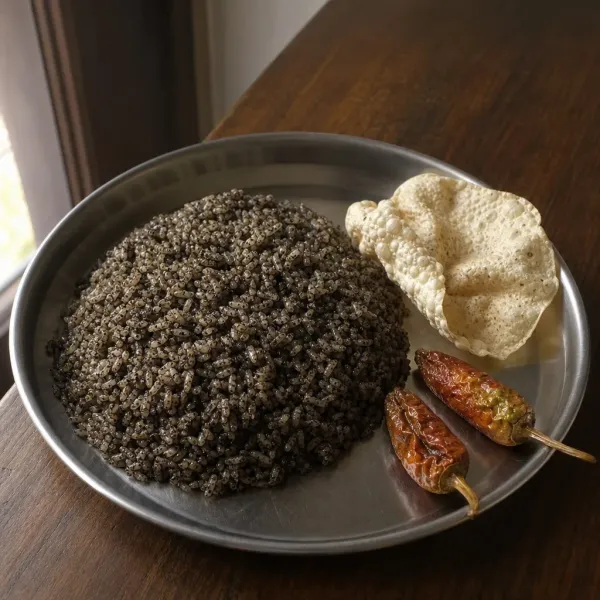
Ellu Sadam
Traditional Tamil Brahmin ellu sadam made with dry-roasted sesame powder, gingelly oil and cooked rice. A simple, sattvic dish for festivals and ever…
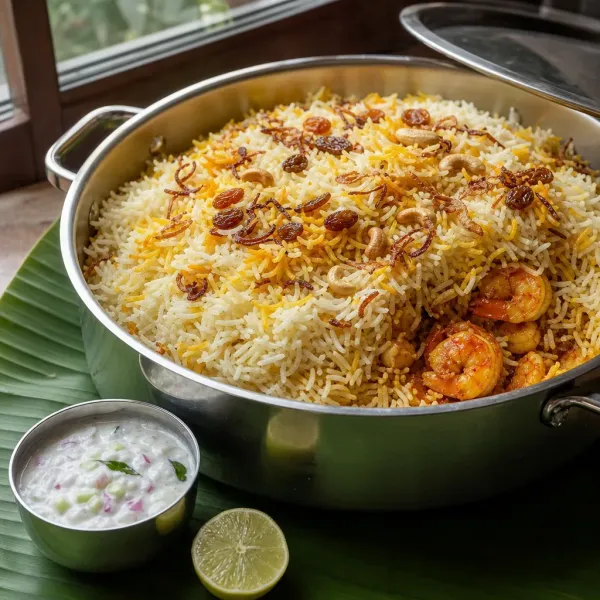
Malabar Prawn Biryani (Chemmeen Biryani)
Traditional Mappila-style prawn biryani from Malabar, Kerala, made with kaima rice, coconut oil, and a thick prawn masala, finished on dum.
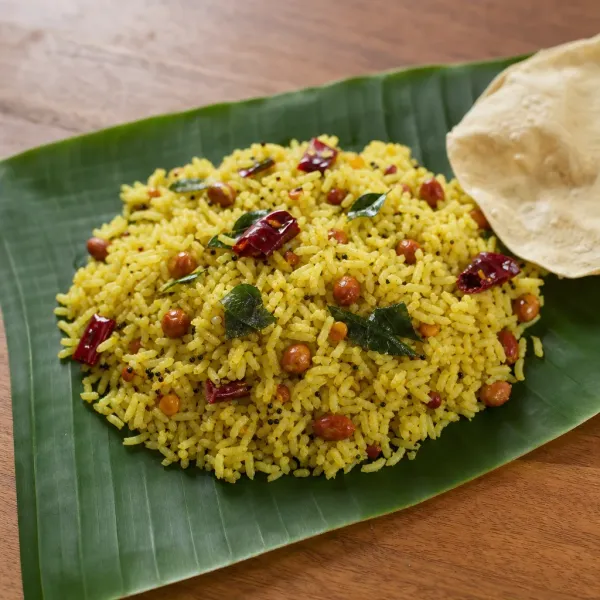
Mavinakayi Chitranna
Traditional Karnataka raw mango rice with fresh coconut-chilli paste, Byadagi chillies, groundnuts and curry leaf tempering. A classic summer chitran…
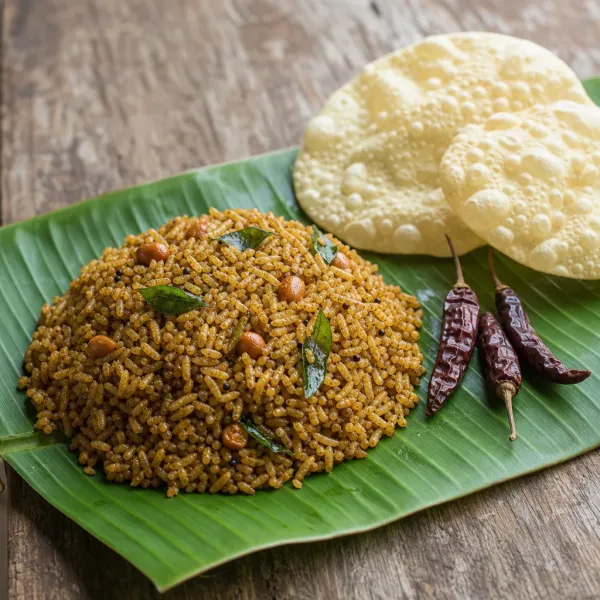
Puliyodarai with Pulikachal
Traditional Tamil Iyer puliyodarai made with homemade pulikachal paste, gingelly oil, and firm-cooked raw rice. Temple-style tamarind rice recipe.
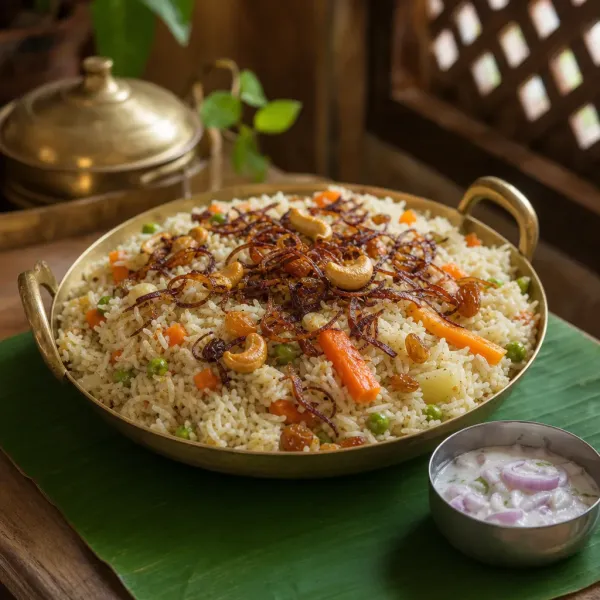
Vegetable Pulao (Mappila Style)
Traditional Malabar Mappila vegetable pulao cooked in coconut milk with whole spices and jeerakasala rice. Authentic Kerala Muslim household recipe.
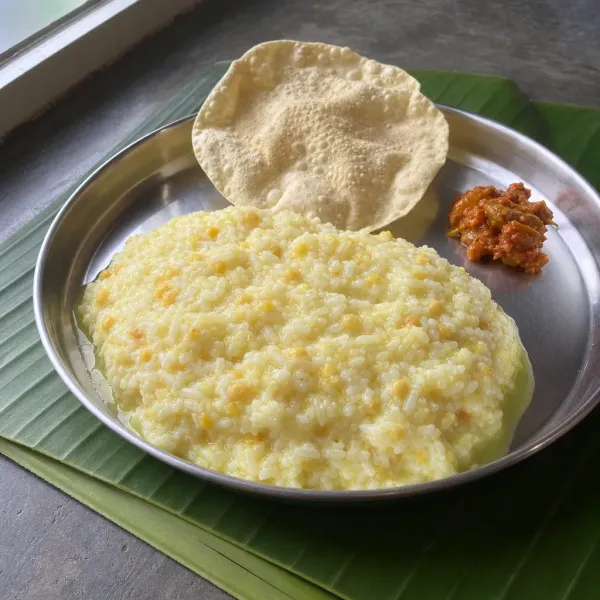
Paruppu Sadam
Traditional Iyer-style paruppu sadam: soft raw rice stirred with toor dal and finished with ghee, the first course of a Tamil Brahmin meal.