

Mavinakayi Chitranna Recipe
Malayalam മാവിനക്കായ് ചിത്രാന്നTamil மாவினக்காய் சித்ரான்னKannada ಮಾವಿನಕಾಯಿ ಚಿತ್ರಾನ್ನTelugu మామిడికాయ చిత్రాన్న
- Prep20 min
- Cook25 min
- Serves4
- DifficultyEasy
- DietVegan
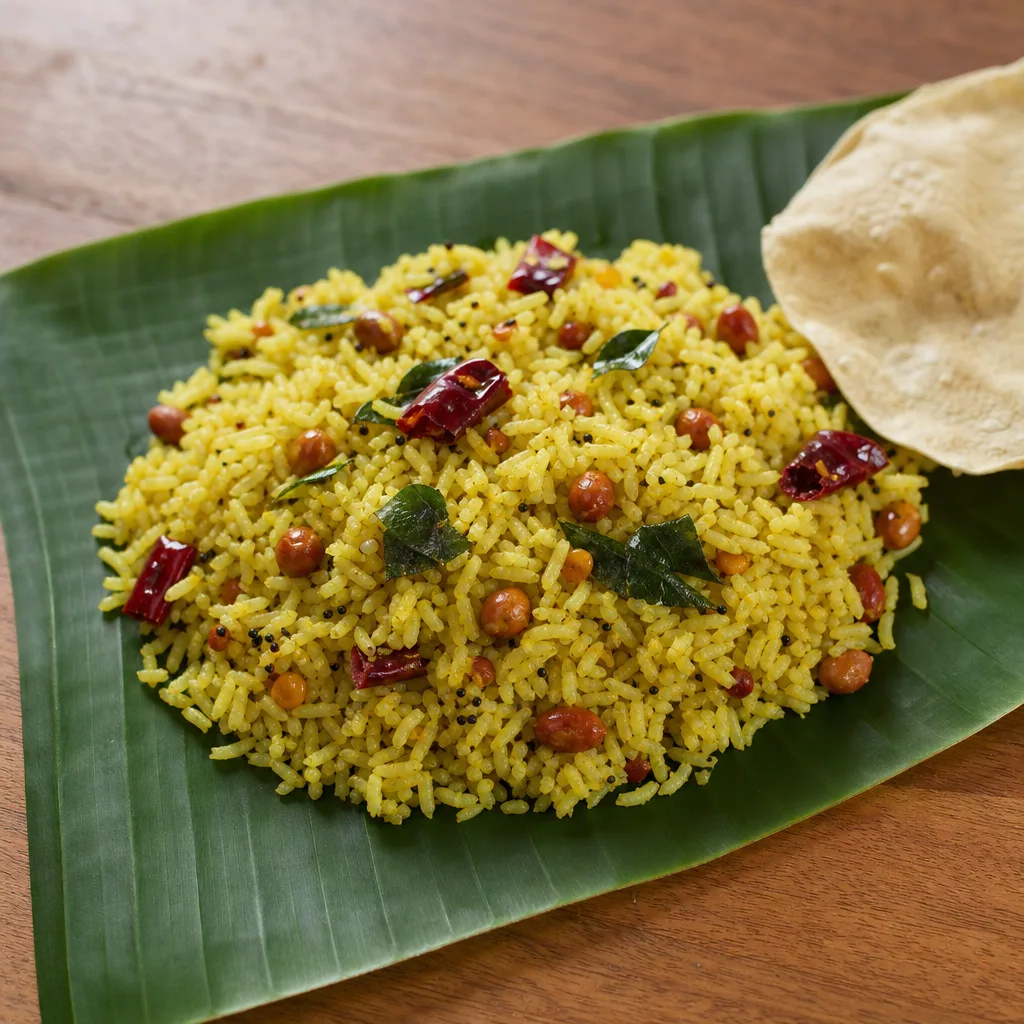
Mavinakayi chitranna is a Karnataka summer rice, made when raw mangoes are hard, pale green, and sharp enough to make you wince. It is not a leftover dish dressed up; many households cook fresh rice specifically for it. The mango is grated raw and stirred into the rice along with a ground coconut-chilli paste and a hot tempering of mustard, dried chillies, curry leaves, and groundnuts in coconut oil or occasionally gingelly oil depending on the family.
It is eaten at room temperature, which is part of the point. In Karnataka homes it appears at lunch as a main rice dish, packed into tiffin boxes for school and office, and carried on long journeys because it keeps well through a warm day without spoiling. The sharpness of the mango does the work that tamarind does in puliyogare.
Households differ mainly in the coconut. Some grind a small amount of fresh coconut into the paste with the chillies and urad dal; others skip coconut entirely and rely on the grated mango alone for moisture and sourness. Both are genuine. The version here uses a modest amount of fresh coconut, which is the more common practice in older Bangalore and Mysuru kitchens.
Ingredients (serves 4)
For the rice
For the raw mango paste
For the tempering
Method
Cook and cool the rice
Cook the sona masuri rice with enough water so the grains are just cooked through but still hold their shape firmly — not mushy, not chalky. Drain if needed, spread on a wide plate or thali, and leave to cool completely to room temperature. Cold rice from the previous night also works well. Warm rice will turn the finished dish sticky and dull.
Dry-roast the urad dal for the paste
In a small heavy pan over low heat, dry-roast 1 tsp of urad dal with the 5 dried red chillies, stirring constantly, until the dal turns pale gold and smells nutty and the chillies darken slightly, about 2 minutes. Do not let them go brown or the paste will taste bitter. Remove immediately and cool.
Grind the paste
In a small stone grinder or mixer jar, grind the roasted urad dal and chillies with the fresh grated coconut, a pinch of salt, and 1 to 2 tbsp of water to a coarse, slightly grainy paste — not completely smooth. You want texture. Set aside.
Grate the mango
Peel the raw mango and grate it on the large holes of a box grater directly into a bowl. You should have roughly 200 g of grated mango. Taste a little: it should be sharply sour. If it is only mildly tart, your dish will taste flat; use the full amount. If it is eye-wateringly sour, reduce slightly.
Fry the groundnuts
Heat the coconut oil in a wide kadai over medium heat. Add the groundnuts and fry, stirring, until the skins blister and the nuts are cooked through, about 3 to 4 minutes. They should sound hollow when you press one. Remove with a slotted spoon and set aside, leaving the oil in the pan.
Make the tempering
In the same oil over medium heat, add the mustard seeds and wait for them to pop — this takes about 30 seconds. Add the urad dal and chana dal and stir until both turn light gold. Add the torn dried red chillies and curry leaves; the leaves will splutter, so stand back. Add the asafoetida and turmeric and stir once. The whole tempering should take no more than 2 minutes from the mustard going in.
Add the grated mango
Add the grated mango to the tempering in the kadai and stir over medium-low heat for 2 minutes. You are not cooking it through; you just want the raw smell to soften slightly and the mango to warm and coat with the oil and spices. It will still look pale and raw. That is correct.
Add the ground paste
Add the coconut-chilli paste to the mango mixture and stir for another minute over low heat until everything is combined and fragrant. Taste for salt at this stage and adjust. Remove from heat.
Mix with the rice
Add the cooled rice to the kadai in two or three additions, folding gently with a wide spatula or your clean fingers. Work from the bottom upward. You want every grain coated with the mango-spice mixture without breaking the rice. If you stir hard you will get a paste. Add the fried groundnuts and fold in.
Rest and serve
Cover and leave to rest for 10 minutes before serving. This short rest lets the mango's sourness settle into the rice. Taste once more and add salt if needed. Serve at room temperature.
How to serve
Plain papad (sandige or happala), a small bowl of coconut chutney, or simply with a raw onion and green chilli on the side. Often eaten as a standalone meal without any side dish when packed for travel or school.
Served with: Plain papad (sandige or happala), a small bowl of coconut chutney, or simply with a raw onion and green chilli on the side. Often eaten as a standalone meal without any side dish when packed for travel or school.
Cook's tips
Choosing the mango
The mango must be completely raw and hard — the kind that leaves a sticky white sap when you cut it. A mango that has begun to ripen even slightly will make the dish sweet and the texture will be wet. Totapuri, raw Alphonso, or any hard local variety works. Avoid anything with any give when pressed.
Rice texture is everything
If the rice is overcooked or still hot when you mix, the dish turns gluey. If you are cooking rice fresh, use slightly less water than usual and spread it out immediately after cooking. Some cooks rinse the cooked rice under cold water briefly, though older cooks do not approve of this.
Byadagi chillies
Byadagi chillies give the dish its characteristic deep red-orange colour and moderate heat. If you use only Guntur or Kashmiri chillies the flavour profile shifts. Kashmiri alone will make it milder and less authentic to the Karnataka kitchen; Guntur alone will make it hotter without the colour.
Keeping and storage
Chitranna keeps at room temperature for up to 6 hours in a cool kitchen, which is why it is a traditional travel and picnic food. Refrigerate if keeping longer; bring back to room temperature before eating. Do not reheat — the mango turns dull and loses its sharpness.
Skipping the coconut
If your family tradition omits coconut from the paste, simply grind the roasted urad dal and chillies dry to a coarse powder and add directly to the tempering. The result is drier and sharper. Both versions are made in Karnataka homes.
Regional variations
Tamil Brahmin households make a version with tamarind-forward pulikachal base; Andhra households add more dried chillies and sometimes curry leaves tempering only without coconut.
Glossary
- Mavinakayi ಮಾವಿನಕಾಯಿ
- Raw mango in Kannada; 'maavu' is the mango tree, 'kayi' means unripe fruit.
- Chitranna ಚಿತ್ರಾನ್ನ
- Karnataka term for seasoned or mixed rice; literally 'decorated rice' from Sanskrit 'chitra' (variegated) and 'anna' (rice/food).
- Byadagi ಬ್ಯಾಡಗಿ
- A variety of dried red chilli grown in Byadagi town, Haveri district, Karnataka; known for deep colour and moderate heat.
- Hing ಇಂಗು
- Asafoetida, the dried resin of Ferula species; used in small quantities as a digestive and flavouring in South Indian cooking.
- Kairi ಕಾಯಿ
- Colloquial term for raw, unripe mango used across Karnataka and Maharashtra; emphasises hardness and sourness.
Two things decide whether mavinakayi chitranna works: the sharpness of the mango and the dryness of the cooked rice. Get both right — a genuinely sour, hard green mango and rice that is cool and grain-separate before mixing — and everything else follows easily.
More Rice Dishes recipes
Ellu Sadam
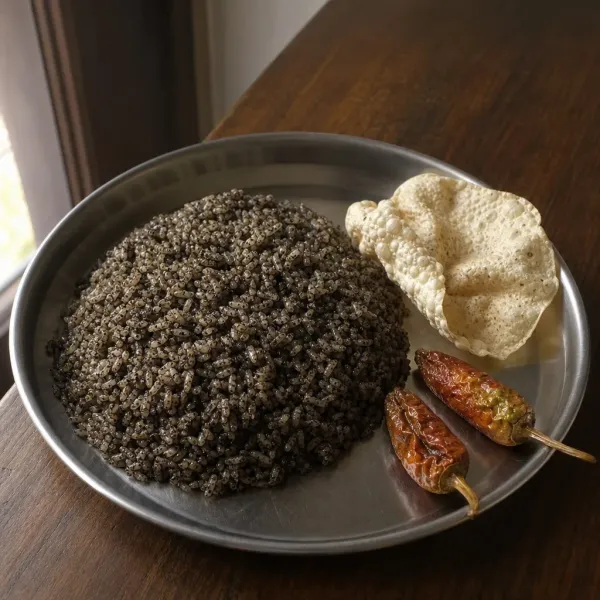
Traditional Tamil Brahmin ellu sadam made with dry-roasted sesame powder, gingelly oil and cooked rice. A simple, sattvic dish for festivals and ever…
Vegetable Pulao (Mappila Style)
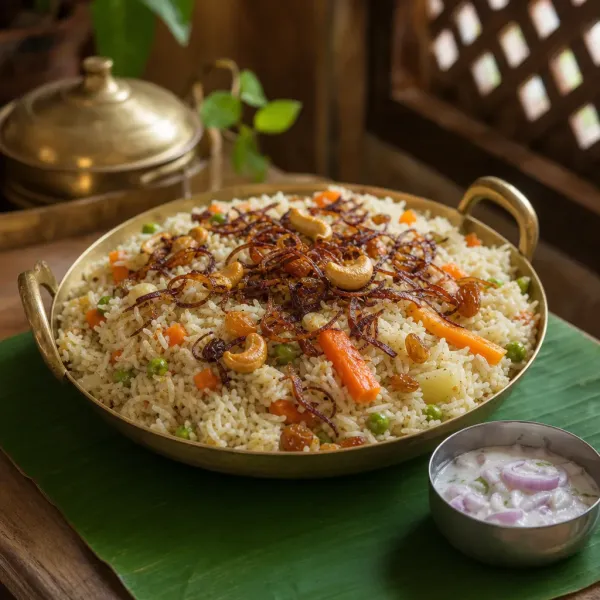
Traditional Malabar Mappila vegetable pulao cooked in coconut milk with whole spices and jeerakasala rice. Authentic Kerala Muslim household recipe.
Kothamalli Sadam (Coriander Rice)
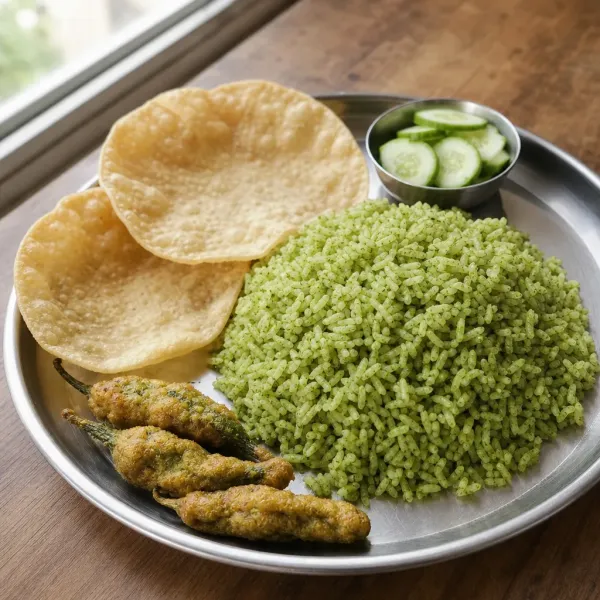
Traditional Tamil Iyer kothamalli sadam: fresh coriander paste with roasted dals, coconut and gingelly oil folded through cooled sona masoori rice.
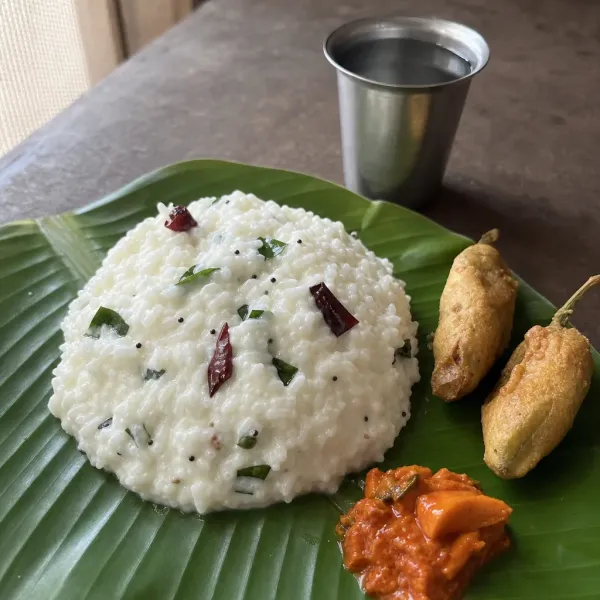
Thayir Sadam
Authentic Iyer-style thayir sadam with gingelly oil tempering, mustard seeds, curry leaves and fresh curd. The traditional Tamil Brahmin curd rice re…
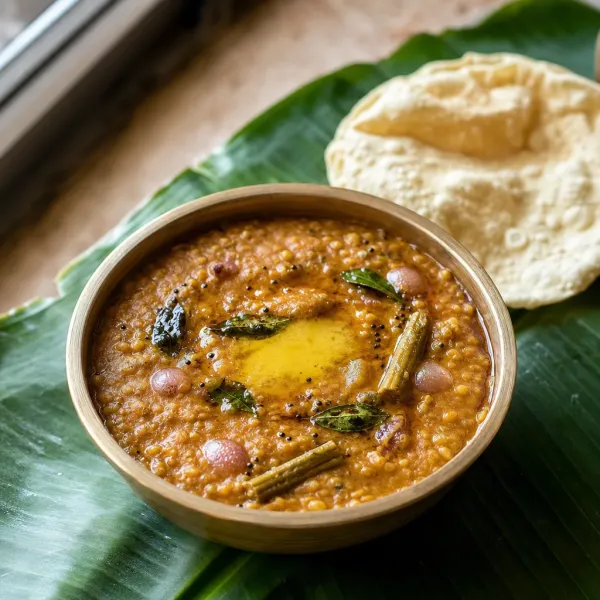
Sambar Sadam (One-Pot Rice and Sambar)
Authentic Tamil Iyer sambar sadam: rice and toor dal cooked with tamarind, drumstick and sambar powder, finished with a ghee tempering. One pot, real…
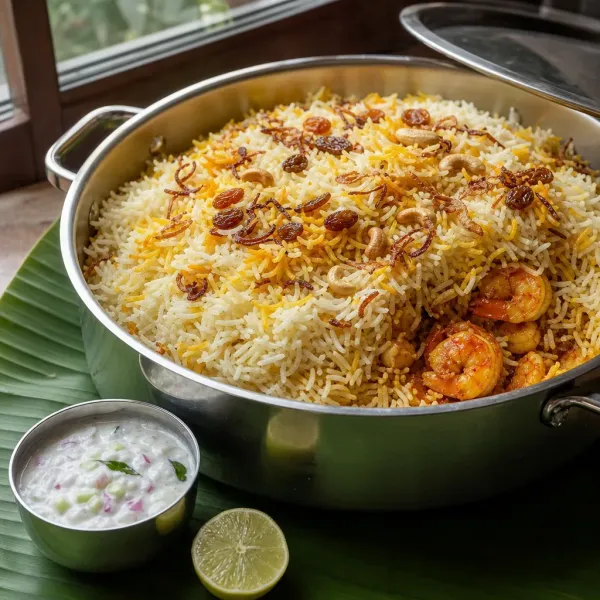
Malabar Prawn Biryani (Chemmeen Biryani)
Traditional Mappila-style prawn biryani from Malabar, Kerala, made with kaima rice, coconut oil, and a thick prawn masala, finished on dum.