

Sambar Sadam (One-Pot Rice and Sambar) Recipe
Malayalam സാമ്പാർ സാദംTamil சாம்பார் சாதம்Kannada ಸಾಂಬಾರ್ ಸಾದTelugu సాంబార్ సాదం
- Prep20 min
- Cook45 min
- Serves4
- DifficultyMedium
- DietVegetarian
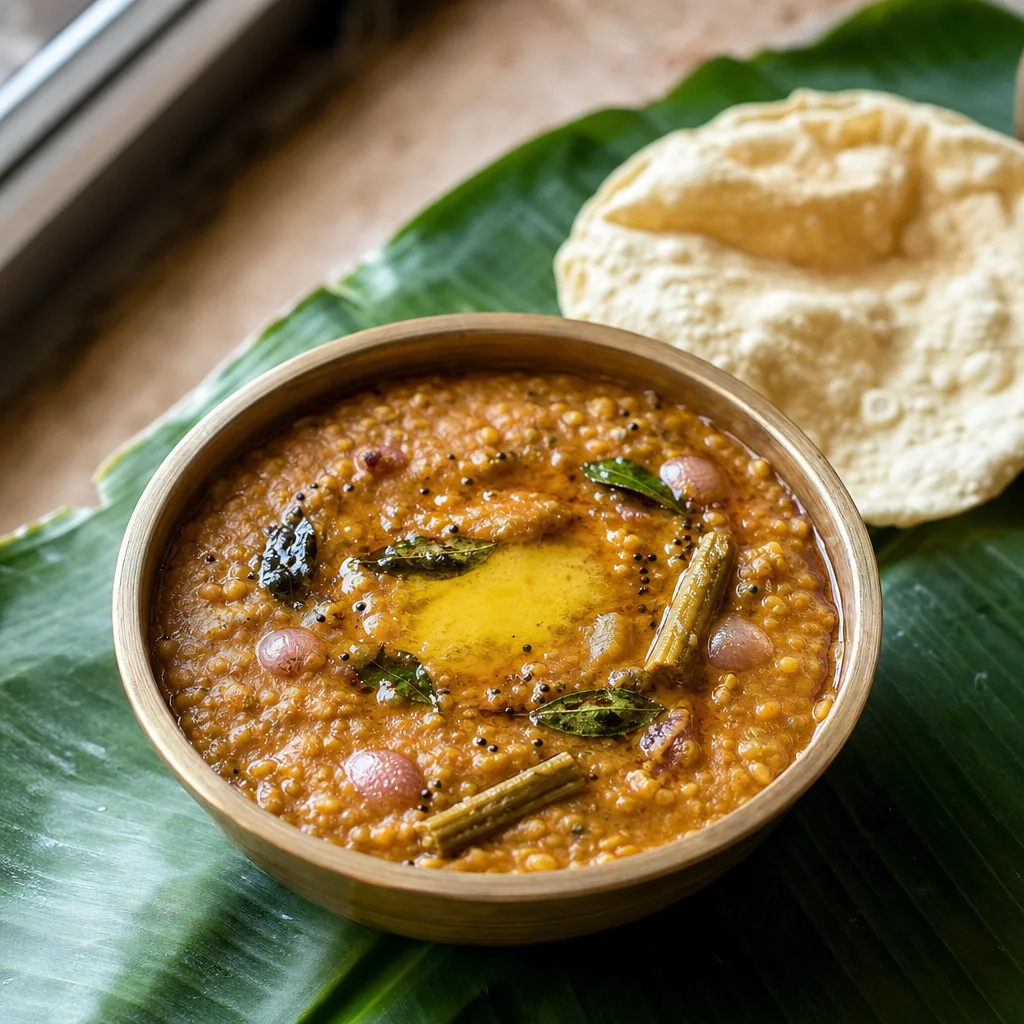
Sambar sadam is comfort food in the truest sense in Tamil Brahmin homes. It is not sambar poured over rice; the rice and toor dal cook together and absorb the tamarind, tomato and spice until the whole pot becomes one unified thing. The texture sits somewhere between a thick porridge and a loose risotto, and it is eaten hot, straight from the vessel.
In Iyer households this is weekday food, made when there is leftover sambar powder to use up or when the cook wants something that needs only one pot and one flame. Some families add a small piece of jaggery to balance the tamarind; others do not. The vegetables most commonly used are small shallots, drumstick and tomato, though brinjal appears in many homes too. The one thing that does not vary is the final tempering in ghee, which is not optional.
It is served with a small mound of ghee on top and a side of appalam or vadagam. Eaten at lunch, rarely at dinner. Leftovers thicken considerably and are sometimes thinned with a little hot water before reheating.
Ingredients (serves 4)
For the rice and dal base
For the sambar base
For the tempering (tadka)
Method
Soak the tamarind
Break the tamarind into a small bowl and pour 200 ml of warm water over it. Leave it for 15 minutes while you prepare everything else. Squeeze the pulp through your fingers, then strain it through a sieve, pressing out all the liquid. Discard the fibres and seeds. You should have about 180 ml of thick tamarind water.
Cook the rice and dal together
Combine the washed rice and toor dal in a pressure cooker. Add 1.2 litres of water and the turmeric. Close the lid and cook on medium heat for 5 whistles. Let the pressure drop completely on its own before opening. The rice and dal should be very soft and mashable, not separate grains. If it looks undercooked, add a splash of water and cook for 2 more whistles.
Mash the cooked rice and dal
Open the cooker and mash the contents well with a ladle or the back of a large spoon. You want a thick, slightly lumpy porridge, not a smooth paste. Set aside with the lid off so it does not continue steaming and sticking.
Cook the vegetables in tamarind water
In a wide, heavy-bottomed pot, combine the tamarind water, chopped tomatoes, halved shallots and drumstick pieces. Add 200 ml of plain water, the sambar powder and salt. Bring to a boil on medium-high heat, then lower the flame and simmer uncovered for 12 to 15 minutes until the drumstick is just tender when pressed and the raw tamarind smell has cooked off. The liquid will reduce by about a third.
Combine the rice-dal with the sambar base
Add the mashed rice and dal into the pot with the simmering sambar base. Stir everything together firmly so there are no lumps of plain dal sitting at the bottom. Add the grated jaggery now. The mixture will look very loose at this point; that is correct. Cook on low heat for 8 to 10 minutes, stirring every couple of minutes to prevent it catching at the base. It will thicken as it cooks. The final consistency should fall slowly off the spoon, like a thick porridge.
Taste and adjust
Taste for salt, sourness and heat. If the tamarind is too sharp, add a little more jaggery. If it tastes flat, a pinch more sambar powder stirred in and cooked for 2 minutes will fix it. Do not add more tamarind at this stage; it will not cook through properly.
Make the tempering
Heat the ghee in a small tempering ladle or a very small pan over medium heat. When it shimmers, add the mustard seeds and wait for them to pop completely, about 30 seconds. Add the cumin seeds, broken dried red chillies and curry leaves. Stand back as the curry leaves will splutter. Add the asafoetida last and let it sizzle for just 5 seconds. Pour the entire tempering immediately over the sambar sadam.
Rest and serve
Stir the tempering through gently and cover the pot for 2 minutes. This short rest lets the ghee and spices distribute evenly. Serve hot, with an extra small spoon of ghee on top of each portion if you like.
How to serve
Appalam (papad) fried or roasted, or sundried vadagam fried in oil. A small mound of raw ghee on top of the served portion is traditional. Some households serve a small side of pickle.
Served with: Appalam (papad) fried or roasted, or sundried vadagam fried in oil. A small mound of raw ghee on top of the served portion is traditional. Some households serve a small side of pickle.
Cook's tips
The ratio of rice to dal
A 2:1 ratio of rice to dal gives the right body. If you use equal parts, the dal flavour dominates and the texture becomes too sticky. If you use very little dal, it tastes more like rice with sambar poured over it, which is a different thing.
Sambar powder matters here
Because this is a one-pot dish, the sambar powder is the backbone of the flavour. Homemade powder ground with coriander seeds, chana dal, urad dal, dried red chillies and curry leaves gives a depth that most commercial powders do not. If using store-bought, taste before adding and adjust the quantity.
It thickens as it sits
Sambar sadam thickens considerably as it cools. What looks perfectly loose in the pot will be quite stiff by the time it reaches the table. Cook it slightly looser than you think you need, and do not be alarmed when it firms up.
Reheating leftovers
Add 3 to 4 tablespoons of hot water per cup of leftover sambar sadam, stir well and reheat on low flame. Do not reheat on high heat or the bottom will scorch quickly.
Pressure cooker shortcut for the whole dish
Some households cook everything together in the pressure cooker in one go: rice, dal, vegetables, tamarind water and spices, then do the tempering at the end. This works but the vegetables lose their shape entirely and the tamarind does not reduce as cleanly. The two-stage method gives better flavour.
Regional variations
Iyengar households make a slightly sweeter version with more jaggery and a distinct kootu-style consistency; Karnataka Brahmin households cook a drier, thicker version sometimes called bisi bele bath which is a separate dish entirely with its own spice powder.
Glossary
- Pacharisi பச்சரிசி
- Raw (unparboiled) short-grain white rice used in Tamil Brahmin cooking.
- Toor dal துவரம் பருப்பு
- Split pigeon peas, the standard dal for sambar in Tamil Nadu.
- Murungakkai முருங்கைக்காய
- Drumstick, the long ridged pod of the moringa tree, used whole in sambar.
- Chinna vengayam சின்ன வெங்காயம்
- Small shallots, distinct from large onions; standard in Tamil sambar.
- Perungayam பெருங்காயம்
- Asafoetida; used in tempering in Brahmin cooking as a substitute for onion and garlic.
- Vadagam வடகம்
- Sun-dried lentil and spice rounds, fried in oil and served as a crisp accompaniment.
The two things that decide whether this works are the thorough cooking-off of the tamarind and the final ghee tempering. If the tamarind has not simmered long enough, there is a raw sourness that no amount of jaggery will fix. And if the tempering is skimped or done in oil instead of ghee, the dish tastes incomplete, because the ghee is not garnish here; it carries the spices into every spoonful.
More Rice Dishes recipes
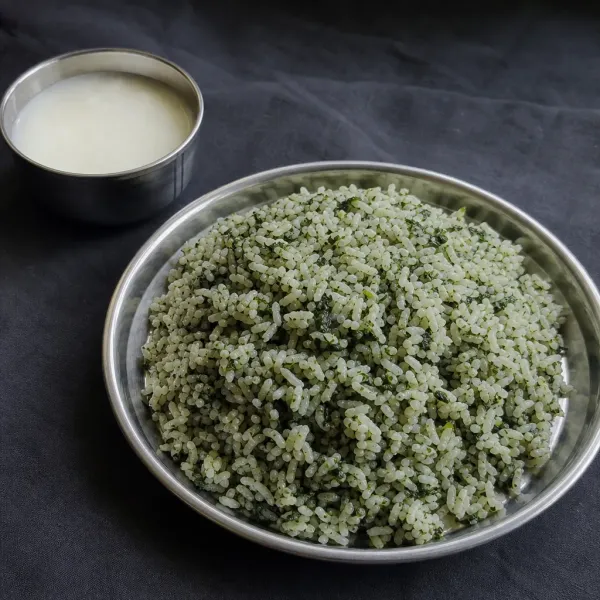
Keerai Sadam (Greens Rice)
Traditional Tamil Iyer keerai sadam made with Amaranth greens, toor dal, fresh coconut paste and gingelly oil. Everyday rice done right.
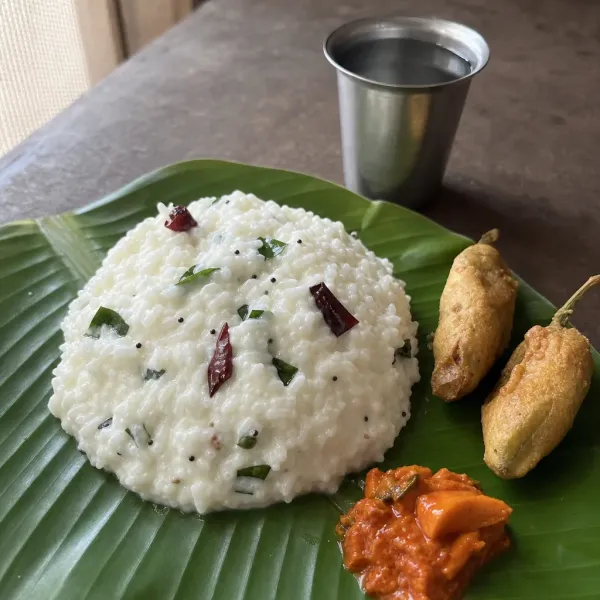
Thayir Sadam
Authentic Iyer-style thayir sadam with gingelly oil tempering, mustard seeds, curry leaves and fresh curd. The traditional Tamil Brahmin curd rice re…
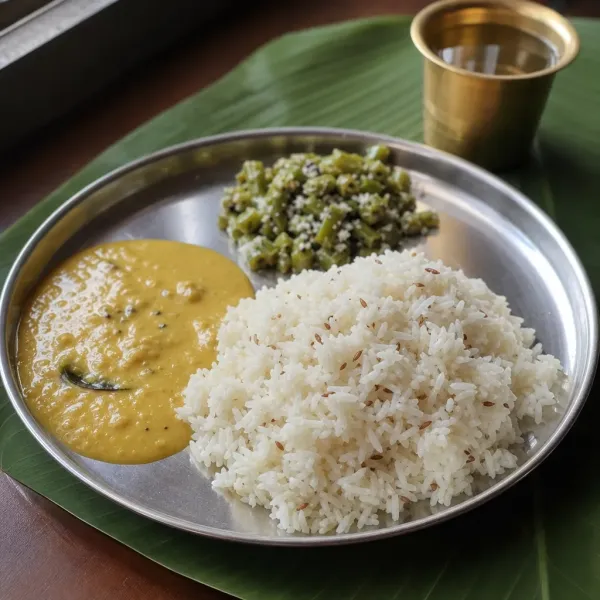
Jeerakasala Rice (Jeera Rice)
Traditional Kerala jeerakasala rice cooked with ghee and cumin in a Brahmin household style. Simple method, exact water ratio, no shortcuts.
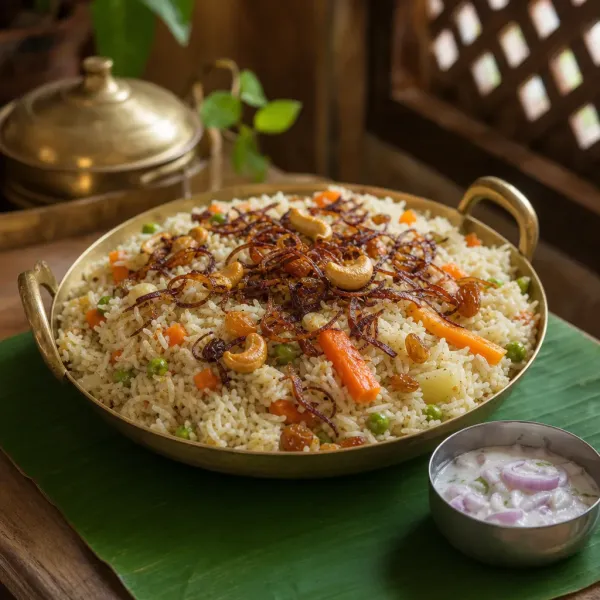
Vegetable Pulao (Mappila Style)
Traditional Malabar Mappila vegetable pulao cooked in coconut milk with whole spices and jeerakasala rice. Authentic Kerala Muslim household recipe.
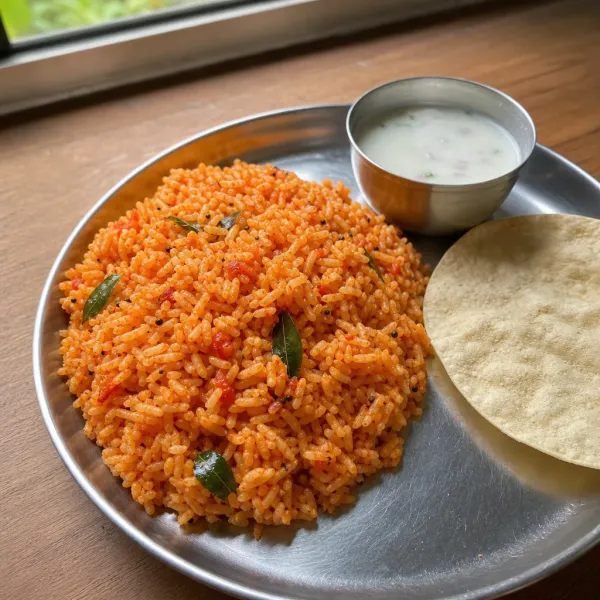
Thakkali Sadam
Authentic Tamil Brahmin thakkali sadam made with gingelly oil, shallots and country tomatoes. A classic variety rice cooked the traditional Iyer way.
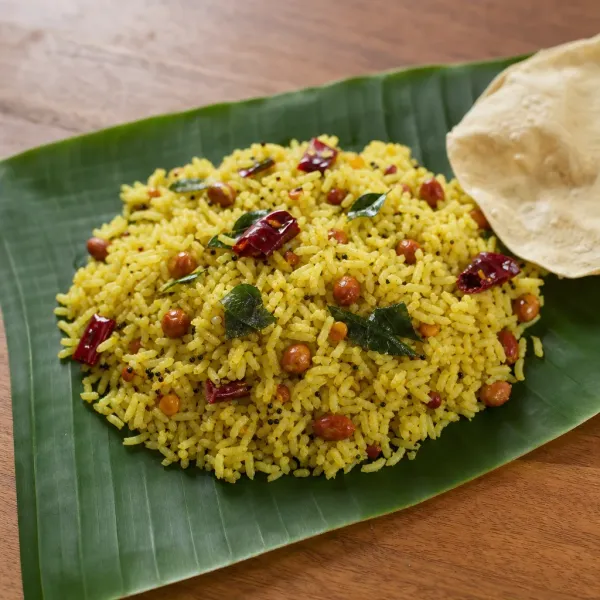
Mavinakayi Chitranna
Traditional Karnataka raw mango rice with fresh coconut-chilli paste, Byadagi chillies, groundnuts and curry leaf tempering. A classic summer chitran…