

Jeerakasala Rice (Jeera Rice) Recipe
Malayalam ജീരകശാല അരി ചോറ്Tamil சீரக சம்பா சாதம்Kannada ಜೀರಿಗೆ ಅಕ್ಕಿ ಅನ್ನTelugu జీలకర్ర అన్నం
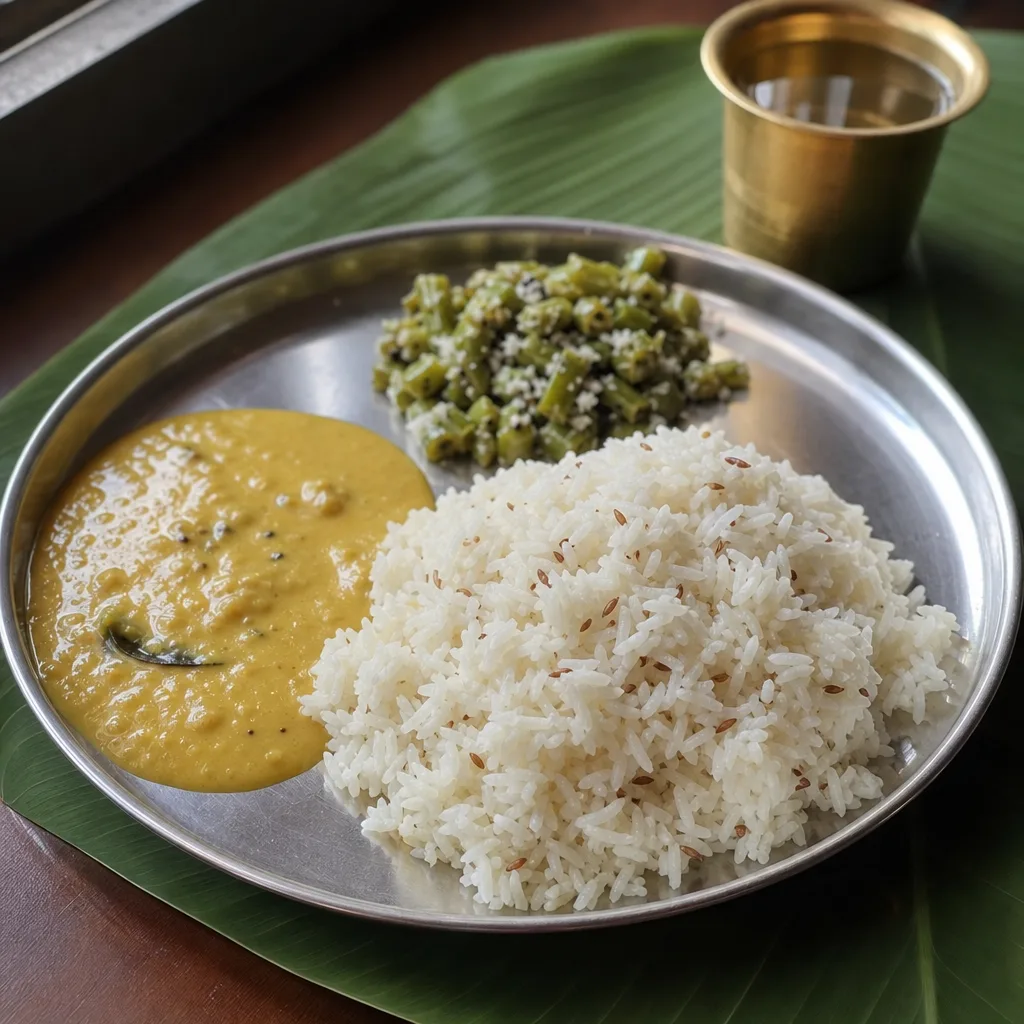
- Prep10 min
- Cook25 min
- Serves4
- DifficultyEasy
- DietVegetarian
Jeerakasala is a small, round, intensely aromatic rice grown in the Palakkad and Wayanad regions of Kerala. Its name comes from its scent, which is close to cumin (jeerakam), though the grain itself contains none. In Kerala Brahmin and Iyer households, this rice needs very little done to it — a spoonful of ghee, a few cumin seeds crackled in the same pot, and the rice cooked in just enough water. The result is soft, faintly sticky, and fragrant without any added spice doing the work.
This is everyday cooking, not a feast dish, though it appears at sadyas in some households as a second rice alongside matta. It is the rice that goes under a good parippu curry or alongside a dry thoran when you want something more delicate than matta. Households differ mainly on whether they wash the rice once or twice — washing too many times strips the surface starch that gives the cooked grain its characteristic soft cohesion — and on how much ghee they use.
The pot matters. Many older kitchens cook this in a heavy-bottomed steel vessel or an earthen pot, not a non-stick pan. The steam is sealed in at the end and the rice is left undisturbed. Lifting the lid too early is the one thing that reliably ruins it.
Ingredients (serves 4)
Main
Method
Wash the rice
Put the jeerakasala rice in a bowl and cover with cold water. Swirl gently with your hand and pour off the water. Repeat once more. The water will still be faintly milky — that is correct. Do not rinse until clear. Leave the washed rice to drain in a colander for five minutes.
Heat the ghee and crackle the cumin
Set a heavy-bottomed steel pot or a wide, thick-based vessel over medium heat. Add the ghee. When it shimmers and a cumin seed dropped in sputters immediately, add all the cumin seeds. They will crackle and turn a shade darker in about 20 seconds. Do not let them blacken.
Add the rice and coat it
Tip the drained rice straight into the pot. Stir gently with a wooden spoon for about one minute so every grain is coated in the ghee and the cumin seeds are distributed through the rice. The rice will smell faintly toasty. This step is brief — you are not frying the rice, just coating it.
Add water and salt
Pour in 525 ml of water and add salt. Stir once to mix the salt through. Bring to a full, rolling boil over medium-high heat, uncovered. This usually takes three to four minutes.
Reduce heat and cook covered
Once the water is boiling vigorously, reduce the heat to the lowest possible setting. Place the lid on the pot firmly. Cook undisturbed for 12 minutes. Do not lift the lid during this time. The steam inside is doing the work.
Check and rest
After 12 minutes, lift the lid quickly and check: the surface of the rice should look dry, with small steam holes visible, and no standing water. If a thin film of water remains, replace the lid and cook for two more minutes. Once the surface is dry, turn off the heat completely, replace the lid, and let the pot sit undisturbed for 8 minutes. The rice finishes cooking in its own trapped steam.
Fluff and serve
Open the lid, tilt it away from you so condensed water does not drip back onto the rice. Use a flat-edged wooden spoon or a rice paddle to gently turn the rice from the edges inward, loosening it without mashing the grains. Serve immediately in a steel thali or on a banana leaf.
How to serve
Parippu curry (moong dal cooked with coconut), Kerala-style sambar, a dry thoran of beans or raw banana, and pappadam. A small amount of plain ghee is often added directly to the rice at the table.
Served with: Parippu curry (moong dal cooked with coconut), Kerala-style sambar, a dry thoran of beans or raw banana, and pappadam. A small amount of plain ghee is often added directly to the rice at the table.
Cook's tips
Water ratio varies by batch
Jeerakasala absorbs water differently depending on how old the stock is and how long it drained after washing. New-season rice may need slightly less water; older rice may need a little more. 1¾ cups water to 1½ cups rice is a reliable starting point, but adjust by a few tablespoons once you know your particular batch.
Do not substitute basmati
Basmati is a different grain with a different starch structure and a much longer cooking time. The water ratio and method here are specific to jeerakasala. Basmati cooked this way will be undercooked.
Sourcing jeerakasala
It is sold in Kerala grocery shops and in South Indian stores elsewhere under the names jeerakasala, jeerakashala, or sometimes kaima rice. Do not confuse it with seeraga samba, the Tamil Nadu variety with a similar name — that is a different rice with a different texture, though it can be cooked by a similar method.
The lid matters
A lid that fits loosely lets steam escape and the rice will be undercooked or dry. If your lid is loose, place a clean folded kitchen cloth between the pot and lid to seal it during the resting phase.
Regional variations
Tamil Iyer kitchens sometimes add a single sprig of curry leaf and a pinch of asafoetida to the tempering; Namboothiri households often skip whole spices entirely and cook jeerakasala plain, relying on the rice's own fragrance.
Glossary
- Jeerakasala ജീരകശാല
- A small, round, fragrant short-grain rice variety grown in Kerala, named for its cumin-like aroma. Distinct from seeraga samba of Tamil Nadu.
- Jeerakam ജീരകം
- Cumin seeds (Cuminum cyminum). Used here as a tempering spice in ghee.
- Parippu പരിപ്പ്
- Lentils or dal; in Kerala, most commonly moong dal cooked with coconut and served with rice.
- Thoran തോരൻ
- A dry Kerala stir-fry of vegetables with grated coconut, mustard seeds, and curry leaves. Served as a side with rice.
Two things decide whether this works: the water ratio and leaving the lid on. Jeerakasala is an unforgiving rice if you add too much water — it turns soft and clumped rather than separate and fragrant. And lifting the lid before the resting time is done lets the steam escape at the moment the rice most needs it. Get those two right and the grain's own fragrance does everything else.
More Rice Dishes recipes
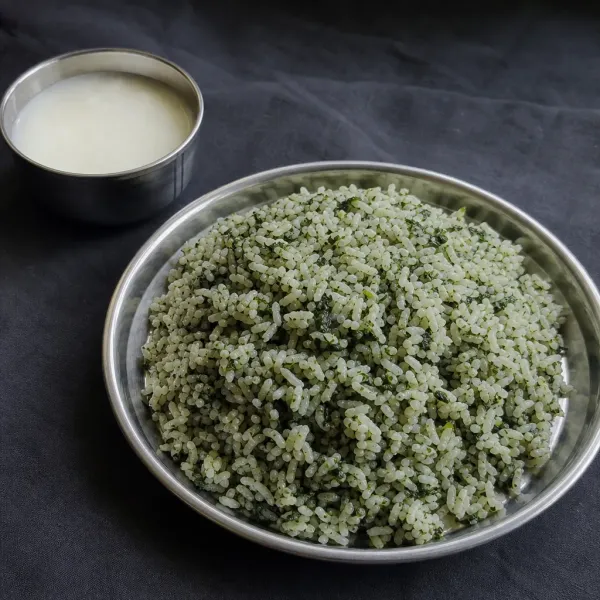
Keerai Sadam (Greens Rice)
Traditional Tamil Iyer keerai sadam made with Amaranth greens, toor dal, fresh coconut paste and gingelly oil. Everyday rice done right.
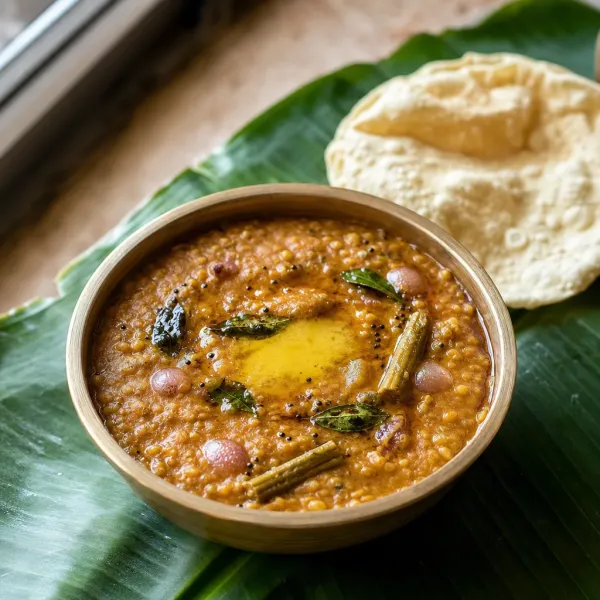
Sambar Sadam (One-Pot Rice and Sambar)
Authentic Tamil Iyer sambar sadam: rice and toor dal cooked with tamarind, drumstick and sambar powder, finished with a ghee tempering. One pot, real…
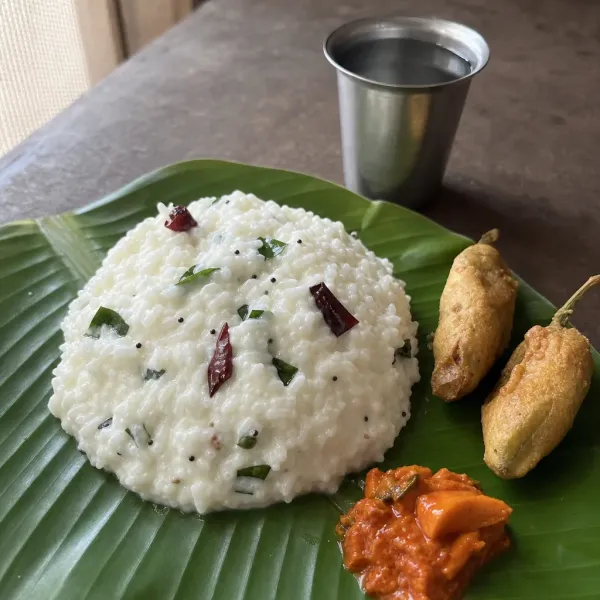
Thayir Sadam
Authentic Iyer-style thayir sadam with gingelly oil tempering, mustard seeds, curry leaves and fresh curd. The traditional Tamil Brahmin curd rice re…
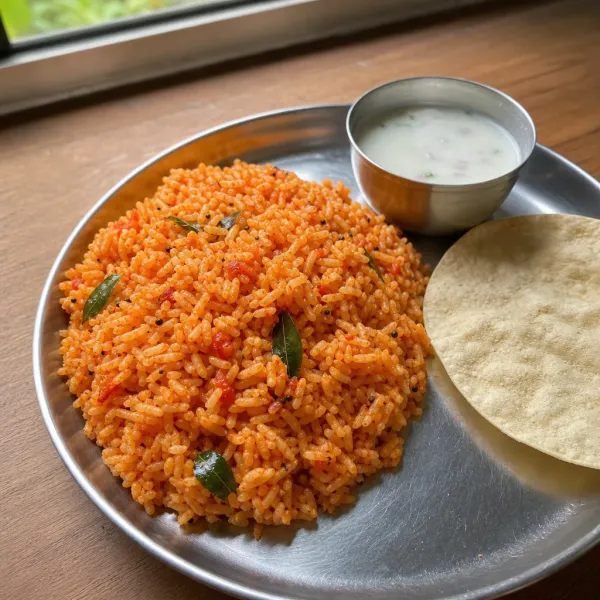
Thakkali Sadam
Authentic Tamil Brahmin thakkali sadam made with gingelly oil, shallots and country tomatoes. A classic variety rice cooked the traditional Iyer way.
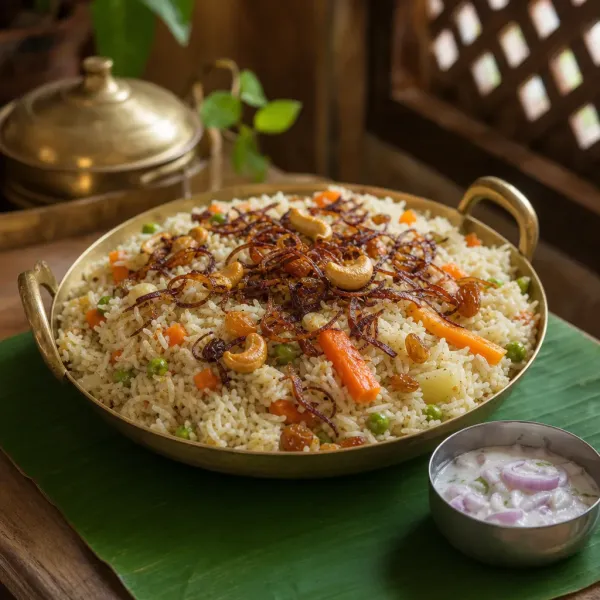
Vegetable Pulao (Mappila Style)
Traditional Malabar Mappila vegetable pulao cooked in coconut milk with whole spices and jeerakasala rice. Authentic Kerala Muslim household recipe.
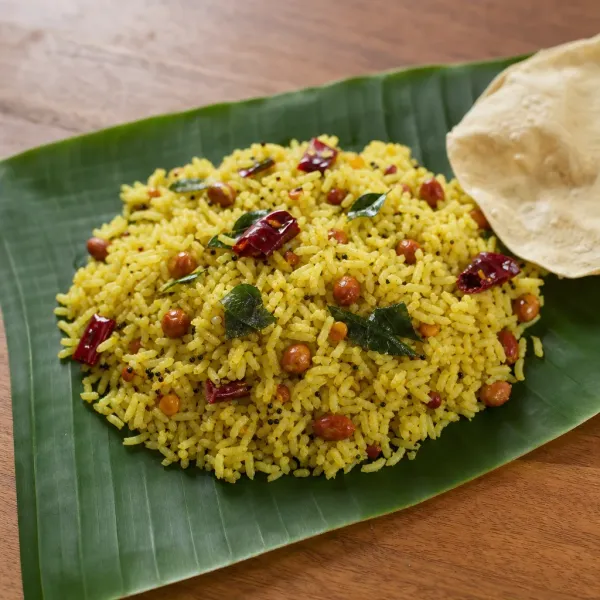
Mavinakayi Chitranna
Traditional Karnataka raw mango rice with fresh coconut-chilli paste, Byadagi chillies, groundnuts and curry leaf tempering. A classic summer chitran…