

Keerai Sadam (Greens Rice) Recipe
Malayalam കീര സദംTamil கீரை சாதம்Kannada ಕೀರೆ ಸಾದಂTelugu కీర సాదం
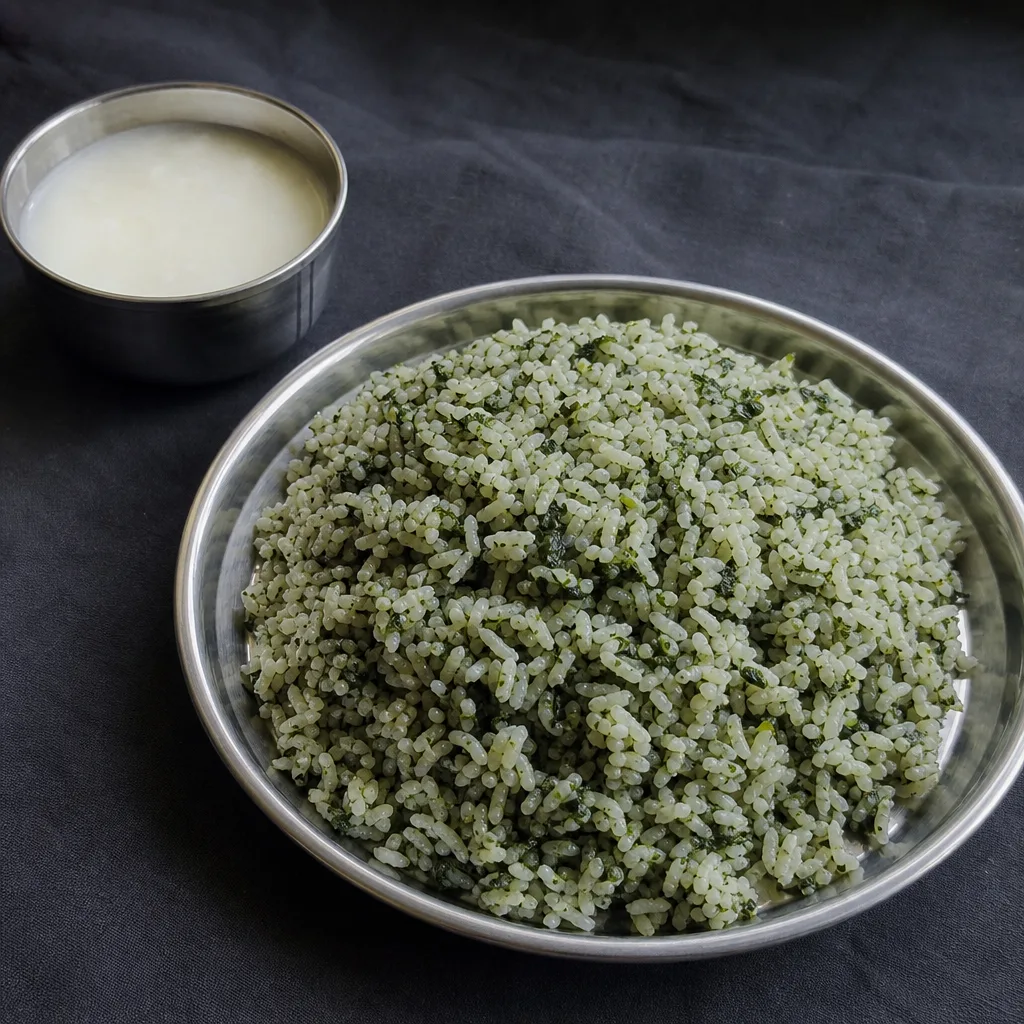
- Prep15 min
- Cook35 min
- Serves4
- DifficultyEasy
- DietVegan
Keerai sadam is everyday food in a Tamil Iyer kitchen, the kind of thing made when a bunch of greens needs using up and the rice is already on the stove. It is not a festive dish and it is not served to guests at a formal meal. It is Tuesday lunch, eaten warm with a small katori of mor (buttermilk) or a smear of ghee on the side.
The greens most commonly used are arai keerai (Amaranthus dubius) or mulai keerai (Amaranthus tricolor), both of which cook down quickly and have a mild, slightly earthy flavour that does not overwhelm the rice. Pasalai keerai (spinach) is also used, though purists in older households say it makes the rice a little slimy if overcooked. The cooked greens are mixed directly into the rice with a simple gingelly oil tempering and a small amount of fresh coconut ground with cumin. Toor dal cooked soft and stirred in at the end gives the rice a little body without making it a sambar rice.
Households differ mainly in the greens they choose and in how much coconut they add. Some cooks skip the coconut entirely and rely on the tempering alone. The rice should be just-cooked and separate-grained, not mushy. If the rice is overcooked the dish becomes a paste, which is the one thing to avoid.
Ingredients (serves 4)
For the rice
For the dal
For the greens
For the coconut paste
For the tempering
Method
Cook the dal
Put the washed toor dal in a small pressure cooker with 300 ml water and the turmeric. Cook on medium heat for 3 whistles, then let the pressure drop on its own. Open and mash the dal lightly with the back of a spoon; it should be soft but not watery. Set aside.
Cook the rice
Bring 540 ml salted water to a boil in a heavy pot. Add the washed rice, stir once, and cook uncovered on medium heat until the water is almost fully absorbed and small steam holes appear on the surface, about 12 minutes. Reduce the heat to the lowest setting, cover tightly, and let the rice finish on steam for 8 minutes. Turn off the heat and leave covered for 5 more minutes. The grains should be cooked through but separate. Spread the cooked rice on a wide plate or thali to cool slightly so it does not clump when mixed.
Make the coconut paste
Grind the fresh coconut, cumin seeds and green chilli to a coarse paste in a small stone grinder or mixer jar. Add no water, or at most a teaspoon if the coconut is very dry. The paste should hold together but not be smooth. Set aside.
Wilt the greens
Heat a wide kadai on medium heat. Add the chopped greens with 2 tablespoons of water and a pinch of salt. Stir and cook until the leaves are completely wilted and any water has evaporated, about 4 to 5 minutes. Do not cover the pan or the greens will turn an unpleasant dark colour. The cooked greens should be bright green and dry in the pan. Set aside.
Temper the spices
In the same kadai, heat the gingelly oil on medium heat until it shimmers. Add the mustard seeds and wait for them to pop fully. Add the urad dal and stir until it turns pale gold, about 30 seconds. Add the broken dried red chillies, curry leaves and asafoetida. The leaves will splutter; stand back. Let everything sizzle for 15 seconds.
Add the greens to the tempering
Tip the wilted greens back into the kadai and stir them through the tempering on medium heat for one minute. The greens should be fully coated in the spiced oil.
Stir in the coconut paste
Add the coconut paste to the greens and stir on low heat for 2 minutes. The raw smell of the coconut should disappear. Do not let it brown; this is not a dry roast.
Add the dal
Spoon in the mashed toor dal and mix it through the greens and coconut on low heat. Taste for salt and adjust. The mixture should be moist but not wet; if it looks soupy, cook it for another minute stirring constantly.
Mix with the rice
Add the slightly cooled rice to the kadai in two or three additions, folding it through the greens mixture gently with a flat spatula or a large spoon. Do not stir vigorously or the grains will break. Every grain should be coated in the green mixture. Taste once more for salt.
Rest and serve
Turn off the heat, cover the kadai loosely and let the rice rest for 3 to 4 minutes before serving. This short rest lets the flavours settle and the rice absorbs the last of the moisture from the greens.
How to serve
Mor (thin salted buttermilk) or plain curd on the side. Some households add a small spoon of ghee over the rice just before eating. Appalam (papad) is a common accompaniment. These are not part of the recipe.
Served with: Mor (thin salted buttermilk) or plain curd on the side. Some households add a small spoon of ghee over the rice just before eating. Appalam (papad) is a common accompaniment. These are not part of the recipe.
Cook's tips
Which greens to use
Arai keerai and mulai keerai are the traditional choice and cook evenly without releasing too much water. Pasalai keerai (spinach) works but releases more liquid; squeeze it well after wilting or the rice will be wet. Avoid very fibrous greens like drumstick leaves for this dish; they do not incorporate smoothly into the rice.
The rice must not be overcooked
Mushy rice turns this into a paste when mixed. If your rice tends to overcook, reduce the water by 30 ml and check it a minute early. The rice will continue to soften slightly when folded with the warm greens mixture.
Gingelly oil is not optional here
The nutty, slightly bitter note of cold-pressed gingelly oil is part of the flavour of this dish. Coconut oil changes the character entirely. Refined sunflower oil makes it flat.
Storing leftovers
Keerai sadam keeps at room temperature for about 4 hours. After that, refrigerate and eat within one day. Reheat with a sprinkle of water and a few drops of gingelly oil to loosen it. The colour will darken on standing; this is normal.
Shortcut on the dal
Some households skip the toor dal entirely and make this as a pure greens rice. It is lighter and the greens flavour is more pronounced. Both versions are genuine.
Regional variations
Non-Brahmin Tamil versions (Mudaliar, Vellalar) add shallots and sometimes a small amount of toor dal in the tempering; Andhra households make a similar palakura annam with less coconut.
Glossary
- Keerai கீரை
- The Tamil word for edible greens or leafy vegetables.
- Sadam சாதம்
- Cooked rice; the Tamil word used for a rice dish.
- Arai keerai அரை கீரை
- Amaranthus dubius, a common edible Amaranth variety used widely in Tamil cooking.
- Mulai keerai முளை கீரை
- Amaranthus tricolor, another Amaranth variety; slightly more tender than arai keerai.
- Perungayam பெருங்காயம்
- Asafoetida; the resin used in Tamil Brahmin cooking in place of onion and garlic.
- Mor மோர்
- Thin salted buttermilk, the everyday drink and digestive accompaniment in Tamil meals.
- Toor dal துவரம் பருப்பு
- Split pigeon pea; the most common dal in Tamil Nadu cooking.
- Gingelly oil நல்லெண்ணெய்
- Cold-pressed sesame oil; the traditional cooking fat for Tamil Nadu savory dishes.
Two things decide whether this works: the rice must be separate-grained and slightly cooled before mixing, and the greens must be completely dry in the pan before the coconut paste goes in. Wet greens make wet rice, and that is the one outcome this dish cannot recover from.
More Rice Dishes recipes
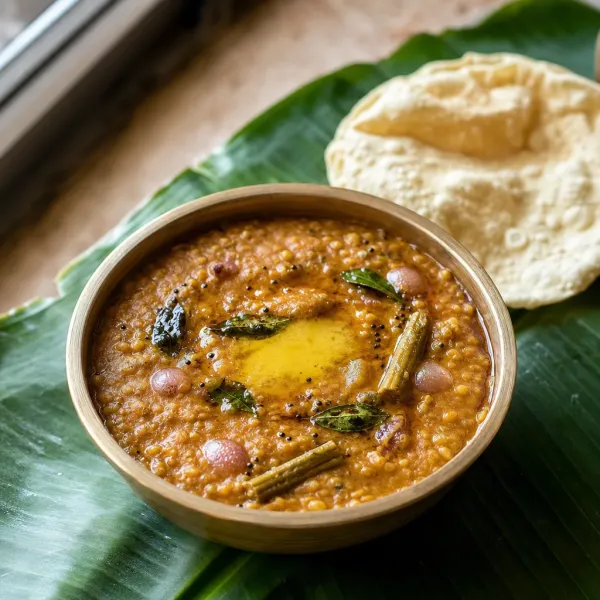
Sambar Sadam (One-Pot Rice and Sambar)
Authentic Tamil Iyer sambar sadam: rice and toor dal cooked with tamarind, drumstick and sambar powder, finished with a ghee tempering. One pot, real…
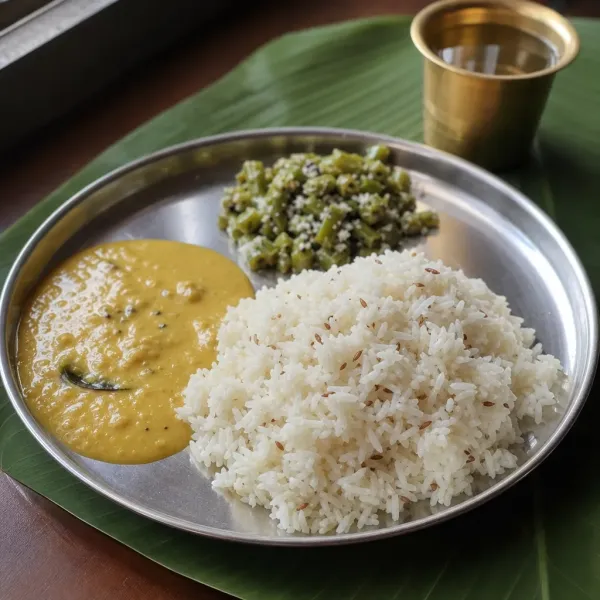
Jeerakasala Rice (Jeera Rice)
Traditional Kerala jeerakasala rice cooked with ghee and cumin in a Brahmin household style. Simple method, exact water ratio, no shortcuts.
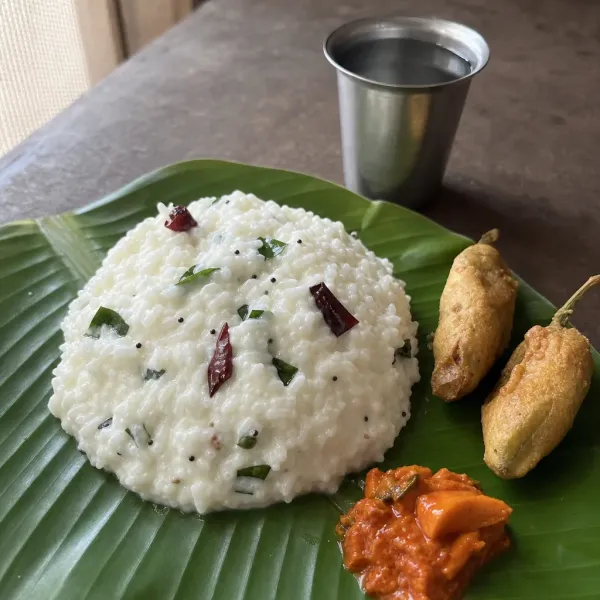
Thayir Sadam
Authentic Iyer-style thayir sadam with gingelly oil tempering, mustard seeds, curry leaves and fresh curd. The traditional Tamil Brahmin curd rice re…
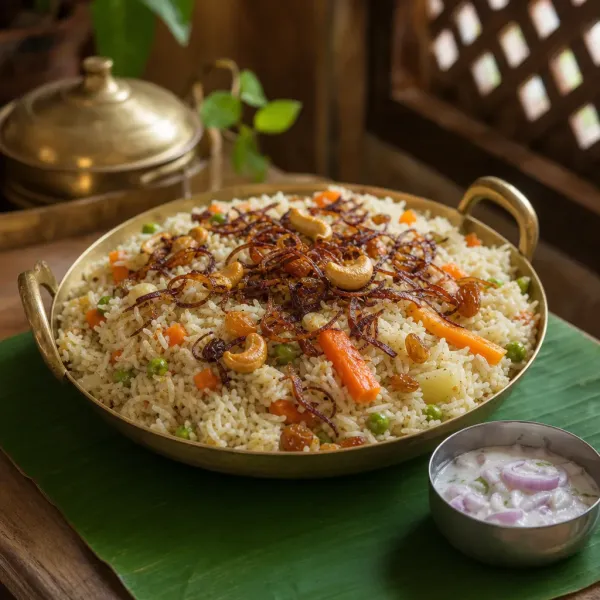
Vegetable Pulao (Mappila Style)
Traditional Malabar Mappila vegetable pulao cooked in coconut milk with whole spices and jeerakasala rice. Authentic Kerala Muslim household recipe.
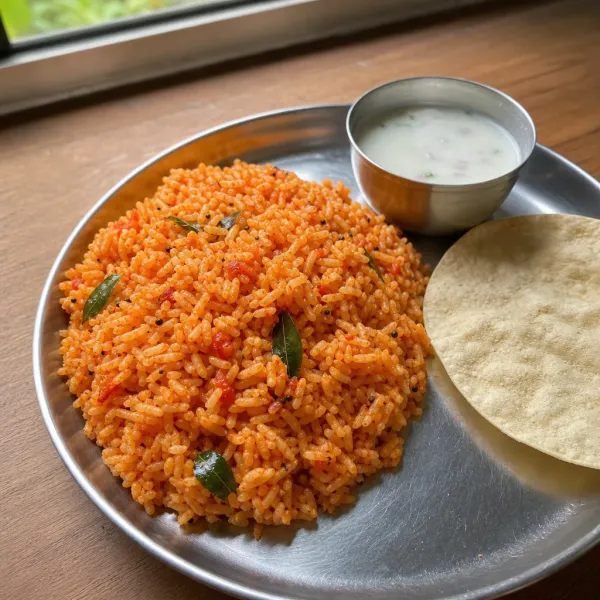
Thakkali Sadam
Authentic Tamil Brahmin thakkali sadam made with gingelly oil, shallots and country tomatoes. A classic variety rice cooked the traditional Iyer way.
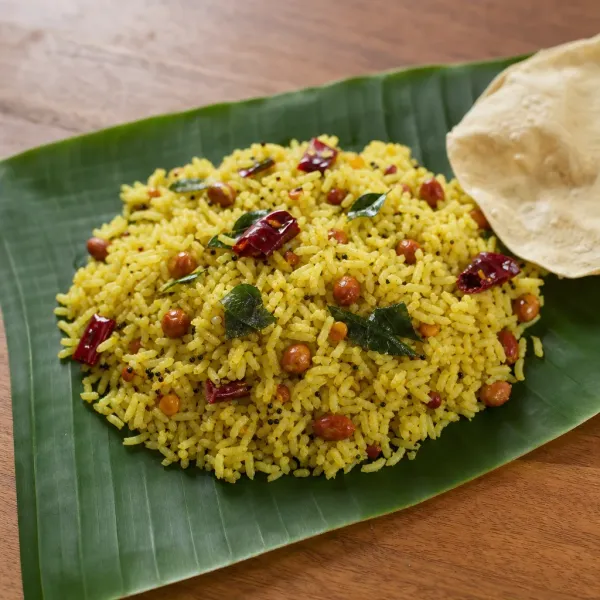
Mavinakayi Chitranna
Traditional Karnataka raw mango rice with fresh coconut-chilli paste, Byadagi chillies, groundnuts and curry leaf tempering. A classic summer chitran…