

Thayir Sadam Recipe
Malayalam തൈര് സാദംTamil தயிர் சாதம்Kannada ಮೊಸರನ್ನTelugu పెరుగన్నం
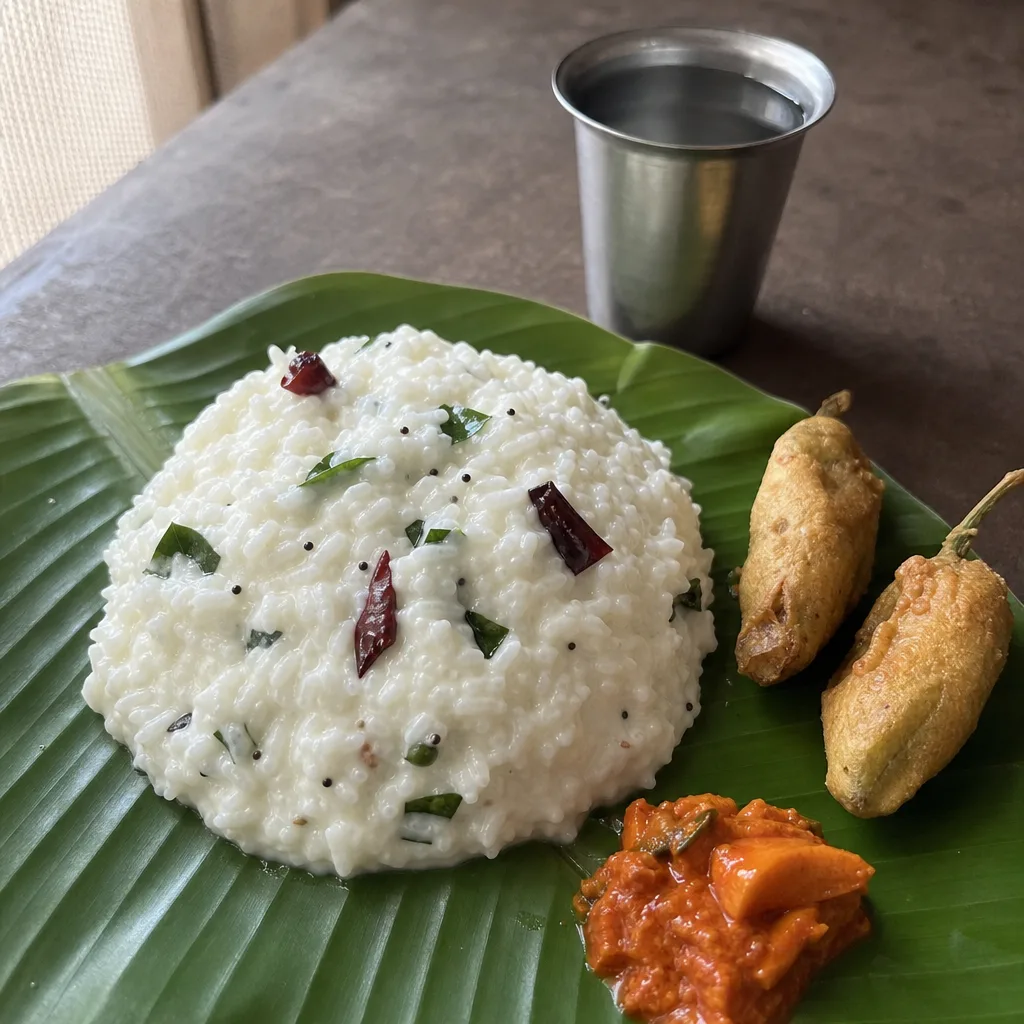
- Prep10 min
- Cook30 min
- Serves4
- DifficultyEasy
- DietVegetarian
Thayir sadam is the last course of a proper Tamil Brahmin meal, eaten to cool the stomach after the heat of rasam and sambar. It is not a leftover dish, though leftover rice is gladly used for it. In many households it is made fresh each afternoon, the rice cooked soft and mashed while still warm, then let down with curd and a little milk so it loosens to the right consistency as it sits.
The tempering is the defining moment. Gingelly oil, a small quantity, goes into the pan first. Mustard seeds, dried red chillies, a pinch of asafoetida, curry leaves, and either fresh ginger or green chilli — sometimes both. Some households add a spoonful of finely grated carrot and pomegranate seeds on top for colour and a little sweetness, especially when guests are expected. These garnishes are optional and regional within Tamil Nadu; the core dish needs none of them.
The rice must be slightly overcooked — softer than you would eat plain — so it mashes without lumps. The curd should be fresh and not too sour. If the curd is sharp, a splash of milk corrects it. The finished sadam should be neither stiff nor soupy; it should hold its shape on a banana leaf but yield at the first press of a finger.
Ingredients (serves 4)
For the rice
For mixing
For the tempering
Method
Cook the rice very soft
Put the rinsed rice and 600 ml water in a heavy pot. Bring to a boil, then lower the heat, cover, and cook for 22 to 25 minutes. You want the grains to be fully cooked and beginning to clump together — softer than you would serve plain rice. If the water is absorbed before the rice is soft enough, add a splash more and continue.
Mash the rice while warm
Take the pot off the heat. While the rice is still hot, use the back of a ladle or your clean hand to mash it lightly — not to a paste, but enough that no whole firm grains remain. Season with salt and stir it through. Spread the rice out in a wide vessel and let it cool until it is just warm to the touch, not hot.
Mix in the curd
Add the curd to the warm (not hot) rice and mix well with a spoon or your hand. If the mixture feels stiff, add the milk a little at a time and work it in. The consistency should be soft and slightly loose — it will firm up a little as it sits, so err on the side of slightly wetter than you want the finished dish to be.
Taste and adjust salt
Taste the mixture now and add more salt if needed. The curd brings its own mild tang; the salt should balance that without the mixture tasting sharp. Set the bowl aside while you make the tempering.
Heat the gingelly oil
Place a small iron or steel tempering pan over medium heat. Add the gingelly oil and let it warm for about 30 seconds. It should be hot enough that a mustard seed dropped in splutters immediately, but not so hot that it smokes.
Temper mustard and chillies
Add the mustard seeds and let them pop fully — this takes about 20 seconds. Add the broken dried red chillies and let them darken slightly, about 10 seconds. Stand back when the chillies go in; they can spit.
Add asafoetida, curry leaves and ginger
Add the asafoetida, then immediately the curry leaves — they will crackle and spit in the oil, so cover the pan briefly if needed. Add the grated ginger and the slit green chilli if using. Stir for 20 seconds. The ginger should smell cooked but not browned.
Pour the tempering over the curd rice
Tip the entire contents of the tempering pan over the curd rice. Mix it through gently but thoroughly so every spoonful gets some of the oil and aromatics. The dish is ready to serve now, or it can rest for 10 to 15 minutes at room temperature, which lets the flavours settle.
How to serve
Eaten as the final course of a meal on a banana leaf, alongside mor milagai (curd chillies, sun-dried and fried), a small mound of pickle (maanga oorugai or lime pickle), and sometimes a papad. Also eaten on its own as a simple meal with just pickle.
Served with: Eaten as the final course of a meal on a banana leaf, alongside mor milagai (curd chillies, sun-dried and fried), a small mound of pickle (maanga oorugai or lime pickle), and sometimes a papad. Also eaten on its own as a simple meal with just pickle.
Cook's tips
Leftover rice works well
If using cold leftover rice, warm it with a tablespoon of water in a covered pot until soft, then mash and proceed. Cold rice straight from the fridge will make the curd seize and the texture will be grainy.
Curd temperature matters
Adding curd to very hot rice will make it watery and slightly sour as the heat breaks down the proteins. Let the rice cool to warm — you should be able to hold your palm comfortably above it — before mixing.
If the curd is sour
Old or refrigerated curd that has turned sharp will make the finished dish unpleasantly acidic. Correct it by increasing the milk and reducing the curd slightly, or mix in a tablespoon of fresh cream.
Gingelly oil is not optional
The cold-pressed sesame oil (not toasted Chinese sesame oil) gives the tempering its characteristic flavour. Coconut oil or sunflower oil will produce a noticeably different dish. Use a small amount of the right oil rather than a larger amount of a substitute.
It stiffens as it sits
If making it ahead, leave the consistency slightly looser than you want at serving time. Stir in a spoonful of milk just before serving if it has thickened too much.
Regional variations
Karnataka Brahmin mosaranna uses a similar tempering but often includes curry leaves fried in ghee rather than gingelly oil; Andhra peruganna is slightly wetter and sometimes includes green chilli paste stirred into the curd.
Glossary
- Thayir sadam தயிர் சாதம்
- Curd rice; thayir means curd, sadam means cooked rice in Tamil.
- Perungayam பெருங்காயம்
- Asafoetida; the dried resin used in Tamil Brahmin cooking as a digestive and flavouring, added in very small quantities.
- Gingelly oil நல்லெண்ணெய் (nallennai)
- Cold-pressed sesame oil used in Tamil cooking for tempering and pickling; not the same as toasted sesame oil.
- Mor milagai மோர் மிளகாய்
- Green chillies soaked in salted buttermilk and sun-dried, then fried in oil; a common accompaniment to curd rice.
- Maanga oorugai மாங்காய் ஊறுகாய்
- Raw mango pickle made with gingelly oil, mustard and chilli; a standard condiment on a Tamil Brahmin leaf.
Two things decide whether this works: the rice must be mashed soft enough that no firm grain remains, and the curd must be fresh and mild. Everything else — the garnishes, the exact chilli count — can vary by household. Get those two right and the dish will be exactly what it should be.
More Rice Dishes recipes
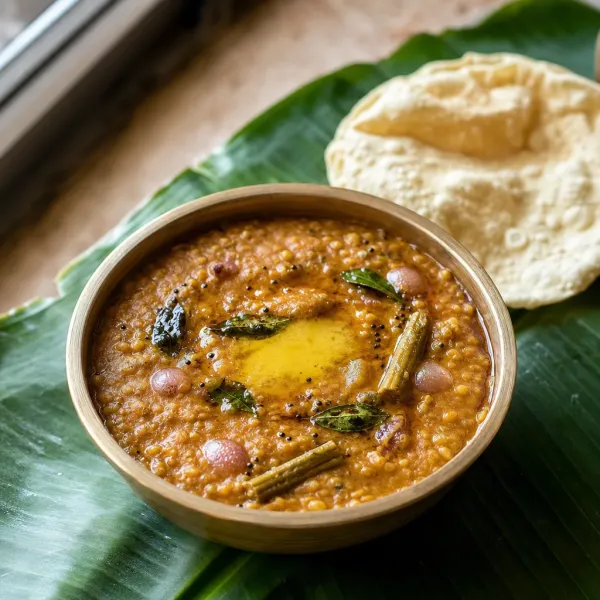
Sambar Sadam (One-Pot Rice and Sambar)
Authentic Tamil Iyer sambar sadam: rice and toor dal cooked with tamarind, drumstick and sambar powder, finished with a ghee tempering. One pot, real…
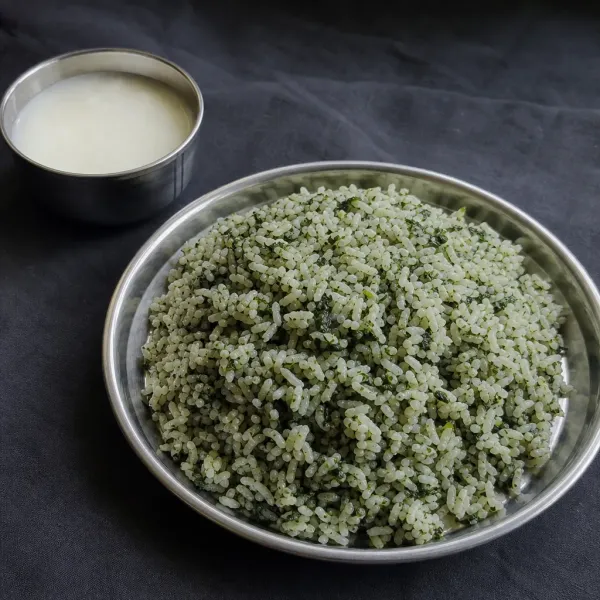
Keerai Sadam (Greens Rice)
Traditional Tamil Iyer keerai sadam made with Amaranth greens, toor dal, fresh coconut paste and gingelly oil. Everyday rice done right.
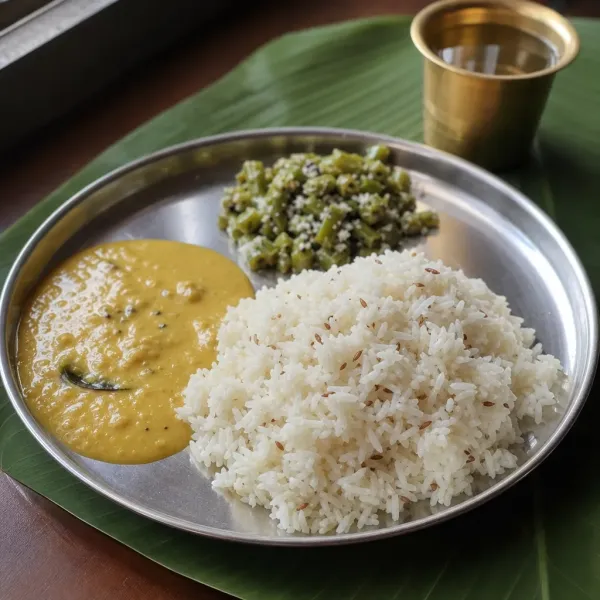
Jeerakasala Rice (Jeera Rice)
Traditional Kerala jeerakasala rice cooked with ghee and cumin in a Brahmin household style. Simple method, exact water ratio, no shortcuts.
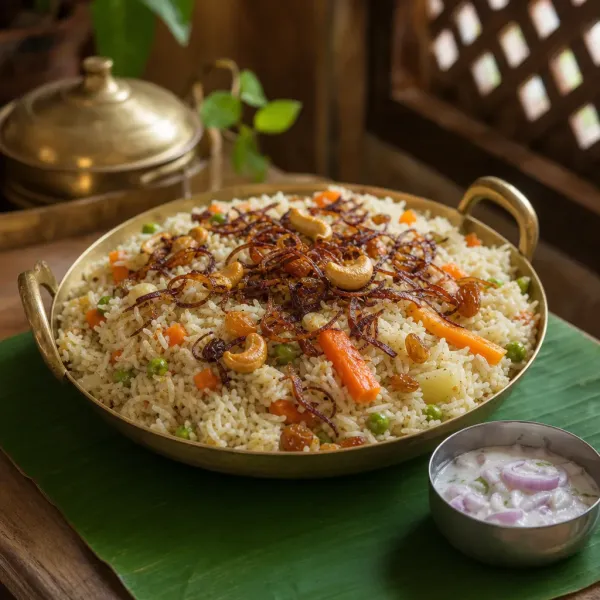
Vegetable Pulao (Mappila Style)
Traditional Malabar Mappila vegetable pulao cooked in coconut milk with whole spices and jeerakasala rice. Authentic Kerala Muslim household recipe.
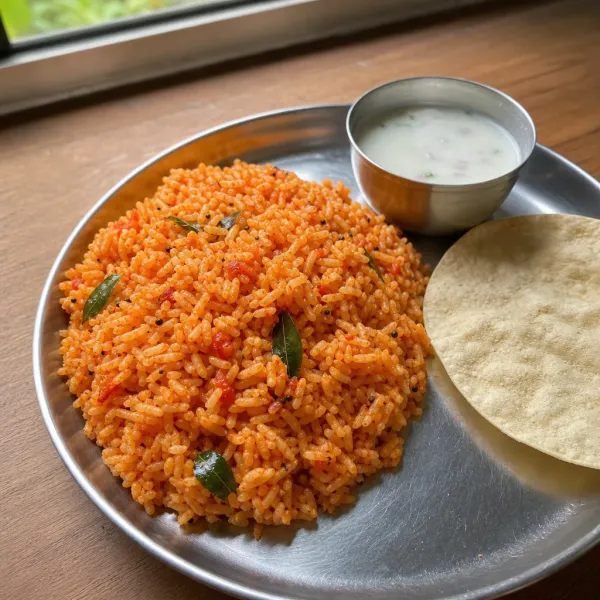
Thakkali Sadam
Authentic Tamil Brahmin thakkali sadam made with gingelly oil, shallots and country tomatoes. A classic variety rice cooked the traditional Iyer way.
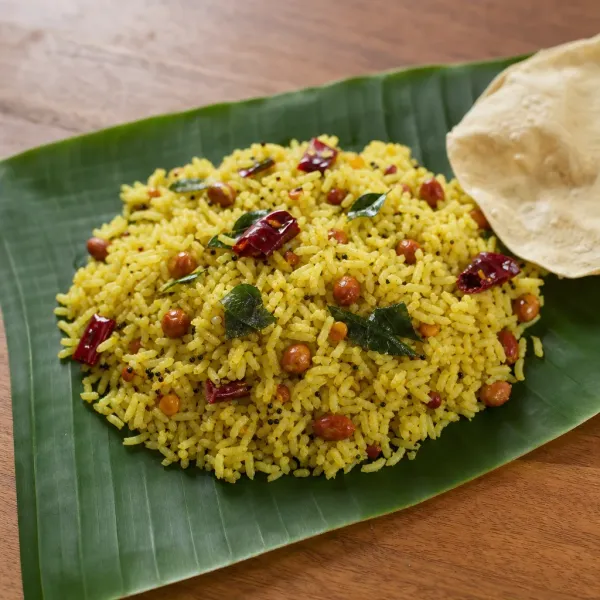
Mavinakayi Chitranna
Traditional Karnataka raw mango rice with fresh coconut-chilli paste, Byadagi chillies, groundnuts and curry leaf tempering. A classic summer chitran…