

Chicken Pakoda Recipe
Malayalam ചിക്കൻ പകോഡTamil சிக்கன் பகோடாKannada ಚಿಕನ್ ಪಕೋಡTelugu చికెన్ పకోడా
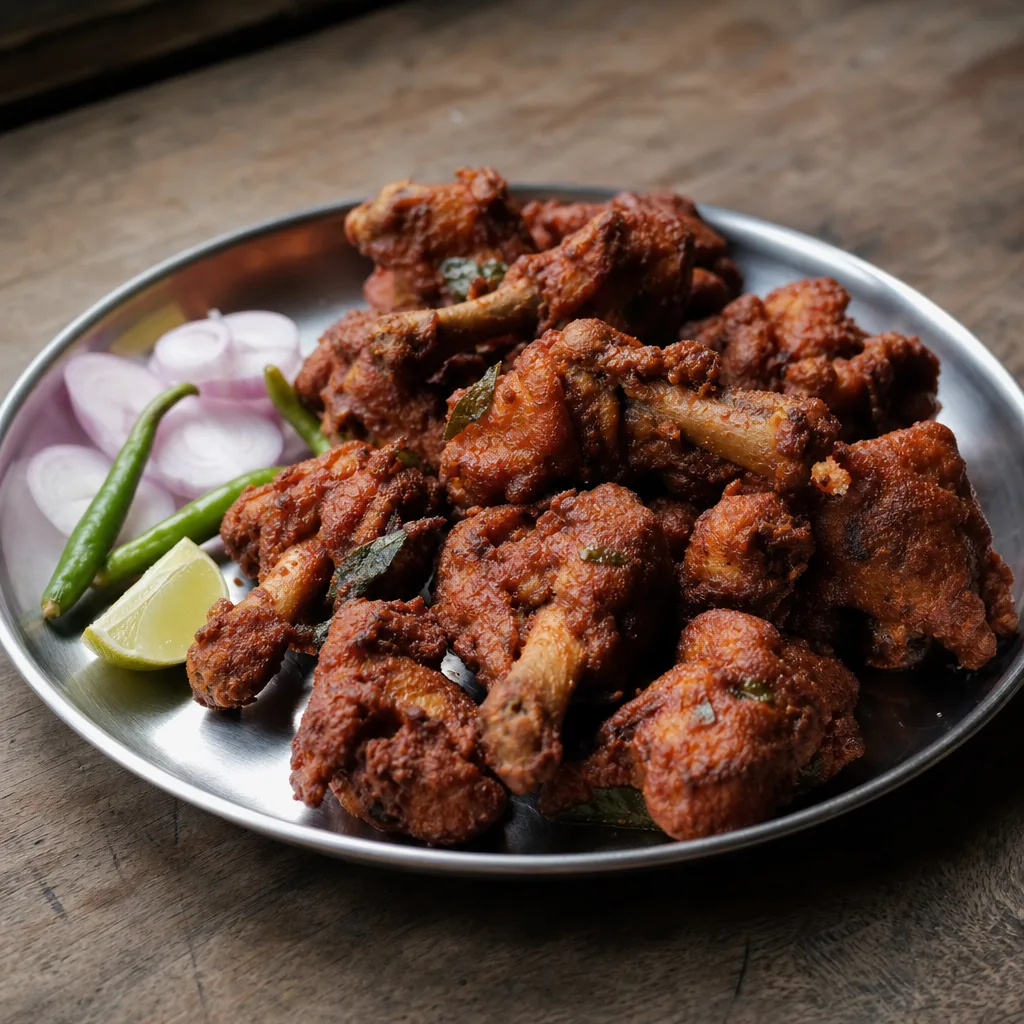
- Prep20 min
- Cook25 min
- Serves4
- DifficultyEasy
- DietNon-vegetarian
This is the kind of thing that appears on the table at tea time in Kongunad households, especially when there is a guest. The chicken is cut small, coated in a spiced gram-flour batter, and deep-fried until the outside is crisp and the inside stays just tender. It is not a restaurant dish here; it is a home dish made with whatever cut is on hand, usually bone-in pieces chopped fine so the marrow flavour comes through the batter.
The batter is kept thick and dry, not a wet dip. You press it onto the chicken rather than dunking the pieces. That is what gives these a rough, cragged surface that holds its crunch even as it cools. Gingelly oil is traditional in this part of Tamil Nadu for frying, and it adds a faint nuttiness that coconut oil would not.
Households differ on the heat level. Some add two green chillies, some add four. Fennel seed is consistent across kitchens in this region and is not optional; it is what separates this from a generic pakoda.
Ingredients (serves 4)
For the chicken
For the batter
For frying
Method
Marinate the chicken
Combine the chicken pieces with the grated ginger, garlic, red chilli powder, coriander powder, crushed fennel seeds, turmeric, salt, and lemon juice. Mix well with your hands so every piece is coated. Set aside for at least 15 minutes at room temperature. Do not skip this rest; the salt begins to draw moisture into the meat and the spices penetrate.
Make the batter
In a wide bowl, combine the gram flour, rice flour, red chilli powder, torn curry leaves, green chillies, and salt. Add water one tablespoon at a time, mixing between additions. Stop when the batter is thick enough to coat the back of a spoon heavily and falls in slow, reluctant ribbons. It should not pour. If it pours, the pakoda will be soft, not crisp.
Coat the chicken
Tip the marinated chicken into the batter bowl. Use your hands to press the batter firmly onto each piece, working it into the crevices around the bone. Every surface should have a thick, uneven coat. The rough surface is intentional; smooth coating fries flat.
Heat the oil
Pour the gingelly oil into a deep, heavy-bottomed kadai and heat over medium flame. The oil is ready when a small pinch of batter dropped in rises to the surface within two seconds and sizzles steadily. Do not let it smoke. Gingelly oil has a lower smoke point than refined oil, so watch carefully.
Fry the first batch
Slide in four or five pieces at a time, never crowding the kadai. Crowding drops the oil temperature and the batter absorbs oil instead of crisping. Fry over medium heat for 5 to 6 minutes without moving the pieces. If you move them too soon, the batter tears away from the bone.
Turn and finish frying
Once the underside is set and deep golden-brown, turn each piece carefully with tongs. Fry for another 4 to 5 minutes until the batter is uniformly dark golden and feels firm when tapped. The bone-in pieces need this full time; cutting it short leaves the meat near the bone undercooked.
Drain and rest
Lift the pieces out with a slotted spoon and rest them on a wire rack or a plate lined with paper. A wire rack keeps the underside from steaming soft. Fry the remaining batches, letting the oil return to temperature between each batch.
Serve immediately
Pakoda is at its best within ten minutes of frying. The batter stays crisp while the inside is still steaming. Arrange on a steel plate and serve at once.
How to serve
Sliced shallots and green chillies on the side; a wedge of lime. In many Kongunad households this is served with a cup of strong filter coffee or milky tea at evening time. Some families serve it with a simple raw onion and tomato salad dressed only with salt and lemon.
Served with: Sliced shallots and green chillies on the side; a wedge of lime. In many Kongunad households this is served with a cup of strong filter coffee or milky tea at evening time. Some families serve it with a simple raw onion and tomato salad dressed only with salt and lemon.
Cook's tips
Bone-in versus boneless
Bone-in pieces are traditional and give better flavour, but boneless thigh works well for children or when speed matters. Reduce frying time by about 2 minutes for boneless.
Batter too wet
The single most common mistake. If the batter runs off the chicken when you hold a piece up, add more gram flour a tablespoon at a time. A wet batter produces a thick, oily crust that is not crisp.
Gingelly oil substitute
If cold-pressed gingelly oil is unavailable, refined groundnut oil is the next best choice for this dish. Do not use coconut oil; it will change the flavour profile significantly and has a lower smoke point.
Resting the marinade
15 minutes is the minimum. If you have 30 minutes, use it. More than an hour is not necessary for small pieces.
Reheating
Pakoda does not reheat well in a microwave; it turns rubbery. If you must reheat, place the pieces on a wire rack in a hot oven at 200°C for 5 to 6 minutes.
Regional variations
Chettinad chicken pakoda uses kalpasi and marathi mokku in the marinade; Chennai street-style versions often add rice flour for extra crunch and egg to bind.
Glossary
- Kadalai maavu கடலை மாவு
- Gram flour milled from dried chickpeas; the base of most South Indian pakoda batters.
- Gingelly oil நல்லெண்ணெய்
- Cold-pressed sesame oil traditional to Tamil Nadu cooking, used for frying and tempering.
- Gundu milagai குண்டு மிளகாய்
- A round, moderately hot dried red chilli common in Tamil Nadu, giving good colour without extreme heat.
- Sombu சோம்பு
- Fennel seeds; a characteristic spice in Kongunad meat preparations.
Two things decide this dish. The first is the batter consistency: too thin and it slides off, too thick and it clumps in dry patches, but at the right thickness it clings and crisps evenly. The second is oil temperature: steady medium heat throughout, never a raging high flame that browns the outside before the chicken near the bone is cooked through.
More Snacks recipes
Kappa Chips (Kerala Tapioca Chips)
Classic Kerala tapioca chips fried in coconut oil and finished with a salt brine. Thin, pale, and crisp — the traditional household method from Trava…
Uppu Kozhukattai
Traditional Iyer recipe for uppu kozhukattai: savoury steamed rice flour dumplings with mustard, curry leaves and coconut. Step-by-step method.
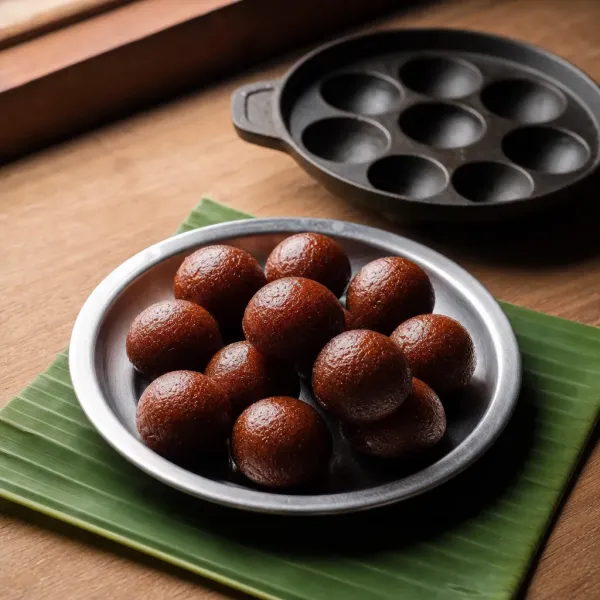
Unniyappam
Traditional Kerala unniyappam made with ground raw rice, dark jaggery, ripe nendran banana and coconut oil in a cast-iron appakaram. Step-by-step hou…
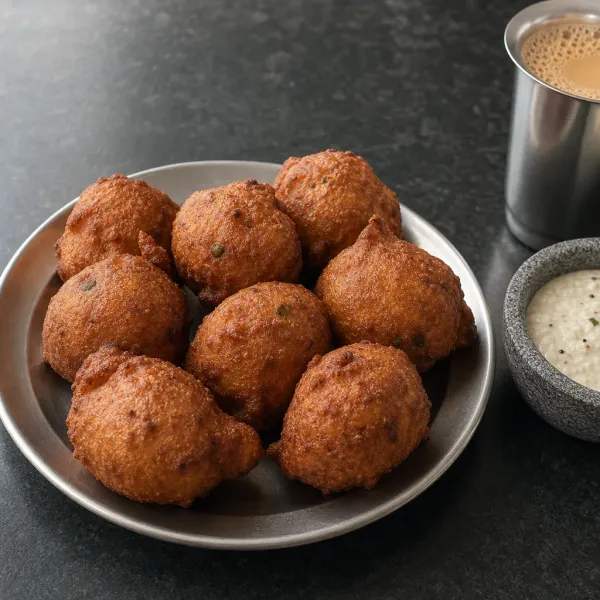
Mysore Bonda
Traditional Mysuru-style maida bonda made with thick sour curd. Crisp shell, soft inside. Step-by-step Karnataka household recipe with tips.