

Kappa Chips (Kerala Tapioca Chips) Recipe
Malayalam കപ്പ ചിപ്സ്Tamil மரவள்ளிக்கிழங்கு சிப்ஸ்Kannada ಮರಗೆಣಸು ಚಿಪ್ಸ್Telugu చేమడుంప చిప్స్
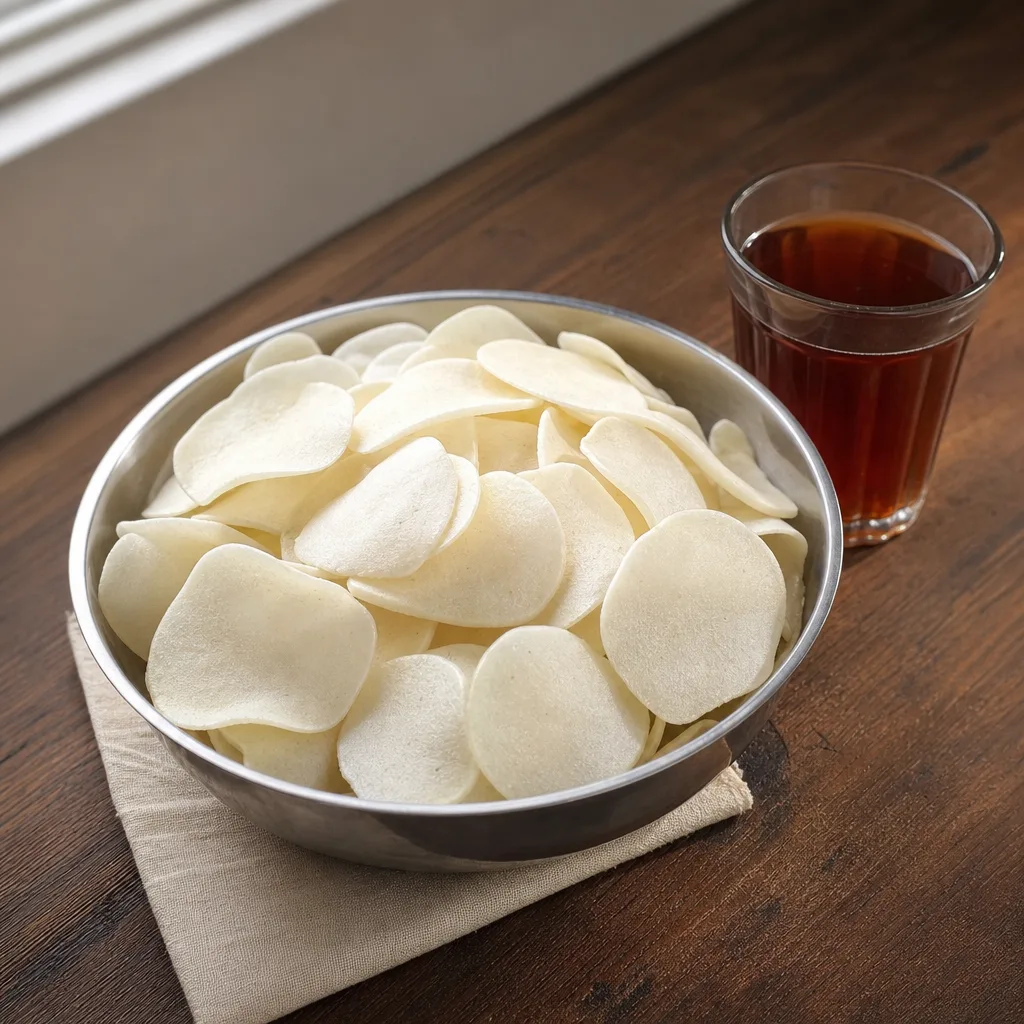
- Prep20 min
- Cook40 min
- Serves4
- DifficultyMedium
- DietVegan
Kappa chips are one of the most ordinary and most beloved snacks in Kerala households. Every family that grows kappa in the backyard has made these, and the technique is simple enough that children learn it early. The kappa is sliced paper-thin, fried in coconut oil until it crisps through, and finished with salt while still hot. That is the whole recipe.
They are eaten as a tea-time snack, packed into school tiffin boxes, and set out alongside rice and fish curry as a crunchy side. In Travancore households you will find them in a steel or glass jar on the kitchen shelf for a week or more, though they rarely last that long.
The only real household variation is in thickness and seasoning. Some families keep the slices very thin and get a chip that is almost translucent and shatters cleanly. Others slice a little thicker and get something with a slight chew at the centre. Salt is always added after frying, never before; a few households add a pinch of chilli powder or black pepper to the hot chips, but the plain salted version is the most common.
Ingredients (serves 4)
For the chips
Method
Peel the tapioca
Cut each root into sections about 10 cm long. Stand each section upright and slice the skin away with a knife, going deep enough to remove the pinkish inner layer as well as the brown outer bark. The flesh underneath should be clean white. Rinse the peeled pieces under cold water.
Slice paper-thin
Using a sharp knife or a mandoline set to about 1.5 mm, slice the tapioca into rounds or slight ovals. Work quickly; the slices discolour in air. If you are slicing by hand, aim for even thickness throughout each slice so they fry at the same rate. Uneven slices will give you some burnt and some underdone in the same batch.
Dry the slices thoroughly
Spread the slices in a single layer on a clean cotton cloth and pat them dry. Any surface moisture will cause violent spattering when they hit the oil and will also make the chips absorb more oil than they should. Leave them to air-dry for 10 minutes while you heat the oil.
Heat the coconut oil
Pour the coconut oil into a wide, deep kadai and heat it over a medium flame. The oil is ready when a single slice dropped in sinks halfway, then rises to the surface and begins to sizzle actively. This is around 170–175 °C. Do not let the oil smoke before you begin.
Fry in small batches
Slide in a small handful of slices at a time — no more than fits in a single loose layer. Overcrowding drops the oil temperature sharply and the chips will be greasy. Stir gently with a slotted spoon to keep the slices from sticking together in the first minute.
Fry until the sizzling quiets
Keep the flame at medium. The chips will bubble vigorously at first as their moisture escapes. When the sizzling quiets noticeably and the chips have turned a pale ivory-cream colour, they are nearly done. Do not wait for them to brown deeply in the oil; they continue to crisp as they cool. The whole fry takes about 4–5 minutes per batch.
Drain well
Lift the chips out with the slotted spoon and spread them on a plate lined with newspaper or a wire rack. Do not pile them; they will steam each other and go soft. Let each batch drain for a minute before you salt them.
Salt while hot
Dissolve fine salt in 2 tbsp of water to make a light brine. Flick or spray this very lightly over the hot chips and toss them quickly. The heat dries the brine almost instantly and the salt coats the chips evenly. If you sprinkle dry salt, it slides off; the brine method is what most Kerala households use. Taste and adjust.
Cool completely before storing
Spread the salted chips in a single layer and let them cool fully to room temperature before you stack or store them. Storing warm chips traps steam and makes them lose their crunch within hours. Once fully cool and crisp, transfer to an airtight tin or glass jar.
How to serve
Hot tea (black or with milk); also set out alongside a Kerala rice meal as a crunchy accompaniment to fish curry and rice.
Served with: Hot tea (black or with milk); also set out alongside a Kerala rice meal as a crunchy accompaniment to fish curry and rice.
Cook's tips
Choosing the right kappa
Cut one end of the root before you buy it and check the flesh. It should be pure white with no grey or blue-grey streaks, which indicate the root is old or has high cyanogenic content and will taste bitter. Firm roots with a clean cross-section fry crisper.
Mandoline versus knife
A mandoline gives more consistent thickness and therefore more even frying, but a sharp knife works perfectly well if you practise a steady stroke. Inconsistent thickness is the most common reason some chips burn while others are still soft.
Keeping the oil clean
Skim out any stray bits between batches. Burnt fragments in the oil will darken later batches faster than they should and give a slightly bitter taste.
Storage
Stored in an airtight tin away from humidity, these keep well for up to two weeks. If they soften, spread them on a tray and put them in a low oven (100 °C) for 5–8 minutes to drive off the moisture, then cool completely before sealing again.
Chilli variation
Some households dust the hot chips with a little red chilli powder along with the salt. This is a genuine common variation but not the plain version. Add it after the brine spray, while the chips are still warm enough for the powder to cling.
Regional variations
Tamil Nadu produces similar cassava chips (maravalli kilangu chips) seasoned with asafoetida and dried red chilli; some Kerala households add a light turmeric-salt water spray mid-fry for colour.
Glossary
- Kappa കപ്പ
- Malayalam word for cassava or tapioca (Manihot esculenta); a staple root vegetable across Kerala.
- Kadai കടായി
- A deep, wide, round-bottomed cooking pan used for frying and stir-frying across South Indian kitchens.
- Kudampuli കുടംപുളി
- Gamboge or Malabar tamarind (Garcinia cambogia); the souring agent used in Kerala fish curries, not relevant to this dish but commonly confused with tamarind by outsiders.
Two things decide whether these chips are worth eating: the dryness of the slices before they go into the oil, and the patience to fry in small batches at a steady medium heat. Rush either of those and you get greasy, uneven chips that go soft within the hour. Get both right and you have the clean, ivory-pale crunch that makes a jar of kappa chips disappear faster than you planned.
More Snacks recipes
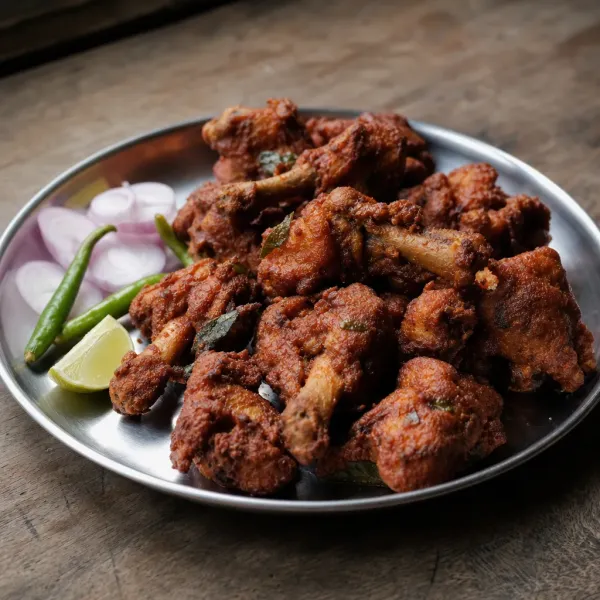
Chicken Pakoda
Traditional Kongunad chicken pakoda with gram flour batter, fennel, curry leaves, and gingelly oil. Bone-in pieces, crisp outside, tender inside.
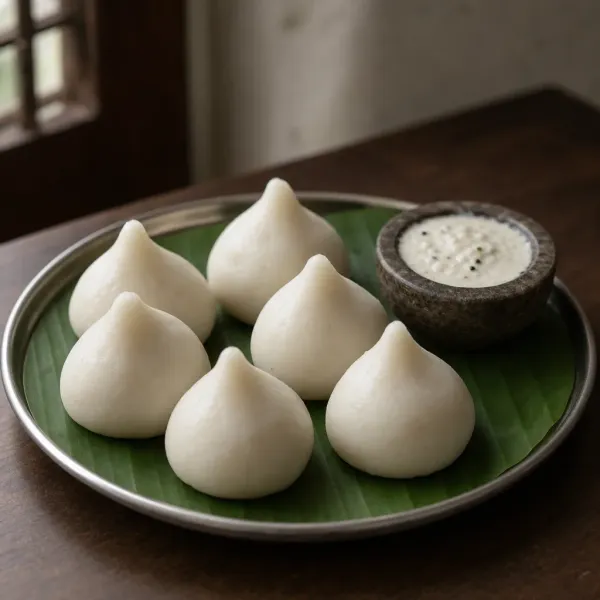
Uppu Kozhukattai
Traditional Iyer recipe for uppu kozhukattai: savoury steamed rice flour dumplings with mustard, curry leaves and coconut. Step-by-step method.
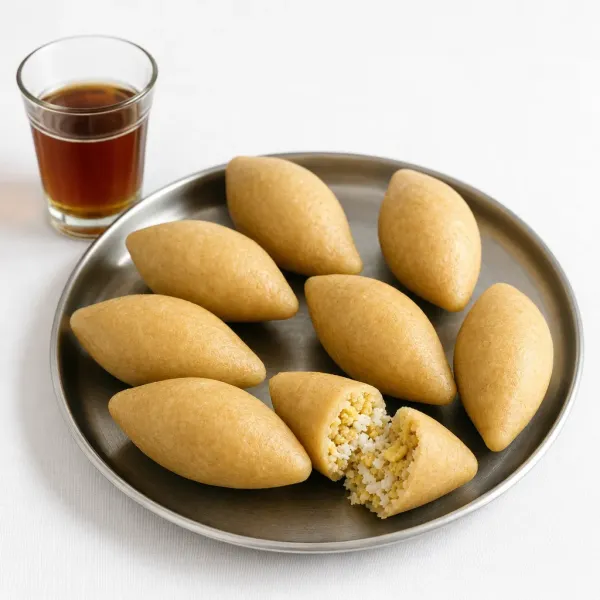
Unniyappam
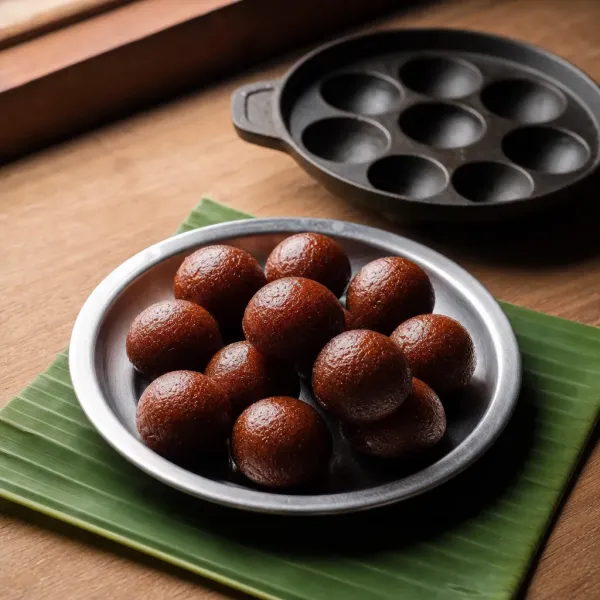
Traditional Kerala unniyappam made with ground raw rice, dark jaggery, ripe nendran banana and coconut oil in a cast-iron appakaram. Step-by-step hou…
Mysore Bonda
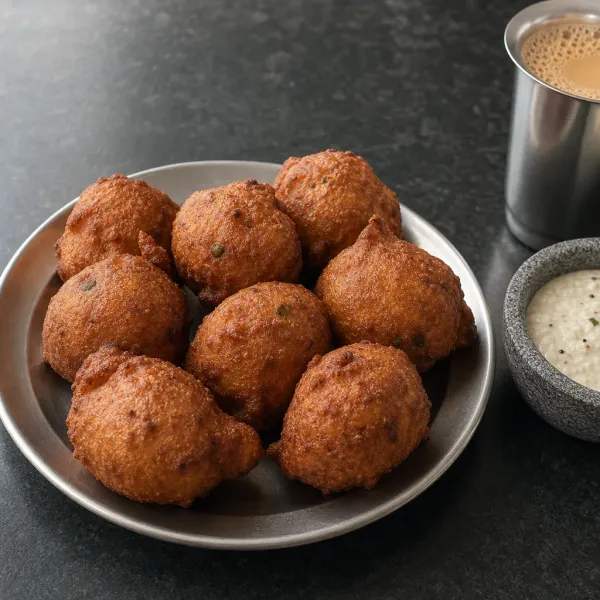
Traditional Mysuru-style maida bonda made with thick sour curd. Crisp shell, soft inside. Step-by-step Karnataka household recipe with tips.