

Mysore Bonda Recipe
Malayalam മൈസൂർ ബോണ്ടTamil மைசூர் போண்டாKannada ಮೈಸೂರು ಬೊಂಡTelugu మైసూర్ బొండా
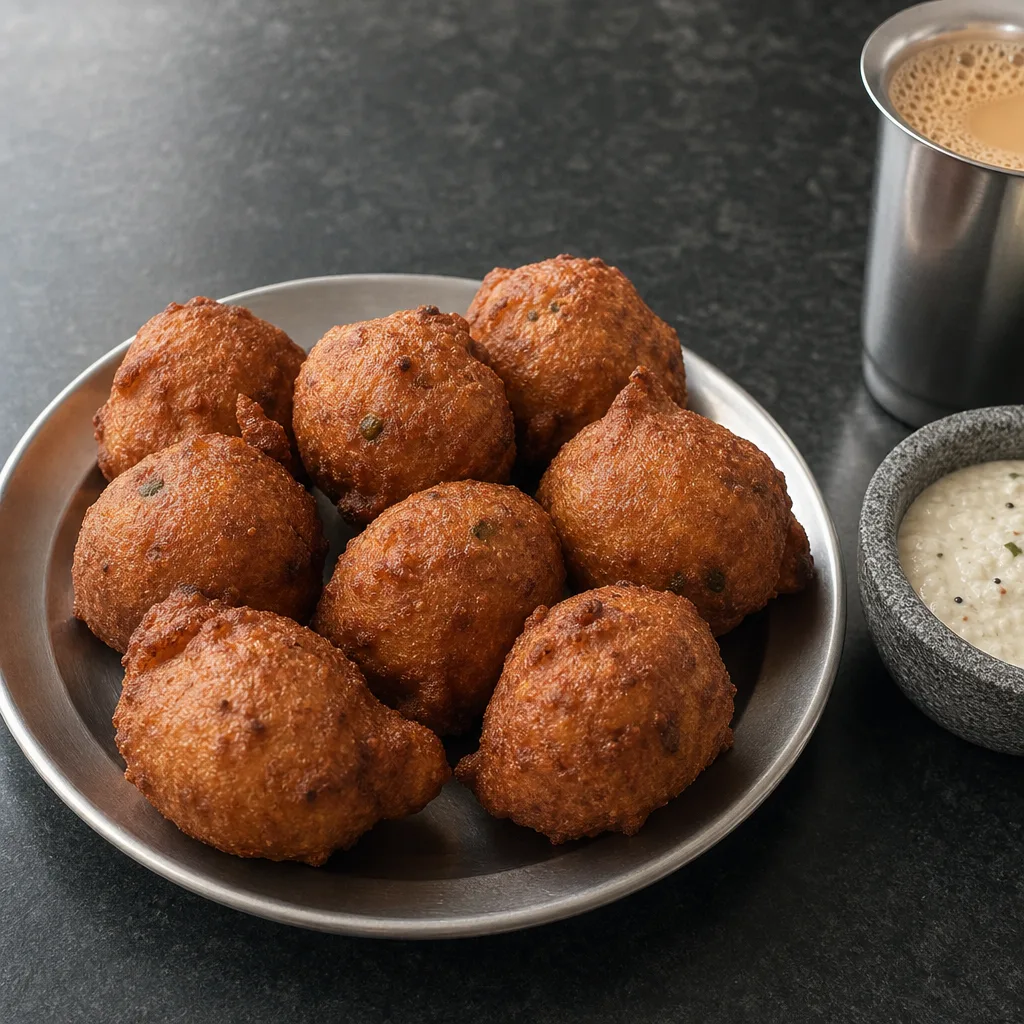
- Prep15 min
- Cook30 min
- Serves4
- DifficultyEasy
- DietVegetarian
Mysore Bonda is a tiffin-time snack from the hotels and home kitchens of Mysuru, made from a quick batter of maida and thick sour curd. Unlike urad dal bondas, which need soaking and grinding, this one comes together fast — which is part of why it became so popular in the city's busy coffee houses alongside a tumbler of filter coffee.
The batter is thicker than you expect, almost like a soft dough, and that thickness is what gives the bonda its round shape and its dense, slightly chewy interior under a genuinely crisp shell. The sourness of the curd does the work that fermentation does in other batters — it lifts the bonda from inside and keeps it from being heavy.
Households differ on the spicing. Some keep it plain with just cumin and green chilli. Others add grated coconut, curry leaves, or finely chopped shallots. The version below uses cumin, green chilli, ginger, and curry leaves, which is the most common combination in Mysuru homes. The oil must be deep and the temperature steady; a bonda dropped into oil that is too hot will brown outside before the centre cooks through.
Ingredients (serves 4)
For the batter
For the seasoning inside the batter
For frying
Method
Mix the batter
Put the sifted maida in a wide bowl. Add the salt, cumin seeds, chopped green chilli, ginger, curry leaves, and pepper if using. Add the thick curd all at once and mix with your hand or a spoon, working from the centre outward. The batter should come together into a thick, sticky mass — thicker than idli batter, closer to a soft dough. Add water one tablespoon at a time only if the batter is too stiff to hold together. Do not make it loose or it will spread in the oil.
Rest the batter
Cover the bowl and leave it at room temperature for 30 minutes. In a warm kitchen this is enough; in a cooler one, go up to 45 minutes. The batter will puff very slightly and smell pleasantly sour. Do not leave it longer than an hour or the sourness becomes sharp and the bonda can taste raw-floury in the centre.
Heat the oil
Pour oil into a deep, heavy kadai to a depth of at least 8 cm. Heat over a medium flame. To test readiness, drop a small pinch of batter into the oil — it should sink slightly, then rise to the surface and sizzle steadily within 3 to 4 seconds. If it shoots straight up immediately, the oil is too hot; reduce the flame and wait a minute before testing again.
Shape and slide in the bondas
Wet your hand with water. Take a portion of batter roughly the size of a large lime — about 40 to 45 g — and close your fingers loosely around it so it forms a rough ball. Do not press or compact it hard; a lightly shaped bonda fries more evenly. Slide it gently into the oil from just above the surface. Shape and add 4 to 5 bondas per batch; do not crowd the kadai or the oil temperature will drop and the bondas will absorb oil.
Fry on medium heat, turning once
Let the bondas fry undisturbed for about 2 minutes until the underside is set and pale gold. Then turn them gently with a slotted spoon. They will turn easily once the outer crust has formed — if they resist, wait another 30 seconds. Continue frying, turning occasionally, for a total of 6 to 8 minutes. The finished bonda should be an even deep golden brown all over, not dark. Tap one lightly with the back of a spoon — it should sound slightly hollow.
Drain and rest briefly
Lift the bondas out with a slotted spoon, letting the oil drain back into the kadai. Place them on a plate lined with paper or a clean cloth for a minute. The crust firms up as they cool slightly. Serve within 10 minutes; the crispness does not hold long.
How to serve
Coconut chutney and sambar are the classic accompaniments in Mysuru tiffin houses. At home, a thick tomato chutney or a simple coconut-green chilli chutney is equally common. Filter coffee alongside is traditional.
Served with: Coconut chutney and sambar are the classic accompaniments in Mysuru tiffin houses. At home, a thick tomato chutney or a simple coconut-green chilli chutney is equally common. Filter coffee alongside is traditional.
Cook's tips
The curd must be thick and sour
Watery curd makes the batter too loose and the bonda absorbs oil. If your curd is fresh and mild, hang it in a muslin cloth for 20 minutes to drain the whey, or use it a day after making. The sourness is not just flavour — it helps the bonda stay light inside.
Why the bonda turns dark before cooking through
The oil is too hot. Once you see this happen, reduce the flame immediately and let the oil cool for a minute before the next batch. A medium flame throughout is the rule. If you have a thermometer, aim for 170°C to 175°C.
Rice flour for extra crispness
Some households replace 2 tablespoons of the maida with rice flour. This is a genuine variation and gives a noticeably crisper shell. It is not the base version written here, but it is worth trying once you are comfortable with the batter consistency.
Leftover batter
The batter does not keep well beyond the day. If you have leftover batter, cover and refrigerate it and use within 4 hours, but the bondas will be slightly denser. Do not refrigerate and use the next day.
Regional variations
Udupi-style bonda uses a fermented urad dal batter; Mangalorean versions sometimes add grated coconut; Tamil Nadu hotel versions of 'maida bonda' are closely related but differ in spicing.
Glossary
- Maida ಮೈದಾ
- Refined white wheat flour, finely milled, with the bran and germ removed. Used across South Indian snack cooking for its smooth texture.
- Bonda ಬೊಂಡ
- A deep-fried, roughly spherical fritter found across South India in many forms, distinguished by its batter or filling.
- Kadai ಕಡಾಯಿ
- A deep, round-bottomed cooking vessel used for deep frying and stir-frying; the curved shape keeps the oil deep with less volume.
Two things decide whether a Mysore Bonda works: the thickness of the batter and the steadiness of the oil temperature. Get the batter too loose and you have flat, oily fritters; get the oil too hot and you have a dark shell around an undercooked centre. Keep the batter thick enough to hold a rough ball in your wet palm, keep the flame medium throughout, and the rest follows.
More Snacks recipes
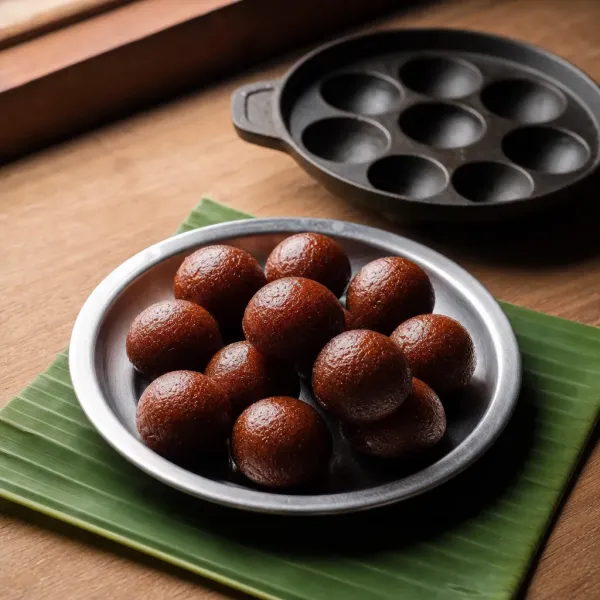
Unniyappam
Traditional Kerala unniyappam made with ground raw rice, dark jaggery, ripe nendran banana and coconut oil in a cast-iron appakaram. Step-by-step hou…
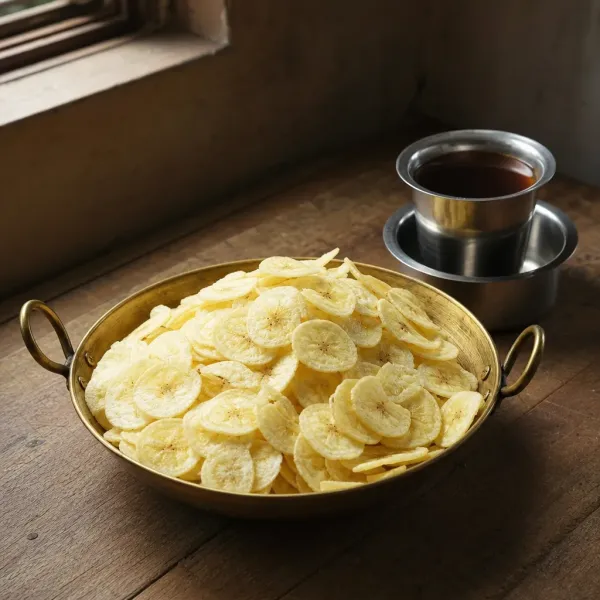
Kaya Upperi
Traditional Kerala kaya upperi recipe: raw nendran banana chips deep-fried in fresh coconut oil and salted the old-fashioned way. Crisp, simple, auth…
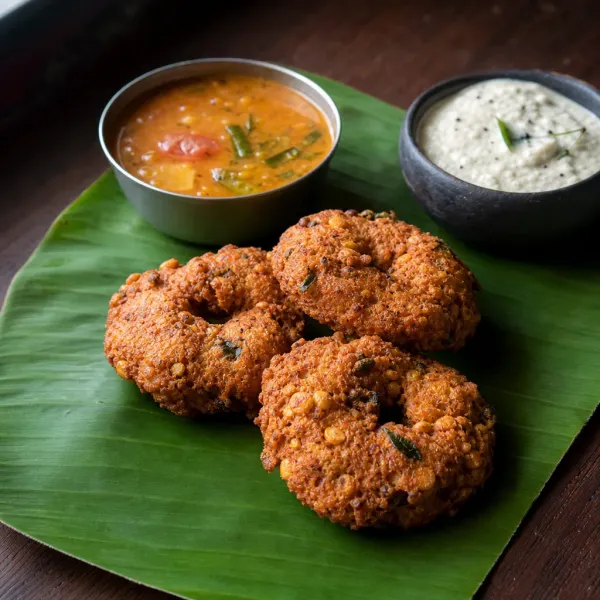
Masala Vada (Paruppu Vadai)
Traditional Tamil Iyer paruppu vadai made with coarse-ground chana dal, shallots, green chillies and curry leaves, deep-fried in gingelly oil.
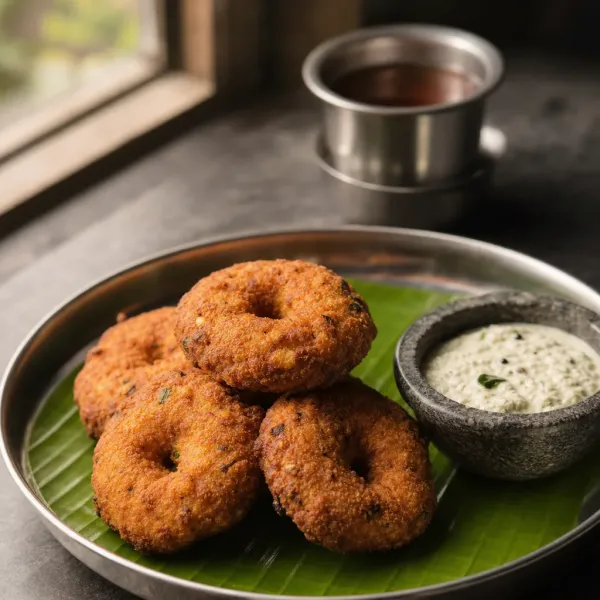
Parippu Vada
Traditional Kerala parippu vada made with coarsely ground chana dal, shallots, green chilli and curry leaves, deep-fried in coconut oil until crisp.
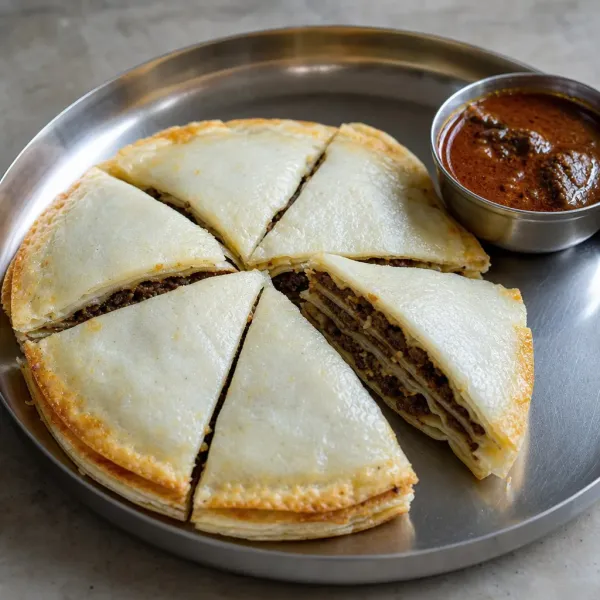
Chattipathiri
Traditional Malabar Mappila chattipathiri: thin rice flour crepes layered with spiced minced beef, sealed with egg, and baked in a chatti. Step-by-st…