Chattipathiri Recipe
Malayalam ചട്ടിപ്പത്തിരിTamil சட்டிப்பத்திரிKannada ಚಟ್ಟಿಪತ್ತಿರಿTelugu చట్టిపత్తిరి
- Prep30 min
- Cook50 min
- Serves6
- DifficultyMedium
- DietNon-vegetarian
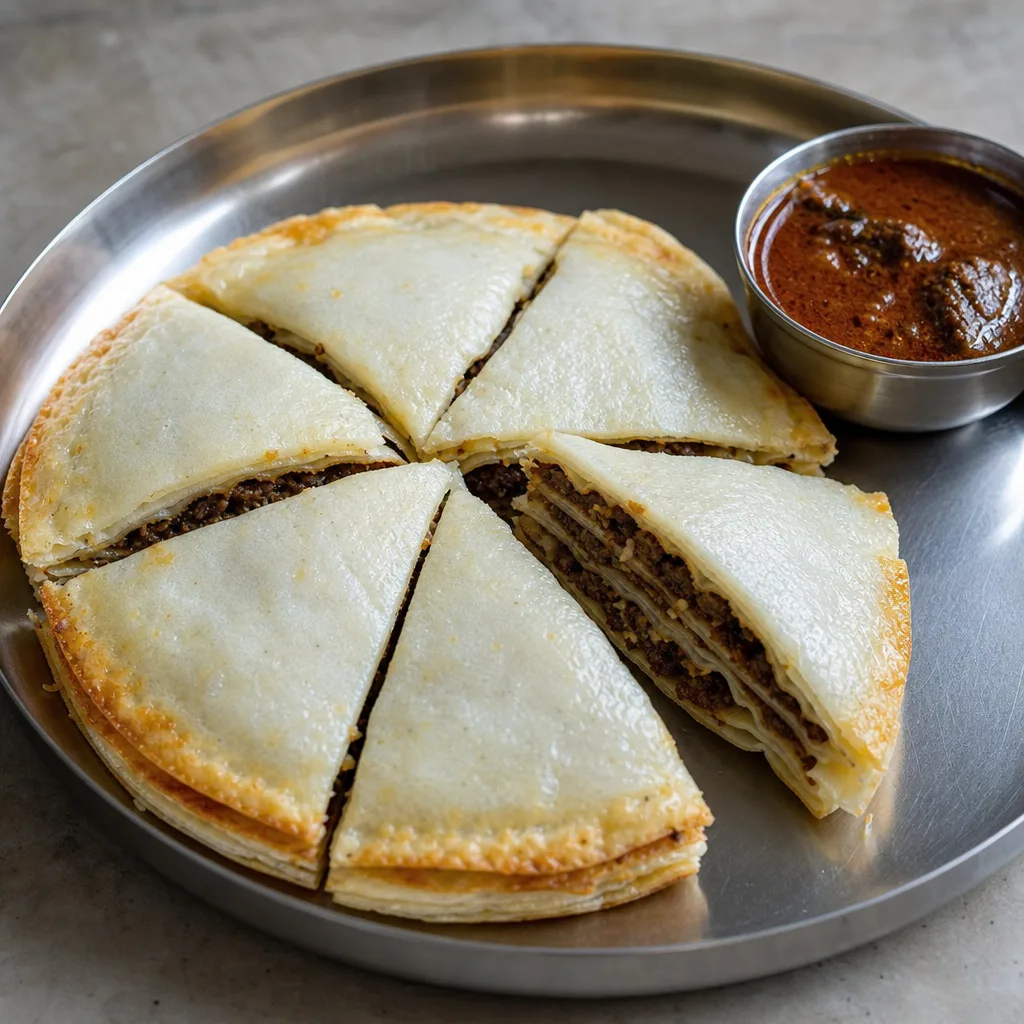
Chattipathiri is a Mappila dish from Malabar, made for weddings, Eid gatherings and Friday lunches when a family wants something that takes effort and shows it. The name points directly to its form: chatti is the shallow vessel it is baked in, and pathiri is the thin rice flour crepe that makes up each layer. The dish is a stack of those crepes, bound together by a spiced minced meat filling, sealed with beaten egg, and finished in the oven or on a tawa over a very low flame until the whole thing sets into sliceable rounds.
Every household in Kozhikode, Malappuram and Kannur has its own balance for the filling. Some families use more fennel and less pepper; some add a little coconut milk to keep the meat moist; some insist on shallots only and would not put onion near it. The crepes themselves are plain and pale, made from roasted rice flour and hot water, and they must be thin enough to be nearly translucent when you hold them up. If they are thick, the finished dish is heavy and the layers lose their definition when you cut it.
This is the savoury version made with minced beef or mutton, which is the most common household form. It is served as a centrepiece at the Malabar table, cut into wedges like a cake, alongside a thin beef curry or just on its own with pickle.
Ingredients (serves 6)
For the pathiri (crepes)
For the meat filling
For the egg binding
Method
Make the pathiri dough
Bring the water to a rolling boil and pour it over the rice flour and salt in a wide bowl. Stir immediately with a wooden spoon until it comes together into a soft, pliable dough with no dry patches. Add the teaspoon of coconut oil and knead briefly while still warm. The dough should not crack at the edges when you press it; if it does, wet your hands and knead a little more. Cover with a damp cloth and rest for 10 minutes.
Roll and cook the crepes
Divide the dough into balls roughly the size of a lime, 10 to 12 of them. Place a ball between two sheets of banana leaf or plastic and press it flat, then roll it out to a circle about 18 cm across and as thin as you can manage without tearing. Heat an ungreased tawa over medium heat. Cook each crepe for about 45 seconds on one side until the surface looks dry and matte and small white spots appear; flip and cook 20 seconds on the other side. The crepes stay pale and soft. Stack them covered so they do not dry out.
Cook the filling
Heat the coconut oil in a wide pan over medium heat. Add the shallots and cook, stirring often, until they are soft and beginning to colour at the edges, about 8 minutes. Add the ginger, garlic, green chillies and curry leaves and cook another 2 minutes until the raw smell goes. Add the coriander powder, turmeric, pepper and the crushed fennel; stir for 30 seconds so the spices fry in the oil rather than steam.
Add and dry the mince
Add the minced meat and salt. Break up any lumps with the back of the spoon. Cook over medium-high heat, stirring regularly, until the meat is cooked through and all the liquid has evaporated, about 15 to 18 minutes. The filling must be quite dry; if moisture remains, the layers will slip when you cut the finished dish. Stir in the garam masala and fresh coriander, taste for salt, and take off the heat. Let it cool to room temperature before assembling.
Prepare the vessel and preheat
Use a shallow round baking dish or a heavy-bottomed chatti roughly 20 cm across. Grease it well with coconut oil. If you are using an oven, preheat it to 180 °C. If you are finishing on the stovetop, have a heavy tawa ready on the lowest possible flame with a lid that fits.
Assemble the layers
Place one crepe in the base of the dish. Spoon a thin, even layer of the meat filling over it, leaving a small border at the edge. Lay another crepe on top and press gently. Repeat, alternating crepe and filling, until you have used all the crepes, ending with a plain crepe on top. You should have 5 to 6 layers of filling between 6 to 7 crepes. Do not overfill each layer; thin, even filling gives clean slices.
Pour the egg over
Beat the eggs with a pinch of salt and pepper until well mixed. Pour them slowly and evenly over the top crepe and let the egg run down the sides and into any gaps around the edge. Tilt the dish gently so the egg reaches the sides. Some families also pour a little egg between each layer before the final pour; this is optional but gives a firmer set.
Bake or cook until set
In the oven: bake at 180 °C for 20 to 25 minutes until the top is set and lightly golden at the very edges and the egg is completely cooked through. On the stovetop: place the dish on the tawa over the lowest flame, cover tightly, and cook for 25 to 30 minutes. The egg must be fully set; press the centre gently and it should not wobble. If the top looks wet after this time, place the dish under a grill for 3 to 4 minutes.
Rest and cut
Let the chattipathiri rest in the dish for 10 minutes before cutting. Run a knife around the edge, then cut into wedges like a cake. The layers should be visible at the cut edge. If you rush this step and cut while it is too hot, the layers compress and the filling slides out.
How to serve
Thin beef or mutton curry (Malabar style, with coconut milk); plain pickle (naranga achar or mango); sometimes just by itself as a rich afternoon snack with tea.
Served with: Thin beef or mutton curry (Malabar style, with coconut milk); plain pickle (naranga achar or mango); sometimes just by itself as a rich afternoon snack with tea.
Cook's tips
Pathiri podi matters
Use flour specifically labelled pathiri podi or Kerala rice flour for pathiri. All-purpose rice flour from other regions is often coarser and will give you crepes that crack. If the only option is coarser flour, pass it through a fine sieve and increase the hot water slightly.
The filling must be bone dry
Any moisture left in the mince will make the crepes soggy and cause the layers to slip when you slice. Take the time to dry-fry the mince completely before assembling. If you are not sure, spread the filling on a plate for a few minutes before using.
Stovetop finishing
Most older Malabar kitchens did not use ovens. The stovetop method over a tawa on the lowest flame with a tight lid is the traditional way and works perfectly well. Place a small iron weight or a heavy plate on the lid to keep the steam in.
Keeping and reheating
Chattipathiri keeps well at room temperature for several hours and is often made in the morning for an afternoon gathering. Reheat wedges in a covered pan over low heat with a few drops of water, or briefly in a low oven. It does not reheat well in a microwave, which makes the crepes rubbery.
Size of the crepes
Match your crepe size to your baking dish. The crepe should fit the dish with just a small gap at the edge, which the egg filling will seal. If the crepes are much smaller than the dish, the layers will be uneven and the egg will pool.
Regional variations
A sweet version (chattipathiri with sweetened coconut-egg filling) is made for Eid in some Malabar households; a few families use a thin wheat parotta-style dough instead of a batter for the layers.
Glossary
- Pathiri podi പത്തിരി പൊടി
- Finely ground roasted rice flour used specifically for making pathiri crepes in Malabar.
- Chatti ചട്ടി
- A shallow, wide earthenware or metal cooking vessel; gives the dish its name.
- Chuvannulli ചുവന്നുള്ളി
- Small red shallots used across Kerala cooking; sharper and more aromatic than large onions.
- Perumjeerakam പെരുംജീരകം
- Fennel seeds; used more in Malabar Mappila cooking than in other Kerala communities.
- Pathiri പത്തിരി
- A thin, soft rice flour crepe cooked on a dry tawa; a staple of Malabar Mappila cuisine.
Two things decide whether this works: the crepes must be thin and pliable without cracking, and the meat filling must be completely dry before it goes between the layers. Get both of those right and the dish will hold its shape, slice cleanly, and show its layers at the table the way it is meant to.
More Snacks recipes
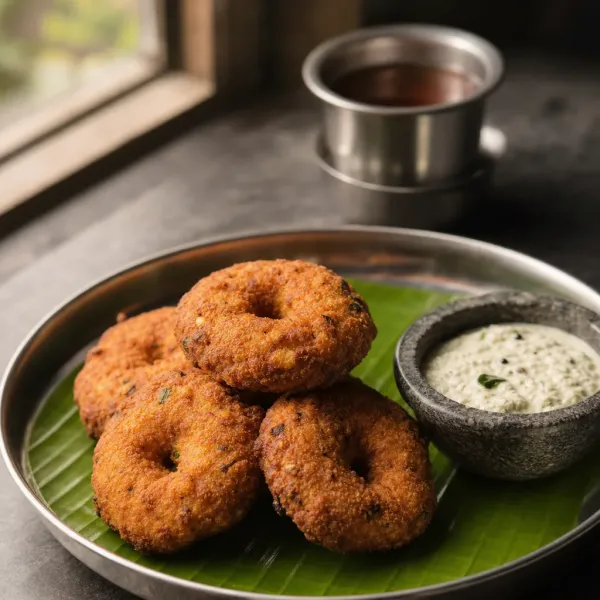
Parippu Vada
Traditional Kerala parippu vada made with coarsely ground chana dal, shallots, green chilli and curry leaves, deep-fried in coconut oil until crisp.
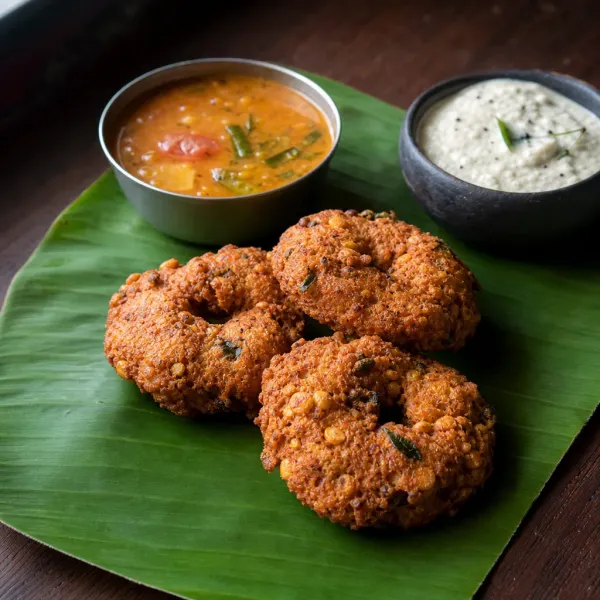
Masala Vada (Paruppu Vadai)
Traditional Tamil Iyer paruppu vadai made with coarse-ground chana dal, shallots, green chillies and curry leaves, deep-fried in gingelly oil.
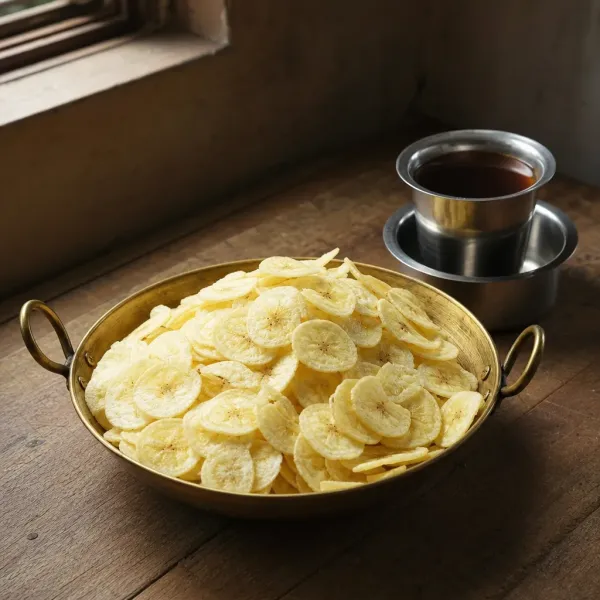
Kaya Upperi
Traditional Kerala kaya upperi recipe: raw nendran banana chips deep-fried in fresh coconut oil and salted the old-fashioned way. Crisp, simple, auth…
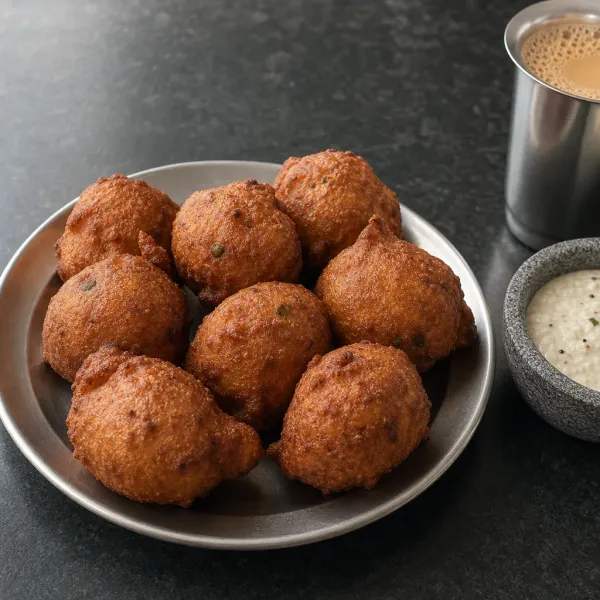
Mysore Bonda
Traditional Mysuru-style maida bonda made with thick sour curd. Crisp shell, soft inside. Step-by-step Karnataka household recipe with tips.
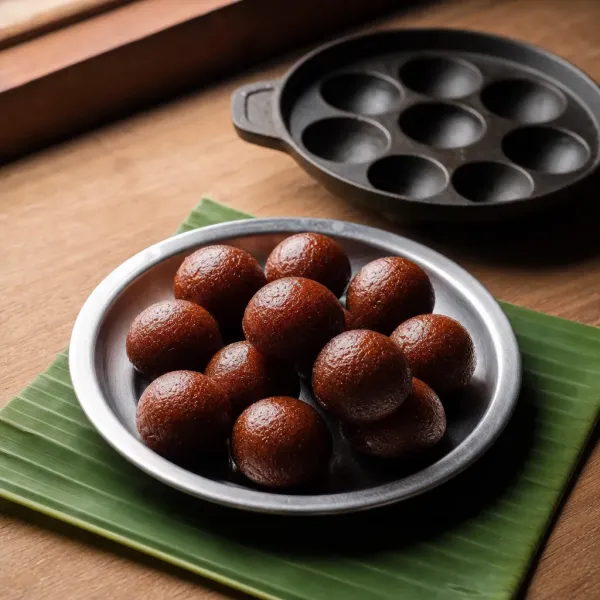
Unniyappam
Traditional Kerala unniyappam made with ground raw rice, dark jaggery, ripe nendran banana and coconut oil in a cast-iron appakaram. Step-by-step hou…