Masala Vada (Paruppu Vadai) Recipe
Malayalam മസാല വടTamil மசால வடைKannada ಮಸಾಲೆ ವಡೆTelugu మసాల వడ
- Prep20 min
- Soak / ferment2 hr
- Cook30 min
- Serves4
- DifficultyMedium
- DietVegan
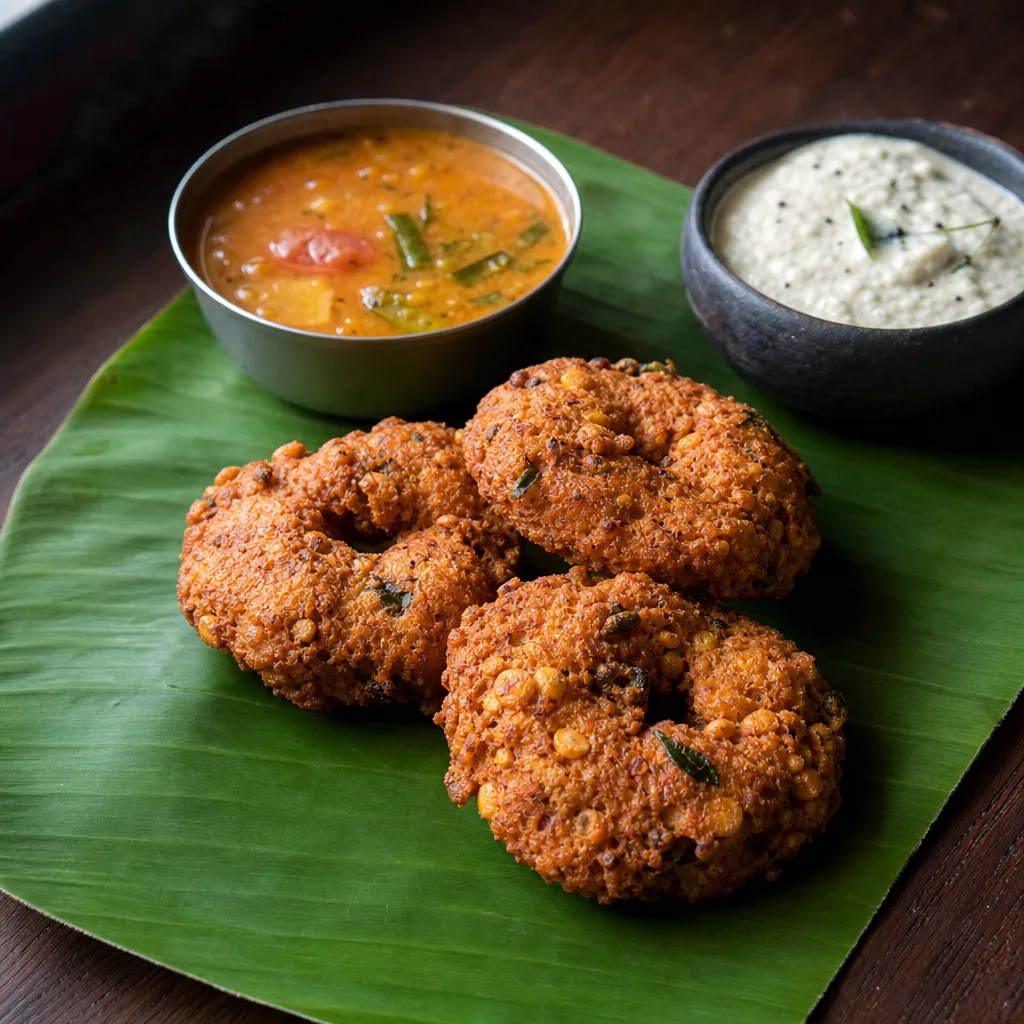
This is the paruppu vadai of Tamil Brahmin households, made on festival mornings, on rainy afternoons, and whenever someone comes home unannounced and the kitchen needs to produce something quickly. The dal is chana dal, soaked just long enough to soften but not so long that it turns slippery. It is ground coarse, not smooth, so the finished vada has a rough, cratered surface that fries up crisp and stays that way for a good half hour.
The seasoning is restrained in the Iyer kitchen: shallots, green chillies, ginger, curry leaves, and sometimes a small handful of fennel seeds. No onion in the large-onion sense, no garam masala, no tomato. The heat comes from the green chillies alone. Households differ on fennel — some consider it essential, others leave it out entirely — and on whether to add a tablespoon of raw rice to the soaking dal to sharpen the crunch.
These are eaten hot from the pan, at the table or straight from the draining plate. They go with filter coffee in the morning and with sambar and chutney at a proper meal, but many households eat them plain, with nothing at all.
Ingredients (serves 4)
For the vada
Method
Soak the dal
Rinse the chana dal and the tablespoon of raw rice together under cold water until the water runs clear. Cover with fresh cold water and soak for exactly 2 hours. Do not soak longer or the dal absorbs too much water and the vadas will not hold their shape. Drain through a colander and shake well to remove as much water as possible.
Grind coarse
Set aside about 3 tablespoons of the soaked dal before grinding. Put the rest into a mixer jar and grind without adding any water. Pulse in short bursts rather than running the motor continuously. You want a coarse, gritty paste — some dal pieces should still be visible. If the mixer struggles, add no more than 1 teaspoon of water, and only if truly necessary. A smooth batter will give you soft, flat vadas.
Mix the batter
Transfer the ground paste to a wide bowl. Add the reserved whole soaked dal, the chopped shallots, green chillies, grated ginger, torn curry leaves, fennel seeds, and salt. Mix everything together firmly with your hand, pressing and turning so the aromatics are evenly distributed through the paste. The mixture should be stiff enough to hold a shape when you press it into a patty — if it feels loose, the dal was over-soaked or too wet.
Test the oil
Pour the gingelly oil into a deep kadai and set it over medium heat. The oil is ready when a small pinch of batter dropped in rises to the surface within 3 seconds. If it sinks and sits on the bottom, the oil is too cold and the vadas will be greasy. If it browns in under a second, the oil is too hot and the outside will burn before the inside cooks through.
Shape the vadas
Wet your palm lightly with water. Take a portion of batter roughly the size of a lime — about 40 g. Roll it into a ball, place it on your palm, and press it flat into a disc about 1 cm thick and 6 cm across. Make a small hole in the centre with your thumb if you like the traditional ring shape, though many households skip this. Shape only as many as will fit in the kadai in one batch.
Fry the first batch
Slide the shaped vadas gently into the hot oil, one at a time, lowering each one on the back of a wet spoon or your wet fingers. Do not crowd the pan — four or five at a time in a medium kadai is enough. Fry on medium heat for 3 to 4 minutes on the first side until deep golden brown. Turn once and fry for another 2 to 3 minutes. The vada should be uniformly amber-brown with a rough, cratered surface.
Drain and serve immediately
Lift the vadas out with a slotted spoon and rest them briefly on a plate lined with absorbent paper. Do not cover them or stack them while hot — steam trapped underneath softens the crust within minutes. Fry the remaining batches, shaping fresh vadas while each batch fries.
How to serve
Filter coffee or plain tea; or at a meal with sambar and coconut chutney. Some households serve with a thin green chutney made from coriander and green chilli.
Served with: Filter coffee or plain tea; or at a meal with sambar and coconut chutney. Some households serve with a thin green chutney made from coriander and green chilli.
Cook's tips
The batter must be dry
Shake the drained dal vigorously and spread it on a clean cloth for a few minutes if your kitchen is humid. Any free water in the batter makes shaping difficult and causes the oil to splatter dangerously.
Shaping without a mould
Keep a small bowl of water nearby and re-wet your palm before each vada. Dry hands cause the batter to stick and tear. A banana leaf square also works well as a shaping surface.
Fennel seeds
Fennel is traditional in many Iyer households but not universal. If your family does not use it, leave it out. Do not substitute cumin — it changes the character of the vada entirely.
Reheating
Vadas made more than an hour ahead can be re-crisped in a dry pan over medium heat for 2 minutes per side. Do not microwave them — they turn rubbery.
Oil choice
Gingelly oil is correct here and gives a characteristic nuttiness. Refined groundnut oil is the common household shortcut when gingelly oil is not available. Coconut oil is not traditional for this Tamil dish.
Regional variations
Kerala has its own parippu vada made with toor dal and shallots; Andhra households add curry leaves and dried red chillies to a coarser grind; Udupi versions sometimes fold in grated coconut.
Glossary
- Kadalai paruppu கடலை பருப்பு
- Chana dal; split and husked Bengal gram, the base of this vada.
- Pacharisi பச்சரிசி
- Raw white rice; a small quantity added to the soaking dal to improve crispness.
- Chinna vengayam சின்ன வெங்காயம்
- Small shallots; sharper and more aromatic than large onions, standard in Tamil cooking.
- Sombu சோம்பு
- Fennel seeds; used whole in the batter for a mild anise note.
- Nallennai நல்லெண்ணெய்
- Gingelly oil; cold-pressed sesame oil used for frying in Tamil Nadu.
Two things decide whether this works: the coarseness of the grind and the dryness of the batter. Grind too smooth and you get a dense, chewy disc. Leave too much water in the soaked dal and the vadas fall apart in the oil before they brown. Get both of those right and the rest follows.
More Snacks recipes
Parippu Vada
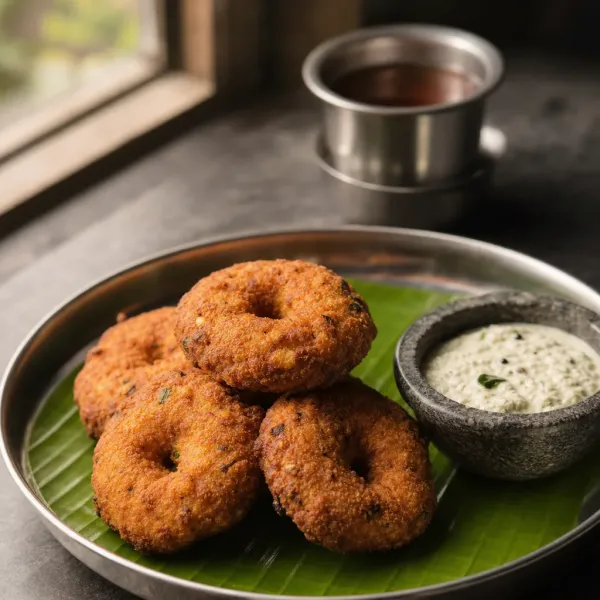
Traditional Kerala parippu vada made with coarsely ground chana dal, shallots, green chilli and curry leaves, deep-fried in coconut oil until crisp.
Kaya Upperi
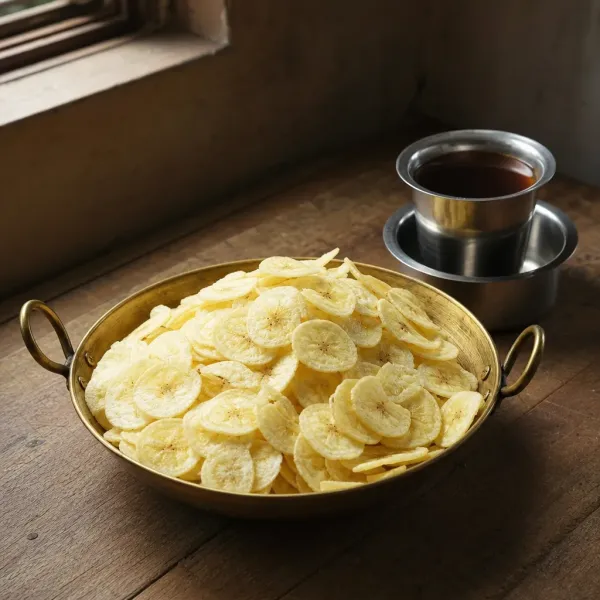
Traditional Kerala kaya upperi recipe: raw nendran banana chips deep-fried in fresh coconut oil and salted the old-fashioned way. Crisp, simple, auth…
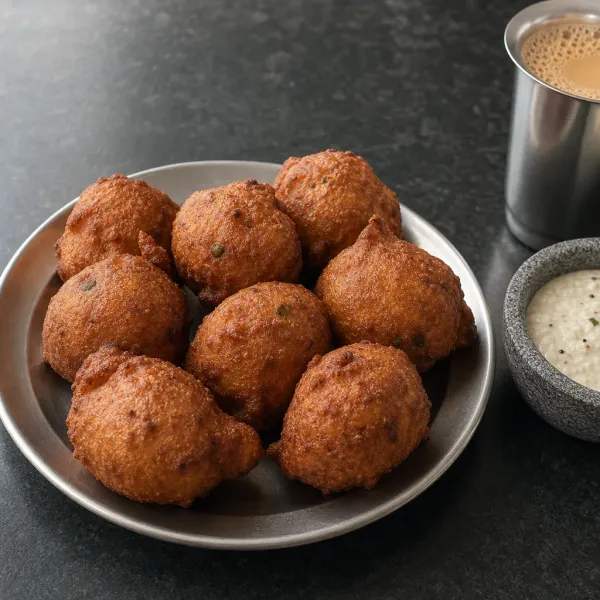
Mysore Bonda
Traditional Mysuru-style maida bonda made with thick sour curd. Crisp shell, soft inside. Step-by-step Karnataka household recipe with tips.
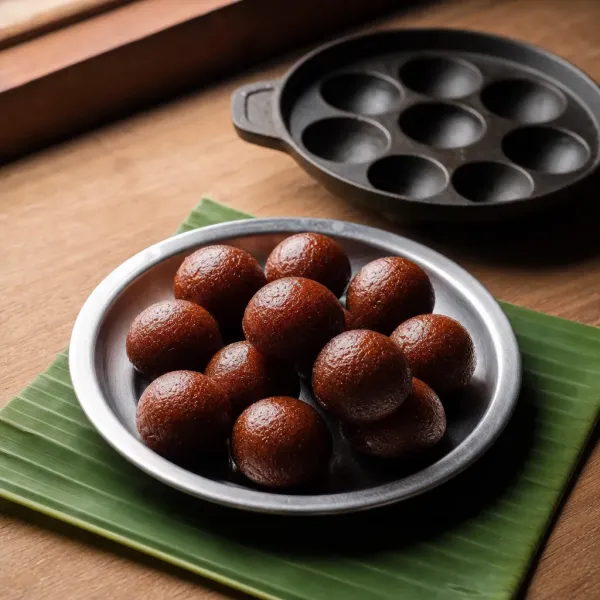
Unniyappam
Traditional Kerala unniyappam made with ground raw rice, dark jaggery, ripe nendran banana and coconut oil in a cast-iron appakaram. Step-by-step hou…
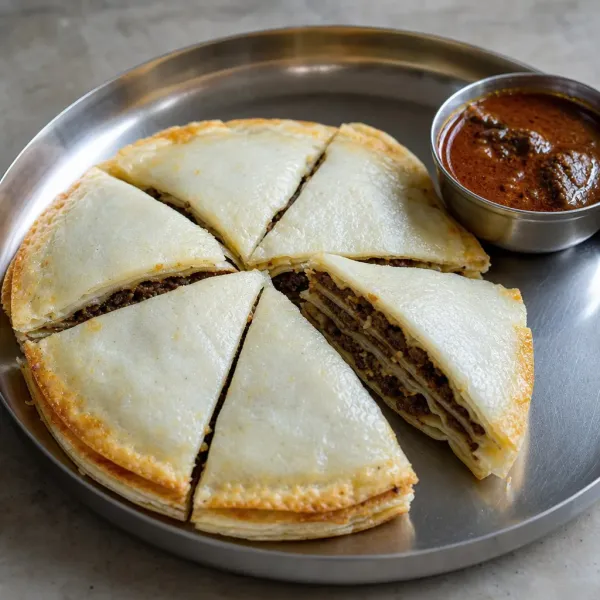
Chattipathiri
Traditional Malabar Mappila chattipathiri: thin rice flour crepes layered with spiced minced beef, sealed with egg, and baked in a chatti. Step-by-st…