

Thatta Payaru Kuzhambu Recipe
Malayalam തട്ട പയർ കുഴമ്പ്Tamil தட்டப் பயறு குழம்புKannada ತಟ್ಟ ಪಯರು ಕುಳಂಬುTelugu అలసంద కూర
- Prep20 min
- Soak / ferment8 hr
- Cook40 min
- Serves4
- DifficultyEasy
- DietVegan
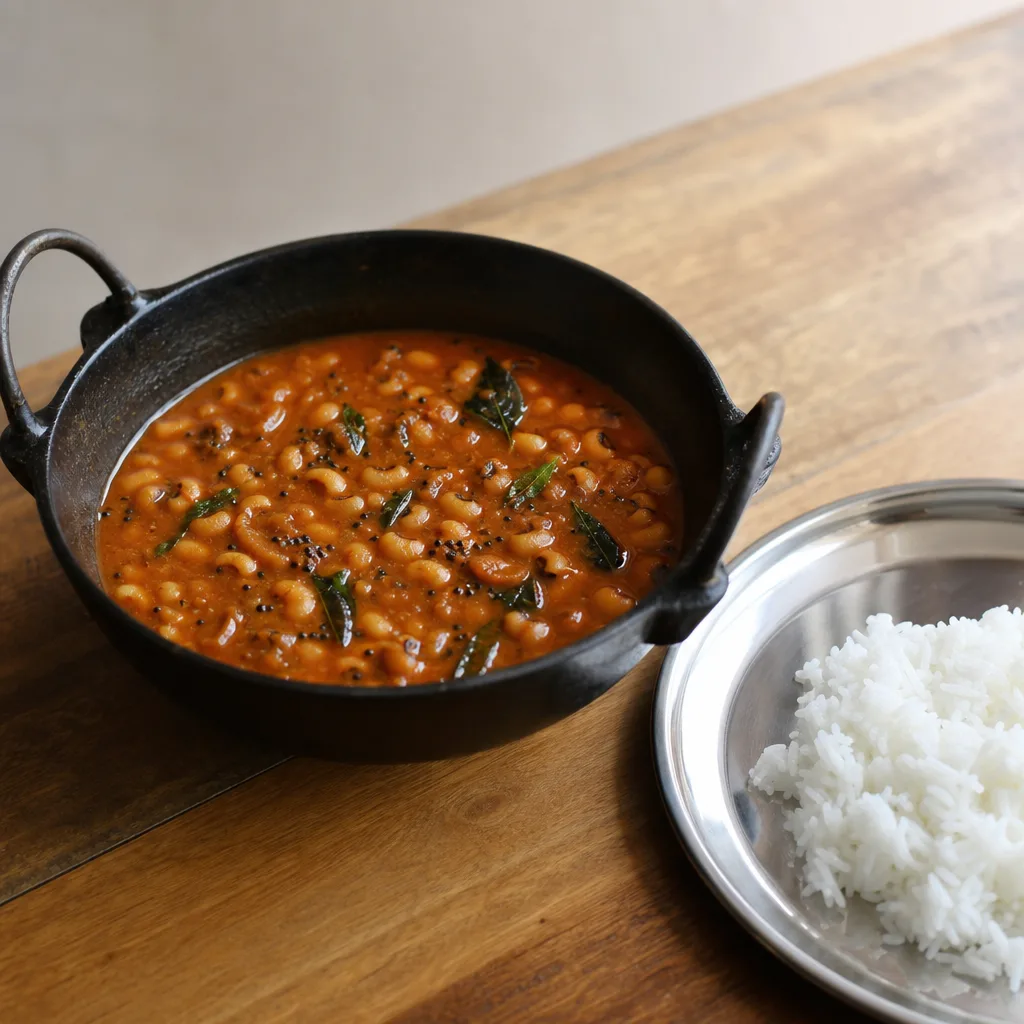
Thatta payaru is the Tamil name for black-eyed peas, the flat, cream-coloured bean with its distinctive dark eye. In Kongunad households this kuzhambu is weekday food, the sort of thing that goes on the stove while the rice is soaking. The peas are soaked overnight, cooked until just tender, and then pulled into a tamarind-and-coconut gravy that is neither too thick nor too thin. Gingelly oil goes in at the tempering stage and again, sometimes, as a finishing drizzle.
This is not a festive dish and it is not meant to be delicate. It should have a clear sour note from the tamarind, warmth from the dried red chillies, and a faint sweetness from the coconut. Some households add a small piece of jaggery to round the sourness; others consider that unnecessary. Both are correct.
It is eaten with plain steamed rice and a dry vegetable on the side, often a drumstick or raw banana poriyal. In the evening the leftovers go well with idli or dosa, when the gravy has thickened and deepened overnight.
Ingredients (serves 4)
For soaking
For the tamarind base
For the coconut paste
For tempering
Method
Soak the peas
Rinse the thatta payaru twice in cold water, then cover generously with fresh cold water and leave to soak for 8 hours or overnight at room temperature. In a warm kitchen 8 hours is enough; in cold weather give them the full night. The peas are ready when they have swelled to nearly twice their size and a fingernail goes through one without resistance.
Cook the peas
Drain the soaked peas and transfer to a pressure cooker with 400 ml fresh water and ½ tsp salt. Cook on medium heat for 3 whistles, then take off the heat and let the pressure drop on its own. Open and check: the peas should be fully cooked but still holding their shape. If they are still chalky at the centre, add a splash of water and cook one more whistle. Do not overcook them to mush; they will cook further in the gravy.
Soak and strain the tamarind
While the peas cook, break the tamarind into the warm water and work it with your fingers for a few minutes until it dissolves. Strain through a sieve, pressing the pulp firmly. Discard the fibres and seeds. You want about 200 to 220 ml of thick tamarind water.
Grind the coconut paste
Grind the fresh grated coconut with the cumin seeds and black pepper in a small wet grinder or blender, adding 3 to 4 tbsp of water just enough to get the blades moving. Grind until you have a smooth, fine paste with no visible coconut shreds. Set aside.
Fry the shallots and chillies
Heat 1 tbsp of the gingelly oil in a heavy-bottomed kadai over medium heat. Add the shallots and the 4 dried red chillies and fry, stirring often, for 6 to 8 minutes until the shallots are soft and lightly coloured at the edges. Add the chopped tomato and cook for another 4 minutes until it softens and the oil starts to separate from the edges.
Add the dry spices
Lower the heat. Add the turmeric powder and coriander powder to the kadai and stir for 30 seconds. If the pan looks dry, add a small splash of water to prevent the powders from burning. The raw smell should go off quickly.
Pour in the tamarind water
Add the strained tamarind water to the kadai. Stir well, scraping up anything stuck to the bottom. Raise the heat to medium and bring to a steady simmer. Let it cook uncovered for 8 to 10 minutes until the raw tamarind smell is gone and the gravy has reduced slightly and darkened a shade.
Add the cooked peas
Add the cooked thatta payaru along with the water they cooked in. Stir gently. Taste for salt and add more if needed. Let the whole thing simmer together for 5 minutes so the peas absorb the tamarind gravy.
Stir in the coconut paste
Add the ground coconut paste and stir it through the kuzhambu. The gravy will thicken immediately. Add 50 to 80 ml water if it becomes too dense; you want it to pour easily off a spoon but not be watery. Simmer for 4 to 5 minutes on low heat, stirring occasionally. Do not boil hard after the coconut goes in or the gravy can turn grainy.
Temper and finish
In a small tempering pan, heat the remaining 2 tbsp gingelly oil until it shimmers. Add the mustard seeds and wait for them to pop fully. Add the broken dried red chilli, curry leaves, and asafoetida, standing back as the curry leaves will splutter. Pour the entire tempering over the kuzhambu, stir once, and take off the heat. The dish is ready.
How to serve
Steamed white rice (raw rice or boiled rice depending on household preference); a dry poriyal on the side such as drumstick or raw banana; papad or appalam.
Served with: Steamed white rice (raw rice or boiled rice depending on household preference); a dry poriyal on the side such as drumstick or raw banana; papad or appalam.
Cook's tips
Pressure cooker versus open pot
If you cook the peas in an open pot rather than a pressure cooker, cover with water by 5 cm and simmer for 45 to 55 minutes until tender. The result is the same; it just takes longer.
Jaggery
Some Kongunad households add a small piece of jaggery (about 10 g) along with the tamarind water to balance sourness. Taste the tamarind first; if it is very sharp, add the jaggery. If it is mild, leave it out.
Coconut paste timing
Add the coconut paste only after the tamarind has cooked through. If you add it too early, the sourness of the tamarind will not mellow properly, and the coconut can make the gravy taste raw.
Overnight improvement
This kuzhambu tastes noticeably better the next day. The peas absorb the gravy and the flavours settle. Reheat gently over low heat with a small splash of water.
Gingelly oil
Do not substitute coconut oil here. The slightly nutty, roasted note of gingelly oil is part of the flavour of this dish in Tamil Nadu. Cold-pressed gingelly oil (not the refined version) is what to use.
Regional variations
Chettinad version uses no coconut and a heavier spice paste with kalpasi and marathi mokku; Tamil Brahmin households sometimes fold the cooked peas into a tamarind-heavy kootu base; Mappila and Nasrani cooks in Kerala add this to coconut milk gravies.
Glossary
- Thatta payaru தட்டப் பயறு
- Black-eyed peas; the flat, pale bean with a dark spot at its eye, widely grown in Tamil Nadu.
- Kuzhambu குழம்பு
- A Tamil term for a gravy-based dish, usually tamarind or tomato forward, eaten with rice.
- Nallennai நல்லெண்ணெய்
- Gingelly oil; cold-pressed sesame oil used as the primary cooking fat in Tamil Nadu for pickles, kuzhambu, and tempering.
- Perungayam பெருங்காயம்
- Asafoetida; the dried resin used in small quantities for tempering, especially in lentil and bean dishes.
- Gundu milagai குண்டு மிளகாய்
- Round dried red chilli variety common in Tamil Nadu, moderately hot with a deep red colour.
Two things decide whether this kuzhambu works. The tamarind must be cooked long enough before the coconut paste goes in, until its raw sharpness has mellowed into a rounded sourness. And the coconut paste must be ground fine enough to dissolve smoothly into the gravy rather than sitting in it as gritty flecks. Get those two right and the rest follows.
More Lentils & Legumes recipes
Dosakaya Pappu
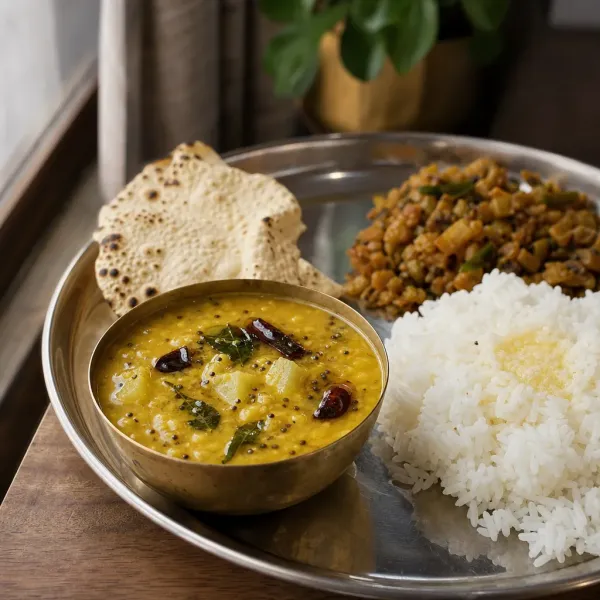
Authentic Andhra-Telangana dosakaya pappu: toor dal cooked with yellow cucumber and finished with a ghee tempering. Traditional household method.
Mamidikaya Pappu
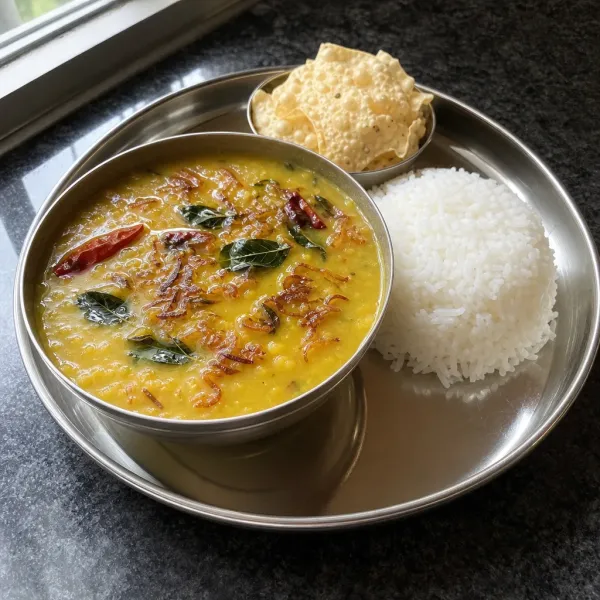
Traditional Andhra recipe for mamidikaya pappu: toor dal cooked with sour raw mango, finished with a ghee tadka of mustard, shallots, and curry leave…
Hesarukalu Usli
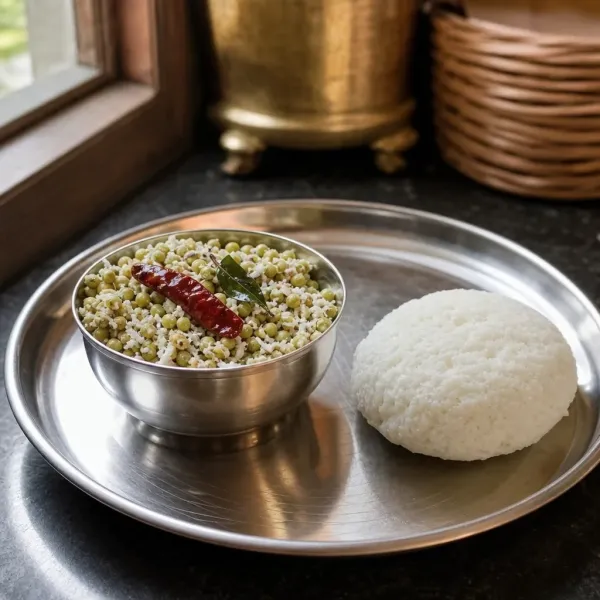
Traditional Karnataka sprouted moong usli from a Udupi kitchen: steamed hesarukalu, fresh coconut, mustard tadka in coconut oil. Vegan, easy, everyda…
Vanpayar Thoran
Traditional Kerala vanpayar thoran: red cowpea cooked tender, tossed with fresh grated coconut and tempered in coconut oil with mustard and curry lea…
Muthira Puzhukku (Horse Gram Puzhukku)
Traditional Kerala muthira puzhukku: horse gram slow-cooked with kudampuli, finished with a fresh coconut-shallot paste and coconut oil tempering. Se…
Ulavacharu
Traditional Rayalaseema ulavacharu: horse gram broth slowly reduced to a deep mahogany, finished with a gingelly oil tadka. Served over hot rice.