

Yam Mezhukkupuratti (Chena Mezhukkupuratti) Recipe
Malayalam ചേന മെഴുക്കുപുരട്ടിTamil யாம் மெழுக்குபுரட்டிKannada ಯಾಮ್ ಮೆಳುಕ್ಕುಪುರಟ್ಟಿTelugu చేన మెళుక్కుపురట్టి
- Prep15 min
- Cook20 min
- Serves4
- DifficultyEasy
- DietVegan
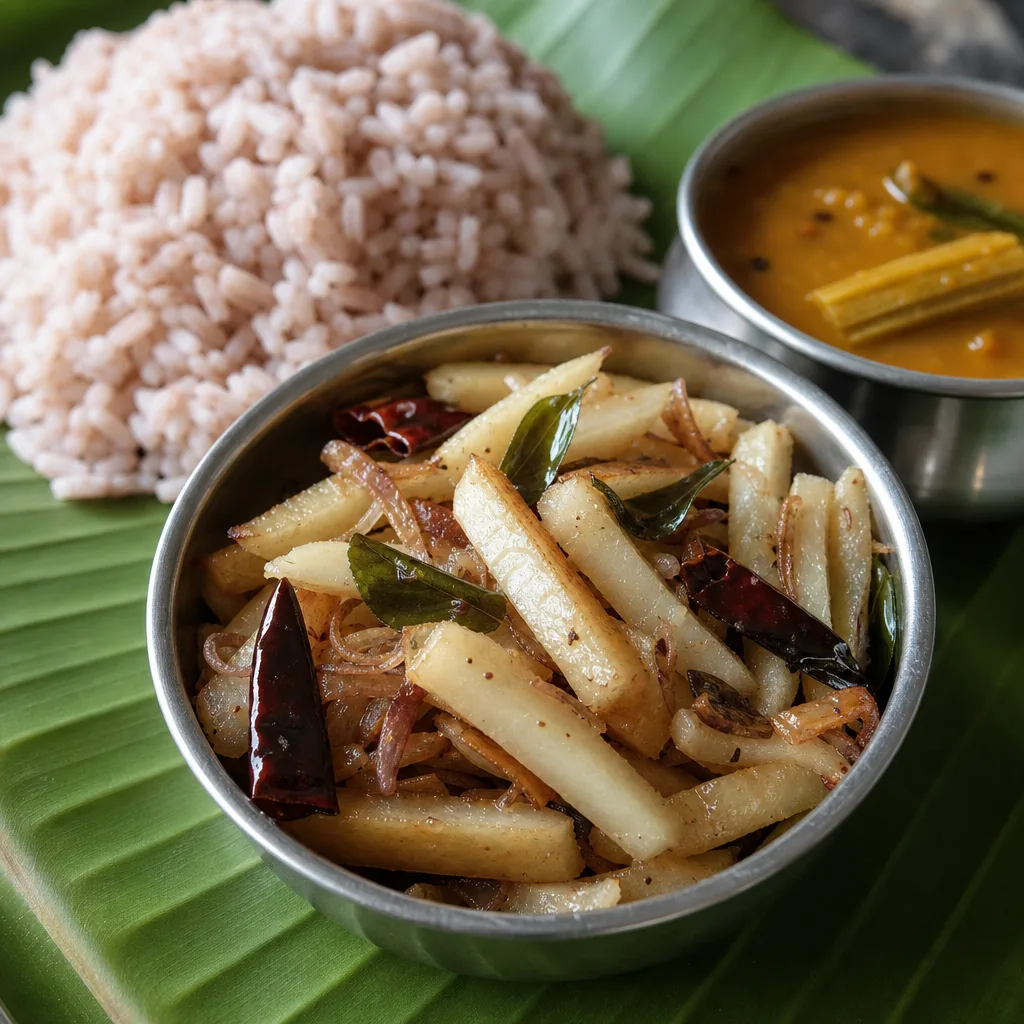
Mezhukkupuratti means something close to 'coated in oil' — the vegetable is cooked until just tender and then tossed in coconut oil with shallots, dried red chillies and curry leaves until each piece glistens. It is not a curry and it carries no gravy. The texture is the whole point: firm enough to have some bite, never mushy, with the oil and spices clinging to the surface.
Chena, the elephant foot yam, is one of the most popular choices for this preparation in Travancore households. It holds its shape well during cooking, absorbs the seasoning without falling apart, and has a satisfying density that makes it a good companion to rice and a thin sambar or rasam. It is part of the everyday sadhya plate and appears on the Onam sadya too, usually sitting alongside other dry vegetable preparations.
The only real variation between households is the number of dried red chillies and whether a little turmeric goes in at the boiling stage or only at the frying stage. Some cooks add a pinch of pepper at the end. The method below is the plain, everyday version most Kerala homes would recognise.
Ingredients (serves 4)
For the yam
For the stir-fry
Method
Prepare the yam
Peel the yam and cut it into batons roughly 4 cm long and 1 cm thick. Rinse them well under cold water. Wear gloves or oil your hands before handling raw chena — the oxalate crystals in the raw flesh can make skin itch.
Parboil until just tender
Place the yam pieces in a wide pan. Add enough water to just cover them, the first measure of turmeric, and salt. Bring to a boil over medium-high heat, then reduce to a steady simmer. Cook for 10 to 12 minutes. The yam is ready when a knife slides in without resistance but the pieces still hold their shape cleanly. Do not let them go soft at the edges.
Drain thoroughly
Tip the yam into a colander and let it drain for two to three minutes. Shake the colander once or twice. Any water left clinging to the pieces will cause the oil to spit badly and will steam the yam instead of frying it.
Heat the oil and fry the shallots
Heat the coconut oil in a wide, heavy pan or a cheenachatti over medium heat. Add the sliced shallots and cook, stirring occasionally, for four to five minutes until they are soft and beginning to colour at the edges. They should smell sweet, not sharp.
Add the chillies and curry leaves
Add the broken dried red chillies and curry leaves to the pan. Stand back slightly — the curry leaves will splutter in the oil. Stir for about thirty seconds until the chillies darken a shade and the leaves are crisp.
Add turmeric
Add the second measure of turmeric powder and stir it into the oil for ten seconds. This brief frying deepens the colour of the finished dish and removes any raw smell from the spice.
Add the yam and toss to coat
Add the drained yam pieces to the pan. Toss gently but thoroughly so every piece is coated in the seasoned oil. Keep the heat at medium. Do not stir constantly — let the pieces sit for a minute at a time so they pick up a little colour on their flat sides. The whole process takes four to five minutes.
Check seasoning and finish
Taste and adjust salt. The yam should be dry, lightly golden on the cut surfaces, and glistening with oil. If any moisture has pooled in the pan, raise the heat for a minute and toss until it evaporates. Remove from heat and serve immediately.
How to serve
Plain matta rice, sambar or a thin rasam, and a wet curry such as olan or pulissery. On the Onam sadya plate it sits alongside other dry vegetable preparations.
Served with: Plain matta rice, sambar or a thin rasam, and a wet curry such as olan or pulissery. On the Onam sadya plate it sits alongside other dry vegetable preparations.
Cook's tips
Itching from raw chena
The raw yam contains calcium oxalate crystals that cause itching on bare skin. Oil your hands before peeling or use rubber gloves. Cooking destroys the crystals completely, so the cooked vegetable is fine to handle.
Do not overcook at the boiling stage
If the yam is boiled until fully soft, it will break apart during the stir-fry and turn into a mash. Pull it off the heat while it still has a little resistance at the centre; it finishes cooking in the pan.
Shallots, not onions
Small red shallots give a sweeter, more delicate flavour than large onions. If you use large onions the dish will taste noticeably different and slightly harsh.
Long beans version
For achinga payar mezhukkupuratti, cut the beans into 3 cm lengths and skip the boiling step. Cook them directly in the seasoned oil over medium heat, covered for the first three minutes, then uncovered until tender and lightly charred in spots. The rest of the method is identical.
Reheating
This keeps well for a day at room temperature in a cool kitchen. Reheat in a dry pan over medium heat rather than microwaving, which makes the yam rubbery.
Regional variations
Long beans (achinga payar) mezhukkupuratti is equally common across Kerala households; raw banana (kaya) and colocasia (chembu) are also made the same way.
Glossary
- Chena ചേന
- Elephant foot yam, a large starchy tuber with a rough brown exterior and pale interior, common in Kerala cooking.
- Mezhukkupuratti മെഴുക്കുപുരട്ടി
- Literally 'coated in oil'; a Kerala dry stir-fry technique where a vegetable is boiled then tossed in seasoned coconut oil.
- Chuvannulli ചുവന്നുള്ളി
- Small red shallots used throughout Kerala cooking; sweeter and more aromatic than large onions.
- Cheenachatti ചീനച്ചട്ടി
- A wide, shallow wok-style pan used in Kerala kitchens, traditionally made of iron or aluminium; ideal for stir-fries.
- Matta rice മട്ട അരി
- Kerala's traditional par-boiled red rice, with a nutty flavour and firm texture; the standard everyday rice of Travancore households.
Two things decide whether this dish works: the yam must be drained completely before it goes into the pan, and it must not be overcooked during boiling. Get those right and the rest follows naturally — the shallots, chillies and curry leaves do their job in the oil, and the yam picks it all up.
More Dry Vegetable Sides recipes
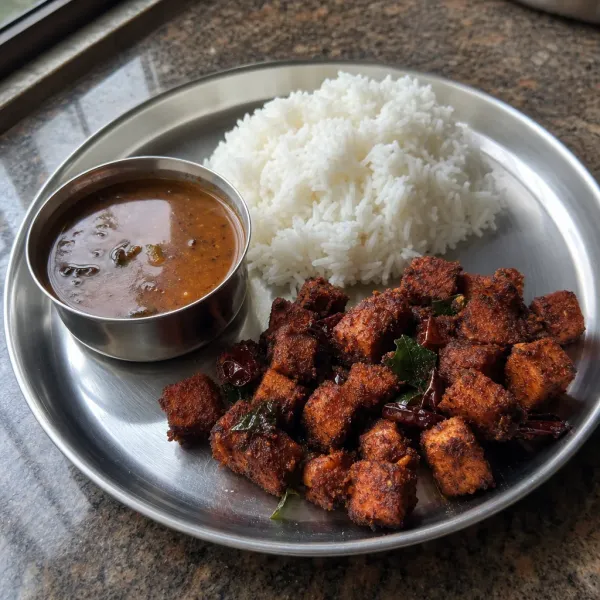
Senai Kizhangu Varuval
Traditional Tamil Iyer-style senai kizhangu varuval: elephant yam boiled, spice-coated and pan-fried in gingelly oil until deeply golden and dry.
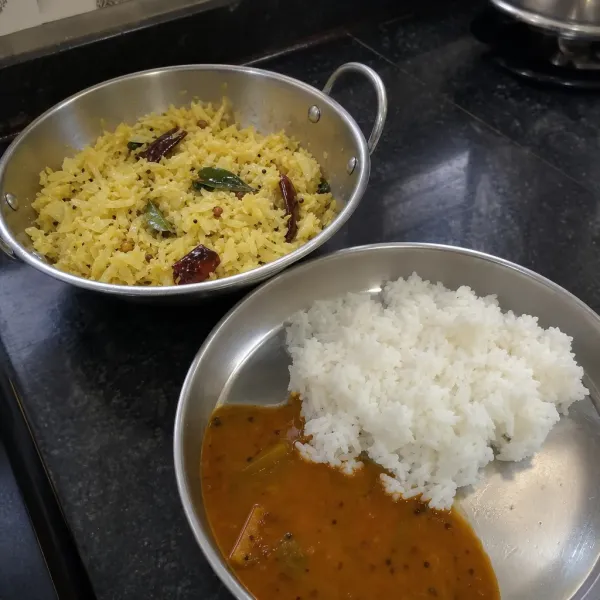
Cabbage Palya
Traditional Karnataka cabbage palya with mustard, curry leaves, toasted chana and urad dal. Dry, quick, and made without water. Everyday home recipe.
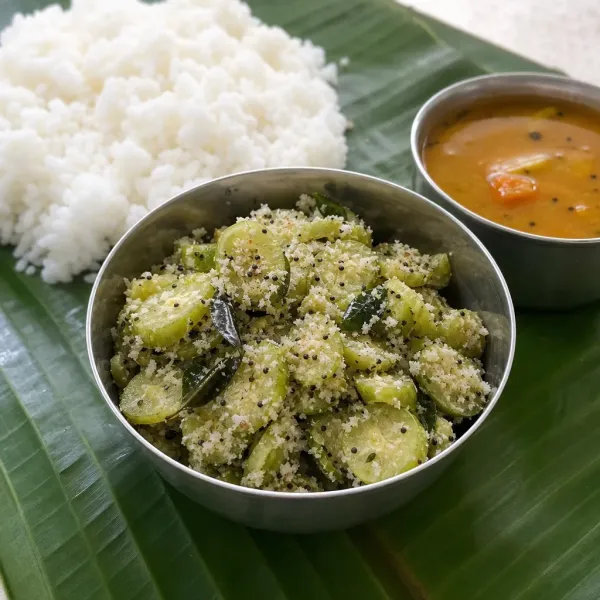
Kovakkai Poriyal
Traditional Tamil Brahmin kovakkai poriyal with gingelly oil, mustard-urad dal tempering, and fresh coconut. Dry, simple, made the right way.
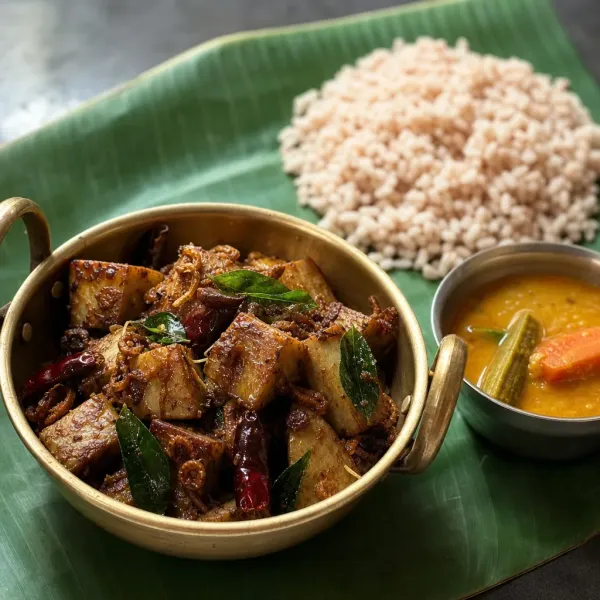
Chembu Mezhukkupuratti (Taro Root Stir-Fry)
Traditional Kerala chembu mezhukkupuratti: taro root stir-fried in coconut oil with shallots, dried red chillies and curry leaves. Step-by-step house…
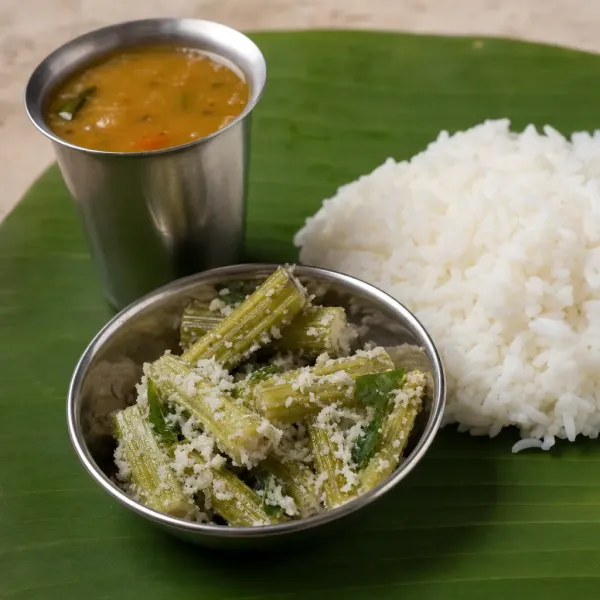
Murungakkai Poriyal
Authentic Tamil Iyer murungakkai poriyal: drumstick cooked dry with gingelly oil, shallots, and fresh coconut. Traditional household method, step by…
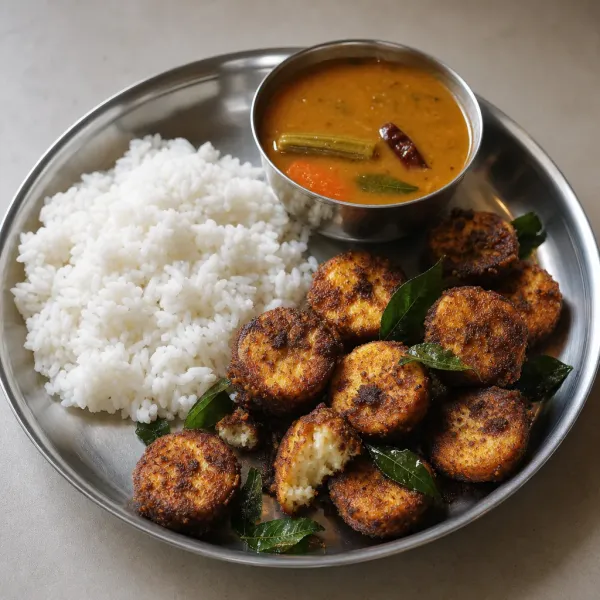
Vazhakkai Varuval
Traditional Tamil Nadu vazhakkai varuval: raw banana rounds fried in gingelly oil with turmeric, red chilli, and coriander until deeply golden.