

Murungakkai Poriyal Recipe
Malayalam മുരിങ്ങക്കായ് പൊരിയൽTamil முருங்கைக்காய் பொரியல்Kannada ಮುರುಂಗಕ್ಕಾಯಿ ಪಲ್ಯTelugu మునగకాయ పొరియల్
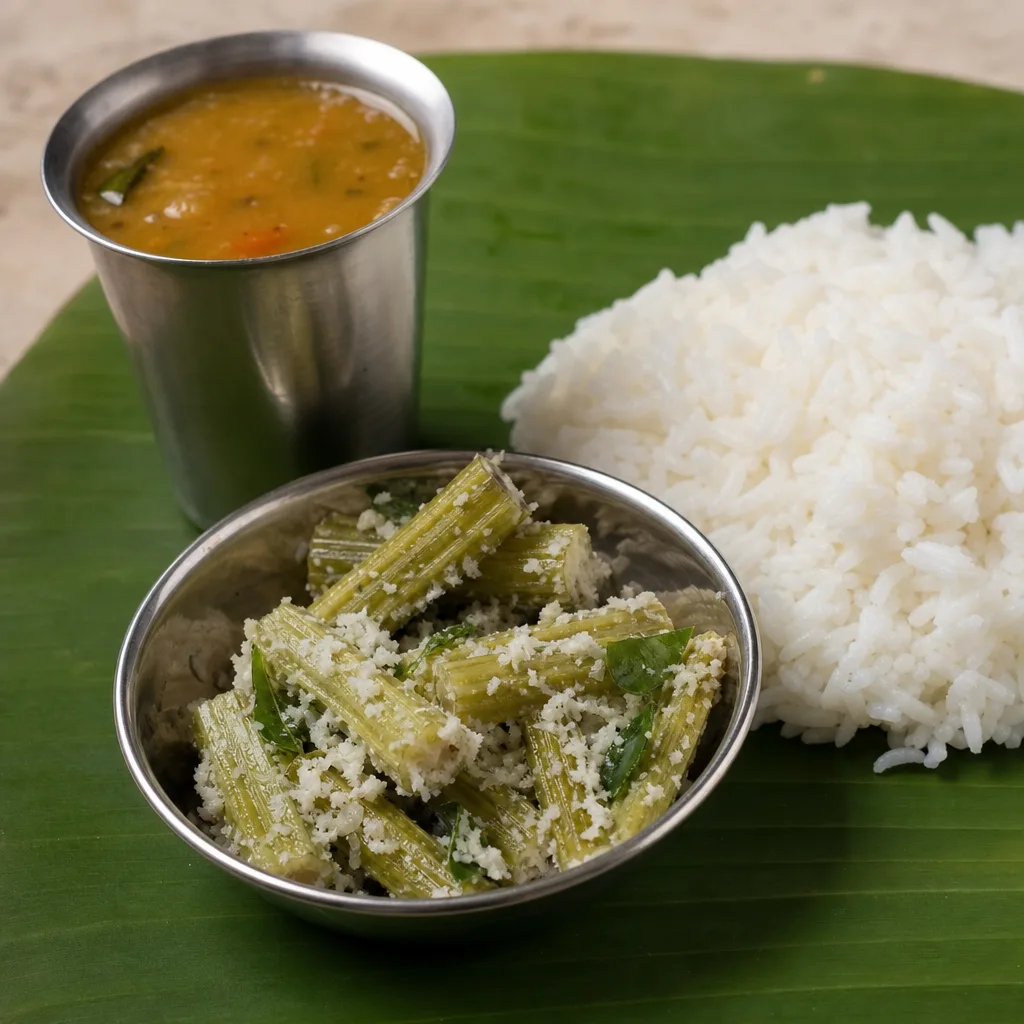
- Prep15 min
- Cook25 min
- Serves4
- DifficultyEasy
- DietVegan
Murungakkai poriyal is a dry side dish from Tamil Brahmin (Iyer) kitchens, made with drumstick pieces cooked until just tender and finished with freshly grated coconut. It belongs to the everyday lunch spread, not to special occasions. The drumstick is eaten by drawing the flesh and seeds out between the teeth, so the pieces are cut long enough to hold.
In most Iyer homes this is cooked in gingelly oil, which gives it a faint nuttiness that coconut oil would not. The coconut is added at the very end, off the heat, so it stays pale and moist rather than frying into the dish. Some households add a small amount of moong dal to the tempering, which softens alongside the drumstick and gives a little body. Others keep it plain.
It is almost always part of a rice meal, served alongside sambar and a kootu or rasam. The poriyal itself is quite lightly spiced — the sambar carries the heat and sourness for the whole plate.
Ingredients (serves 4)
Main
Method
Prepare the drumstick
Cut the drumstick into 7 cm lengths. Run a peeler or the back of a knife lightly along the ridges if the outer skin looks tough and stringy, but do not peel it completely — a little skin holds the piece together during cooking. Rinse the pieces and set aside.
Heat the oil and temper
Set a wide, heavy pan over medium heat and add the gingelly oil. When the oil is hot but not smoking, add the mustard seeds and keep the lid nearby. Once they splutter and pop, add the urad dal. Stir for about 30 seconds until the dal turns a pale gold — do not let it go brown or it will taste bitter.
Add chillies, curry leaves and shallots
Add the broken dried red chillies and curry leaves. They will crackle immediately. Add the sliced shallots straight away and stir. Cook on medium heat for 3 to 4 minutes, stirring occasionally, until the shallots are soft and translucent but not coloured.
Add turmeric and drumstick
Sprinkle in the turmeric and stir for a few seconds to coat the shallots. Add the drumstick pieces and turn them to coat in the oil and turmeric. Add salt now so it begins to draw moisture from the drumstick.
Cook the drumstick through
Add 3 tablespoons of water, stir once, and cover the pan with a lid. Cook on medium-low heat for 12 to 15 minutes. Lift the lid and check at 12 minutes: the drumstick is ready when a piece bends slightly without snapping and the flesh inside looks pale green and yields when you press it. If the pan looks dry before the drumstick is tender, add another tablespoon of water and cover again.
Dry off any remaining water
Once the drumstick is cooked through, remove the lid and raise the heat to medium for a minute or two to drive off any water left in the pan. The poriyal should be dry, not wet. Stir gently so the pieces do not break apart.
Finish with coconut
Take the pan off the heat. Scatter the freshly grated coconut over the drumstick and fold it in gently. The coconut should stay pale and moist. Taste for salt and serve immediately.
How to serve
Steamed matta rice or par-boiled rice, sambar, and rasam as part of a full South Indian rice meal. A papad alongside is common.
Served with: Steamed matta rice or par-boiled rice, sambar, and rasam as part of a full South Indian rice meal. A papad alongside is common.
Cook's tips
Choosing drumsticks
Pick drumsticks that are firm and dark green with no yellowing. Very thin drumsticks cook quickly but have little flesh to scrape; very thick old ones can be woody and fibrous. Medium-thickness, about the width of a thumb, is ideal.
Why gingelly oil matters
Coconut oil will work but gives a different flavour profile. Toasted sesame oil (the dark Chinese variety) is not a substitute — it is far too strong. Use cold-pressed gingelly oil, which is pale gold and mild.
Adding the coconut off the heat
If you add the coconut while the pan is still on the flame, it fries and turns slightly brown and dry. Adding it off the heat keeps it soft and fresh-tasting, which is the point of a poriyal coconut finish.
The water quantity
Three tablespoons is usually enough for drumstick that is not too old. If your drumstick is very fibrous and thick, you may need up to 5 tablespoons total, added in small amounts. Never add so much that the vegetables boil rather than steam.
Regional variations
Mappila households in Kerala cook drumstick with grated coconut and small onions in a similar dry style; Chettinad kitchens sometimes add fennel and a pinch of kalpasi to the tempering.
Glossary
- Murungakkai முருங்கைக்காய்
- Drumstick, the long ridged pod of the Moringa oleifera tree.
- Poriyal பொரியல்
- A dry Tamil Nadu vegetable side dish, tempered and finished with grated coconut.
- Gingelly oil நல்லெண்ணெய்
- Cold-pressed sesame oil used in Tamil Nadu cooking; pale gold and mildly nutty, not to be confused with toasted sesame oil.
- Urad dal உளுத்தம் பருப்பு
- Split black gram, used whole in tempering to add a mild nuttiness and slight crunch.
- Chinna vengayam சின்ன வெங்காயம்
- Small shallots used in Tamil cooking; sweeter and more pungent than large onions.
Two things decide whether this poriyal works: the drumstick must be cooked all the way through before the lid comes off, and the coconut must go in off the heat. Rush the first and you get hard, fibrous pieces; add the coconut too soon and it fries dry instead of staying fresh.
More Dry Vegetable Sides recipes
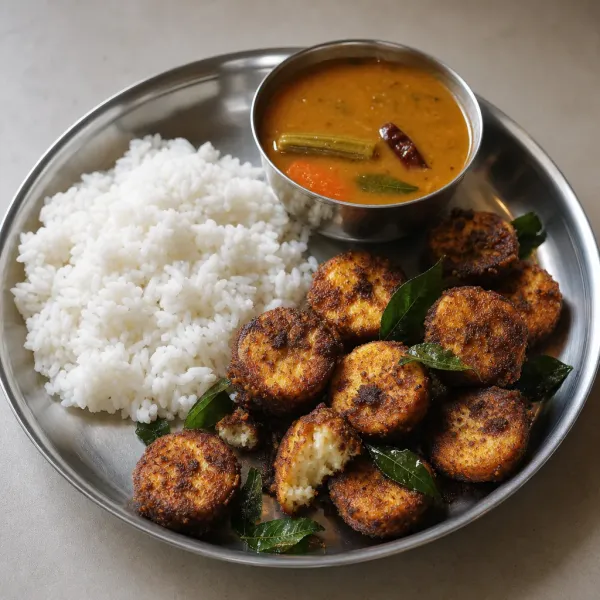
Vazhakkai Varuval
Traditional Tamil Nadu vazhakkai varuval: raw banana rounds fried in gingelly oil with turmeric, red chilli, and coriander until deeply golden.
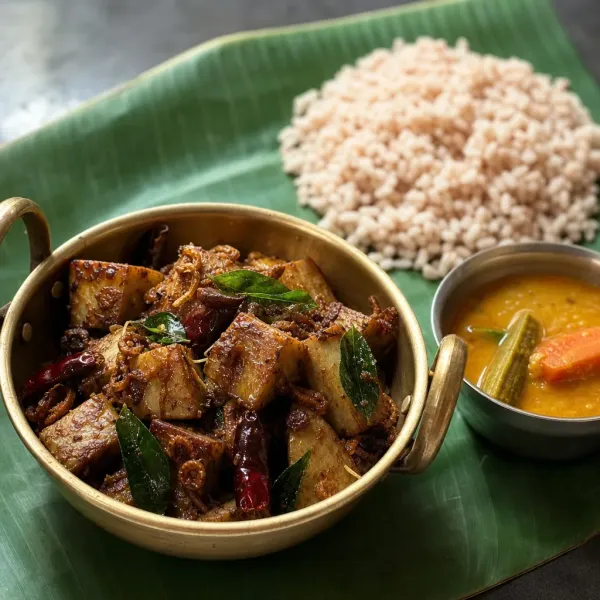
Chembu Mezhukkupuratti (Taro Root Stir-Fry)
Traditional Kerala chembu mezhukkupuratti: taro root stir-fried in coconut oil with shallots, dried red chillies and curry leaves. Step-by-step house…
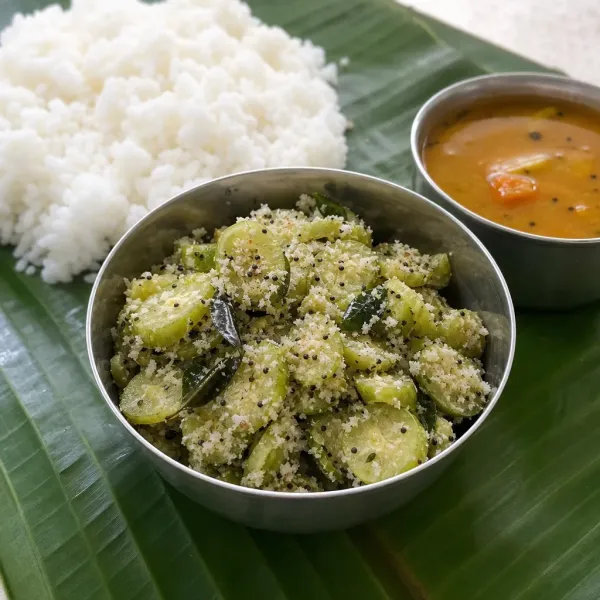
Kovakkai Poriyal
Traditional Tamil Brahmin kovakkai poriyal with gingelly oil, mustard-urad dal tempering, and fresh coconut. Dry, simple, made the right way.
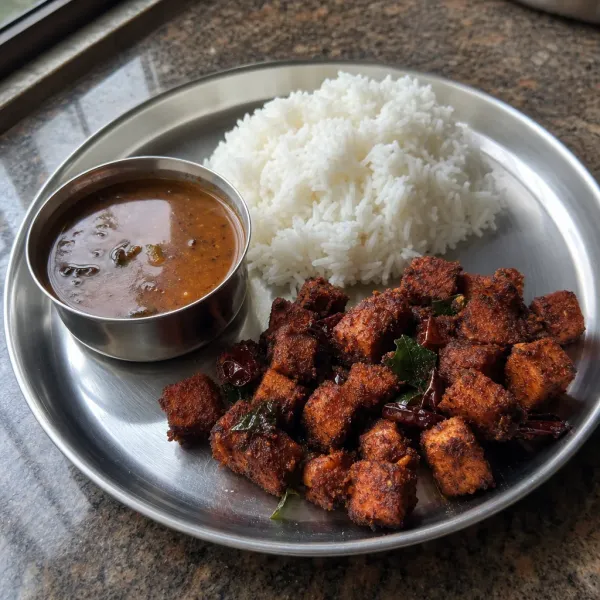
Senai Kizhangu Varuval
Traditional Tamil Iyer-style senai kizhangu varuval: elephant yam boiled, spice-coated and pan-fried in gingelly oil until deeply golden and dry.
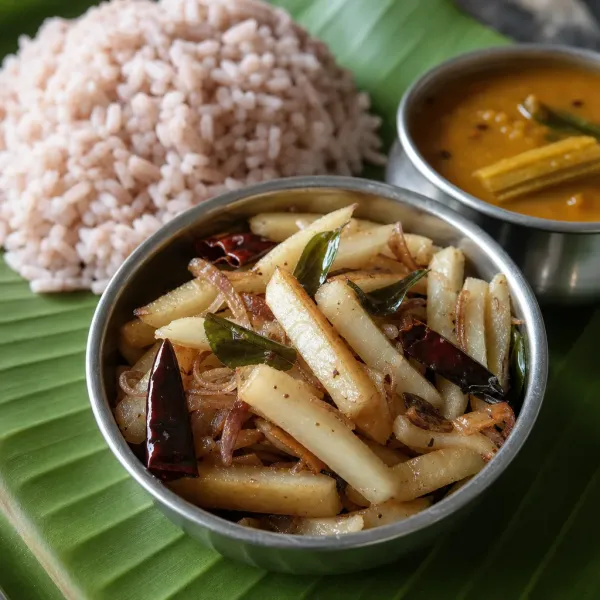
Yam Mezhukkupuratti (Chena Mezhukkupuratti)
Traditional Kerala chena mezhukkupuratti: elephant foot yam stir-fried in coconut oil with shallots, dried red chillies and curry leaves. Everyday Tr…
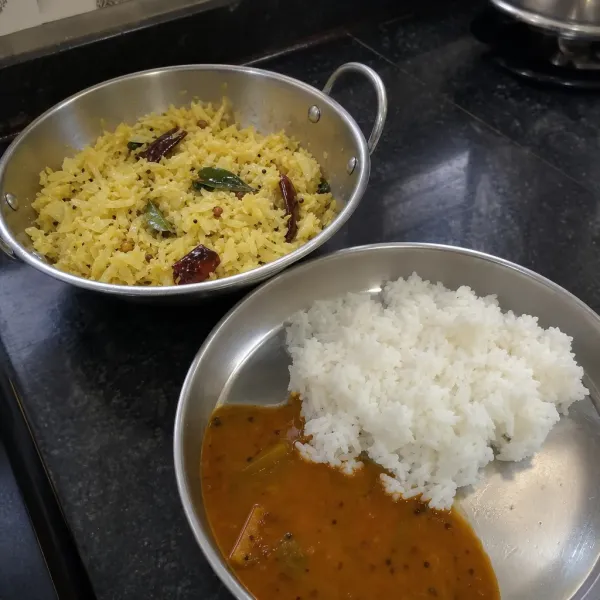
Cabbage Palya
Traditional Karnataka cabbage palya with mustard, curry leaves, toasted chana and urad dal. Dry, quick, and made without water. Everyday home recipe.