

Vazhakkai Varuval Recipe
Malayalam വാഴക്കായ് വറുവൽTamil வாழைக்காய் வறுவல்Kannada ಬಾಳೆಕಾಯಿ ವರುವಲ್Telugu అరటికాయ వరువల్
- Prep15 min
- Cook25 min
- Serves4
- DifficultyEasy
- DietVegan
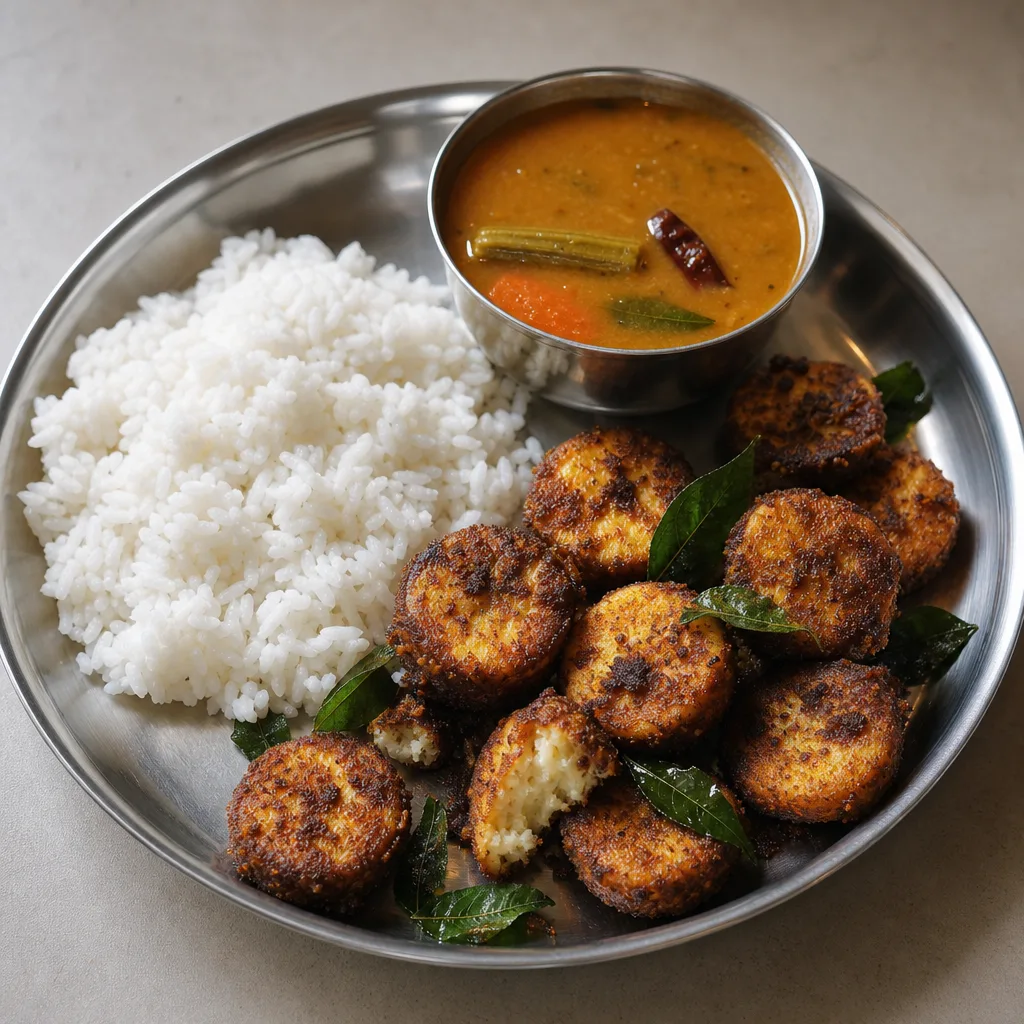
Vazhakkai varuval is a dry side dish from Tamil Nadu, made by slicing raw green banana and frying the rounds in gingelly oil with a spice coating until the edges turn deep gold and the interior becomes floury and tender. It belongs firmly in the category of poriyal-adjacent sides that appear on a weekday lunch plate alongside sambar and a kootu.
In Iyer households this dish is kept simple: turmeric, red chilli powder, coriander powder, and salt rubbed directly onto the slices, then fried patiently in gingelly oil until the spices dry onto the surface. Some cooks add a small amount of rice flour to the coating so the crust sets crisper; others leave it out. Both are genuine. What is not in dispute is the oil: gingelly oil gives the dish its characteristic slightly nutty undertone, and coconut oil, while common in Kerala versions, is not used here.
The banana must be fully raw, the skin still completely green with no hint of yellow. Even a half-ripe banana will turn sweet and soft in the pan and will not hold its shape. Slice it too thin and the rounds break; too thick and the centre stays starchy and raw. Seven to eight millimetres is the right thickness for this dish.
Ingredients (serves 4)
For the varuval
Method
Peel and slice the banana
Fill a wide bowl with cold water. Cut off both ends of each banana, then score the skin along its length and peel it away. The sap is sticky and will stain, so work quickly. Slice the peeled banana into rounds 7 to 8 mm thick and drop them straight into the water as you go. This stops them oxidising and turning grey.
Drain and dry the slices
Drain the slices in a colander and spread them on a clean kitchen cloth. Pat them dry thoroughly. Any surface moisture will cause the spices to slide off and the oil to spit.
Coat with the spice mixture
Put the dry banana slices in a wide bowl. Add the turmeric, red chilli powder, coriander powder, rice flour, and salt. Toss well so every slice is evenly coated on both sides. Do not add water; the slight surface moisture left on the slices is enough to make the spices cling.
Heat the oil
Pour the gingelly oil into a wide, heavy iron kadai or thick-bottomed pan and set it over medium heat. When the oil is hot but not smoking, drop in the curry leaves and let them crackle for about ten seconds.
Lay in the banana slices
Place the spice-coated rounds in a single layer in the pan. Do not crowd them; fry in two batches if your pan is small. Pressing them together means they steam rather than fry and will not colour properly.
Fry on the first side
Fry on medium heat without touching the slices for 5 to 6 minutes. You are waiting for the underside to turn a deep reddish-brown at the edges and for the spice coating to dry and set. Resist the urge to move them early; if they stick slightly to the pan, they are not ready to turn.
Turn and fry the second side
Flip each slice carefully with a flat spatula. The cooked side should be a deep rust-gold with the spices set firmly. Fry the second side for another 4 to 5 minutes on the same medium heat until it matches the first side. The banana is ready when it is cooked through at the centre and the edges are slightly crisped.
Finish and serve
Lift the slices out and serve immediately. They lose their crispness as they cool, so bring them straight to the table.
How to serve
Hot steamed rice, sambar, and a simple kootu or moru kuzhambu. On a full South Indian lunch plate it sits as the dry side.
Served with: Hot steamed rice, sambar, and a simple kootu or moru kuzhambu. On a full South Indian lunch plate it sits as the dry side.
Cook's tips
Choosing the banana
The banana must be hard all the way through when you press it. If the flesh gives even slightly, it is beginning to ripen and will turn mushy and sweet in the pan. Nendran and the smaller local raw varieties both work; avoid any variety with yellow on the skin.
Why the slices stick and break
If the slices are not fully dry before coating, the spice paste becomes wet and the rounds stick to each other and to the pan. Dry them well and the coating stays put.
Oil substitution
Gingelly oil is traditional here and gives the dish its flavour. Coconut oil changes the character of the dish toward the Kerala style. Refined sunflower oil produces a flat result. If gingelly oil is unavailable, cold-pressed groundnut oil is the closest acceptable substitute.
Rice flour
The teaspoon of rice flour is a common household addition, not mandatory. Without it the coating is softer; with it the crust is more defined. Do not increase the quantity or the coating will taste of raw flour.
Frying in batches
A crowded pan drops the oil temperature and the slices absorb more oil rather than frying. Two uncrowded batches produce a far better result than one crowded one.
Regional variations
Chettinad households use more whole spices and sometimes fennel; Kerala homes make a similar fry called vazhakka mezhukkupuratti using coconut oil and fewer dry spices; Andhra households add curry leaves and red chilli only with turmeric.
Glossary
- Vazhakkai வாழைக்காய்
- Raw unripe banana, used as a vegetable in South Indian cooking.
- Varuval வறுவல்
- Tamil term for a dry fry; the technique of frying in oil with spices until the coating is dry and the surface is coloured.
- Gingelly oil நல்லெண்ணெய்
- Cold-pressed untoasted sesame oil used as the cooking fat in Tamil Nadu for kuzhambu, pickles, and dry fries.
- Kadai கடாய்
- A deep, wide, round-bottomed cooking vessel, typically iron or carbon steel, used for frying.
Two things decide whether this dish works: the banana must be completely raw and hard, and the slices must be given enough undisturbed time in the pan on each side. Rush either of those and you get soft, pale rounds with the spices fallen off. Get them right and the coating sets into a firm, fragrant crust with a floury interior.
More Dry Vegetable Sides recipes
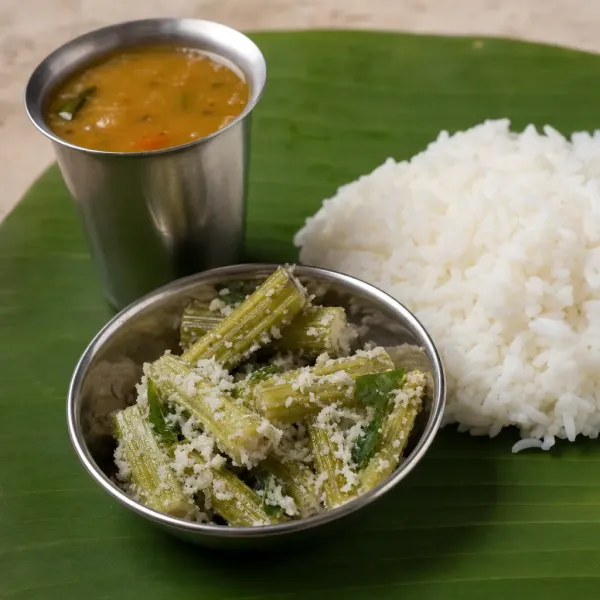
Murungakkai Poriyal
Authentic Tamil Iyer murungakkai poriyal: drumstick cooked dry with gingelly oil, shallots, and fresh coconut. Traditional household method, step by…
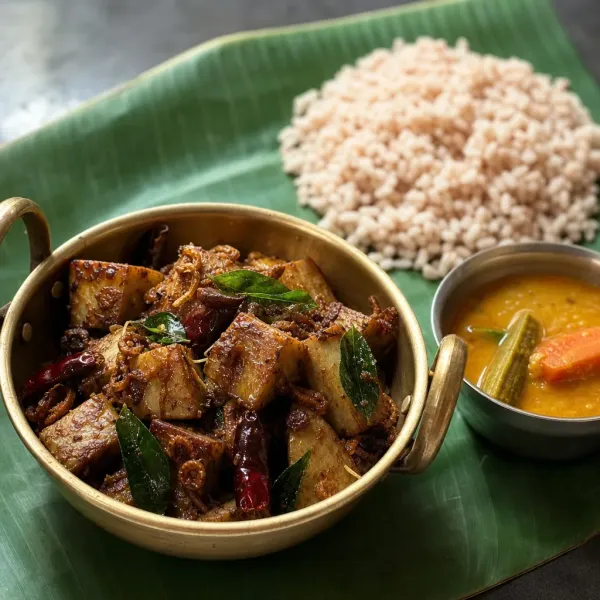
Chembu Mezhukkupuratti (Taro Root Stir-Fry)
Traditional Kerala chembu mezhukkupuratti: taro root stir-fried in coconut oil with shallots, dried red chillies and curry leaves. Step-by-step house…
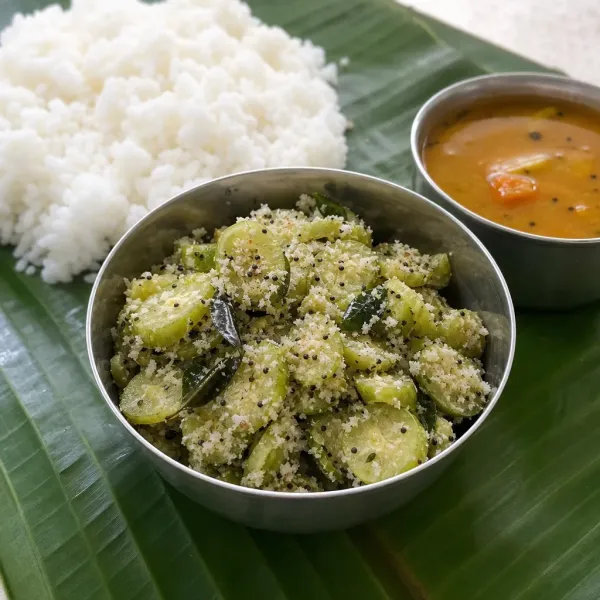
Kovakkai Poriyal
Traditional Tamil Brahmin kovakkai poriyal with gingelly oil, mustard-urad dal tempering, and fresh coconut. Dry, simple, made the right way.
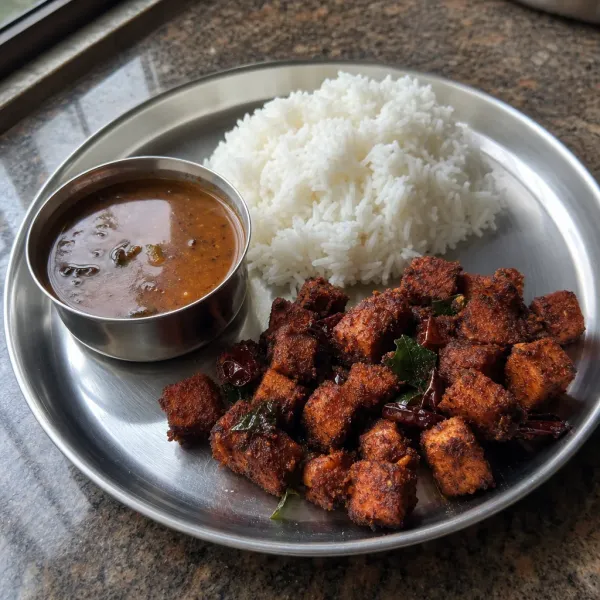
Senai Kizhangu Varuval
Traditional Tamil Iyer-style senai kizhangu varuval: elephant yam boiled, spice-coated and pan-fried in gingelly oil until deeply golden and dry.
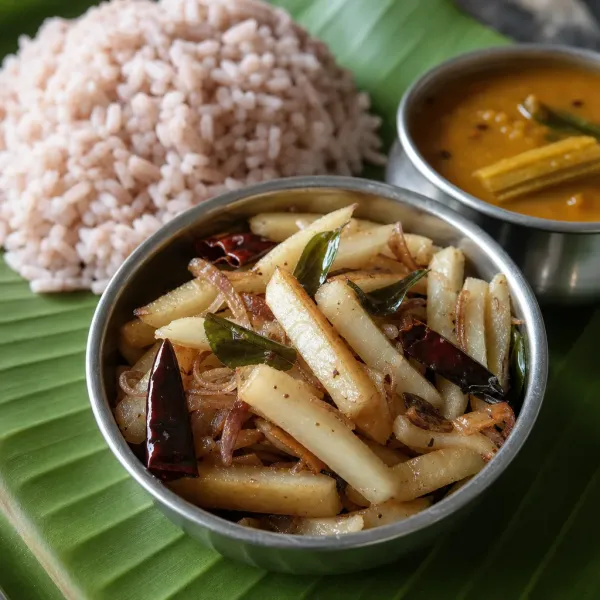
Yam Mezhukkupuratti (Chena Mezhukkupuratti)
Traditional Kerala chena mezhukkupuratti: elephant foot yam stir-fried in coconut oil with shallots, dried red chillies and curry leaves. Everyday Tr…
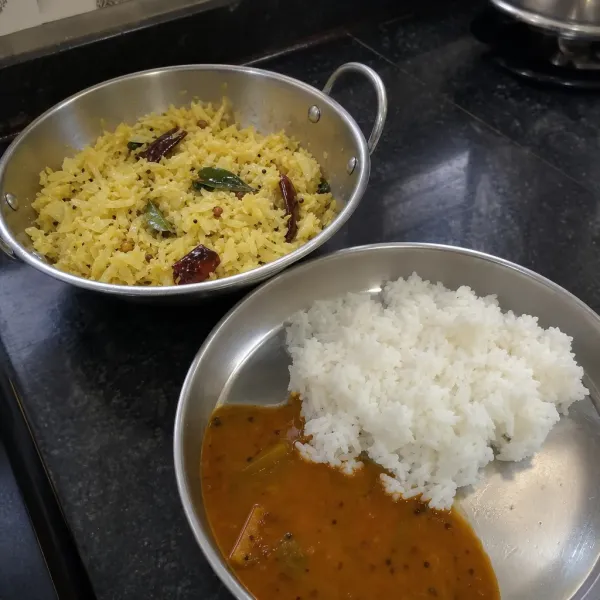
Cabbage Palya
Traditional Karnataka cabbage palya with mustard, curry leaves, toasted chana and urad dal. Dry, quick, and made without water. Everyday home recipe.