

Chemmeen Achar Recipe
Malayalam ചെമ്മീൻ അച്ചാർTamil இறால் ஊறுகாய்Kannada ಸೀಗಡಿ ಉಪ್ಪಿನಕಾಯಿTelugu రొయ్యల నిల్వ పచ్చడి
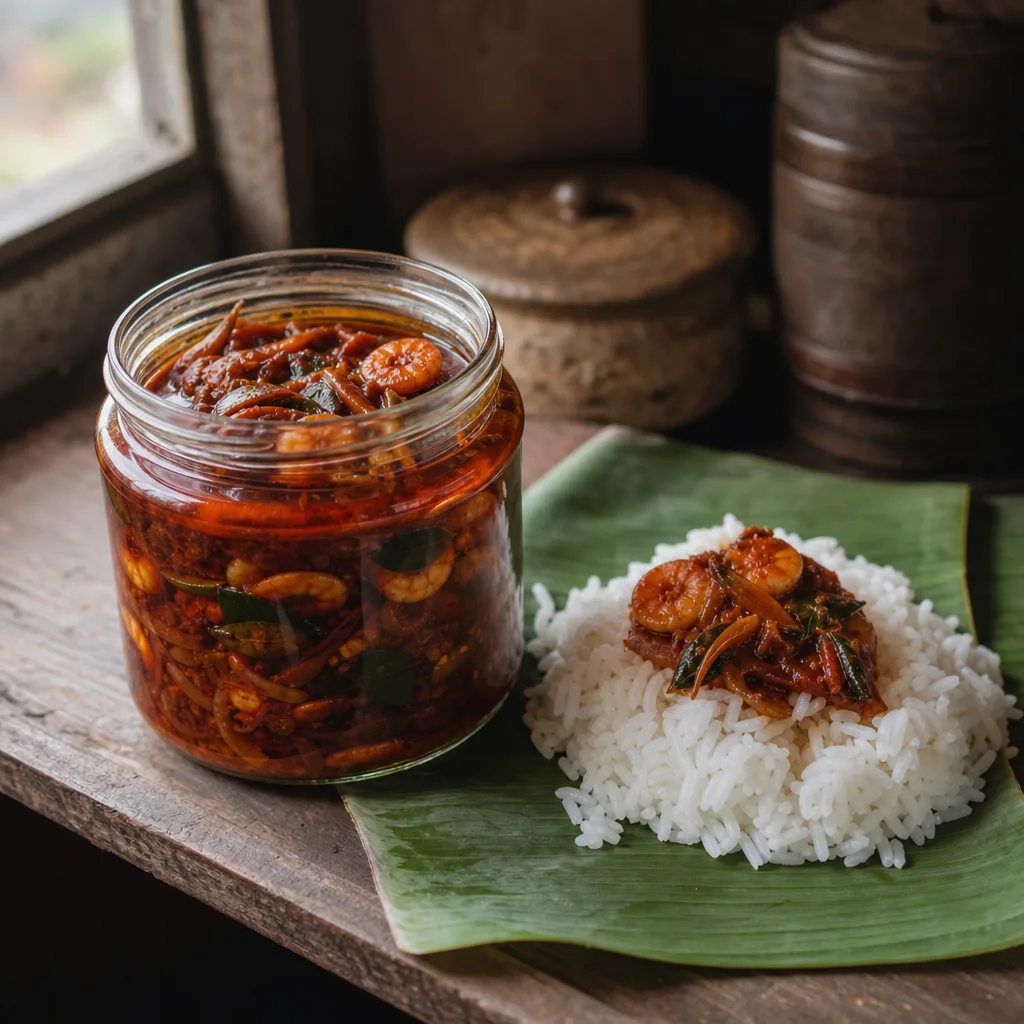
- Prep30 min
- Cook45 min
- Serves8 to 10 as a condiment
- DifficultyMedium
- DietNon-vegetarian
This is a pickle made to last, not a quick side dish. It keeps for two to three weeks at room temperature in a cool kitchen, longer in the refrigerator, and the flavour deepens considerably after the second day. The prawns are fried dry before they go into the pickle base, so they hold their texture rather than turning soft.
In Mappila households along the Malabar coast, this is made in quantity when prawns are cheap and plentiful, usually during the season's first good catch. It sits in a glass or ceramic jar on the kitchen shelf and comes out at every meal — a spoonful alongside rice and fish curry, or with kanji on a quiet morning.
Households differ mainly on the balance of heat and sour. Some cooks use only vinegar for the acid; others add a small piece of kudampuli to the oil along with the vinegar, which gives a slightly different, rounder sourness. The quantity of Kashmiri chilli keeps the colour deep red without making the pickle unbearably hot; a portion of the heat comes from the green chillies and the black pepper.
Ingredients (serves 8 to 10 as a condiment)
For the prawns
For the pickle base
Method
Marinate the prawns
Combine the cleaned, thoroughly dried prawns with 1 tsp Kashmiri chilli powder, ½ tsp turmeric, and salt. Mix well with your hands so every prawn is coated. Set aside for 15 minutes. The prawns must be dry before frying or they will steam in the pan and stay pale.
Fry the prawns until firm
Heat 4 tbsp coconut oil in a wide heavy pan over medium-high heat. When the oil is hot, add the prawns in a single layer — do not crowd them. Fry for 2 to 3 minutes per side until they are cooked through, lightly browned at the edges, and firm. They will shrink noticeably. Remove with a slotted spoon and spread on a plate to cool. Do not cover them; trapped steam makes them soft.
Prepare the spice powders
In a small bowl, mix together 2 tsp Kashmiri chilli powder, 1 tsp coriander powder, ½ tsp black pepper powder, ¼ tsp fenugreek powder, and ¼ tsp turmeric with 2 tbsp of the vinegar to form a loose paste. Mixing the dry spices into liquid first prevents them from scorching in the oil.
Temper mustard and curry leaves
In the same pan, heat 5 tbsp coconut oil over medium heat. Add the mustard seeds and wait for them to splutter completely. Add the curry leaves — stand back, they spit. Let them crisp for 20 seconds.
Cook the aromatics
Add the sliced shallots and fry over medium heat, stirring often, until they are soft and beginning to turn golden at the edges, about 8 minutes. Add the garlic, ginger, and green chillies. Continue cooking for another 4 to 5 minutes until the raw smell of garlic is completely gone and the mixture is fragrant.
Add the spice paste
Reduce the heat to low. Add the vinegar-spice paste to the pan and stir continuously for 2 to 3 minutes. The paste will darken slightly and the oil will begin to separate at the edges of the mixture. This cooking is important — undercooked spice paste gives the pickle a raw, harsh taste.
Add the remaining vinegar
Pour in the remaining vinegar (about 4 tbsp) and stir through. Taste the base for salt and sourness at this point — it should be noticeably tart and well-salted, because the prawns will absorb some of both. Adjust with salt or a little more vinegar.
Fold in the fried prawns
Add the fried prawns to the pan and stir gently so every piece is coated in the masala. Cook together over low heat for 3 to 4 minutes, just long enough for the prawns to absorb the flavours. Do not cook longer or the prawns will tighten and turn rubbery.
Cool completely before jarring
Take the pan off the heat and allow the pickle to cool to room temperature — this takes about 45 minutes. Do not transfer it to the jar while warm. Residual heat in a sealed jar creates condensation, which shortens the shelf life and can cause spoilage.
Jar and rest
Spoon the cooled pickle into a clean, dry glass or ceramic jar. Press it down gently so the oil rises and covers the surface. Seal the jar and leave it at room temperature for at least one full day before eating. The flavour on day two is noticeably rounder than on day one.
How to serve
Plain white rice and fish curry; also alongside kanji (rice gruel) for a simple meal. A small spoonful is enough per serving.
Served with: Plain white rice and fish curry; also alongside kanji (rice gruel) for a simple meal. A small spoonful is enough per serving.
Cook's tips
Dryness is everything
Any moisture left on the prawns before frying, or in the jar when you seal it, will shorten the shelf life dramatically. Pat the prawns dry with a clean cloth, not paper towels, which leave fibres.
Fenugreek: use sparingly
¼ tsp is the ceiling for fenugreek in a pickle this size. More than that and the bitterness takes over. If you are unsure of your fenugreek powder's freshness, start with ⅛ tsp.
Storage
Keeps 2 to 3 weeks at room temperature in a cool kitchen if the jar is dry and the oil covers the surface. Refrigerate in hot weather; bring to room temperature before serving. Always use a dry spoon.
Vinegar choice
White vinegar gives a clean, sharp sourness. Some Mappila cooks use coconut vinegar (toddy vinegar), which is gentler and slightly fruity. If you use coconut vinegar, you may need a little more of it.
Prawn size
Medium prawns work best — small ones overcook in seconds and disappear into the masala; very large ones stay chewy. Aim for prawns that are roughly 4 to 5 cm after shelling.
Regional variations
Nasrani (Syrian Christian) version uses kudampuli as the souring agent with little or no vinegar; coastal Hindu households in Travancore make a simpler version with fewer whole spices and sometimes add dried red chillies to the oil tempering only.
Glossary
- Chemmeen ചെമ്മീൻ
- Prawn or shrimp in Malayalam.
- Achar അച്ചാർ
- Pickle preserved in oil and vinegar or oil and souring agent.
- Chuvannulli ചുവന്നുള്ളി
- Small red shallots; the standard allium in Kerala cooking.
- Uluva ഉലുവ
- Fenugreek seeds or powder; used in small quantities in pickles and curries.
- Kudampuli കുടംപുളി
- Dried Malabar tamarind (Garcinia cambogia); the souring agent in many Kerala fish dishes. Not used in this version.
- Kanji കഞ്ഞി
- Rice gruel; a light meal eaten with pickles and small side dishes.
Two things decide this pickle. The first is frying the prawns completely dry so they stay firm in the jar rather than turning mushy. The second is cooking the spice paste long enough in the oil that the raw edge is gone before the prawns go in — that step is what separates a pickle that tastes cooked from one that tastes sharp and unfinished.
More Chutneys, Podis & Pickles recipes
Ellu Podi (Sesame Seed Powder)
Traditional Tamil Iyer ellu podi made with white sesame, dried red chillies, urad dal and asafoetida. Dry-roasted and coarsely ground. Ready in 20 mi…
Gongura Pachadi
Traditional Rayalaseema gongura pachadi made with red sorrel leaves, Guntur chillies and gingelly oil. Coarse-ground, fiery and sharply sour.
Paruppu Thogayal
Traditional Tamil Iyer paruppu thogayal: roasted toor dal, dried red chilli, fresh coconut and asafoetida ground coarse. Mixed into hot rice with gin…
Homemade Rasam Podi (Iyer-Style Tamil Brahmin Rasam Powder)
Traditional Tamil Brahmin rasam powder, dry-roasted spice by spice. Peppery, fragrant, made fresh at home. Keeps 4 to 6 weeks.
Tomato Pachadi
Traditional Kerala tomato pachadi with fresh coconut paste and curd. A Travancore sadya side dish ready in 30 minutes. Step-by-step recipe.
Poondu Podi
Traditional Kongunad poondu podi recipe: garlic, urad dal, chana dal and dry red chillies roasted in gingelly oil and ground to a coarse spice powder…