

Ellu Podi (Sesame Seed Powder) Recipe
Malayalam എള്ള് പൊടിTamil எள்ளு பொடிKannada ಎಳ್ಳು ಪುಡಿTelugu నువ్వుల పొడి
- Prep5 min
- Cook15 min
- ServesMakes enough for 8 to 10 servings as a s
- DifficultyEasy
- DietVegan
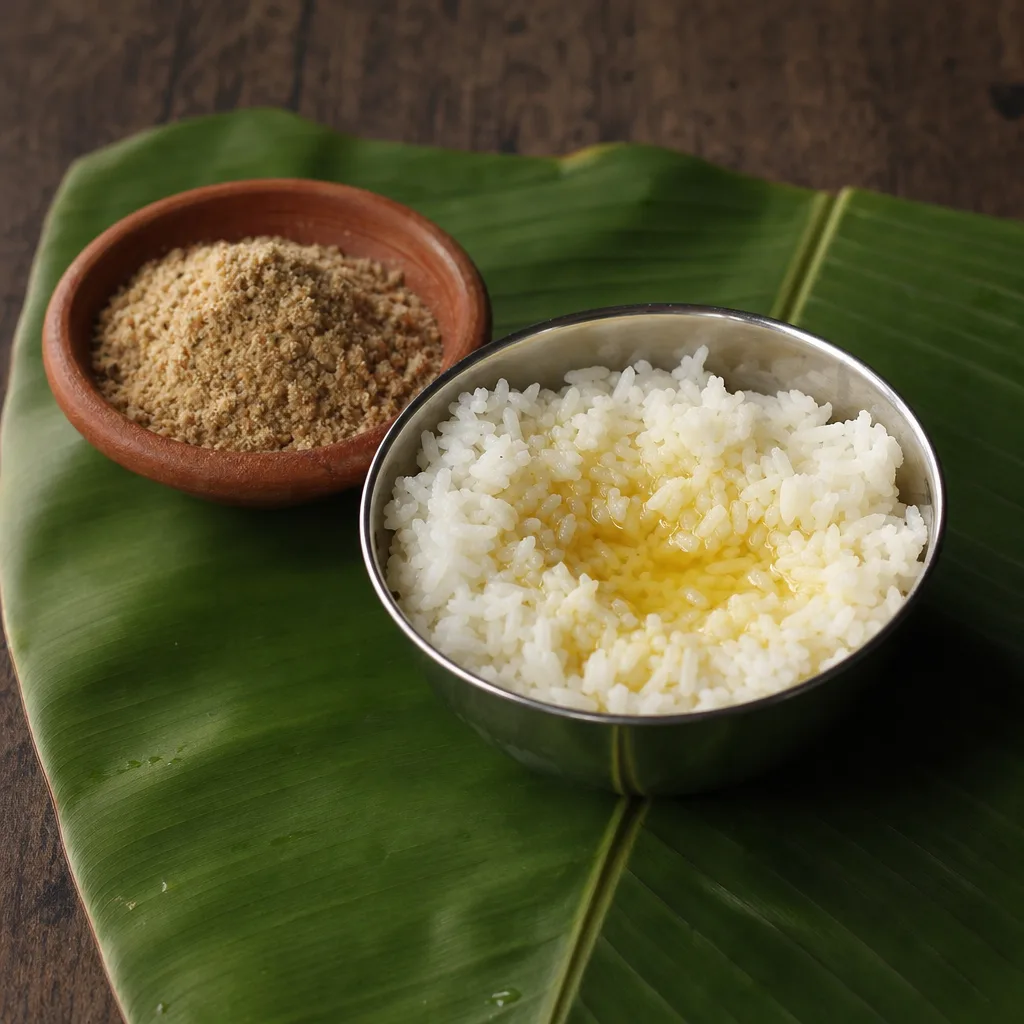
Ellu podi is one of the simplest podis a Tamil Brahmin kitchen keeps on hand. It is made from white sesame seeds dry-roasted until they begin to pop, ground with dried red chillies, a little urad dal, asafoetida, and salt. The result is a pale, nutty, slightly coarse powder with a clean heat that does not linger too long.
In Iyer households it is eaten most often with plain rice and gingelly oil, sometimes as a quick meal when no curry has been made. A spoonful mixed into hot rice with a generous pour of gingelly oil is complete in itself. It also goes alongside idli or dosa, though sambar or chutney would be the first choice on most mornings.
Every household has its own ratio. Some families roast the sesame darker for a more bitter, toasty note; others keep it light and sweet. The chilli count is adjusted for the household's tolerance. What does not change is the fat: gingelly oil is the only oil that belongs here, both in the making and when the podi is served.
Ingredients (serves Makes enough for 8 to 10 servings as a s)
For the podi
Method
Heat the pan
Place a heavy iron or thick-bottomed kadai over medium-low heat. Let it warm for a minute or two. There should be no oil in the pan at any point during roasting.
Roast the urad dal
Add the urad dal to the dry pan. Stir continuously over medium-low heat for about 2 minutes until the dal turns a light golden colour and smells nutty. Do not let it go dark brown or it will make the podi bitter. Tip it onto a plate to cool.
Roast the dried chillies
In the same pan, add the dried red chillies. Stir over low heat for 1 to 2 minutes until they darken slightly and smell fragrant. They should puff a little. Remove immediately and add them to the plate with the dal — they burn quickly if left in the pan.
Roast the sesame seeds
Add the sesame seeds to the pan over medium-low heat. Stir constantly. Within 3 to 4 minutes the seeds will begin to pop and jump in the pan and the colour will shift from white to a very pale cream. This is the moment to stop — do not wait for them to brown. Tip them onto the plate immediately. They carry heat and will continue to cook for a moment off the flame.
Add the asafoetida
If you are using the solid block of asafoetida, drop a small piece into the still-warm pan for 20 to 30 seconds, pressing it lightly against the surface. It will soften and become slightly fragrant. Remove and add to the plate. If using powder, you can add it directly to the blender later.
Cool everything completely
Spread everything on the plate and leave it to come fully to room temperature. Grinding warm sesame releases its oil and the podi will clump and turn paste-like rather than staying dry and free-flowing. This step matters.
Grind to a coarse powder
Transfer the cooled sesame, dal, chillies, and asafoetida to a dry mixer jar. Pulse in short bursts rather than running the motor continuously. You want a slightly coarse, sandy powder, not a fine flour. Stop and check after every few pulses. Over-grinding releases the sesame oil and the podi will go from powder to paste.
Add salt and check
Add salt and pulse once or twice to mix. Tip the podi into a bowl and taste. Adjust salt if needed. The texture should be dry and grainy, holding its shape when you press a pinch between your fingers.
Store
Transfer to a clean, completely dry glass or steel jar with a tight lid. At room temperature it keeps well for 2 to 3 weeks. Refrigerated it will last a month. Always use a dry spoon.
How to serve
Hot rice with gingelly oil stirred in; also served alongside idli or plain dosa.
Served with: Hot rice with gingelly oil stirred in; also served alongside idli or plain dosa.
Cook's tips
Why the seeds jump out of the pan
Sesame seeds are light and pop energetically. Use a pan with slightly raised sides, not a flat tawa, and keep the heat medium-low throughout. High heat causes uneven roasting and the seeds on the bottom scorch before the ones on top are done.
Grinding in small batches
A small mixer jar gives better control than a large one. If the jar is too big for the quantity, the blades will not catch the seeds properly and you will end up with whole seeds in the finished podi.
The urad dal question
Some households omit the urad dal entirely and make a pure sesame-and-chilli podi. The dal adds a mild savouriness and helps the texture stay dry. Either way is genuinely made at home.
Solid asafoetida versus powder
The solid block (raw asafoetida) has a more rounded flavour. Compounded asafoetida powder often contains wheat flour as a filler and can make the podi slightly sticky. Use whichever your household keeps.
Moisture is the enemy
Any moisture in the jar, on the spoon, or in the podi itself will cause it to clump and spoil quickly. Make sure everything — the roasted ingredients, the jar, and the spoon — is bone dry.
Regional variations
Karnataka Brahmin version uses black sesame (kaadu ellu) and dried coconut; Mudaliar and Vellalar households often add garlic; Andhra households make a similar nuvvula podi with a higher chilli ratio.
Glossary
- Ellu எள்ளு
- Sesame seeds; in Tamil Nadu almost always white sesame (vella ellu) in cooking podis.
- Podi பொடி
- Dry powder condiment, typically mixed with oil or ghee and eaten with rice or idli.
- Perungayam பெருங்காயம்
- Asafoetida; used in small quantities as a digestive and flavouring in Tamil Brahmin cooking.
- Vella ellu வெள்ள எள்ளு
- White sesame seeds, as distinct from black sesame (kaadu ellu).
- Gingelly oil நல்லெண்ணெய்
- Cold-pressed sesame oil used as the primary cooking and finishing fat in Tamil Nadu.
Two things decide whether this podi works. First, the sesame must come off the heat the moment it starts to pop — a shade too dark and the bitterness overtakes the nuttiness. Second, everything must be completely cold before it goes into the blender, or the oil in the seeds will turn your powder into a paste before you can stop it.
More Chutneys, Podis & Pickles recipes
Gongura Pachadi
Traditional Rayalaseema gongura pachadi made with red sorrel leaves, Guntur chillies and gingelly oil. Coarse-ground, fiery and sharply sour.
Chemmeen Achar
Traditional Kerala Mappila prawn pickle with coconut oil, shallots, vinegar and whole spices. Keeps for weeks. Step-by-step household recipe.
Paruppu Thogayal
Traditional Tamil Iyer paruppu thogayal: roasted toor dal, dried red chilli, fresh coconut and asafoetida ground coarse. Mixed into hot rice with gin…
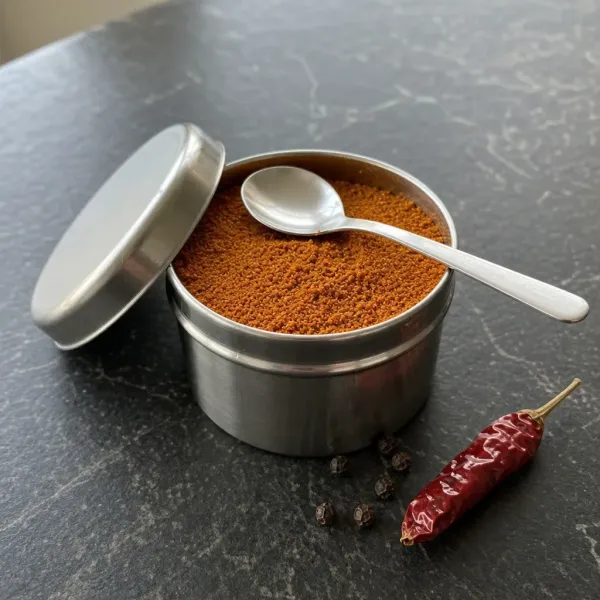
Homemade Rasam Podi (Iyer-Style Tamil Brahmin Rasam Powder)
Traditional Tamil Brahmin rasam powder, dry-roasted spice by spice. Peppery, fragrant, made fresh at home. Keeps 4 to 6 weeks.
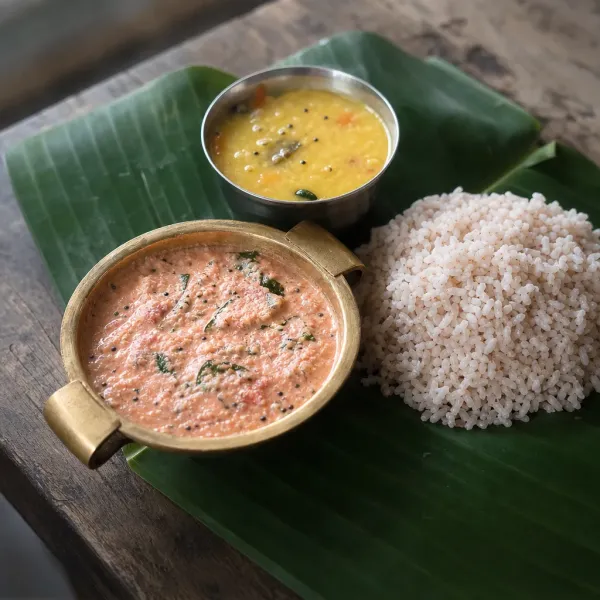
Tomato Pachadi
Traditional Kerala tomato pachadi with fresh coconut paste and curd. A Travancore sadya side dish ready in 30 minutes. Step-by-step recipe.
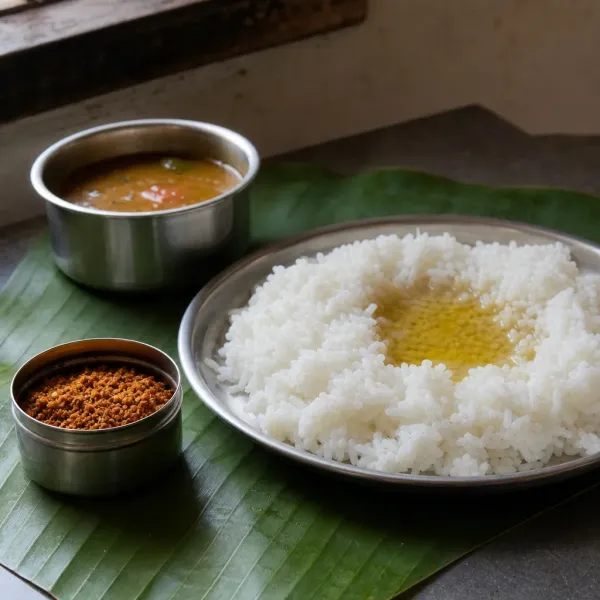
Poondu Podi
Traditional Kongunad poondu podi recipe: garlic, urad dal, chana dal and dry red chillies roasted in gingelly oil and ground to a coarse spice powder…