

Poondu Podi Recipe
Malayalam വെളുത്തുള്ളി പൊടിTamil பூண்டு பொடிKannada ಬೆಳ್ಳುಳ್ಳಿ ಪುಡಿTelugu వెల్లుల్లి పొడి
- Prep10 min
- Cook20 min
- ServesMakes enough for 8 to 10 servings of ric
- DifficultyEasy
- DietVegan
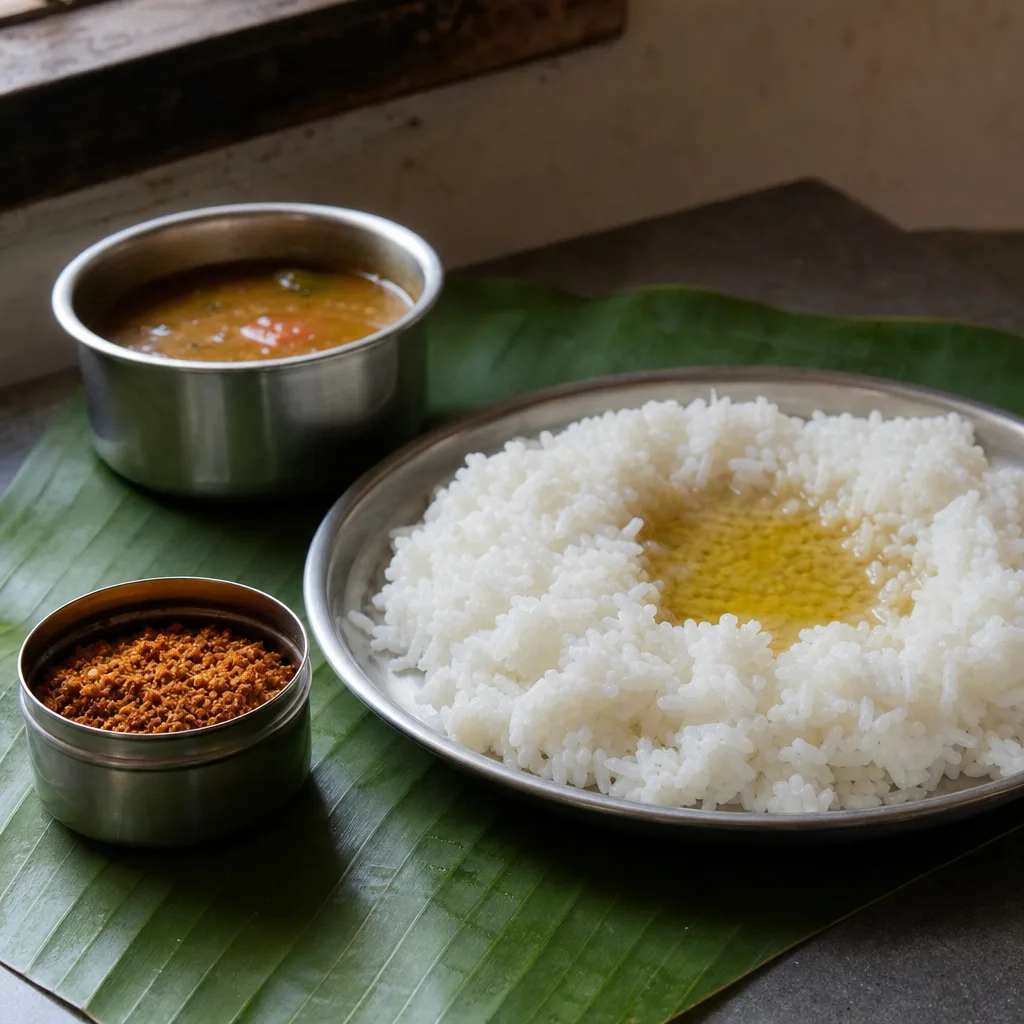
Poondu podi is a dry spice powder made to eat with plain cooked rice and gingelly oil. It sits in a small steel box in most Kongunad kitchens and comes out at lunch alongside sambar and kuzhambu. When there is nothing else ready, a spoonful of this stirred into hot rice with a generous pour of oil is a complete meal by itself.
The method is simple but the roasting must be done with patience. Each ingredient goes into the pan at a different moment because each one burns at a different speed. Garlic takes the longest and must be coaxed to a deep amber without scorching. Rush it and the whole batch tastes bitter.
Households differ mainly on the chilli. Some use only Gundu chilli for colour and mild heat; others mix in a few Kanthari or long dry chillies for a sharper bite. The garlic quantity also shifts: some cooks use a full head, others half. What stays constant is the gingelly oil used to roast everything and the rough, slightly coarse grind that gives the podi its texture.
Ingredients (serves Makes enough for 8 to 10 servings of ric)
For the podi
Method
Warm the pan
Set a heavy iron or thick-bottomed kadai over medium-low heat. Let it warm for a minute before anything goes in. A cold pan causes uneven roasting and the dals will colour on the outside before they are cooked through.
Roast the chana dal
Add the chana dal to the dry pan with no oil. Stir continuously on medium-low heat for 3 to 4 minutes until it turns a pale golden and smells nutty. Tip it out onto a plate and spread it to cool.
Roast the urad dal
Add the urad dal to the same dry pan. Stir on medium-low heat for 2 to 3 minutes. It will go from white to a warm cream colour and smell like roasted lentils. Tip it out onto the same plate.
Roast the dry chillies
Still in the dry pan, add the red chillies. Toss them on low heat for about 1 to 2 minutes, just until they puff slightly and the skin turns a shade darker. Do not let them blacken. Tip them out immediately onto the plate.
Roast the garlic
Add the gingelly oil to the pan and let it warm on medium-low heat. Add the peeled garlic cloves. Stir and turn them every 30 seconds. They need 6 to 8 minutes to reach a deep amber-gold colour all over with no raw white centre remaining. This is the step most people rush; undercooked garlic makes the podi taste sharp and raw. When the cloves feel firm but slightly yielding and are evenly bronzed, remove them.
Fry the curry leaves
In the residual oil in the pan, add the dried curry leaves. They will crackle and spit for about 30 seconds. Stir until they are completely crisp and the crackling stops. Tip them out. If there is moisture in the leaves they will not crisp and the podi will go damp in storage.
Add the asafoetida
Turn off the heat. Add the pinch of asafoetida directly to the warm pan and stir it around for 10 seconds in the residual heat. This blooms it without burning. Scrape it out with the curry leaves.
Cool completely
Spread everything on the plate in a single layer and leave to cool to room temperature. Grinding warm ingredients creates steam inside the jar of the mixer and the podi will clump. Give it at least 15 minutes.
Grind to a coarse powder
Transfer everything to a dry mixer jar. Add salt. Grind in short pulses of 3 to 4 seconds each, checking between pulses. The podi should be slightly coarse, not a fine flour. You want a texture where you can still see small flecks of chilli skin and dal. Over-grinding makes it pasty when mixed with oil.
Taste and store
Taste a pinch and adjust salt. Tip the podi into a clean, completely dry steel or glass jar. It keeps at room temperature for 2 to 3 weeks and in the refrigerator for up to 2 months. Make sure the spoon you use to serve it is always dry.
How to serve
Hot cooked rice (preferably sona masoori or raw rice) mixed with gingelly oil; also eaten alongside sambar or a simple kuzhambu. Some households eat it as a side powder with idli or dosa at breakfast.
Served with: Hot cooked rice (preferably sona masoori or raw rice) mixed with gingelly oil; also eaten alongside sambar or a simple kuzhambu. Some households eat it as a side powder with idli or dosa at breakfast.
Cook's tips
Garlic size matters
Large garlic cloves may not roast evenly. If yours are large, halve them lengthwise so the inside cooks through before the outside burns.
Keeping the jar dry
Any moisture in the jar or the serving spoon will cause the podi to clump and go stale within days. Store in a steel dabba with a tight lid.
Chilli choice
Gundu chilli gives colour and moderate heat. If you want more heat, replace two or three Gundu chillies with dry Kanthari or long dry chillies. Do not use Kashmiri chilli; it changes the flavour profile.
Shortcut note
Some households dry-roast everything together in one go. It is faster but the garlic rarely reaches the right colour before the dals start to over-roast. Roasting separately takes ten extra minutes and makes a noticeably better podi.
Regional variations
Thanjavur Brahmin households make a garlic-free podi; some Chettinad cooks add curry leaves and a small measure of pepper; Karnataka households sometimes add copra.
Glossary
- Poondu பூண்டு
- Garlic in Tamil.
- Podi பொடி
- Dry powder or spice mix in Tamil; used as a condiment with rice or tiffin.
- Nallennai நல்லெண்ணெய்
- Gingelly oil (sesame oil) in Tamil; the traditional cooking and finishing fat in Tamil Nadu.
- Perungayam பெருங்காயம்
- Asafoetida in Tamil; used in small quantities for digestive warmth and depth.
- Gundu chilli குண்டு மிளகாய்
- A round, moderately hot dry red chilli used widely in Tamil Nadu for colour and mild heat.
- Urad dal உளுந்து
- Split or whole black gram; gives body and a characteristic nutty flavour when roasted.
Two things decide this podi: the garlic must be roasted all the way to deep amber with no raw centre, and everything must be completely cool and dry before grinding. Get those two right and the podi will be fragrant, balanced and long-lasting.
More Chutneys, Podis & Pickles recipes
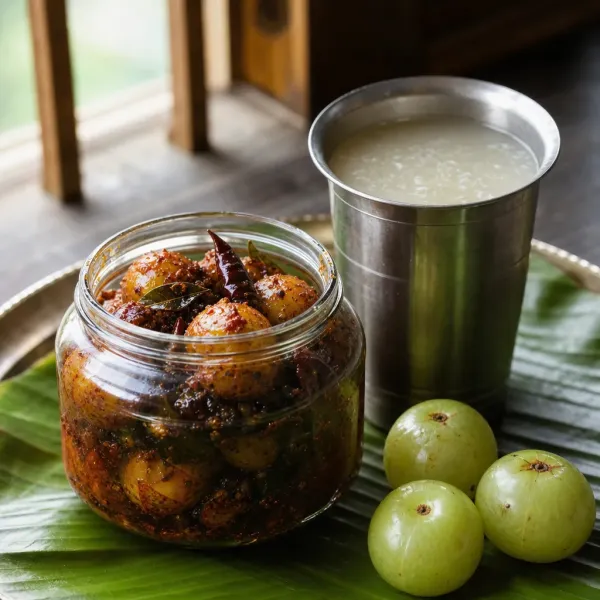
Nellikka Achar
Traditional Kerala gooseberry pickle made with coconut oil, curry leaves and whole spices. Keeps for weeks. A classic sadya condiment.
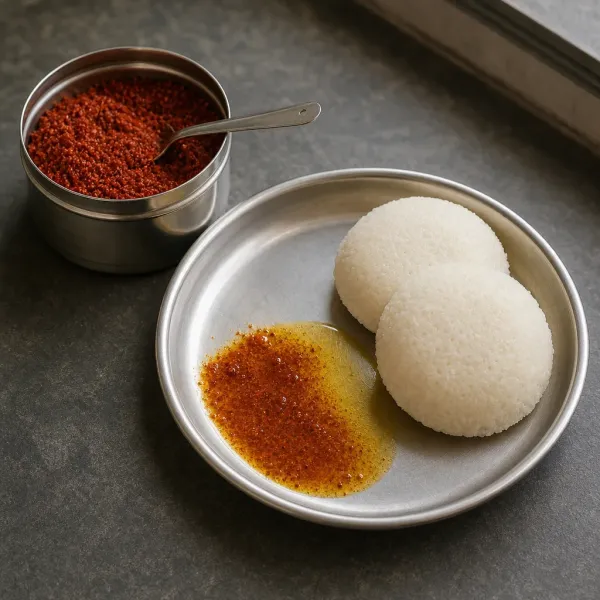
Idli Milagai Podi (Gunpowder)
Authentic Tamil Iyer milagai podi made with urad dal, chana dal, and dry red chillies. Coarse, nutty, properly hot. Traditional household recipe.
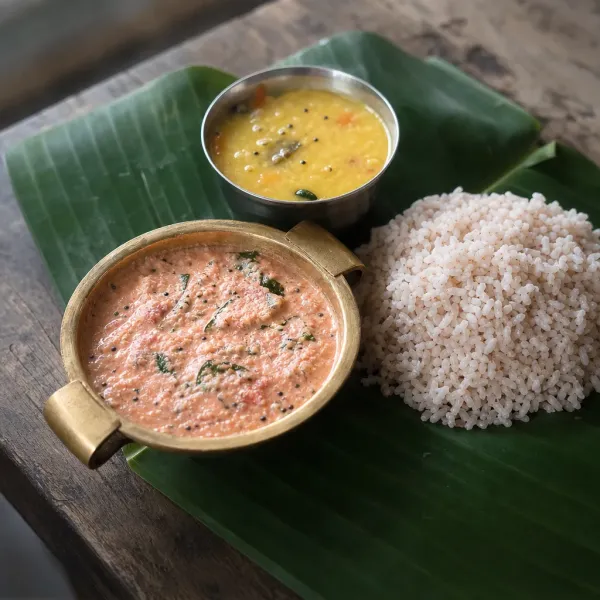
Tomato Pachadi
Traditional Kerala tomato pachadi with fresh coconut paste and curd. A Travancore sadya side dish ready in 30 minutes. Step-by-step recipe.
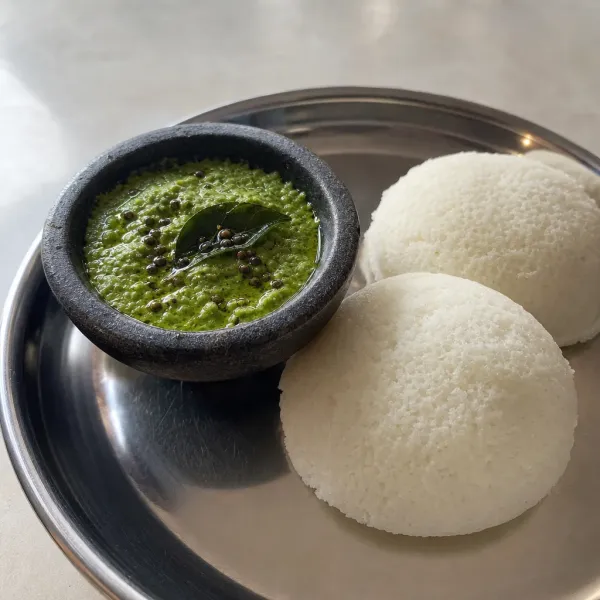
Kothamalli Chutney
Fresh coriander chutney from a Tamil Iyer kitchen: ground with coconut and tamarind, tempered in gingelly oil. Ready in 15 minutes. Bright green and…
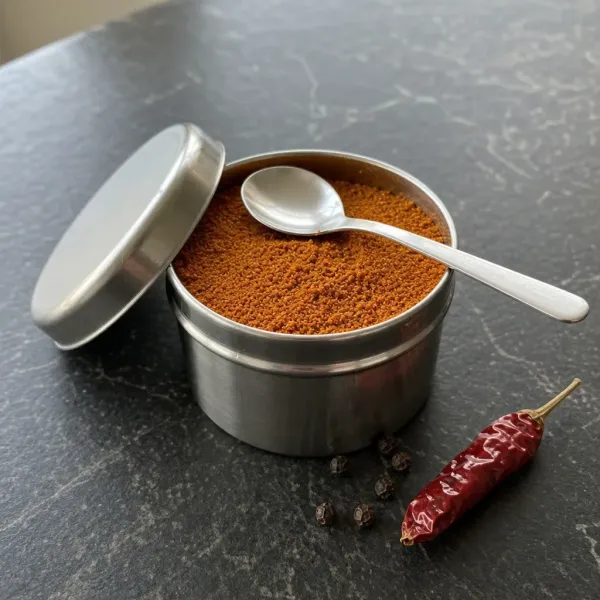
Homemade Rasam Podi (Iyer-Style Tamil Brahmin Rasam Powder)
Traditional Tamil Brahmin rasam powder, dry-roasted spice by spice. Peppery, fragrant, made fresh at home. Keeps 4 to 6 weeks.
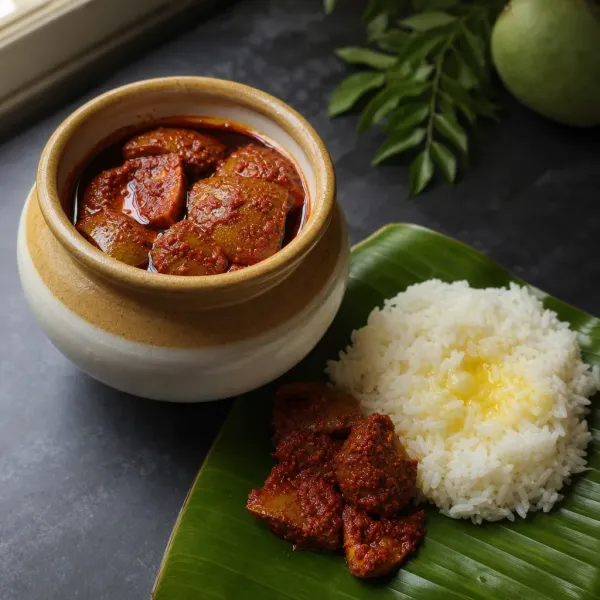
Avakkai
Authentic Andhra avakkai pickle with raw mango, Guntur chilli, mustard powder, and gingelly oil. Traditional household method, no cooking required.