

Kothamalli Chutney Recipe
Malayalam കൊത്തമല്ലി ചട്ണിTamil கொத்தமல்லி சட்னிKannada ಕೊತ್ತಂಬರಿ ಚಟ್ನಿTelugu కొత్తిమీర చట్నీ
- Prep10 min
- Cook5 min
- Serves4
- DifficultyEasy
- DietVegan
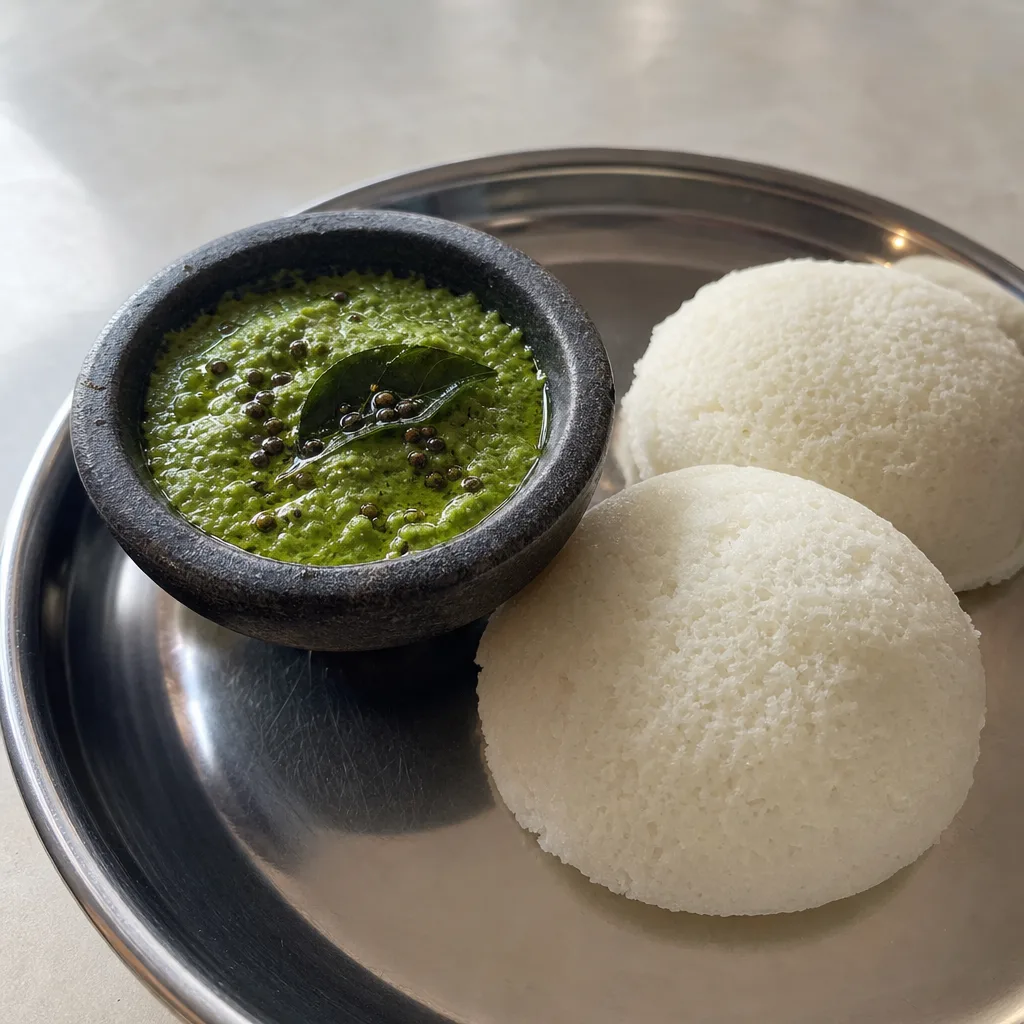
In a Tamil Iyer kitchen this chutney is ground fresh every morning, usually alongside a coconut chutney, and eaten with idli or dosa at breakfast. It is bright green, mildly sour from a small piece of tamarind, and cooled slightly by the coconut. The coriander is never cooked before grinding; heat would turn it army-green and flatten the fresh fragrance that makes the chutney worth making.
The tempering is done last, in gingelly oil, with mustard seeds and a sprig of curry leaves. In some households a single dried red chilli goes into the tempering for a faint smokiness; in others the heat comes entirely from the green chilli ground into the body of the chutney. Neither is wrong. What matters is that the tempering oil is poured over the chutney and stirred in just before serving, not left to sit.
Quantities in this recipe are for a household of four eating it as a breakfast condiment. It does not keep well beyond the day it is made. The colour dulls and the fragrance fades by evening, so grind only what you will use.
Ingredients (serves 4)
For grinding
For the tempering
Method
Prepare the tamarind
Break off a marble-sized piece of tamarind and soak it in 2 tbsp of warm water for 5 minutes. Work it with your fingers until it dissolves into a thick pulp. Discard any fibre or seeds. You need the pulp and the soaking water together.
Pick and wash the coriander
Pull the leaves and tender upper stems from the bunch. Discard the thick lower stalks, which can make the chutney bitter. Wash in two changes of water, then shake off as much water as you can. A wet bunch will make the chutney watery before you have even added grinding water.
Load the grinder
Put the green chillies into the grinder first, then the grated coconut, then the coriander. Add the tamarind pulp and its soaking water. Adding the harder items first gives the blades something to grip before the soft leaves go in.
Grind to a smooth paste
Grind on high speed, stopping once to scrape down the sides. Add water one tablespoon at a time, only as much as needed to keep the blades moving. The finished chutney should be thick enough to mound on a spoon, not run off it. Taste and add salt now, grind for a few more seconds, and taste again.
Transfer and check colour
Scrape the chutney into a small steel or stone bowl. It should be a vivid, grassy green. If it looks dull or yellowish, the coriander was either overripe or the grinder ran too long and generated heat. Nothing can fix that batch, but you know for next time.
Make the tempering
Heat the gingelly oil in a small tempering ladle or a tiny pan over medium-high heat. When the oil shimmers, add the mustard seeds. Keep the heat up; they should pop within 20 to 30 seconds. The moment they pop, add the curry leaves and the dried red chilli if using. Stand back slightly as the leaves will spit. The whole tempering takes under a minute.
Pour and serve immediately
Pour the hot tempering directly over the chutney in the bowl. Stir it in and serve at once. The heat of the oil carries the fragrance of the curry leaves into the chutney. If the chutney sits for more than a few minutes after tempering, the colour begins to dull.
How to serve
Idli, plain dosa, or rava dosa. In some households also served alongside pongal at breakfast.
Served with: Idli, plain dosa, or rava dosa. In some households also served alongside pongal at breakfast.
Cook's tips
Why the colour goes dull
Coriander oxidises quickly once ground. Grinding it with the tamarind (which is acidic) slows this slightly, but the chutney still loses its bright green within a few hours. Grind only what you will eat at that meal.
Roasted chana dal as a thickener
Some households add 1 tbsp of roasted chana dal (pottu kadalai) while grinding. This thickens the chutney without extra coconut and gives a slightly nuttier flavour. It is a common household shortcut but changes the texture noticeably.
Gingelly oil matters here
The tempering is done in gingelly oil, not coconut oil. Coconut oil is correct for Kerala chutneys; in a Tamil Iyer kitchen, gingelly oil is the everyday cooking fat for tempering. The flavour difference is real and readers will notice.
Adjusting the sourness
Tamarind quantity varies by the batch's sourness. Start with the marble-sized piece, taste after grinding, and add a little more tamarind pulp if you want a sharper edge. Some cooks use a small piece of raw mango instead of tamarind when it is in season.
Stone grinder versus mixer-grinder
A wet grinder gives a smoother, slightly cooler paste. A mixer-grinder works perfectly well and is what most households use today. Keep the grinding time short to avoid heating the blade and wilting the coriander.
Regional variations
Kerala household versions (across communities) often include shallots and more green chilli; Andhra versions rely on roasted chana dal as a thickener with less coconut; Udupi versions use fresh coconut and a jaggery balance.
Glossary
- Kothamalli கொத்தமல்லி
- Tamil word for fresh coriander (Coriandrum sativum), referring to the leaves and stems.
- Nallennai நல்லெண்ணெய்
- Gingelly oil, cold-pressed sesame oil; the everyday cooking and tempering fat in Tamil Nadu.
- Kadugu கடுகு
- Black mustard seeds, used whole in tempering; they should pop in hot oil before other tempering ingredients are added.
- Pottu kadalai பொட்டுக்கடலை
- Roasted split chana dal (husked Bengal gram), used as a thickener and mild flavour base in Tamil chutneys.
Two things decide this chutney: the freshness of the coriander, and the speed from grinding to table. Use a bunch that was bought that morning if you can, and serve it within minutes of the tempering hitting the bowl. Everything else, the exact chilli count, the tamarind level, the decision to add chana dal, is household preference.
More Chutneys, Podis & Pickles recipes
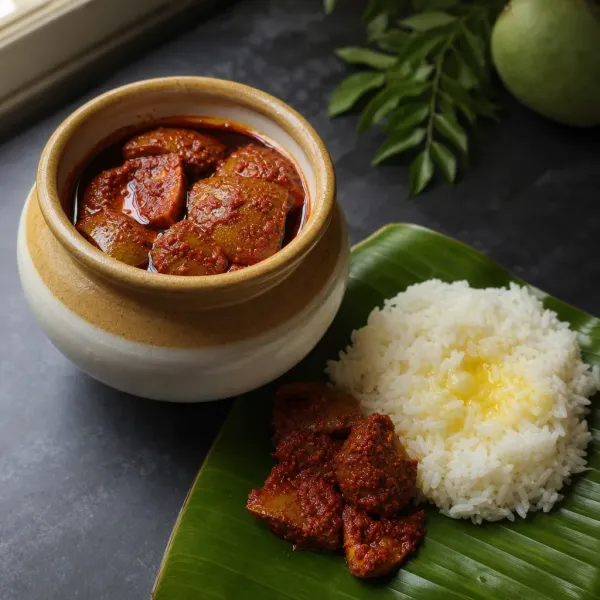
Avakkai
Authentic Andhra avakkai pickle with raw mango, Guntur chilli, mustard powder, and gingelly oil. Traditional household method, no cooking required.
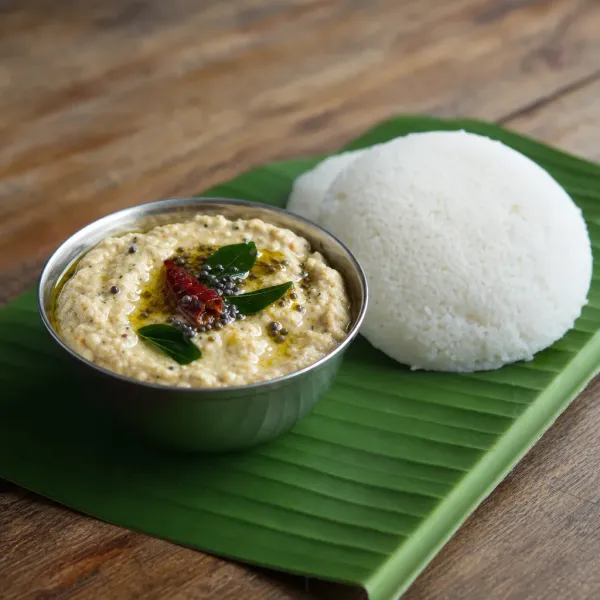
Andhra Peanut Chutney (Pallī Pachchadi)
Authentic Andhra pallī pachchadi: dry-roasted peanuts ground thick with Guntur chillies, tamarind and garlic, finished with a gingelly oil tempering.
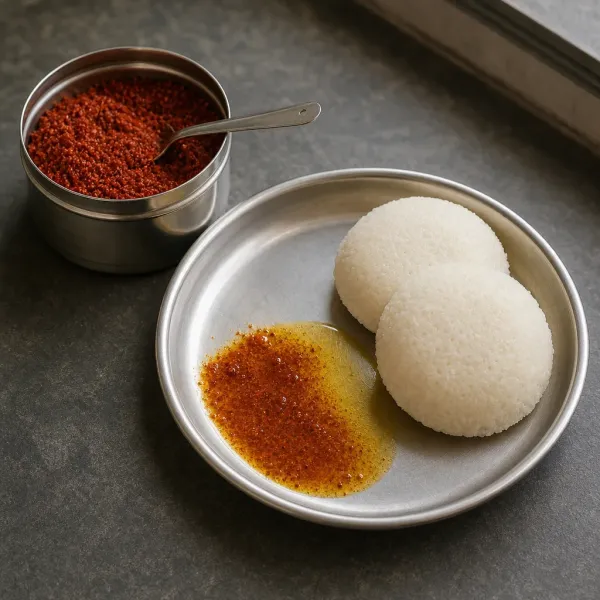
Idli Milagai Podi (Gunpowder)
Authentic Tamil Iyer milagai podi made with urad dal, chana dal, and dry red chillies. Coarse, nutty, properly hot. Traditional household recipe.
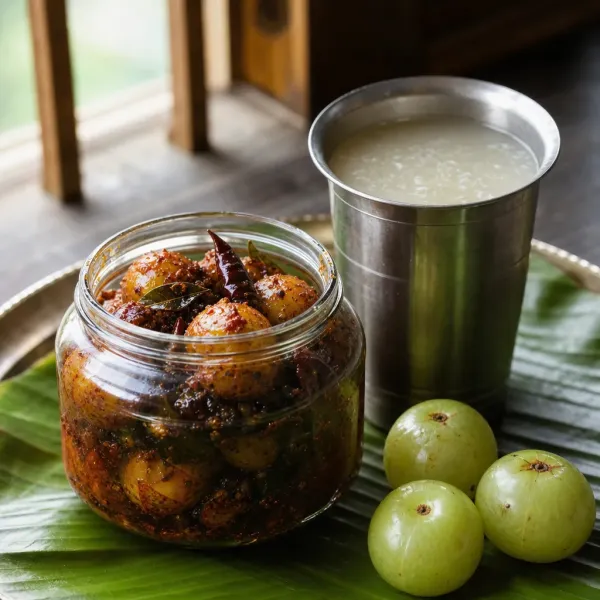
Nellikka Achar
Traditional Kerala gooseberry pickle made with coconut oil, curry leaves and whole spices. Keeps for weeks. A classic sadya condiment.
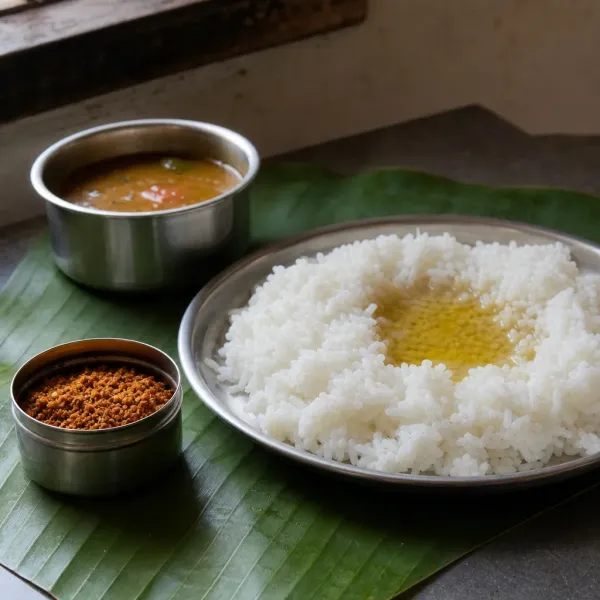
Poondu Podi
Traditional Kongunad poondu podi recipe: garlic, urad dal, chana dal and dry red chillies roasted in gingelly oil and ground to a coarse spice powder…
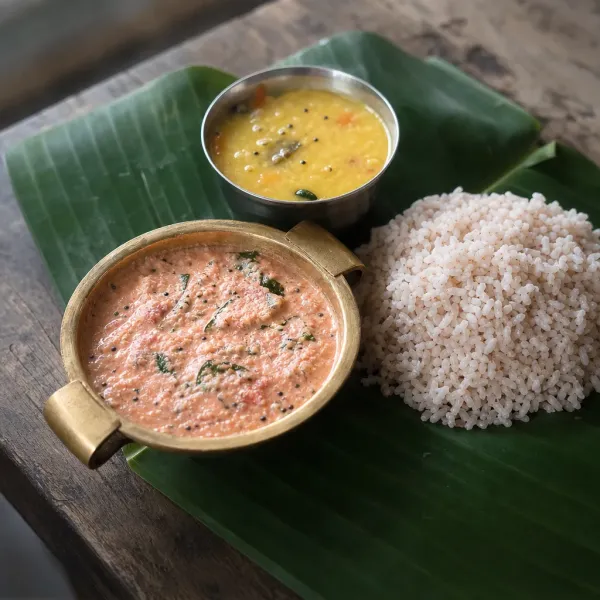
Tomato Pachadi
Traditional Kerala tomato pachadi with fresh coconut paste and curd. A Travancore sadya side dish ready in 30 minutes. Step-by-step recipe.