

Uttapam: Tamil Brahmin Household Style Recipe
Malayalam ഉത്തപ്പംTamil உத்தப்பம்Kannada ಉತ್ತಪ್ಪTelugu ఉత్తప్పం
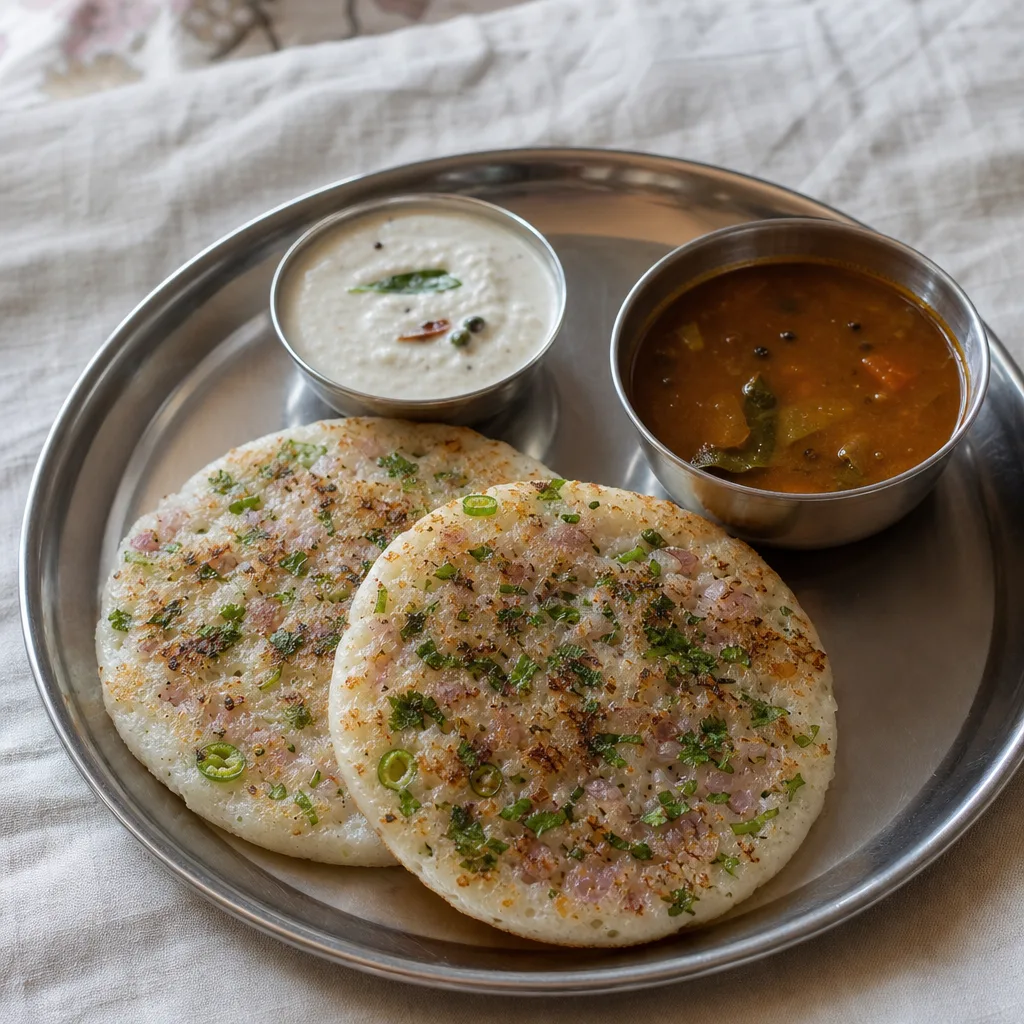
- Prep20 min
- Soak / ferment14 hr
- Cook40 min
- Serves4
- DifficultyEasy
- DietVegetarian
Uttapam is a thick, soft pancake made from the same fermented batter used for idli and dosa. In Tamil Brahmin households it has always been the sensible use of a batter that has fermented a little too long or has thinned from a previous day's dosa-making. The batter is poured thick, and a small amount of finely chopped shallot, green chilli and fresh coriander is pressed into the wet surface before it sets. Nothing more is needed.
It is a breakfast or tiffin dish, eaten at the table while still hot. Coconut chutney and a small bowl of sambar come alongside. In many households the toppings are placed directly on the tawa as the batter is poured over them, which gives a slightly caramelised underside to the shallot; other cooks press the toppings into the poured batter from above. Both are correct.
The batter must be thicker than dosa batter. If you pour it and it spreads thin on its own, it will not hold the toppings and will cook unevenly. The right consistency is a slow, reluctant spread that you nudge into a round with the back of a ladle.
Ingredients (serves 4)
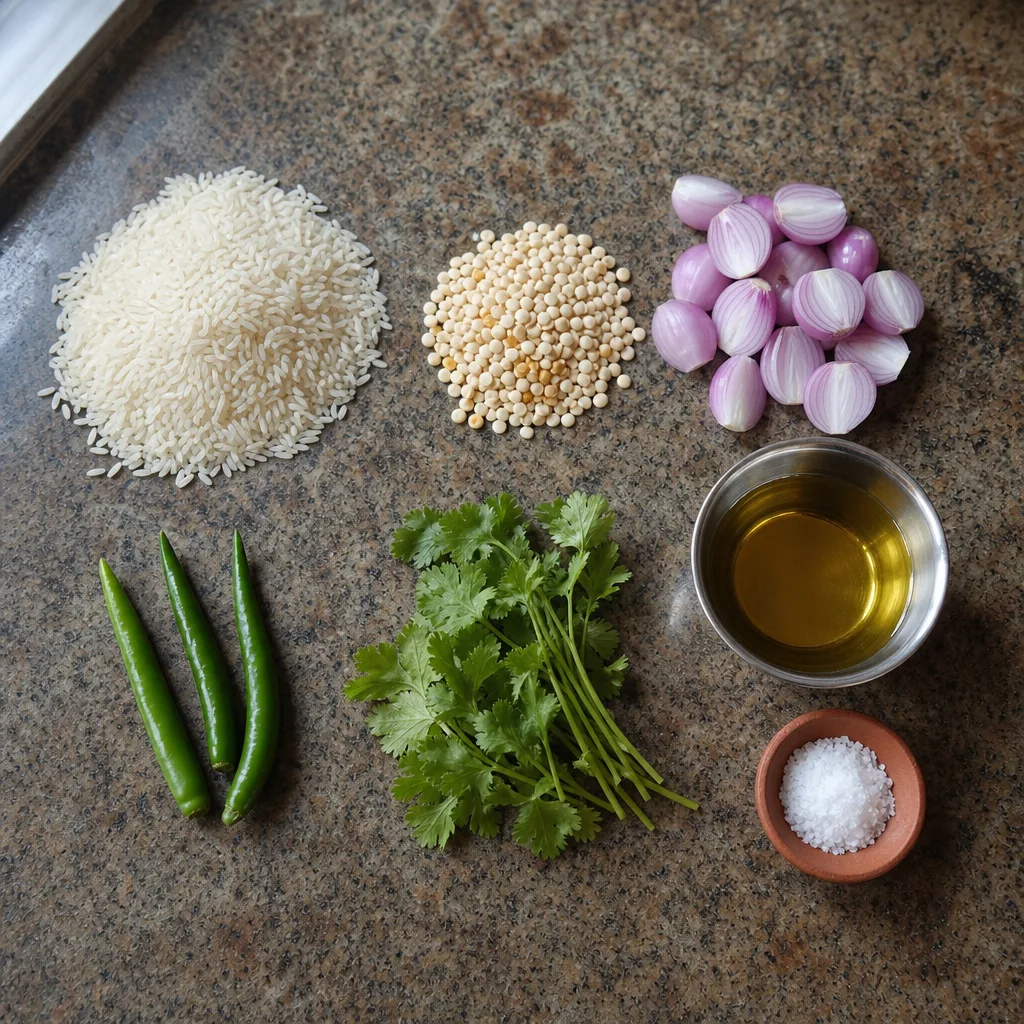
For the batter
Toppings (pressed into each uttapam)
For cooking
Method
Soak the rice and dal
Wash the rice in three changes of water and soak in plenty of cold water for 6 hours. Wash the urad dal and fenugreek seeds together and soak separately for 4 hours. Keep them in separate vessels; they need different grinding times and you cannot combine them at this stage.
Grind the urad dal
Drain the urad dal and fenugreek. Grind in a wet grinder or heavy blender, adding cold water a little at a time, until the batter is very smooth, light and almost fluffy. This takes 15 to 20 minutes in a wet grinder. The batter should hold a soft peak briefly when you lift a spoonful; it should not be watery. Transfer to a large vessel.
Grind the rice
Drain the rice and grind it, again adding cold water gradually, until the texture is smooth but with just a faint graininess, like fine cream of wheat. Rice takes less time than dal, roughly 10 minutes. The batter should flow but not pour like water. Add it to the urad batter and mix well with your hand or a large spoon.
Ferment the batter
Add salt and mix thoroughly. Cover the vessel loosely with a plate, not an airtight lid, and leave it in a warm spot for 8 to 10 hours. In a hot Tamil Nadu summer this may be done in 6 hours; in a cooler kitchen or during monsoon it can take 12 hours. The batter is ready when it has risen visibly, smells pleasantly sour, and small bubbles are visible on the surface. Do not stir it before use.
Check the batter consistency
For uttapam the batter must be thicker than dosa batter. Lift a ladle and let it fall back; it should drop in a thick ribbon, not a thin stream. If the batter has thinned during fermentation, do not add flour. Instead, let it sit uncovered for 20 minutes; the surface will thicken slightly. If it is too thick, add a tablespoon of water at a time.
Prepare the toppings
Chop the shallots, green chillies and coriander finely and mix them together in a small bowl. Keep this near the tawa. The mixture should be dry, not wet, so the topping stays where you press it and does not make the surface soggy.
Heat the tawa
Place a heavy iron tawa or cast-iron griddle over medium heat. Let it heat for 2 to 3 minutes. Sprinkle a few drops of water; they should sizzle and evaporate in under a second. Wipe the surface with a cloth lightly dampened with water. The tawa must be hot but not smoking before you pour.
Pour and top the uttapam
Reduce the heat to medium-low. Pour one full ladle of batter (about 90 ml) onto the centre of the tawa. Using the back of the ladle, nudge it gently into a round about 15 cm across and 1 cm thick. Do not spread it thin the way you would a dosa. Immediately scatter a generous tablespoon of the shallot-chilli-coriander mixture over the surface and press it lightly into the batter with the back of the ladle.
Add oil and cook the first side
Drizzle about 1 tsp of gingelly oil around the edges of the uttapam. Cook on medium-low heat, uncovered, for 3 to 4 minutes. The underside is ready to turn when the edges look set and dry, the surface has lost its wet shine in most places, and the uttapam lifts cleanly from the tawa without sticking.
Flip and finish
Flip the uttapam carefully with a wide spatula. The underside should be a pale golden brown, not dark. Drizzle another half teaspoon of oil over the topping side. Cook the second side for 2 minutes. The uttapam is done when it feels firm when you press the centre gently. Slide it onto a plate, topping side up.
Continue with the remaining batter
Wipe the tawa with a damp cloth between each uttapam to clear any scorched bits. Adjust the heat as you go; the tawa tends to get hotter with each round, so you may need to lower the flame slightly after the third or fourth one. Serve each uttapam as it comes off the tawa; they lose their softness if they sit stacked.
How to serve
Coconut chutney and a small bowl of sambar. In many Iyer households a small mound of idli milagai podi mixed with gingelly oil is also placed on the thali.
Served with: Coconut chutney and a small bowl of sambar. In many Iyer households a small mound of idli milagai podi mixed with gingelly oil is also placed on the thali.
Cook's tips
Day-old batter works best
Uttapam made from batter that has fermented a full day and sat overnight in the refrigerator is easier to handle than fresh batter. The extra sourness suits the thick pancake and the batter holds its shape better on the tawa.
Do not rush the heat
High heat is the most common mistake. Because the uttapam is thick, it needs time to cook through on medium-low. High heat browns the outside before the centre is set, and you end up with a raw, gummy middle.
Iron tawa versus non-stick
A well-seasoned iron tawa gives a slightly crisper underside and is the traditional choice. Non-stick works and requires less oil, but the result is a little softer. If using non-stick, do not preheat it empty for more than a minute.
Storing batter
Fermented batter keeps in the refrigerator for up to 3 days. Take it out 30 minutes before use so it returns to room temperature; cold batter does not spread evenly and the yeast activity that gives the soft texture is temporarily suppressed.
Regional variations
Rava uttapam (semolina batter, no fermentation) is made across South India; Udupi restaurants serve a thinner version with a wider spread of toppings including grated carrot and coriander.
Glossary
- Pachari പച്ചരി
- Raw, unparboiled rice used in Kerala and Tamil Nadu for batter; distinct from boiled matta rice.
- Chinna vengayam சின்ன வெங்காயம்
- Small shallots used throughout Tamil Nadu cooking; sharper and more pungent than large onions.
- Nallennai நல்லெண்ணெய்
- Gingelly oil, cold-pressed sesame oil; the cooking fat used in Tamil Nadu for tawa dishes and kuzhambu.
- Tawa தவா
- Flat iron griddle used for dosa, uttapam and roti across South and North India.
- Urad dal உளுந்து
- Skinned black gram lentil; ground to give the batter its lightness and the characteristic slight sourness after fermentation.
Two things decide whether this works: the batter must be thick enough to hold its shape when poured, and the heat must be low enough to let the inside cook through before the outside colours too much. Get those two right and everything else follows.
More Breakfast & Tiffin recipes
Rava Idli (Karnataka Style)
Traditional Karnataka rava idli made with ghee-roasted semolina, fresh curd and no fermentation. Soft, pale and ready in under an hour.
Rava Dosa
Traditional Tamil Iyer rava dosa with semolina, rice flour and gingelly oil. No fermentation, lacy and crisp. Step-by-step home kitchen method.
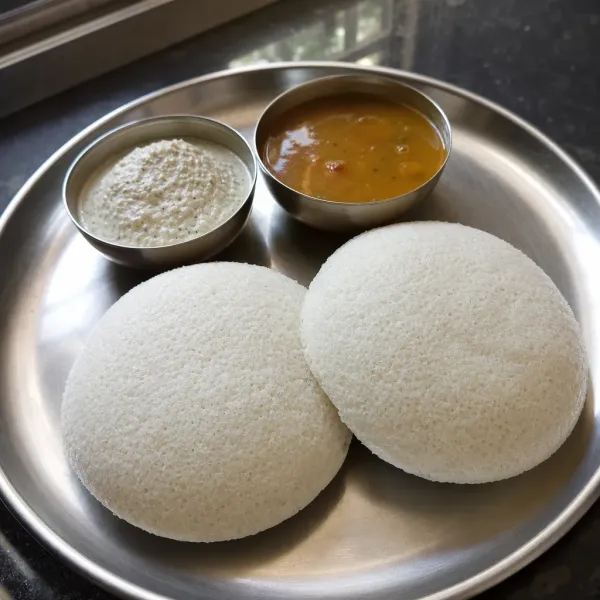
Thatte Idli
Soft, wide Karnataka-style thatte idli made with idli rice, urad dal and avalakki. Traditional household recipe with fermentation tips and steaming m…

Vattayappam
Traditional Nasrani vattayappam: soft steamed sweet rice cake made with raw rice, fresh coconut and toddy. Step-by-step Kerala recipe with fermentati…
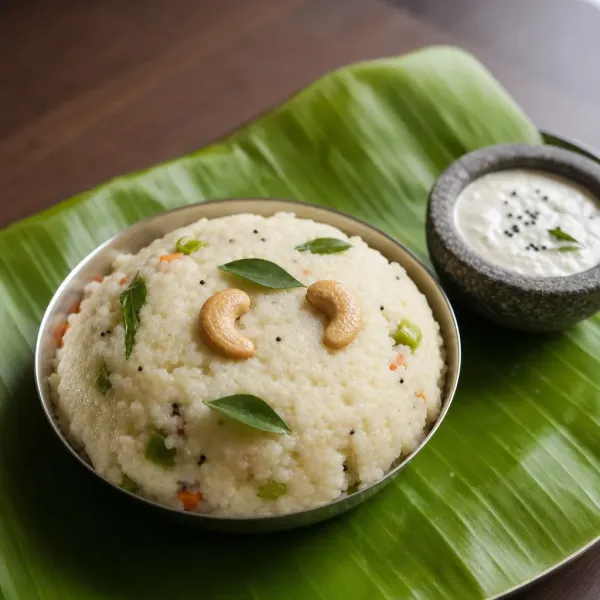
Rava Upma
Classic Tamil Brahmin rava upma made with dry-roasted semolina, gingelly oil, shallots and curry leaves. Step-by-step traditional method.
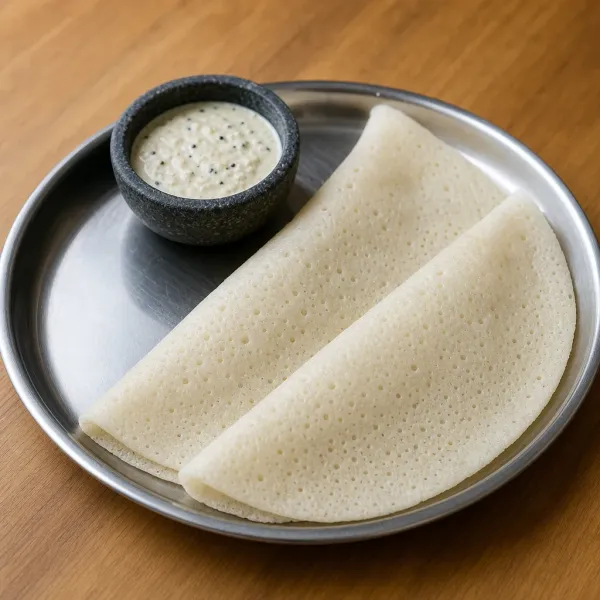
Aval Dosa (Soft Poha Dosa)
Soft, spongy aval dosa made with thick poha and raw rice. A quick-soak batter, no overnight ferment needed. Traditional Udupi home recipe.