

Kootu Recipe
Malayalam കൂട്ടുTamil கூட்டுKannada ಕೂಟುTelugu కూటు
- Prep20 min
- Cook40 min
- Serves4
- DifficultyEasy
- DietVegan
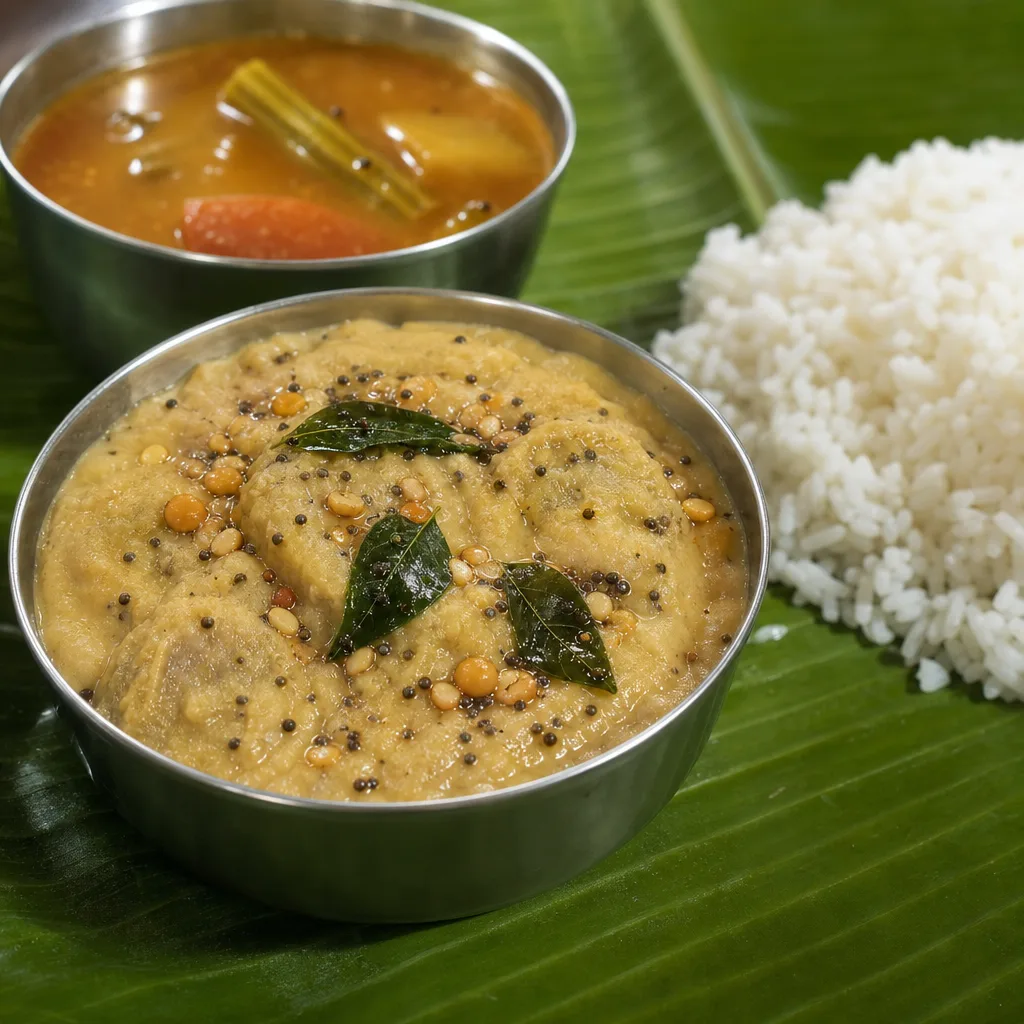
Kootu is the daily workhorse of the Iyer kitchen. It sits in the middle of the banana leaf at lunch, between the sambar and the dry poriyal, doing the job of something substantial — cooked dal and vegetable bound together with freshly ground coconut and cumin, finished with a mustard and urad dal tempering in coconut oil. It is neither a curry nor a dry dish. It holds its shape when you press it with the back of a spoon but is not stiff.
The vegetable changes with the season and what the garden offers. Raw banana, yam, ash gourd, raw jackfruit, cluster beans, and colocasia all pass through this dish across the year. The dal is almost always toor dal, though some households use chana dal for harder vegetables like raw jackfruit, or a half-and-half mix. The coconut paste is the spine of the dish: if it is ground too coarse, the kootu tastes raw; if it is ground without enough cumin, it is flat.
Households differ mainly in the pepper-to-red-chilli ratio in the coconut paste and in how much water is left in the finished dish. Some families like it wetter, closer to a thick gravy. Others cook it until almost every drop of liquid has been absorbed. Both are correct. What is not variable is the fresh coconut — desiccated coconut does not belong here.
Ingredients (serves 4)
Vegetable and dal
Coconut paste
Tempering
Method
Cook the toor dal
Put the rinsed toor dal in a pressure cooker with 300 ml water and ¼ tsp turmeric. Cook on medium heat for 3 whistles, then remove from heat and let the pressure fall on its own. The dal should be fully soft and mashable but not waterlogged. Open the cooker and mash it roughly with the back of a ladle — not to a smooth paste, just broken down. Set aside.
Cook the raw banana
Drain the cubed raw banana and put it in a wide pan with just enough water to cover, ¼ tsp turmeric, and a little salt. Bring to a boil, then cook on medium heat for 10 to 12 minutes until the pieces are completely tender when pierced with a knife but still hold their shape. Do not let them turn mushy. Drain off most of the cooking water, leaving about 3 to 4 tbsp in the pan.
Grind the coconut paste
In a small mixer jar, combine the fresh grated coconut, cumin seeds, black peppercorns, and dried red chillies. Add about 3 to 4 tbsp of water and grind to a smooth, fine paste. It should have no visible coconut shreds left. This takes a full 2 to 3 minutes in most home mixers; scrape down the sides once halfway through. A coarse paste will taste raw in the finished dish.
Combine dal, vegetable, and coconut paste
To the pan with the cooked raw banana, add the mashed toor dal and the coconut paste. Stir everything together over low heat. Add salt and mix well. The mixture will look quite thick at this point.
Cook the combined mixture
Keep the pan on low heat and stir gently but continuously for 5 to 7 minutes. The coconut paste needs this time to cook through and lose its raw smell. You will notice the colour deepen very slightly and the mixture will tighten. If it becomes too thick to stir, add a splash of hot water — no more than 2 to 3 tbsp — and continue. Taste for salt.
Temper and finish
Heat the coconut oil in a small tempering pan over medium heat. When it shimmers, add the mustard seeds and wait for them to pop fully — this takes about 30 seconds. Add the urad dal and stir for another 20 to 30 seconds until the dal turns golden. Add the broken red chilli and curry leaves, stand back as the leaves will splutter, and immediately pour the entire tempering over the kootu. Stir once to distribute and take off the heat.
How to serve
Hot rice, sambar, a dry poriyal, rasam, and papad — the full Iyer lunch spread on a banana leaf or steel plate. Also eaten with curd rice at the end of the meal.
Served with: Hot rice, sambar, a dry poriyal, rasam, and papad — the full Iyer lunch spread on a banana leaf or steel plate. Also eaten with curd rice at the end of the meal.
Cook's tips
Vegetable substitutions
This same method works with ash gourd (poosanikai), yam (senai), colocasia (seppankizhangu), or cluster beans (kothavarangai). Harder vegetables like yam may need a minute or two longer to cook through in step 2. Cluster beans are best cooked directly in the pan without draining, letting the water absorb in.
Chana dal variation
For raw jackfruit or colocasia kootu, some households replace toor dal entirely with chana dal, or use half of each. Chana dal needs one extra whistle in the cooker and gives a slightly nuttier flavour. Do not over-mash chana dal — a little texture is welcome.
The coconut paste is not optional
Desiccated or frozen coconut will not grind to the same smooth paste and the raw smell does not cook out the same way. Fresh coconut is the only option here. If you are in a climate where fresh coconut is hard to find, this is a dish to make on the days you have it.
Storing leftovers
Kootu keeps well in the refrigerator for a day. Reheat gently with a tablespoon of water, stirring over low heat. It will thicken further as it sits. Do not reheat more than once.
Regional variations
Kerala Nair and Nasrani households make a similar dish called kootu with coconut and green chilli, heavier on coconut and without the urad dal tempering; Mudaliar and Pillai households in Tamil Nadu make versions with different vegetable-dal pairings and occasionally add tomato.
Glossary
- Kootu கூட்டு
- Literally 'to add together'; a Tamil dish of cooked vegetable and dal bound with a coconut paste.
- Vazhakkai வாழைக்காய்
- Raw unripe banana, used as a vegetable in South Indian cooking.
- Toor dal துவரம் பருப்பு
- Split pigeon pea, the most common dal in Tamil Brahmin cooking.
- Jeeragam ஜீரகம்
- Cumin seeds; essential to the coconut paste in kootu.
- Tadka / Thalippu தாளிப்பு
- The tempering of whole spices in hot fat poured over a dish at the end to finish it.
- Gundu milagai குண்டு மிளகாய்
- Small round dried red chilli common in Tamil Nadu, moderately hot.
Two things decide whether this kootu works: the coconut paste must be ground completely smooth and then cooked long enough over low heat to lose its raw edge, and the dal must be soft enough to mash but not so wet that it turns the dish soupy. Get those two right and the rest follows.
More Vegetarian Gravies recipes
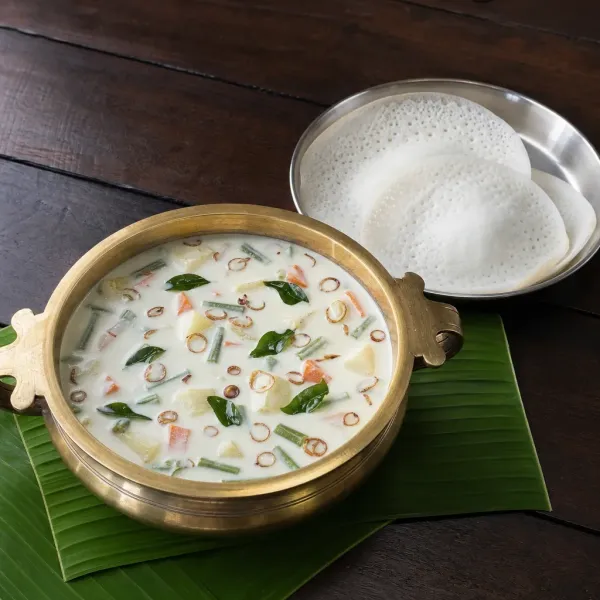
Kerala Vegetable Stew (Ishtu)
Traditional Nasrani vegetable ishtu from Travancore: potatoes, carrots and beans simmered in coconut milk with whole spices. Served with appam.
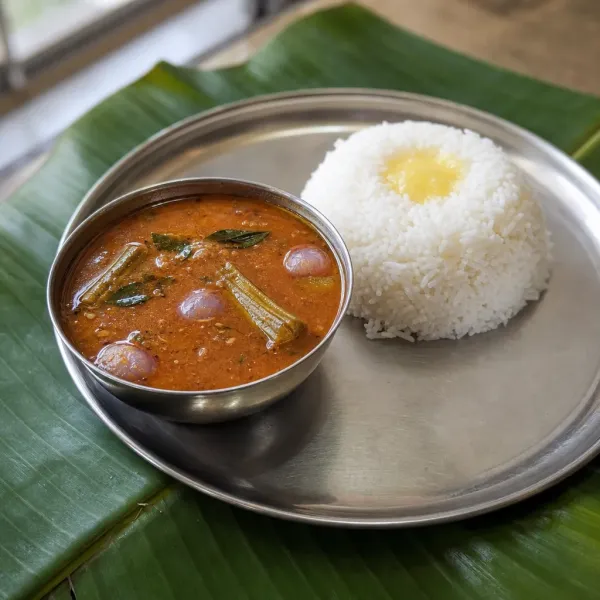
Arachuvitta Sambar (Tamil Brahmin Style, Freshly Ground Masala)
Traditional Tamil Brahmin arachuvitta sambar with freshly ground coconut masala, toor dal, drumstick, and tamarind. No sambar powder, no tomato.
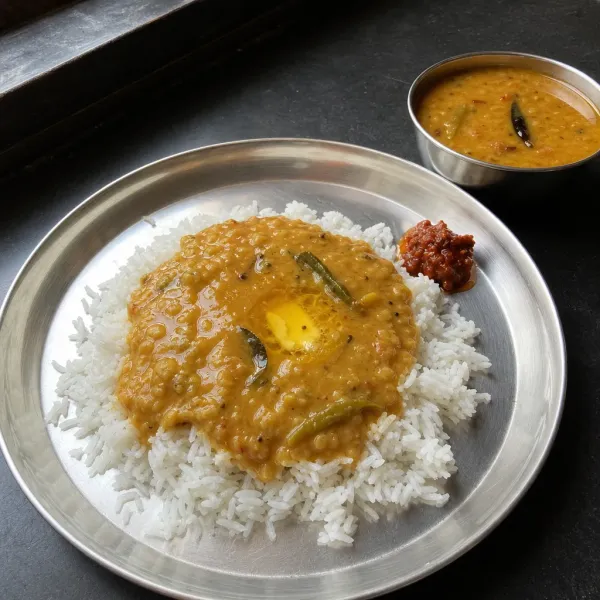
Andhra Pappu
Traditional Coastal Andhra toor dal with tamarind, green chillies, and a ghee tempering. The everyday rice-and-pappu meal made the right way.
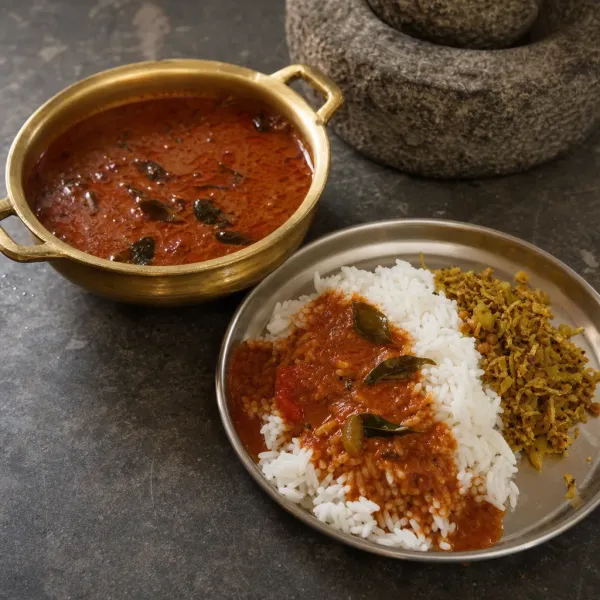
Thakkali Kuzhambu
Traditional Tamil Iyer thakkali kuzhambu with ripe country tomatoes, tamarind, shallots, and freshly roasted kuzhambu podi in gingelly oil.
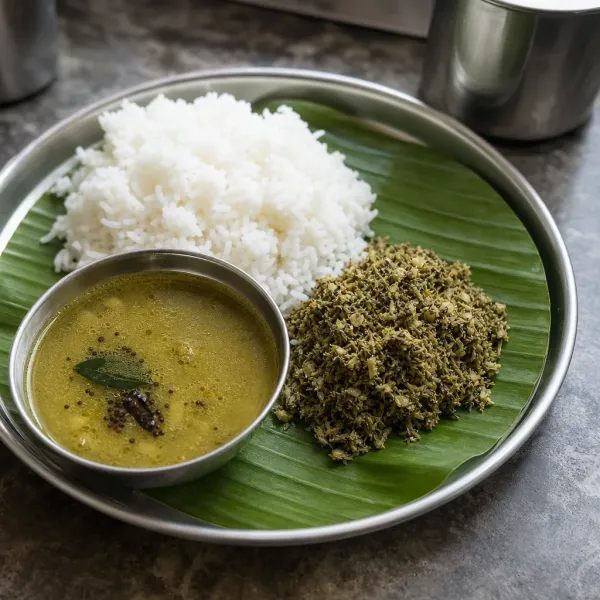
Bassaru
Traditional Karnataka bassaru: toor dal and dill cooked together, strained into a spiced coconut broth and a dry palya. Vokkaliga household recipe.
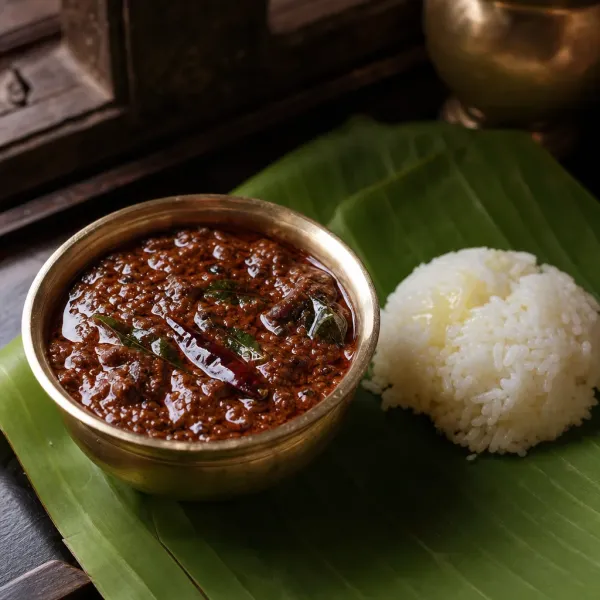
Menthya Gojju
Traditional Karnataka menthya gojju: dry-roasted fenugreek seeds in tamarind, jaggery and fresh coconut paste. Balanced bitter, sour and sweet.