

Kallappam Recipe
Malayalam കള്ളപ്പംTamil கள்ளப்பம்Kannada ಕಳ್ಳಪ್ಪಂTelugu కళ్ళప్పం
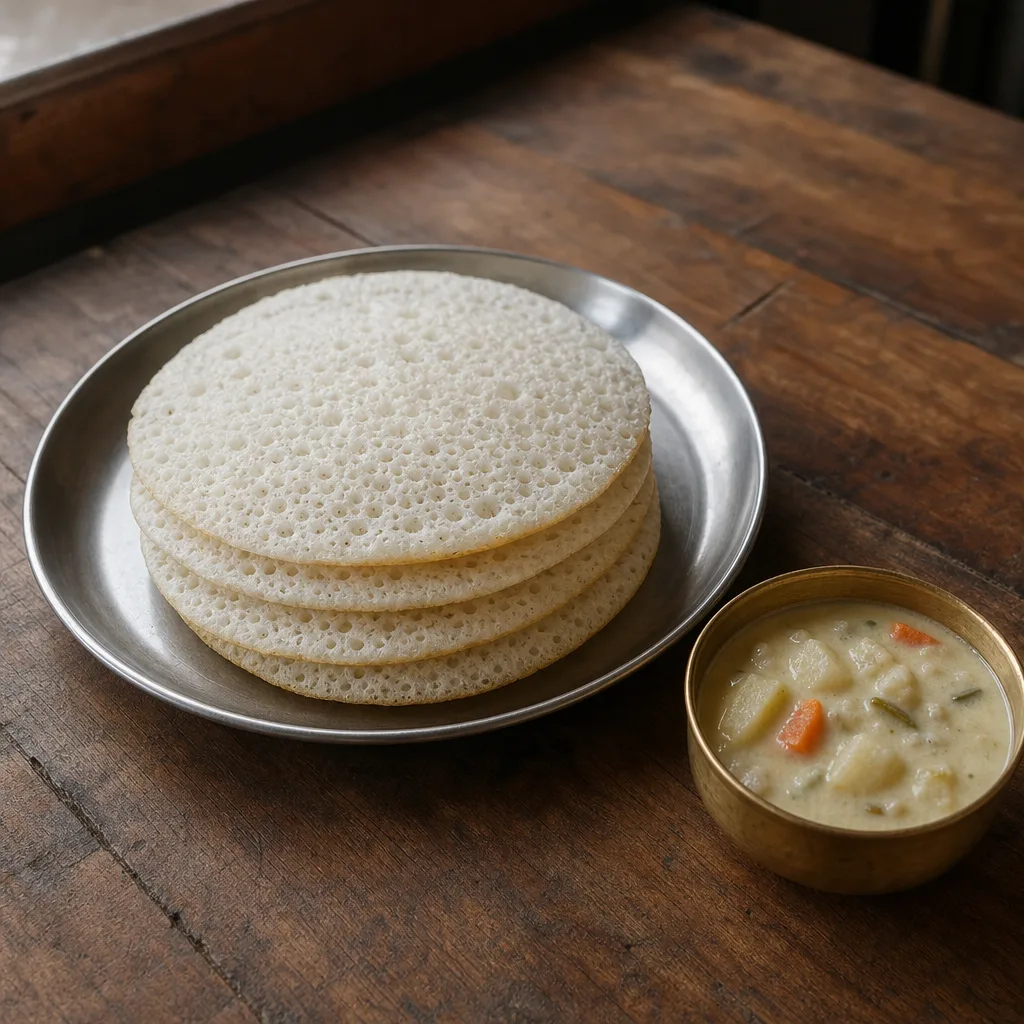
- Prep20 min
- Soak / ferment10 hr
- Cook40 min
- Serves4
- DifficultyMedium
- DietVegetarian
Kallappam is a thick, soft, spongy pancake that belongs entirely to the Syrian Christian table. The name comes from kallu, the toddy that ferments the batter overnight. That single ingredient is what separates it from every other rice pancake in Kerala: no yeast, no soda, no previous batter kept back as starter. Fresh toddy does the work, and the result has a very faint sourness and a honeycomb interior that no other leavening produces.
In Travancore Nasrani households it appears at breakfast and also at dinner alongside a meat stew. The batter is made the night before and left in a clay pot or a wide-mouthed vessel in a warm corner of the kitchen. By morning it has risen, smells lightly of fermentation and is ready to pour. The pancakes cook in a shallow iron or cast-iron pan with a lid, because the steam trapped inside finishes the top without flipping. You never flip a kallappam.
The thickness is a matter of household habit. Some families pour a thinner layer and get a more delicate result; others pour generously and get a bread-like cake almost a centimetre thick. Both are correct. What is not negotiable is the toddy: fresh, sweet toddy collected in the morning, not the sour evening draw, gives the gentlest fermentation.
Ingredients (serves 4)
For the batter
Method
Grind the rice
Drain the soaked raw rice and put it in a wet grinder or stone grinder with the cooked rice. Add the toddy gradually as you grind — it thins the batter and begins working immediately. Grind until the batter is very smooth, smoother than dosa batter. This takes 20 to 25 minutes in a wet grinder. A gritty batter will not give you the soft sponge you are after.
Season and rest the batter
Transfer the batter to a large clay pot or a wide steel vessel. Stir in the salt and the teaspoon of sugar. The batter should be pourable but thicker than buttermilk — roughly the consistency of a thin pancake batter. Cover the vessel with a plate, not a tight lid, and leave it in a warm spot in the kitchen for 8 to 10 hours or overnight. In Kerala's climate this is usually enough; in a cold kitchen it may need a full 12 hours.
Check the fermentation
The batter is ready when it has risen visibly, smells faintly sour and pleasant, and has small bubbles across the surface. If you press a spoon into it and lift, you will see an airy, slightly stringy texture underneath. Do not let it over-ferment: if it smells sharply sour or has separated into liquid and solids, it has gone too far and the pancakes will taste unpleasantly acidic.
Stir in the coconut milk
Just before cooking, stir the thick coconut milk gently into the fermented batter. Do not beat it hard — you want to keep the air that has built up. The batter will loosen slightly. Taste for salt and adjust. The final batter should flow easily from a ladle in a slow, thick ribbon.
Heat the pan
Place a shallow iron tawa or a cast-iron pan with a domed lid over medium-low heat. Rub the surface lightly with a piece of coconut oil-soaked cloth or a few drops of coconut oil spread with a folded banana leaf. The pan is ready when a drop of water flicked onto it evaporates in two seconds. Do not let it get smoking hot — kallappam cooks gently.
Pour the batter
Pour one ladleful of batter (approximately 80 ml) into the centre of the pan. Do not swirl it the way you would a dosa. Tilt the pan very slightly in a circular motion so the batter spreads on its own into a round about 15 cm across. The edges will be thinner than the centre. That is correct.
Cover and steam-cook
Place the lid on immediately and cook on low heat for 3 to 4 minutes. The pancake is done when the surface has set completely — no wet batter visible — and the top looks dull and dry with small pores across it. The underside will be pale golden, not dark brown. If the bottom colours too quickly before the top sets, your heat is too high.
Remove without flipping
Slide a flat spatula under the pancake and lift it onto a plate. It should come away cleanly. The top will be white and porous; the bottom pale gold. Do not flip. Set the pancakes in a single layer or stack them with a cloth between layers to keep them soft while you cook the rest.
Cook the remaining batter
Wipe the pan with the oiled cloth between pancakes if needed, though a well-seasoned iron pan may not require it after the first one or two. Keep the heat consistently low to medium-low throughout. The batter will continue to be lively from the fermentation; stir it gently from the bottom before each pour.
How to serve
Vegetable ishtu (a mild Kerala coconut-milk stew with potato, carrot and green peas) or mutton or beef ishtu. Also eaten with sweetened coconut milk poured over, or with a ripe banana on the side — but those are separate items, not part of the pancake itself.
Served with: Vegetable ishtu (a mild Kerala coconut-milk stew with potato, carrot and green peas) or mutton or beef ishtu. Also eaten with sweetened coconut milk poured over, or with a ripe banana on the side — but those are separate items, not part of the pancake itself.
Cook's tips
Finding toddy
Fresh sweet toddy (kallu) is drawn from the coconut palm in the morning. In Kerala it is available from licensed toddy shops (shaap). If you are outside Kerala and cannot source toddy, the fermentation cannot be authentically replicated. Some cooks use a small amount of active dry yeast dissolved in warm water as a practical substitute, but the flavour is noticeably different and this is a compromise, not the traditional method.
Morning toddy, not evening toddy
Toddy ferments rapidly in heat. The morning draw is sweet and only mildly alcoholic. By evening the same batch has soured considerably. Using sour toddy will over-acidify the batter and the pancakes will taste sharp. If you are unsure, taste the toddy: it should taste faintly sweet, lightly fizzy, and pleasantly yeasty.
The cooked rice is not optional
The small addition of cooked rice softens the texture and helps the batter hold together without becoming rubbery. Do not skip it in favour of more raw rice.
Keeping them soft
Kallappam toughens if left uncovered. Stack them on a plate and cover with a clean cotton cloth or an inverted bowl as soon as they come off the pan. They keep well for 4 to 5 hours at room temperature this way.
Pan choice
A traditional shallow iron pan with a domed lid gives the best result because the dome allows condensation to run off rather than drip back onto the pancake. A flat lid works but may leave water droplets on the surface. Non-stick pans can be used but they conduct heat unevenly at low temperatures and the base tends to colour faster.
Regional variations
Some Mappila households in Malabar make a similar toddy-leavened pancake, but the batter ratios and the pan used differ. Vattayappam is a related Nasrani steamed cake using the same fermentation principle but is not a pancake.
Glossary
- Kallu കള്ള്
- Toddy; the naturally fermented sap drawn from the coconut palm, used here as a leavening agent.
- Pachari പച്ചരി
- Raw rice; unparboiled white rice used for grinding into batter in Kerala cooking.
- Ishtu ഇഷ്ടു
- A mild Kerala stew made with coconut milk, vegetables or meat; the classic accompaniment to kallappam in the Nasrani kitchen.
- Nasrani നസ്രാണി
- Saint Thomas Christians of Kerala; one of the oldest Christian communities in the world, with a distinct culinary tradition.
- Tawa തവ
- A flat or slightly concave iron griddle used for cooking flatbreads and pancakes.
Two things decide whether this works: the quality of the toddy and the patience of the fermentation. Use fresh morning toddy and give the batter a full night — eight to ten hours in a warm Kerala kitchen. Rush either of those and the pancakes will be flat, dense and missing the characteristic honeycomb crumb that makes kallappam what it is.
More Breakfast & Tiffin recipes
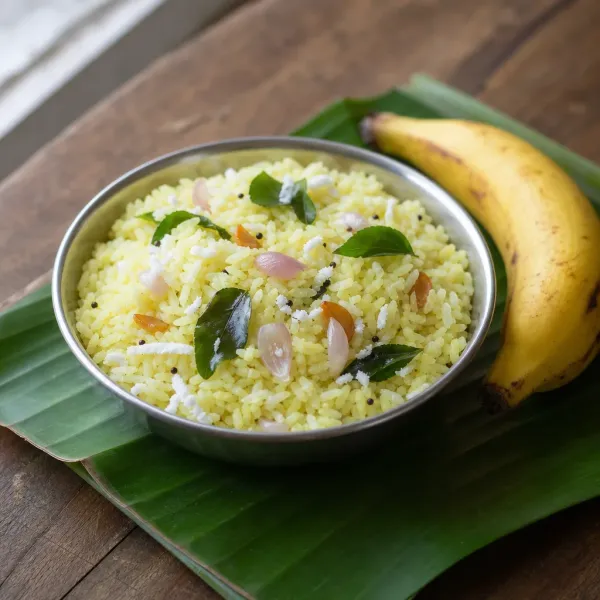
Aval Upma
A quick Kerala breakfast of thin flattened rice tempered in coconut oil with shallots, curry leaves and fresh grated coconut. Ready in 30 minutes.
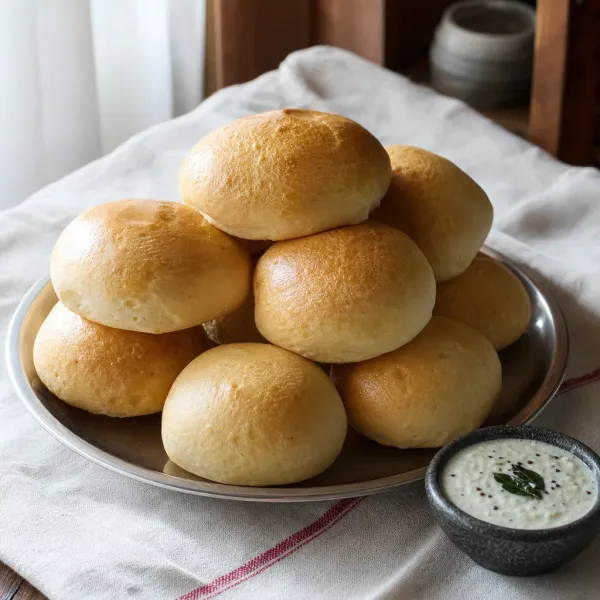
Mangalore Buns
Traditional Mangalore Buns from Konkani Catholic kitchens: ripe banana and curd dough rested overnight, rolled thick and fried until soft and golden.
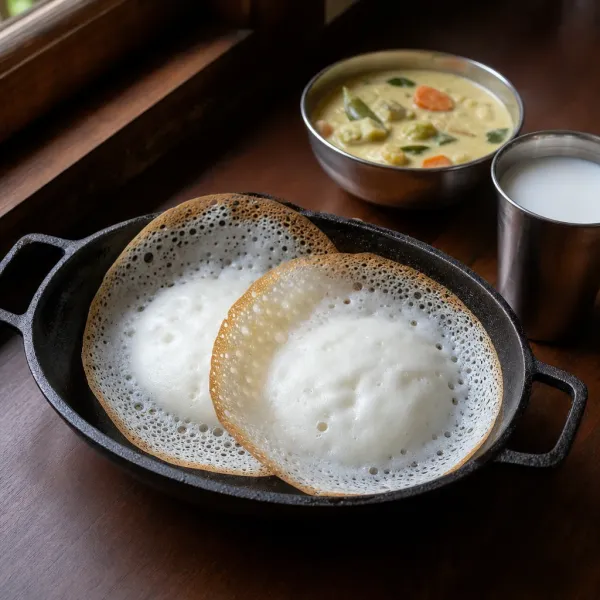
Appam
Traditional Kerala appam with toddy or yeast fermentation, ground fresh coconut, and cooked rice for a soft centre and lacy browned rim. Nasrani hous…
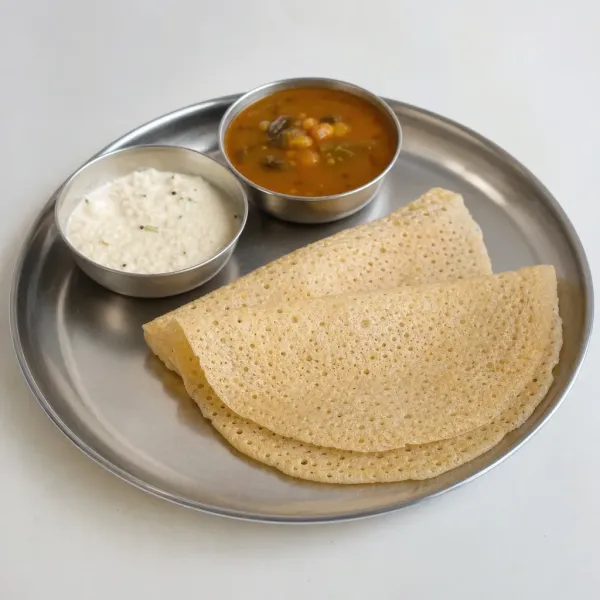
Godhuma Dosa
Quick Tamil Nadu-style godhuma dosa made with wheat flour and rice flour, no fermentation needed. Ready in under an hour, soft and lacy.
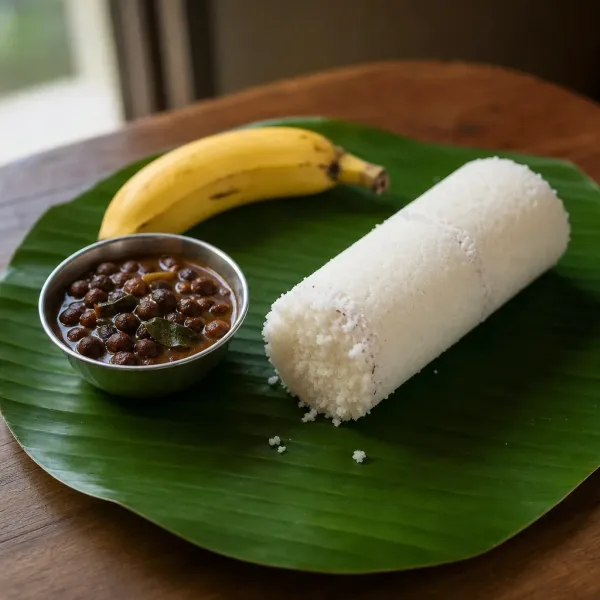
Kerala Puttu
Traditional Kerala puttu made with rice flour and fresh coconut, steamed in a puttu kutti. Step-by-step method with the correct flour texture explain…
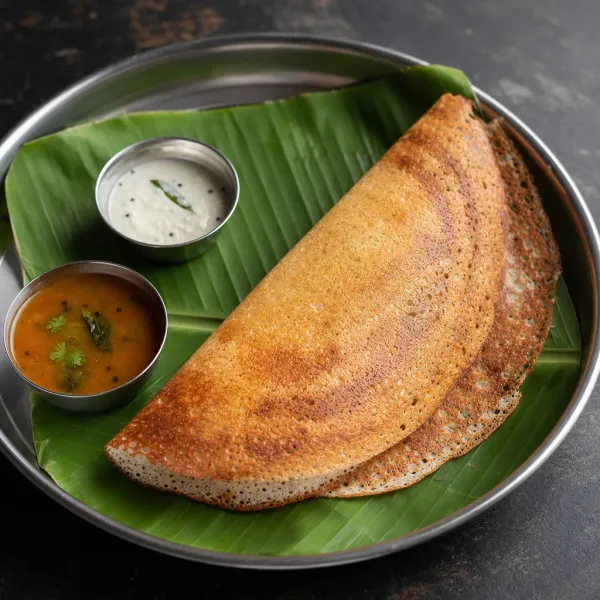
Plain Dosa
Traditional Tamil Iyer plain dosa: fermented rice and urad dal batter, spread thin on a cast-iron tawa with gingelly oil. Crisp, golden, and sour.