

More Kootu (Tamil Brahmin Buttermilk and Coconut Vegetable Curry) Recipe
Malayalam മോർ കൂട്ട്Tamil மோர் கூட்டுKannada ಮಜ್ಜಿಗೆ ಕೂಟುTelugu మజ్జిగ కూటు
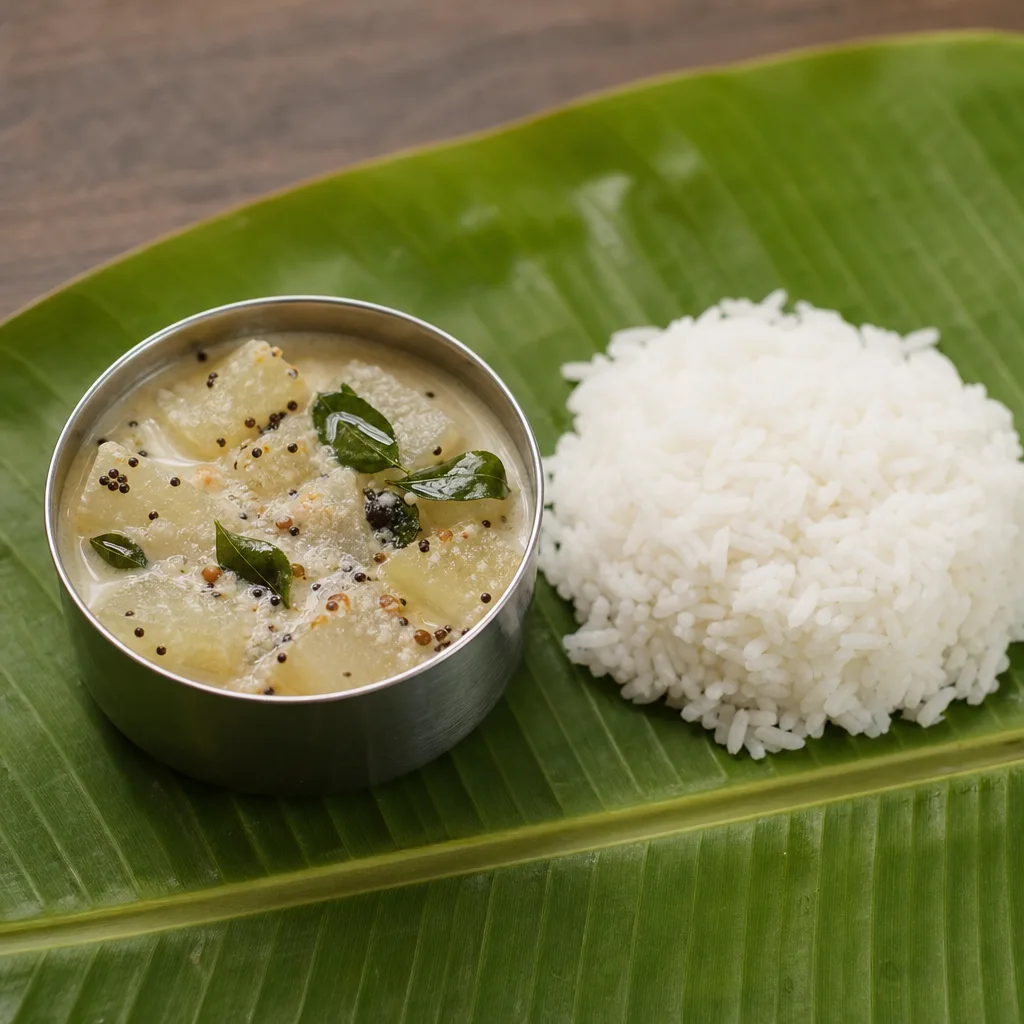
- Prep20 min
- Cook25 min
- Serves4
- DifficultyEasy
- DietVegetarian
More kootu belongs to the Tamil Iyer kitchen and appears regularly in the afternoon meal alongside rice. It is not a sambar substitute and not a soup. It sits somewhere between a thick curry and a dressed vegetable — cooked vegetable (most often ash gourd, raw banana, or yam) folded into a smooth coconut paste, then loosened and finished with sour buttermilk. The result is pale, mildly sour, faintly peppery, and comforting in a quiet way.
The coconut paste is what holds it together. It is ground with cumin and green chilli until completely smooth — any graininess and the dish feels unfinished. The buttermilk goes in only after the heat is turned right down, because boiling it even briefly makes it split and turn grainy. Every Iyer household knows this and watches the pot carefully at that stage.
Which vegetable you use depends on the season and what is in the house. Ash gourd (vellai poosanikai) is the most common choice and gives the mildest flavour. Raw banana and yam both work well. Some households add a small amount of toor dal, cooked soft, to thicken the base. The tempering is always in coconut oil in traditional homes, though some families have shifted to refined oil.
Ingredients (serves 4)
For the vegetable
For the coconut paste
For the buttermilk finish
For the tempering
Method
Cook the vegetable
Put the ash gourd cubes in a wide pan with 250 ml water, a pinch of salt, and the turmeric. Cover and cook on medium heat for 10 to 12 minutes until the cubes are completely tender — a knife should go through with no resistance. Do not drain the water; there should be very little left by the time the vegetable is done.
Grind the coconut paste
While the vegetable cooks, put the grated coconut, green chillies, and cumin seeds into a small grinder or wet grinder. Add 3 to 4 tablespoons of water and grind to a completely smooth paste. There should be no gritty coconut texture left — run the grinder longer than you think you need to. This smoothness is what gives the dish its body.
Beat the buttermilk
Whisk the sour curd with 100 ml water until there are no lumps. It should be pourable and uniformly smooth, like thin lassi. Set it aside near the stove. It must be at room temperature, not cold from the refrigerator, or it will shock the hot pan and separate faster.
Add the coconut paste to the cooked vegetable
With the pan still on low heat, stir the ground coconut paste into the cooked ash gourd. Mix gently so the cubes stay intact. Let it cook together for 2 to 3 minutes, stirring occasionally, until the raw coconut smell is gone and the paste coats the vegetable evenly. Taste and adjust salt now.
Add the buttermilk off the boil
Turn the heat to the lowest possible setting, or take the pan completely off the flame for a moment. Pour in the beaten buttermilk slowly, stirring as you go. Return to the lowest heat and warm it through gently — 2 to 3 minutes, stirring continuously. The moment you see the first sign of steam rising steadily, take it off the heat. Do not let it boil. Boiling splits the buttermilk and gives the dish a grainy, curdled texture that cannot be fixed.
Temper and finish
Heat coconut oil in a small tempering pan on medium heat. Add the mustard seeds and wait for them to pop fully — about 30 seconds. Add the broken red chilli and curry leaves and let them splutter for 10 seconds. Pour the entire tempering over the kootu immediately and cover the pan for a minute so the aroma is absorbed. Stir once before serving.
How to serve
Hot steamed rice, with a dry thoran or poriyal alongside. Often part of a larger Iyer meal that includes rasam and papad.
Served with: Hot steamed rice, with a dry thoran or poriyal alongside. Often part of a larger Iyer meal that includes rasam and papad.
Cook's tips
The buttermilk must be sour
Fresh curd gives a flat, bland result. The curd should be at least a day old and noticeably sour. If your curd is not sour enough, the dish will taste like a plain coconut curry without the characteristic tang.
Do not reheat aggressively
Leftovers can be gently warmed on the lowest flame, stirring constantly. High heat will split the buttermilk even after the dish is made. Many households eat it at room temperature rather than risk reheating.
Choosing the vegetable
Ash gourd gives the most neutral, delicate result. Raw banana (cooked until just tender, not mushy) gives a starchier, more filling dish. Yam must be cooked completely through or it will be unpleasantly fibrous. All three are traditional; the method does not change.
Adding toor dal
Some Iyer households cook 2 tablespoons of toor dal separately until very soft and mash it into the vegetable before adding the coconut paste. This thickens the kootu and makes it more substantial. It is a genuine household variation, not a shortcut.
Regional variations
Palakkad Iyer households make a very similar version with ash gourd; Kerala Brahmin (Namboothiri) kitchens have a comparable dish called moru curry that uses a thinner coconut paste and different tempering.
Glossary
- More kootu மோர் கூட்டு
- More means buttermilk; kootu means a cooked vegetable dish with a ground coconut base. Together, a vegetable curry finished with buttermilk and coconut paste.
- Vellai poosanikai வெள்ளை பூசணிக்காய்
- Ash gourd, also called white pumpkin or winter melon. A pale, mild-flavoured vegetable used widely in South Indian cooking.
- Jeeragam ஜீரகம்
- Cumin seeds. Ground raw into the coconut paste here, not fried, so the flavour stays fresh and aromatic.
- Thoran തോരൻ
- A dry Kerala vegetable stir-fry with grated coconut, mentioned here as a typical accompaniment in Palakkad Iyer homes that sit on the Kerala border.
Two things decide whether this works: the coconut paste must be ground to a truly smooth consistency with no graininess, and the buttermilk must never reach a boil. Get those two right and the dish takes care of itself.
More Vegetarian Gravies recipes
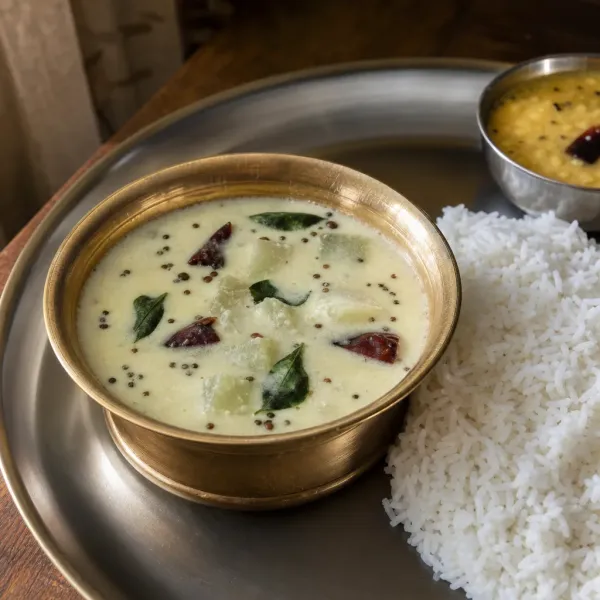
Majjiga Pulusu
Traditional Andhra Telugu Brahmin majjiga pulusu: ash gourd simmered with a coconut-green chilli paste and sour buttermilk. Step-by-step household re…
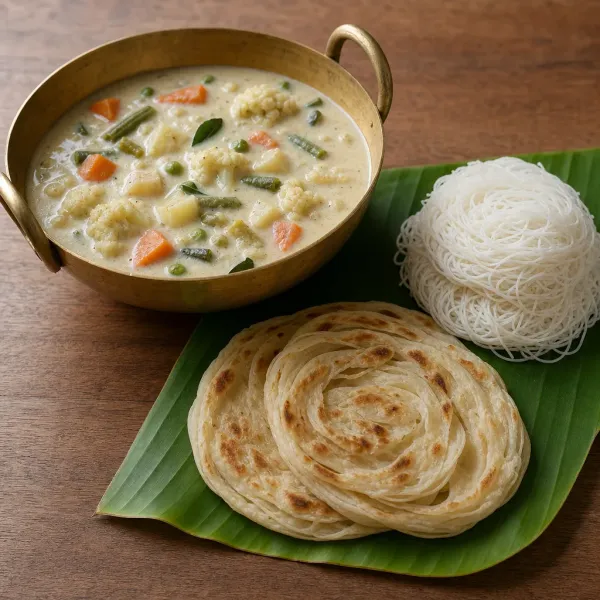
Kerala Muslim Vegetable Kurma
Traditional Malabar Mappila vegetable kurma with fresh coconut, kus kus and cashew paste. Pale, mildly spiced, perfect with parotta and idiyappam.
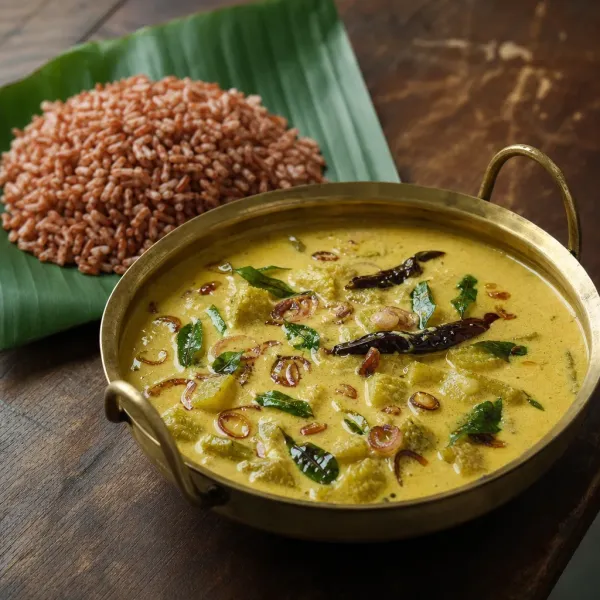
Manga Curry
Traditional Kerala manga curry with fresh coconut paste, shallots and curry leaves. A quick, sour, everyday side dish for matta rice. Ready in 40 min…
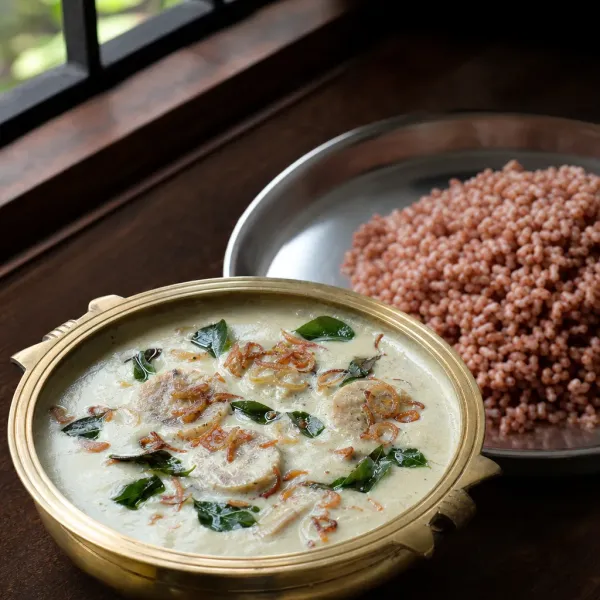
Vazhakka Curry (Raw Banana in Coconut Gravy)
Traditional Nasrani Kerala vazhakka curry with fresh coconut paste and kudampuli. Step-by-step household recipe with exact quantities and cook's note…
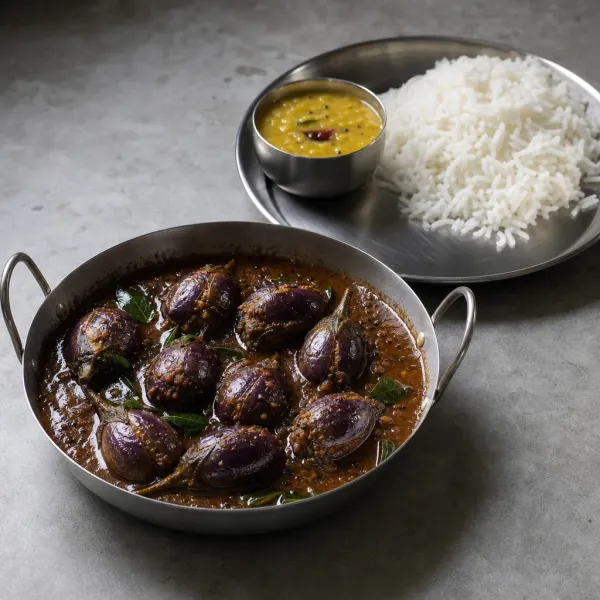
Gutti Vankaya Kura
Authentic Rayalaseema gutti vankaya kura: small brinjals stuffed with a peanut-sesame-coconut masala, slow-cooked in a tamarind gravy with gingelly o…
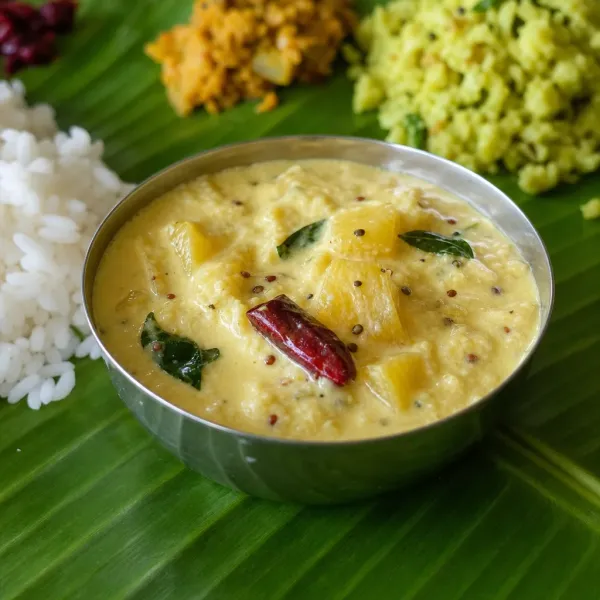
Pineapple Pachadi
Traditional Kerala pineapple pachadi for the sadya leaf: pineapple cooked with coconut paste, finished with sour curd and a coconut oil tempering.