

Majjiga Pulusu Recipe
Malayalam മജ്ജിഗ പുളുസుTamil மஜ்ஜிக புளுசுKannada ಮಜ್ಜಿಗ ಪುಳುಸುTelugu మజ్జిగ పులుసు
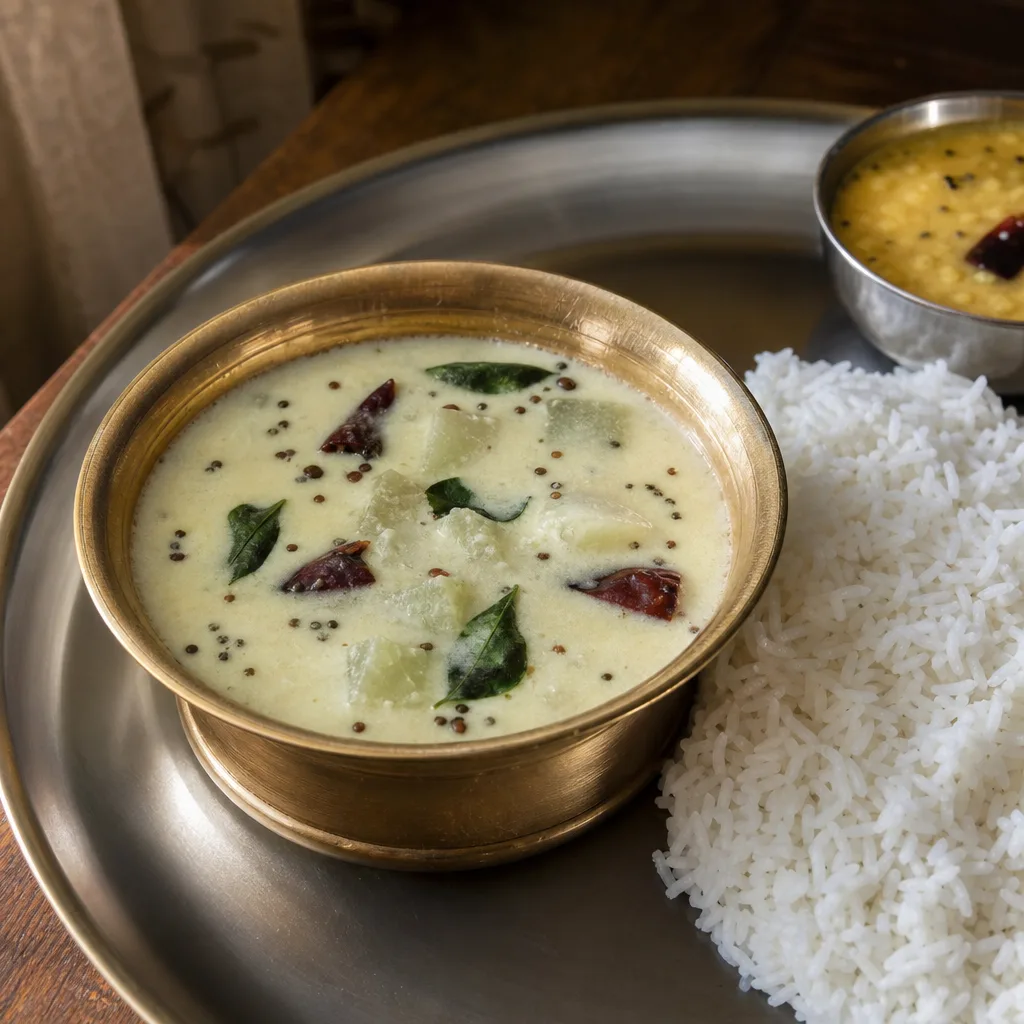
- Prep20 min
- Cook25 min
- Serves4
- DifficultyEasy
- DietVegetarian
Majjiga pulusu is a gently soured, coconut-thickened buttermilk stew cooked in Telugu Brahmin households across Coastal Andhra. It is nothing like a curry: the heat is low throughout, the colour is pale cream or faint yellow, and the whole point is a soft, tangy warmth that settles the stomach. The vegetable most commonly used is ash gourd (boodida gummadi), though raw banana, drumstick, and chayote all appear in different homes.
The technique is unhurried. The vegetables are cooked through in water first, then the ground paste of fresh coconut, green chillies, and ginger goes in, and finally the beaten sour buttermilk is stirred in off the heat or over the lowest possible flame. If the buttermilk boils hard, it splits and the stew turns grainy and watery. This is the one thing that ruins it. The tempering of mustard, dried red chillies, and curry leaves goes in at the end, poured over the top.
In most households this is a summer dish, made when curd has turned properly sour. It is eaten with hot rice as part of a full meal, often alongside a dry vegetable preparation and pappu. Some families add a small piece of raw turmeric to the paste; others use only dried turmeric. The stew thickens as it sits, so it is served as soon as it is tempered.
Ingredients (serves 4)
For the vegetables
For the ground paste
For the buttermilk base
For the tempering (popu)
Method
Cook the ash gourd
Put the ash gourd cubes in a wide heavy pan with 350 ml water, salt, and turmeric. Bring to a boil over medium heat, then reduce to a steady simmer. Cook uncovered for 12 to 15 minutes until the cubes are completely tender when pierced with a knife but still holding their shape. There should be a small amount of cooking water left in the pan; do not drain it.
Grind the paste
While the ash gourd cooks, grind the fresh coconut, green chillies, ginger, and cumin seeds together with 3 to 4 tablespoons of water to a smooth, fine paste. It should have no coarse coconut shreds remaining. Set aside.
Beat the buttermilk
Whisk the sour curd with 200 ml water until completely smooth and free of lumps. The mixture should be pourable, roughly the consistency of thin lassi. Taste it: it must be noticeably sour. Fresh curd will make a flat, bland stew.
Add the paste to the cooked vegetable
Once the ash gourd is cooked and still in its pan over low heat, add the ground paste and stir it through. Let it cook gently for 3 to 4 minutes, stirring, so the raw coconut and ginger smell cooks out. The liquid in the pan will turn a pale cream colour.
Stir in the buttermilk off the heat
Take the pan completely off the flame. Pour in the beaten buttermilk slowly, stirring as you go. Stir everything together. Now return the pan to the lowest possible heat and warm through, stirring continuously, for 3 to 4 minutes. The stew must not boil. Watch for the first sign of steam rising and small bubbles forming at the edges: that is the point to stop. If it boils, the curd splits and the stew becomes grainy and watery, which cannot be fixed.
Check seasoning and consistency
Taste for salt and sourness. The stew should be gently sour, lightly spiced from the green chillies, and have a soft coconut background. It should be pourable but not watery. If it is too thick, stir in a splash of warm water. Remove from heat.
Make the tempering
Heat the gingelly oil in a small tempering pan over medium-high heat until it shimmers. Add the mustard seeds and wait for them to pop. Add the dried red chillies and curry leaves — stand back as the leaves will splutter — then add the asafoetida. The whole tempering takes about 30 seconds. Pour it immediately over the stew.
Serve at once
Stir the tempering through gently and bring the stew to the table. It thickens noticeably as it cools, so serve it while it is still warm and pourable.
How to serve
Hot plain rice (sona masuri or raw rice cooked soft). Typically part of a full Telugu meal alongside pappu (lentil dal) and a dry vegetable preparation such as vepudu. Appalam or vadiyalu (sun-dried rice crackers) are common on the side.
Served with: Hot plain rice (sona masuri or raw rice cooked soft). Typically part of a full Telugu meal alongside pappu (lentil dal) and a dry vegetable preparation such as vepudu. Appalam or vadiyalu (sun-dried rice crackers) are common on the side.
Cook's tips
The curd must be sour
Fresh curd gives a bland, flat stew. Leave your curd out at room temperature for an extra day if it has not soured enough. In summer this happens quickly; in winter it takes longer. The sourness is not just flavour — it is the character of the dish.
Never let it boil
Once the buttermilk goes in, the heat must stay very low. A rolling boil splits the curd proteins and the stew turns thin and grainy. If you see it beginning to bubble vigorously, lift the pan off the flame immediately and keep stirring.
Other vegetables that work
Raw banana (cooked the same way), drumstick (murungakkai), chayote (seema vankaya), and yam are all used in different households. Ash gourd is the most common. Avoid watery vegetables like cucumber, which make the stew too thin.
Gingelly oil in the tempering
Gingelly oil gives the tempering a faint nutty warmth that suits this stew. Some households use ghee instead, which is also traditional. Do not use refined sunflower oil — it has no flavour contribution.
The stew does not keep well
Because it is buttermilk-based, it turns more sour as it sits and the texture changes on reheating. It is best eaten the day it is made, at the meal it is cooked for.
Regional variations
Telangana households make a thinner version without coconut; Rayalaseema versions are often spicier with more dry red chillies in the tempering; some families add raw banana or yam alongside or instead of ash gourd.
Glossary
- Majjiga మజ్జిగ
- Buttermilk in Telugu; here it refers to thinned sour curd rather than the watery liquid left after churning butter.
- Pulusu పులుసు
- A soured, thin stew or gravy in Telugu cooking; the sourness can come from tamarind, raw mango, or as here, buttermilk.
- Boodida gummadi బూడిద గుమ్మడి
- Ash gourd, also called white pumpkin or winter melon; a pale, mild vegetable used widely in South Indian cooking.
- Inguva ఇంగువ
- Asafoetida; used in a tiny quantity in the tempering, especially in Brahmin cooking where onion and garlic are not used.
- Popu పోపు
- The tempering of spices in hot oil that is poured over a finished dish; equivalent to tadka or thalippu.
- Jeelakarra జీలకర్ర
- Cumin seeds in Telugu.
- Nuvvula nune నువ్వుల నూనె
- Gingelly oil, sesame oil; the traditional cooking fat for tempering in many Telugu dishes.
Two things decide whether this works. The curd must be genuinely sour — not fresh, not mildly tangy, but properly sour — because that sourness is the whole flavour of the stew. And the buttermilk must never boil after it goes into the pan. Keep the heat low, stir continuously, and pull the pan off the moment it begins to steam. Get those two things right and the rest follows easily.
More Vegetarian Gravies recipes
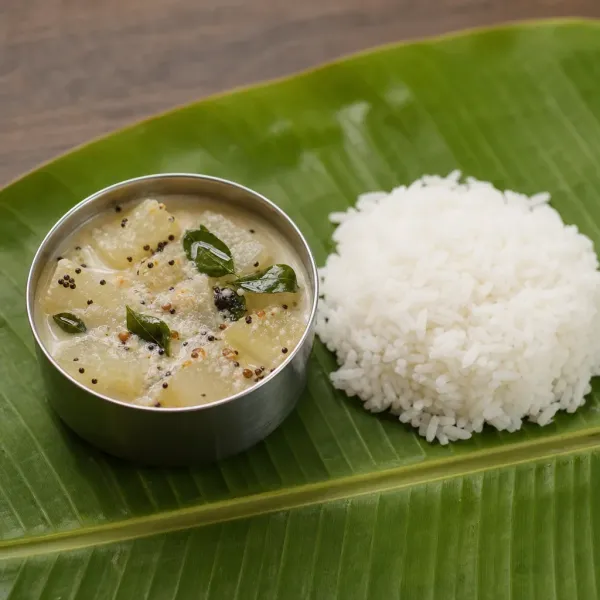
More Kootu (Tamil Brahmin Buttermilk and Coconut Vegetable Curry)
Traditional Tamil Iyer more kootu with ash gourd, smooth coconut paste and sour buttermilk. Step-by-step method with tips to prevent splitting.
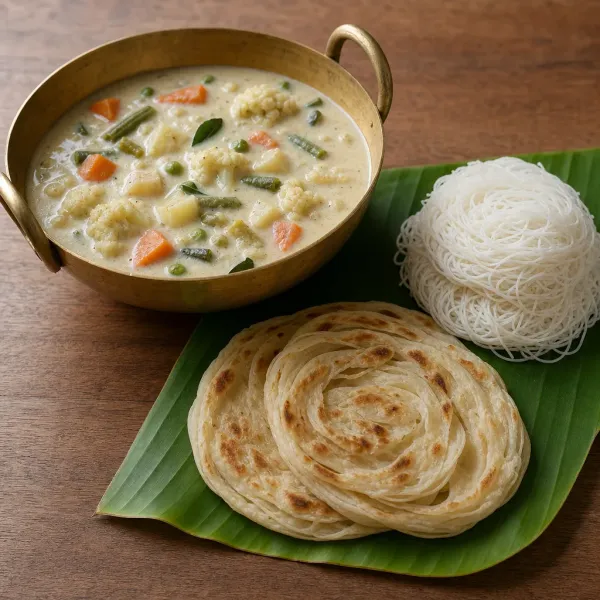
Kerala Muslim Vegetable Kurma
Traditional Malabar Mappila vegetable kurma with fresh coconut, kus kus and cashew paste. Pale, mildly spiced, perfect with parotta and idiyappam.
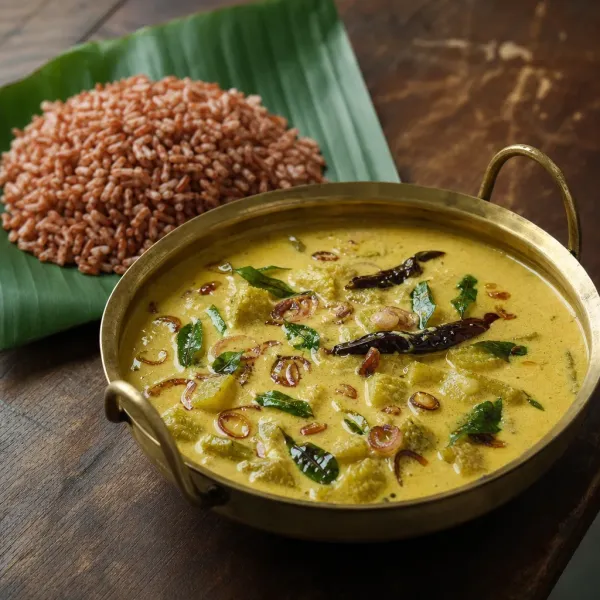
Manga Curry
Traditional Kerala manga curry with fresh coconut paste, shallots and curry leaves. A quick, sour, everyday side dish for matta rice. Ready in 40 min…
Vazhakka Curry (Raw Banana in Coconut Gravy)
Traditional Nasrani Kerala vazhakka curry with fresh coconut paste and kudampuli. Step-by-step household recipe with exact quantities and cook's note…
Gutti Vankaya Kura
Authentic Rayalaseema gutti vankaya kura: small brinjals stuffed with a peanut-sesame-coconut masala, slow-cooked in a tamarind gravy with gingelly o…
Pineapple Pachadi
Traditional Kerala pineapple pachadi for the sadya leaf: pineapple cooked with coconut paste, finished with sour curd and a coconut oil tempering.