

Manga Curry Recipe
Malayalam മാങ്ങ കറിTamil மாங்காய் கறிKannada ಮಾವಿನಕಾಯಿ ಕರಿTelugu మామిడికాయ కూర
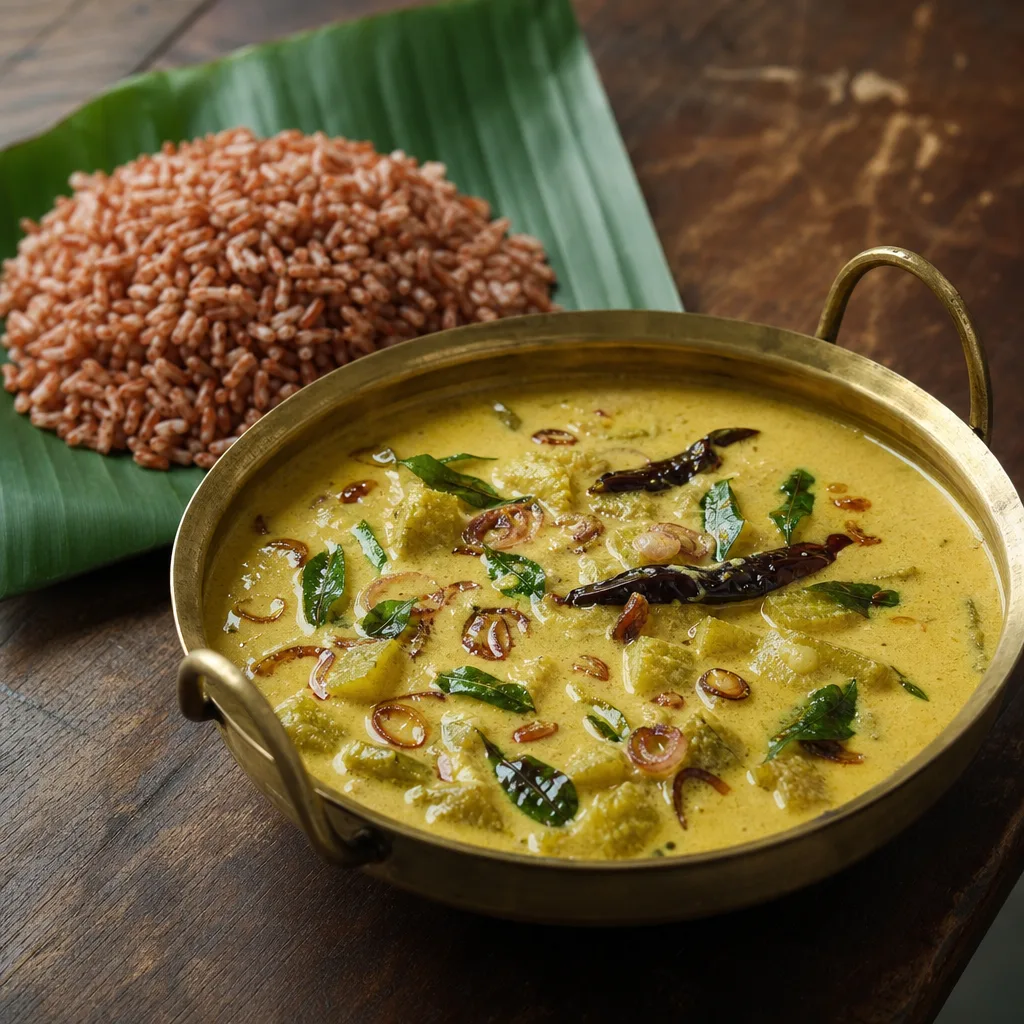
- Prep15 min
- Cook25 min
- Serves4
- DifficultyEasy
- DietVegan
This is the everyday raw mango curry that appears on Kerala tables from April through June, when the first hard green mangoes arrive at the market. It is a simple coconut-based gravy, sour from the mango itself, with no tamarind or kudampuli needed. The sourness is the whole point, and the variety of mango matters: a very fibrous or very sweet mango will not give you the clean, sharp tang this curry needs. Look for a firm, unripe mango that makes your mouth water just cutting it.
In most Travancore households this is cooked daily during mango season as a quick side dish. It takes under half an hour from start to finish. The coconut paste is ground fresh — that is what gives the gravy its body and its slightly raw-coconut sweetness, which balances the mango's acidity. Dried red chillies and shallots go into the tempering at the end, not into the gravy itself.
Households differ mainly on two points: how thick to grind the coconut paste, and whether to add a small amount of turmeric to the cooking mango or only to the paste. Both are correct. Some cooks add a slit green chilli to the mango while it cooks; others keep the heat only in the tempering. The version here is the plainer, more widely made one.
Ingredients (serves 4)
For the curry
For the coconut paste
For the tempering (tadka)
Method
Cook the mango
Put the mango pieces into a wide, shallow pan. Add 200 ml water, the turmeric, and salt. Bring to a gentle boil over medium heat, then reduce to a simmer. Cook uncovered for 8 to 10 minutes until the mango is just tender when pressed with a spoon but still holding its shape. The water will have turned pale yellow and will smell strongly of raw mango. Do not let it cook to mush.
Grind the coconut paste
While the mango cooks, grind the fresh coconut, green chillies, cumin seeds, and turmeric together with 3 to 4 tablespoons of water. Grind to a smooth, thick paste — not watery, not coarse. You should not feel individual coconut shreds when you rub the paste between your fingers. A wet grinder gives the smoothest result; a mixer-grinder works if you grind for at least two full minutes.
Add the coconut paste to the mango
Reduce the heat under the mango pan to low. Add the coconut paste and stir it in gently so the mango pieces do not break. Add another 50 to 75 ml of water if the curry looks very thick — it should be a pourable, medium-bodied gravy, not a paste. Taste for salt now and adjust.
Simmer briefly, do not boil
Keep the heat on low and let the curry just come to a gentle simmer, stirring once or twice. This takes about 3 minutes. Do not let it boil hard after the coconut paste goes in — a hard boil will make the gravy grainy and can cause it to split. As soon as you see the first few bubbles, take it off the heat.
Prepare the tempering
Heat coconut oil in a small tempering pan over medium-high heat until it shimmers. Add the mustard seeds and wait for them to pop completely — about 30 seconds. Add the broken dried red chillies and let them darken for 10 seconds, then add the sliced shallots. Fry the shallots, stirring, until they are golden brown at the edges, about 2 minutes. Add the curry leaves last; they will splutter.
Pour the tempering and rest
Pour the entire tempering over the curry immediately and cover the pan with a lid. Leave it covered for 5 minutes so the flavours from the tempering settle into the gravy. Stir once before serving. The curry should be a pale golden-yellow, sour-smelling, and thick enough to coat a spoon.
How to serve
Hot matta rice. Often eaten alongside a dry thoran and papad on the same plate.
Served with: Hot matta rice. Often eaten alongside a dry thoran and papad on the same plate.
Cook's tips
Choosing the mango
The mango must be completely unripe and hard. Even a slightly ripe mango will make the curry sweet rather than sour, and the pieces will disintegrate during cooking. If the mango you have is very large, use only half — too much mango makes the curry unpleasantly sharp.
Keeping the coconut paste from splitting
The only reliable way to prevent splitting is low heat after the coconut goes in. If you are reheating leftovers the next day, do it on the lowest flame possible and stir constantly. Add a splash of water if it has thickened overnight.
Frozen coconut
If fresh coconut is not available, frozen grated coconut that has been fully thawed works. Desiccated or dessicated coconut does not — it will make the paste dry and the gravy bitter.
Storing
This curry keeps for one day at room temperature in a cool kitchen, or two days refrigerated. The sourness deepens overnight, which many people prefer.
Regional variations
Mambazha pulissery uses ripe mango in a yoghurt-coconut gravy; Mappila households in Malabar make a sharper version with less coconut and more dried chilli.
Glossary
- Manga മാങ്ങ
- Raw green mango, unripe; the word also covers ripe mango depending on context, but in a curry name it always means unripe.
- Cheriya ulli ചെറിയ ഉള്ളി
- Small red shallots, the standard allium in Kerala cooking; sweeter and more aromatic than large onions.
- Kollamulaku കൊല്ലമുളക്
- Dried whole red chillies used in Kerala tempering; moderately hot with a deep red colour.
- Jeerakam ജീരകം
- Cumin seeds; used sparingly in Kerala coconut-based gravies to add a faint earthiness.
- Tadka / Thalikkal തളിക്കൽ
- The tempering step: hot oil with mustard seeds, dried chillies, shallots and curry leaves poured over a finished dish.
Two things decide whether this curry works: the mango must be hard and fully unripe, and the coconut paste must never meet a boiling pot. Get those two right and the rest takes care of itself.
More Vegetarian Gravies recipes
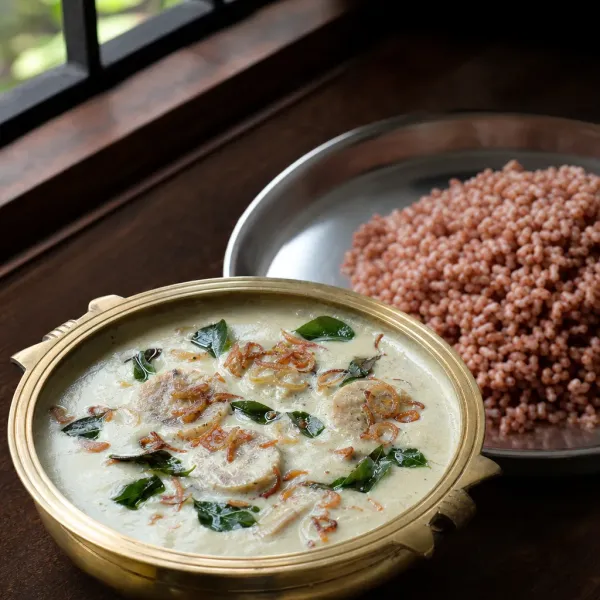
Vazhakka Curry (Raw Banana in Coconut Gravy)
Traditional Nasrani Kerala vazhakka curry with fresh coconut paste and kudampuli. Step-by-step household recipe with exact quantities and cook's note…
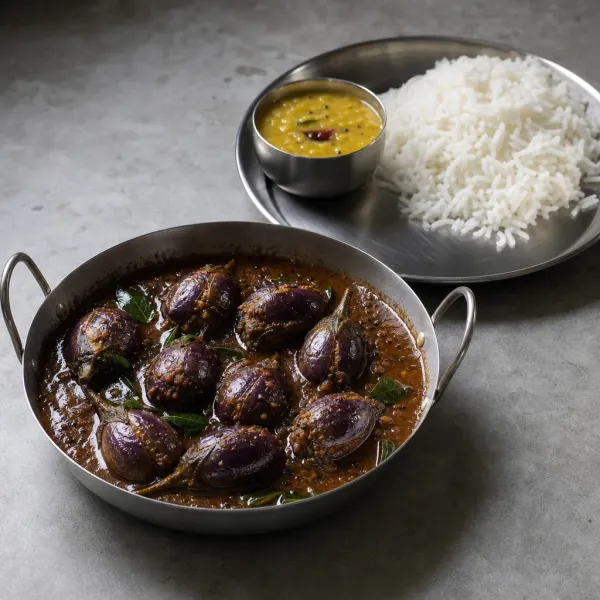
Gutti Vankaya Kura
Authentic Rayalaseema gutti vankaya kura: small brinjals stuffed with a peanut-sesame-coconut masala, slow-cooked in a tamarind gravy with gingelly o…
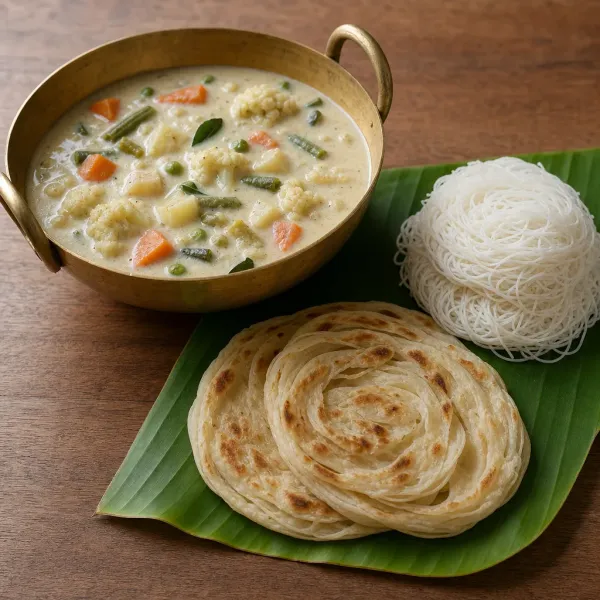
Kerala Muslim Vegetable Kurma
Traditional Malabar Mappila vegetable kurma with fresh coconut, kus kus and cashew paste. Pale, mildly spiced, perfect with parotta and idiyappam.
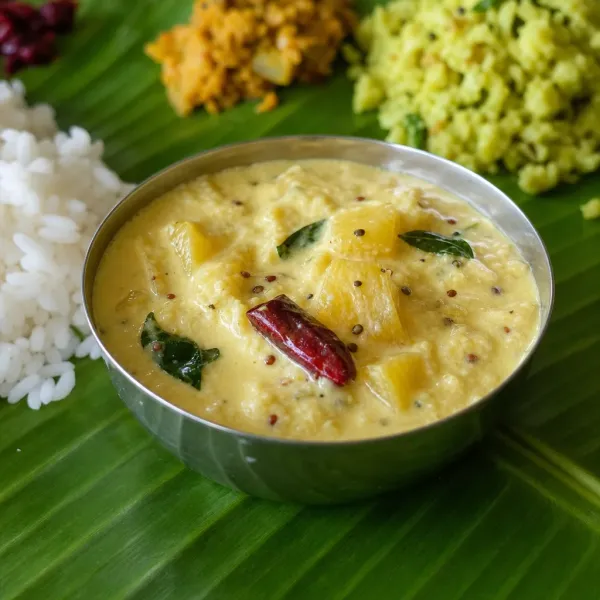
Pineapple Pachadi
Traditional Kerala pineapple pachadi for the sadya leaf: pineapple cooked with coconut paste, finished with sour curd and a coconut oil tempering.
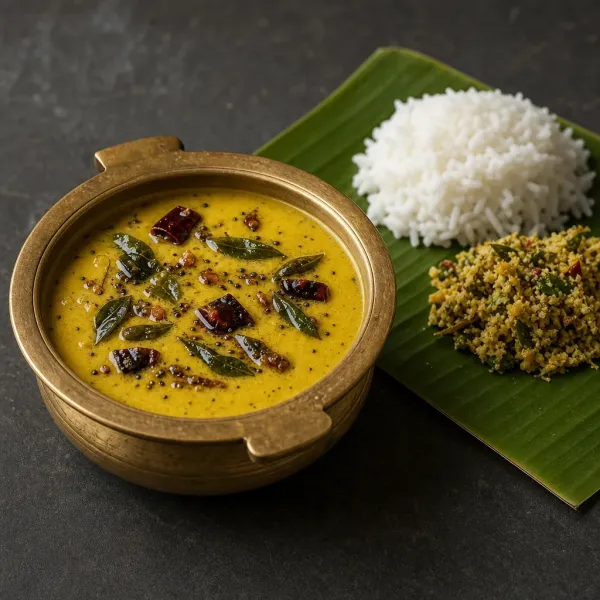
Poricha Kuzhambu
Traditional Tamil Brahmin poricha kuzhambu with roasted coconut paste, toor dal, and raw banana. No tamarind, no onion. Weekday lunch recipe.
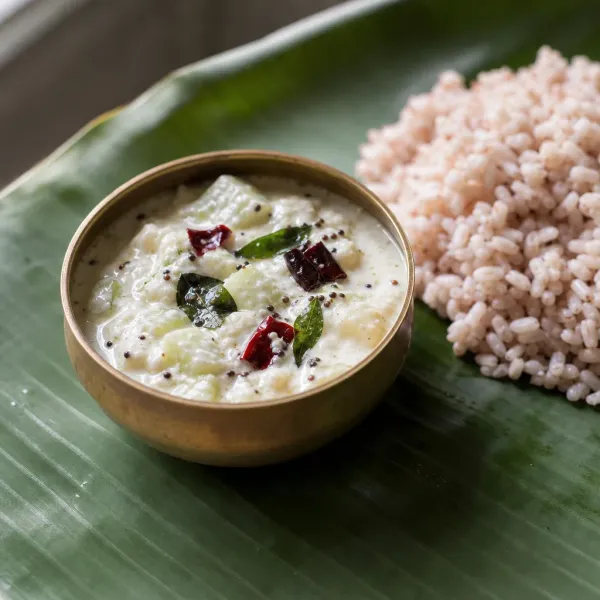
Vellarikka Pachadi
Traditional Kerala vellarikka pachadi with fresh coconut paste, green chilli and thick curd. A cooling sadya side dish ready in 25 minutes.