

Kerala Muslim Vegetable Kurma Recipe
Malayalam വെജിറ്റബിൾ കുർമ്മTamil வெஜிட்டபிள் குர்மாKannada ವೆಜಿಟೇಬಲ್ ಕುರ್ಮಾTelugu వెజిటేబుల్ కుర్మా
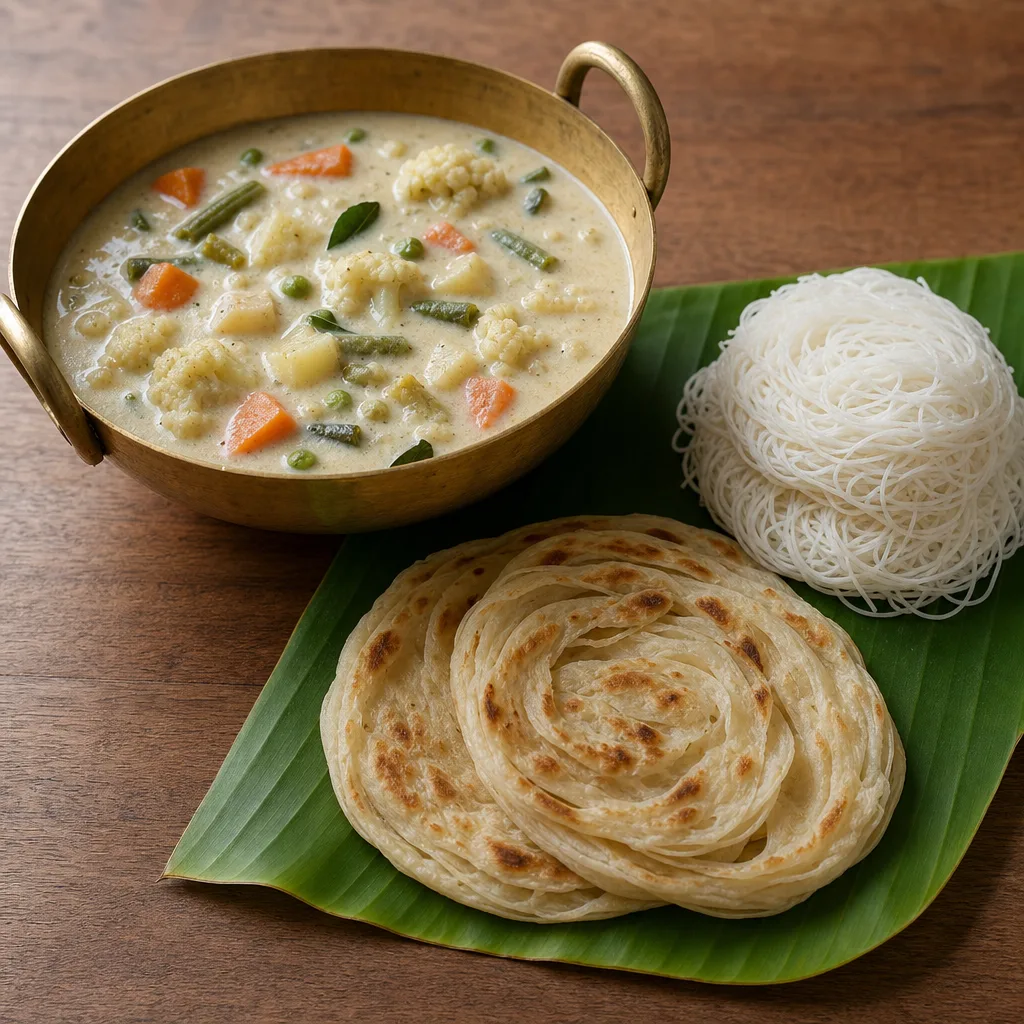
- Prep25 min
- Cook40 min
- Serves4
- DifficultyMedium
- DietVegetarian
In Mappila households across Malabar, this kurma is the natural partner for parotta on Friday afternoons and for idiyappam at breakfast. The gravy is pale, mildly spiced and coconut-rich. It does not have the deep orange colour of a tomato-forward curry. The vegetables hold their shape; the sauce coats them rather than drowning them.
The base is a freshly ground paste of coconut, kus kus (poppy seeds), cashews and whole spices. This is what gives the kurma its characteristic ivory colour and the slight body that makes it cling to torn parotta. Shallots are used, not large onions, and the fat is coconut oil throughout. Some households add a small piece of pineapple for a faint sweetness; others consider this unnecessary. Both are genuine.
The spicing is gentle by Malabar standards. Fennel is more prominent than chilli. The kurma should taste of coconut and whole spice, not of heat. If you are making it for idiyappam in the morning, cook it the previous evening; it thickens as it rests and the flavours settle considerably.
Ingredients (serves 4)
Vegetables
For the ground paste
For the base
Method
Soak the paste ingredients
Put the kus kus and cashews in a small bowl with 4 tbsp of warm water combined. Leave them for at least 15 minutes. They should feel soft when you press them between your fingers. Do not skip this; dry kus kus will not grind smooth.
Grind the coconut paste
Grind together the grated coconut, soaked kus kus with its water, soaked cashews with their water, fennel seeds, cardamom, cloves, cinnamon and 80 ml of fresh water. Grind to a very smooth paste, stopping to scrape down the sides twice. The paste should feel silky with no grit when you rub a little between your fingers. A coarse paste will leave a raw coconut taste in the finished kurma.
Parboil the vegetables
Put the potato, carrot, beans and cauliflower in a wide pot with 250 ml of water and a pinch of salt. Cover and cook on medium heat for 8 to 10 minutes until the vegetables are just barely tender. They should yield to a knife but not be soft. Add the green peas in the last 2 minutes. Drain and set aside, keeping the cooking water.
Fry the shallots and aromatics
Heat coconut oil in a wide, heavy pan on medium heat. Add the sliced shallots and fry, stirring often, for 6 to 8 minutes until they turn golden and soft. Add the curry leaves, slit green chillies, ginger and garlic. Fry for another 3 minutes until the raw smell of the ginger and garlic disappears.
Add the dry spice powders
Lower the heat. Add the coriander powder and turmeric. Stir constantly for 1 minute. The powders should coat the shallots and smell fragrant, not scorched. If the pan looks dry, add a tablespoon of the reserved vegetable water.
Add the coconut paste
Pour in the ground coconut paste. Stir it into the shallot mixture and cook on low heat for 4 to 5 minutes, stirring frequently. The paste will change from raw-smelling to mellow and slightly thickened. Do not rush this step on high heat or the coconut will catch at the bottom.
Add water and bring to a simmer
Pour in the reserved vegetable cooking water and enough additional water to give a medium-thick gravy, roughly 150 to 200 ml total. Stir well, taste for salt and bring to a gentle simmer on low-medium heat.
Add the vegetables and finish
Add the parboiled vegetables to the gravy. Stir gently to coat them without breaking the pieces. Simmer uncovered on low heat for 8 to 10 minutes. The gravy will thicken slightly and the vegetables will absorb the flavours. The finished kurma should be pale ivory to very light yellow in colour, not orange, with a sauce that coats the back of a spoon.
Rest before serving
Turn off the heat and cover the pot. Let the kurma rest for at least 10 minutes before serving. This resting time matters. The sauce thickens further and the whole spice flavours from the paste settle into the vegetables. If serving with idiyappam the next morning, cool completely and refrigerate; reheat gently with a splash of water.
How to serve
Malabar parotta (layered wheat flatbread); idiyappam (string hoppers made from rice flour). Either banana or a small spoonful of sugar is sometimes offered alongside idiyappam as a separate accompaniment.
Served with: Malabar parotta (layered wheat flatbread); idiyappam (string hoppers made from rice flour). Either banana or a small spoonful of sugar is sometimes offered alongside idiyappam as a separate accompaniment.
Cook's tips
Kus kus is not optional
White poppy seeds (kus kus) give the gravy its characteristic body and a faint nuttiness. Do not leave them out or substitute with sesame seeds. If you cannot find them, increase the cashews to 18 and accept a slightly different texture.
Colour tells you the dish is right
A correctly made Mappila vegetable kurma is pale ivory or very light yellow. If yours is orange, you have either added tomato (which does not belong here) or used too much turmeric. Turmeric is present only to prevent a grey tinge, not to colour the dish.
Vegetable choice
Potato, carrot, beans and peas are the standard combination in most households. Cauliflower is common but not universal. Capsicum and beetroot do not belong in this kurma.
Grinding matters
A wet grinder gives a smoother paste than a mixer-grinder. If using a mixer, grind in two or three long cycles, pausing to let the motor cool. A coarse paste is the most common reason this dish tastes raw even after cooking.
Storing and reheating
The kurma keeps well in the refrigerator for two days. It thickens considerably when cold. Add 3 to 4 tablespoons of water when reheating on low heat and stir gently to avoid breaking the vegetables.
Regional variations
Tamil Nadu hotel-style vegetable kurma (Kongunad and Chennai) uses a thicker tomato-and-coconut base and is common with parotta across the state; Iyer households make a milder version with less coconut and no kus kus.
Glossary
- Kus kus കുസ്കുസ്
- White poppy seeds used in Malabar and Tamil Nadu cooking to thicken gravies and add a mild nuttiness; not related to the North African couscous grain.
- Perumjeerakam പെരുംജീരകം
- Fennel seeds; used widely in Mappila cooking and distinct from ordinary cumin (jeerakam).
- Cheriya ulli ചെറിയ ഉള്ളി
- Small red shallots; the standard allium in Kerala cooking, sharper and more aromatic than large onions.
- Kudampuli കുടംപുളി
- Gamboge or Malabar tamarind; the souring agent in many Kerala fish curries. Not used in this kurma, which has no souring agent.
The two things that decide whether this kurma works are the smoothness of the coconut paste and the patience to cook that paste on low heat before the vegetables go in. Grind until there is no grit, and do not rush the paste in the pan. Everything else follows from those two steps.
More Vegetarian Gravies recipes
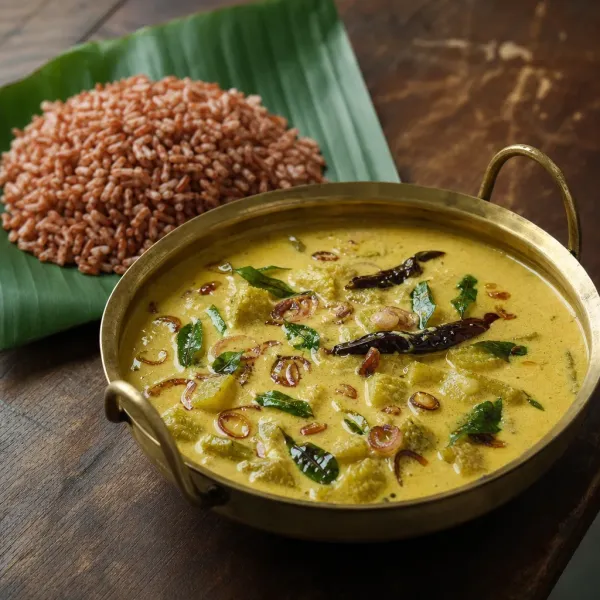
Manga Curry
Traditional Kerala manga curry with fresh coconut paste, shallots and curry leaves. A quick, sour, everyday side dish for matta rice. Ready in 40 min…
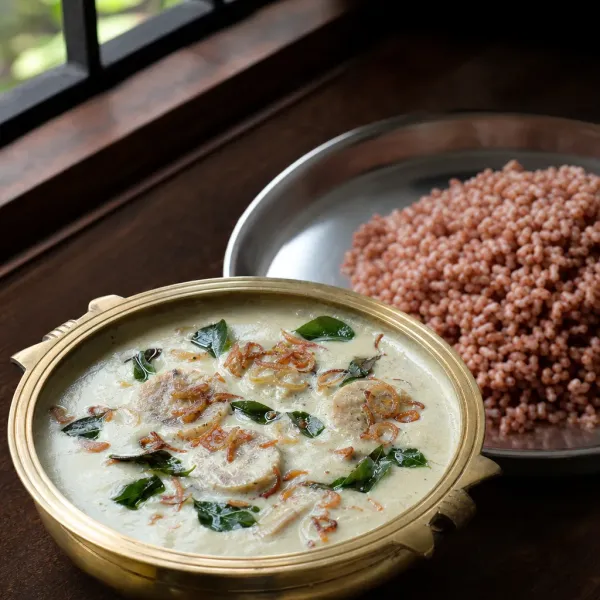
Vazhakka Curry (Raw Banana in Coconut Gravy)
Traditional Nasrani Kerala vazhakka curry with fresh coconut paste and kudampuli. Step-by-step household recipe with exact quantities and cook's note…
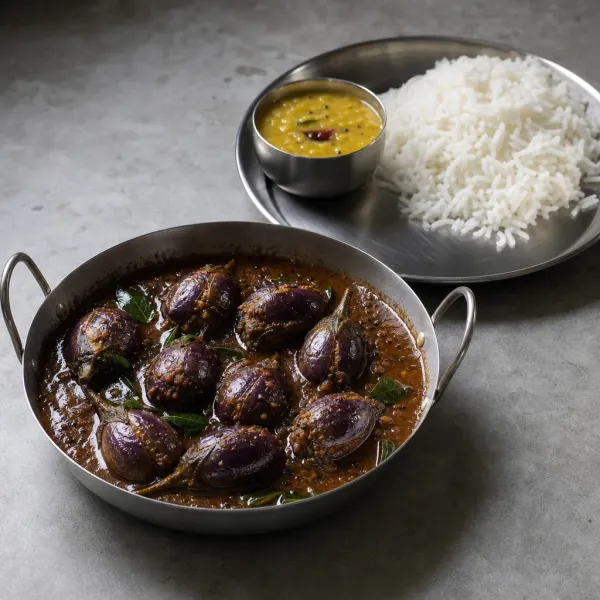
Gutti Vankaya Kura
Authentic Rayalaseema gutti vankaya kura: small brinjals stuffed with a peanut-sesame-coconut masala, slow-cooked in a tamarind gravy with gingelly o…
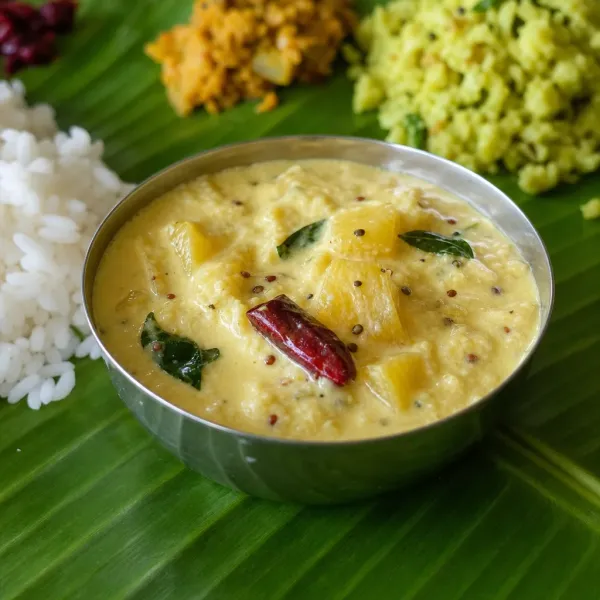
Pineapple Pachadi
Traditional Kerala pineapple pachadi for the sadya leaf: pineapple cooked with coconut paste, finished with sour curd and a coconut oil tempering.
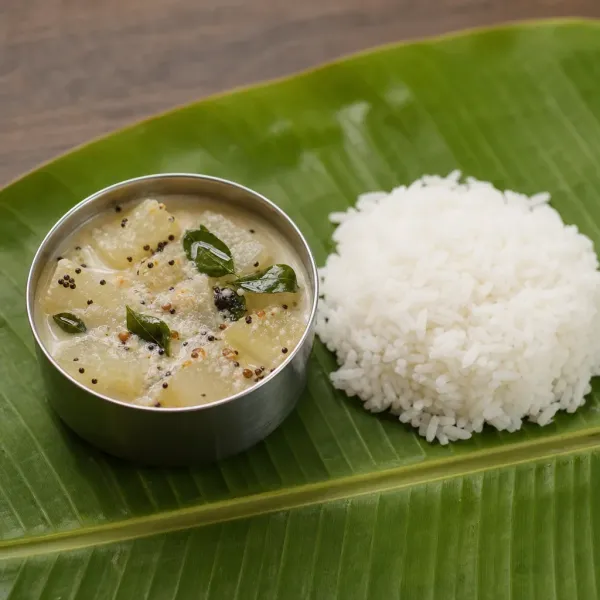
More Kootu (Tamil Brahmin Buttermilk and Coconut Vegetable Curry)
Traditional Tamil Iyer more kootu with ash gourd, smooth coconut paste and sour buttermilk. Step-by-step method with tips to prevent splitting.
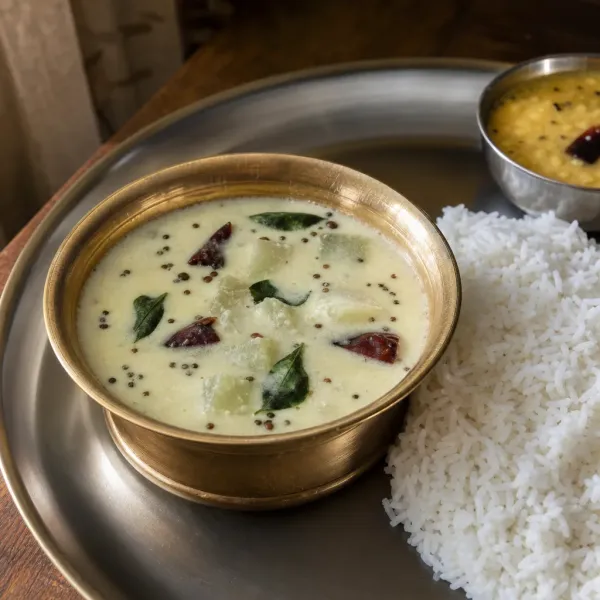
Majjiga Pulusu
Traditional Andhra Telugu Brahmin majjiga pulusu: ash gourd simmered with a coconut-green chilli paste and sour buttermilk. Step-by-step household re…