

Mangalore Buns Recipe
Malayalam മംഗലൂർ ബൺസ്Tamil மங்களூர் பன்ஸ்Kannada ಮಂಗಳೂರು ಬನ್ಸ್Telugu మంగళూరు బన్స్
- Prep20 min
- Soak / ferment8 hr
- Cook30 min
- Serves4
- DifficultyEasy
- DietVegetarian
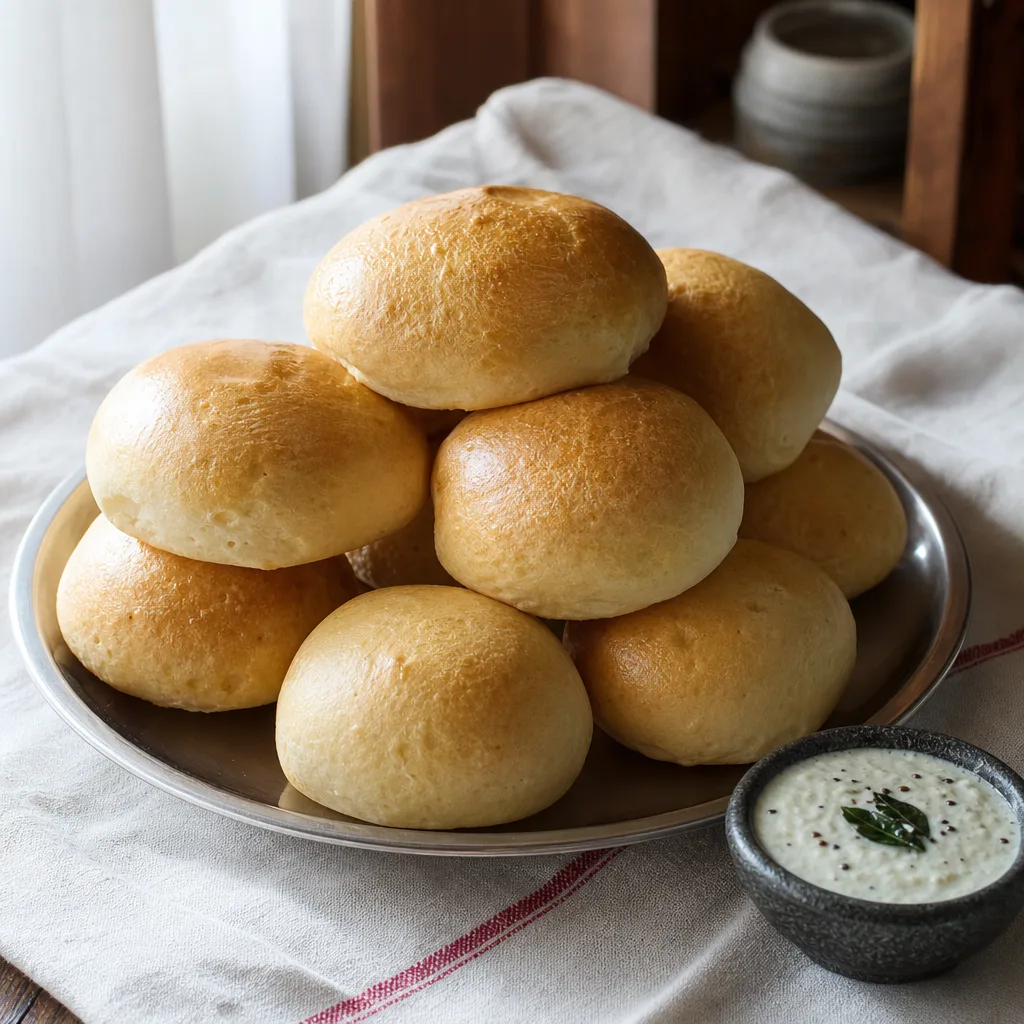
Mangalore Buns come from the Konkani Catholic kitchens of the Mangalore coast. They are a breakfast item, thick and soft, faintly sweet, with the ripe banana folded directly into the dough. The dough rests overnight — or at minimum through the morning — and the curd in it gives just enough sourness to balance the banana's sweetness. The result is a puri that puffs up in hot oil and stays soft even as it cools, which is not what a plain wheat puri does.
In most households this is Sunday breakfast food. You make the dough the night before and fry them in the morning while the tea is brewing. They are eaten with coconut chutney and sometimes with a thin dal. Some families add a pinch of cumin to the dough; others do not. The banana must be fully ripe — yellow with black spots — because an under-ripe banana makes the bun dense and faintly bitter.
The thickness matters. These are not rolled thin like a puri. They are rolled to about half a centimetre, which is why they stay pillowy inside when they puff. If you roll them too thin they go crisp, which is not the point.
Ingredients (serves 4)
For the dough
For frying
Method
Mash the banana
Peel the bananas and mash them thoroughly in a wide bowl until no lumps remain. The mash should be smooth and sticky. Any lump will show as a dense spot in the finished bun. Add the sugar and mix it in so it begins to dissolve in the banana.
Bring the dough together
Add the curd, cumin seeds, salt, and baking soda to the banana mash and stir briefly. Add the wheat flour in two additions and mix with your fingers until a soft dough forms. It will be slightly tacky from the banana — this is correct. Do not add water; the banana and curd provide all the moisture needed. If the dough is unworkably wet, add flour a tablespoon at a time.
Rest the dough overnight
Shape the dough into a ball, rub the surface lightly with a few drops of oil, and place it in a bowl. Cover tightly with a plate or damp cloth. Leave it at room temperature for 6 to 8 hours — overnight is the traditional practice. In a warm Mangalore kitchen this is enough time for the curd to work gently into the dough and make it pliable and slightly puffy. In a very cold kitchen, keep it in a slightly warm spot. The dough is ready when it has relaxed and feels soft rather than springy.
Divide the dough
The next morning, knead the rested dough gently for one minute — it should feel smooth and cooperative. Divide it into 12 to 14 equal portions and roll each into a smooth ball between your palms. Keep the balls covered with a damp cloth while you work.
Roll the buns
Dust the rolling surface lightly with flour. Roll each ball into a round about 8 to 9 cm across and roughly 4 to 5 mm thick. This is noticeably thicker than a standard puri — resist the urge to roll them thinner. A thin bun will not stay soft. Keep the rolled buns separated on a lightly floured surface and cover them.
Heat the oil
Pour the oil into a deep kadai and heat it over medium flame. To test the temperature, drop a small piece of dough into the oil — it should rise to the surface within two or three seconds without browning immediately. If it browns in under a second, the oil is too hot; lower the flame and wait. Too-hot oil will colour the outside before the inside cooks through.
Fry the buns
Slide one bun into the oil. Within a few seconds it will begin to puff. Press it gently under the oil with the back of a slotted spoon — this helps it puff evenly. Fry for about 1 minute on the first side until it is pale golden, then flip and fry for another 30 to 40 seconds on the second side. The colour should be a light, even golden — not deep brown. Fry one or two at a time depending on the size of your kadai.
Drain and serve
Lift the buns out with a slotted spoon and rest them briefly on a plate lined with absorbent paper. Serve them hot. They stay soft for 20 to 30 minutes after frying, which is enough time for the whole household to eat together.
How to serve
Fresh coconut chutney; some households serve alongside a thin yellow moong dal. A cup of filter coffee or tea is always on the table.
Served with: Fresh coconut chutney; some households serve alongside a thin yellow moong dal. A cup of filter coffee or tea is always on the table.
Cook's tips
Which banana to use
Nendran gives the most flavour and body; Elakki (small, very sweet) also works well. Regular Cavendish bananas can be used but produce a slightly wetter dough — reduce the curd to 40 ml if using them. The banana must be very ripe. An under-ripe one will not mash smoothly and the dough will be stiff.
Why the dough must rest
The overnight rest is not optional for flavour and texture. The curd softens the gluten and the banana sugar ferments very slightly, which gives the bun its characteristic softness. If you are short of time, a minimum of 4 hours at room temperature will do, but the buns will be slightly less tender.
Oil temperature is everything
If the oil is too cool, the buns absorb it and become greasy. If it is too hot, they brown before puffing. Medium heat — around 170°C if you have a thermometer — is correct. Fry one test bun first and adjust before frying the rest.
Storing leftover dough
Rested dough keeps in the refrigerator for one day. Bring it back to room temperature before rolling, otherwise the buns will not puff properly.
Regional variations
GSB (Gaud Saraswat Brahmin) households in the same region make a very similar bun, sometimes without sugar and with a longer rest; Tulu Nadu Hindu households also make their own version with slight differences in sweetness.
Glossary
- Nendran നേന്ത്രൻ
- A large, starchy Kerala banana variety with a firm texture and pronounced flavour, widely used in cooking and frying.
- Elakki ಏಲಕ್ಕಿ ಬಾಳೆ
- A small, very sweet Karnataka banana variety, also called cardamom banana; used ripe in sweets and batters.
- Kadai ಕಡಾಯಿ
- A deep, round-bottomed cooking vessel used for deep frying and stir-frying across South Asian kitchens.
Two things decide whether these buns work: the ripeness of the banana and the patience to let the dough rest. A ripe banana gives the sweetness and moisture the dough needs without any additions; an under-ripe one cannot be rescued. And without the overnight rest, the dough stays tight and the buns come out chewy rather than soft. Get those two right and the frying is straightforward.
More Breakfast & Tiffin recipes
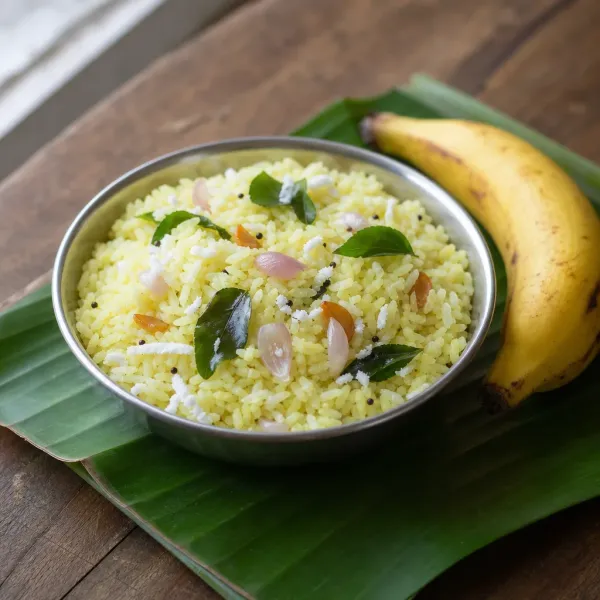
Aval Upma
A quick Kerala breakfast of thin flattened rice tempered in coconut oil with shallots, curry leaves and fresh grated coconut. Ready in 30 minutes.
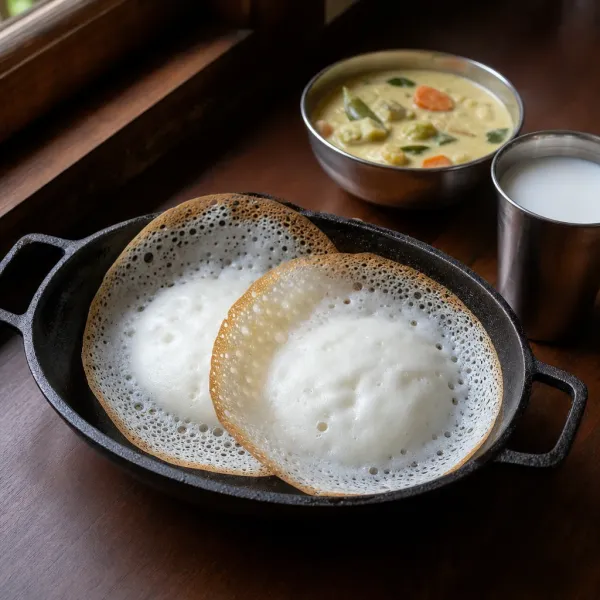
Appam
Traditional Kerala appam with toddy or yeast fermentation, ground fresh coconut, and cooked rice for a soft centre and lacy browned rim. Nasrani hous…
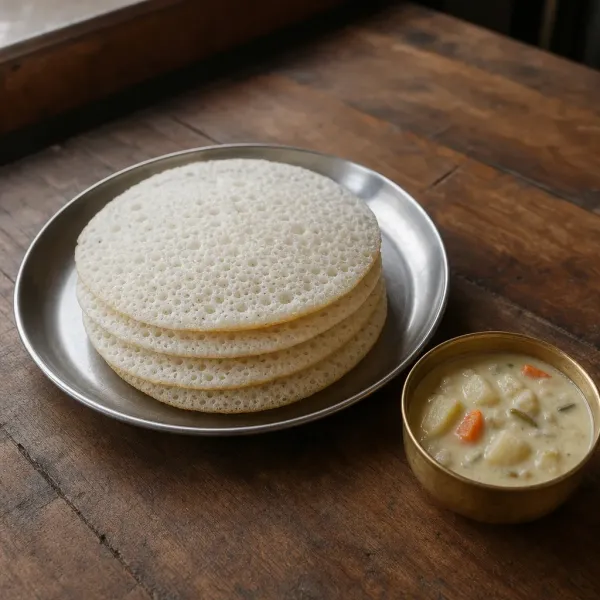
Kallappam
Traditional Kerala Nasrani kallappam made with fresh toddy and ground raw rice. Soft, spongy, overnight-fermented pancakes from the Syrian Christian…
Godhuma Dosa
Quick Tamil Nadu-style godhuma dosa made with wheat flour and rice flour, no fermentation needed. Ready in under an hour, soft and lacy.
Kerala Puttu
Traditional Kerala puttu made with rice flour and fresh coconut, steamed in a puttu kutti. Step-by-step method with the correct flour texture explain…
Plain Dosa
Traditional Tamil Iyer plain dosa: fermented rice and urad dal batter, spread thin on a cast-iron tawa with gingelly oil. Crisp, golden, and sour.