

Kovakkai Poriyal Recipe
Malayalam കോവക്കാ തോരൻTamil கோவக்காய் பொரியல்Kannada ತೊಂಡೆಕಾಯಿ ಪಲ್ಯTelugu దొండకాయ పొరియల్
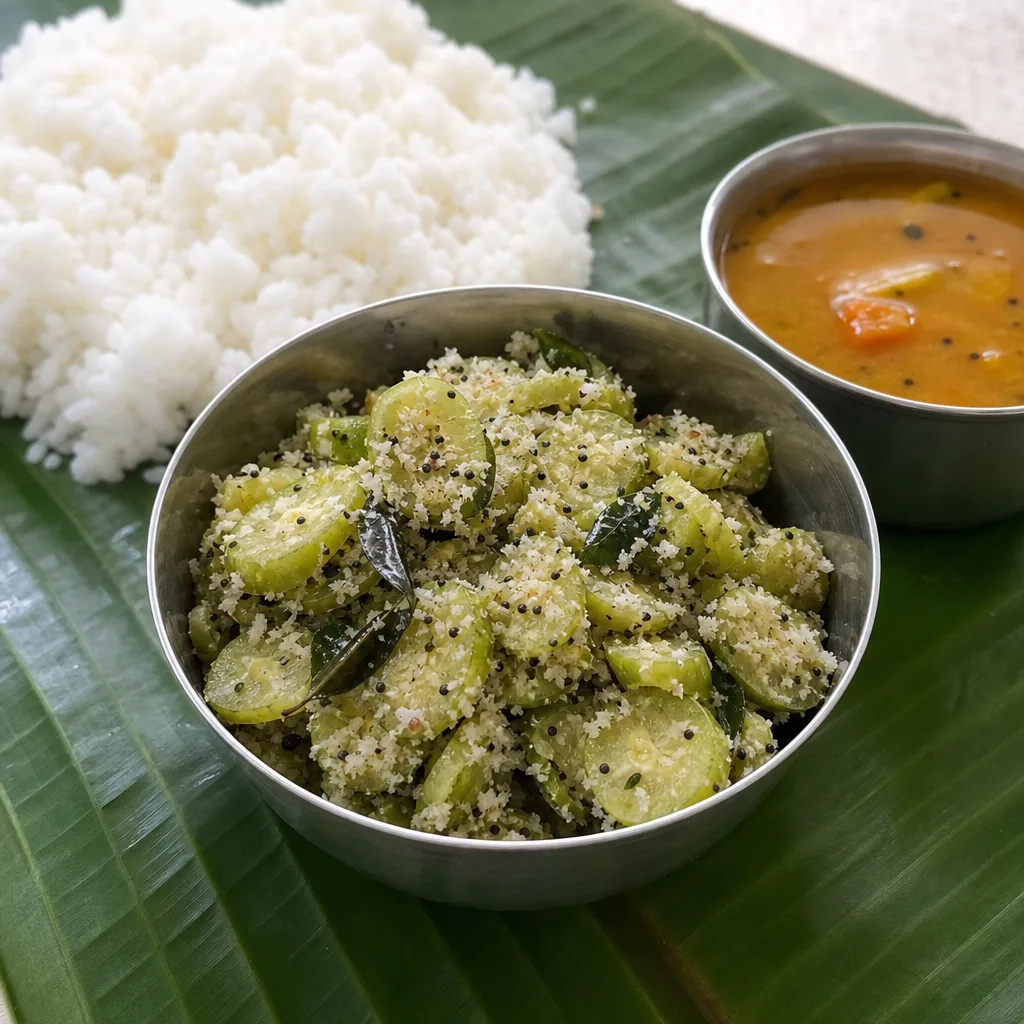
- Prep15 min
- Cook20 min
- Serves4
- DifficultyEasy
- DietVegan
Kovakkai poriyal is a dry vegetable side dish from Tamil Brahmin (Iyer) households, cooked with gingelly oil and finished with freshly grated coconut. It sits on the lunch thali alongside sambar and rasam, and its quietness is deliberate: the vegetable itself is the point, not the spicing.
The ivy gourd is sliced into thin rounds or matchsticks, not chunks. Thicker cuts stay raw at the centre while the outside overcooks. Most Iyer cooks slice them into rounds of about three millimetres; some households prefer fine julienne, which cooks faster and picks up the mustard and urad dal tempering more evenly.
Coconut is added off the heat, or in the last minute on the lowest flame, so it stays moist and pale rather than frying. This is what separates poriyal from a stir-fry. The finished dish is nearly dry, with no pooling liquid, and the coconut should look just barely warmed through.
Ingredients (serves 4)
Main vegetable
Tempering
Aromatics and spice
Finish
Method
Slice the kovakkai
Trim both ends of each kovakkai and slice into rounds of about 3 mm. Uneven slices will cook unevenly: the thin ones go soft while the thick ones remain firm and slightly bitter. Set aside in a bowl.
Heat the oil and temper the mustard seeds
Place a wide, heavy kadai over medium heat. Add the gingelly oil and let it warm for about 30 seconds until it shimmers. Add the mustard seeds. Wait until they splutter fully before moving to the next step; if you add the dal too soon the mustard will not pop and will taste raw.
Add urad dal and dried chillies
Once the mustard seeds have spluttered, add the urad dal and broken red chillies. Stir continuously on medium heat for about 40 seconds. The dal should turn pale gold, not brown. Brown dal tastes bitter.
Add curry leaves and shallots
Add the curry leaves, standing back as they will sputter in the oil. Add the sliced shallots immediately after. Cook on medium heat, stirring often, for 4 to 5 minutes until the shallots are soft and translucent at the edges. They should not colour.
Add turmeric and salt
Add the turmeric powder and salt. Stir for 30 seconds so the turmeric coats the shallots evenly and loses its raw smell.
Add the kovakkai
Add the sliced kovakkai to the pan and mix well so every piece is coated in the turmeric-oil. The pan will look crowded; that is fine. Spread the slices in an even layer and let them sit undisturbed for 2 minutes before stirring.
Cook covered on low heat
Reduce the heat to low and cover the pan with a lid. Cook for 8 to 10 minutes, lifting the lid to stir every 3 minutes. The kovakkai will release some moisture on its own; do not add water. It is ready when a slice pressed with the back of the spoon yields without resistance but still holds its shape. Mushy kovakkai means it cooked too long or the heat was too high.
Cook off any residual moisture
Remove the lid and raise the heat to medium for 2 minutes, stirring continuously. Any liquid that collected on the lid and fell back into the pan should evaporate. The finished dish must be dry; no pooling oil or water at the bottom of the pan.
Add fresh coconut and finish
Reduce the heat to the lowest setting. Add the grated coconut and fold it in gently. Cook for exactly 1 minute, just long enough for the coconut to warm through and pick up the flavour of the tempering. Remove from heat immediately. The coconut should remain pale and slightly moist, not fried.
Taste and serve
Taste for salt and adjust. Transfer to a serving bowl. Serve at the table, not piping hot from the stove; poriyal is best eaten at the temperature of a just-served thali, warm rather than scalding.
How to serve
Steamed white rice, sambar, rasam, and a papad on the Tamil Brahmin lunch thali. Sometimes alongside mor kuzhambu (buttermilk-based curry) in place of sambar.
Served with: Steamed white rice, sambar, rasam, and a papad on the Tamil Brahmin lunch thali. Sometimes alongside mor kuzhambu (buttermilk-based curry) in place of sambar.
Cook's tips
Choosing kovakkai
Use firm, small to medium kovakkai with no soft spots or yellowing. Older, larger ones have hard seeds inside and a bitter aftertaste. If the seeds are fully formed and hard, pick them out after slicing or they will stay unpleasantly firm in the finished dish.
Gingelly oil
This dish is cooked in cold-pressed gingelly oil (sesame oil), which gives it a characteristic background warmth. Refined or light sesame oil does not give the same result. Coconut oil is used in Kerala thorans, not here.
Moisture control
Kovakkai releases water as it cooks. If you add even a tablespoon of water you will end up with a semi-wet dish that lacks the texture of poriyal. Trust the steam from the covered pan.
Coconut added last
The grated coconut goes in off the heat or on the lowest flame. If it fries in the oil it turns grainy and yellow, and the dish loses its balance. Some households skip coconut entirely for a lighter weekday version; both are traditional.
Regional variations
Kovakkai poriyal is made across Tamil Nadu with small household differences in spicing; a Chettiar version uses more dried red chillies and sometimes a small amount of tamarind water to deglaze. In Kerala, ivy gourd is made into a thoran with fresh grated coconut, which is a distinct dish.
Glossary
- Poriyal பொரியல்
- Dry Tamil Nadu vegetable side dish, stir-cooked with a tempering of mustard and dal, often finished with grated coconut.
- Kovakkai கோவக்காய்
- Ivy gourd, Coccinia grandis; small green vegetable related to the cucumber family, common in South Indian cooking.
- Nallennai நல்லெண்ணெய்
- Good oil; the Tamil term for cold-pressed gingelly (sesame) oil used in Tamil Nadu cooking.
- Kaduku கடுகு
- Mustard seeds; the small black variety used in South Indian tempering.
- Ulutham paruppu உளுத்தம் பருப்பு
- Split and husked urad dal; used whole in tempering for crunch and a faint nuttiness.
- Chinna vengayam சின்ன வெங்காயம்
- Small onion; the South Indian shallot, preferred over large onions for its sharper, sweeter flavour in poriyal.
- Kadai கடாய்
- Wide, curved iron or steel cooking pan used for stir-frying and tempering.
Two things decide whether this poriyal works: the slices must be thin and uniform so nothing stays raw or turns to mash, and the coconut must go in at the very end on the lowest heat so it stays pale and moist. Get those two right and the rest follows.
More Dry Vegetable Sides recipes
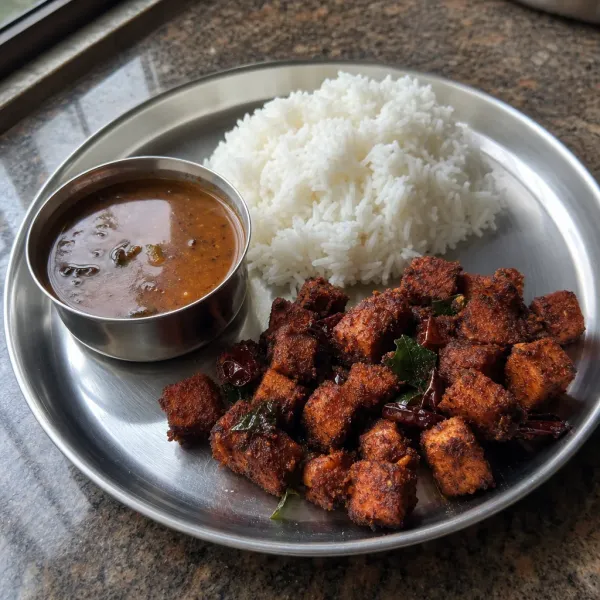
Senai Kizhangu Varuval
Traditional Tamil Iyer-style senai kizhangu varuval: elephant yam boiled, spice-coated and pan-fried in gingelly oil until deeply golden and dry.
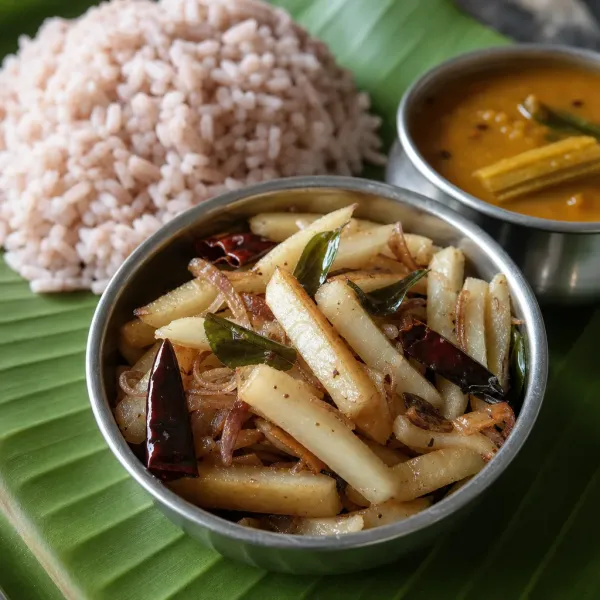
Yam Mezhukkupuratti (Chena Mezhukkupuratti)
Traditional Kerala chena mezhukkupuratti: elephant foot yam stir-fried in coconut oil with shallots, dried red chillies and curry leaves. Everyday Tr…
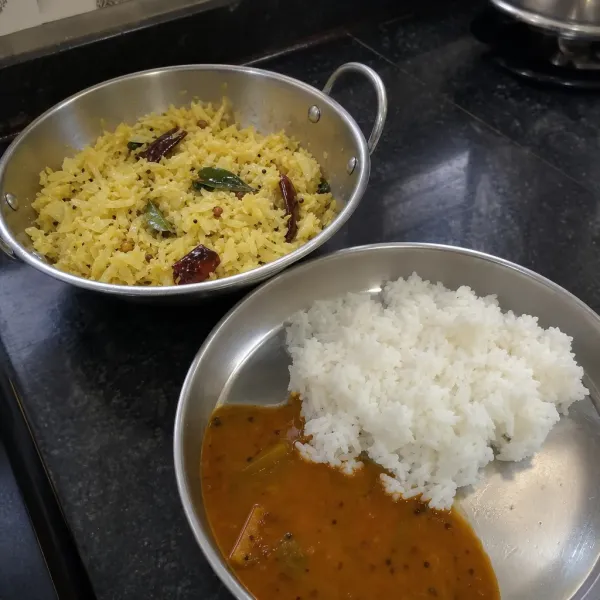
Cabbage Palya
Traditional Karnataka cabbage palya with mustard, curry leaves, toasted chana and urad dal. Dry, quick, and made without water. Everyday home recipe.
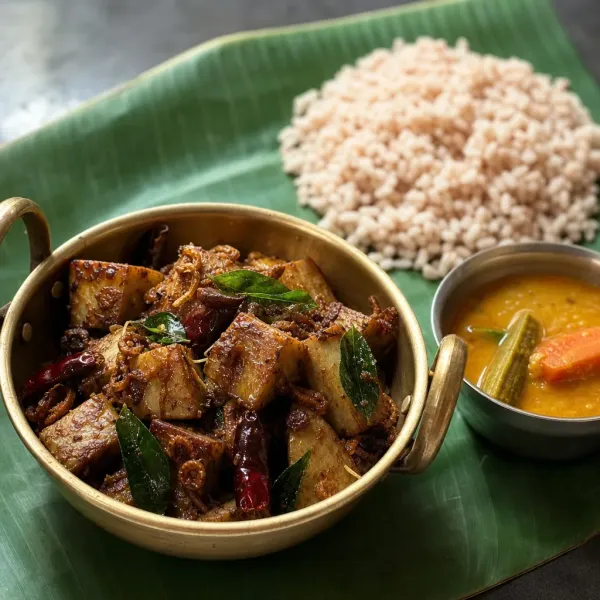
Chembu Mezhukkupuratti (Taro Root Stir-Fry)
Traditional Kerala chembu mezhukkupuratti: taro root stir-fried in coconut oil with shallots, dried red chillies and curry leaves. Step-by-step house…
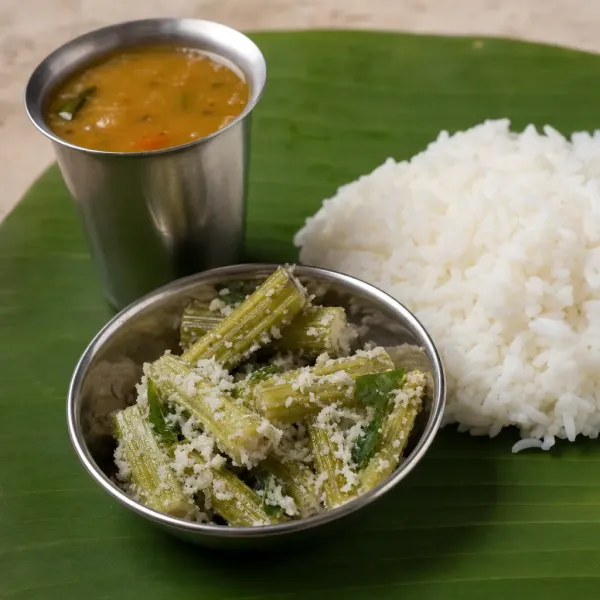
Murungakkai Poriyal
Authentic Tamil Iyer murungakkai poriyal: drumstick cooked dry with gingelly oil, shallots, and fresh coconut. Traditional household method, step by…
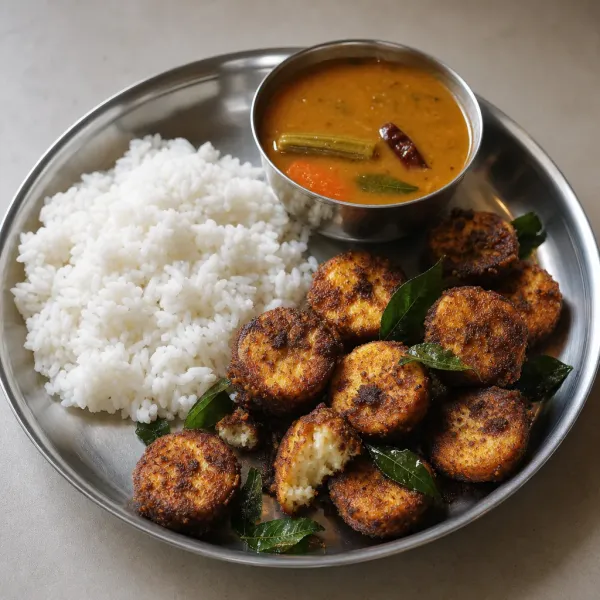
Vazhakkai Varuval
Traditional Tamil Nadu vazhakkai varuval: raw banana rounds fried in gingelly oil with turmeric, red chilli, and coriander until deeply golden.